
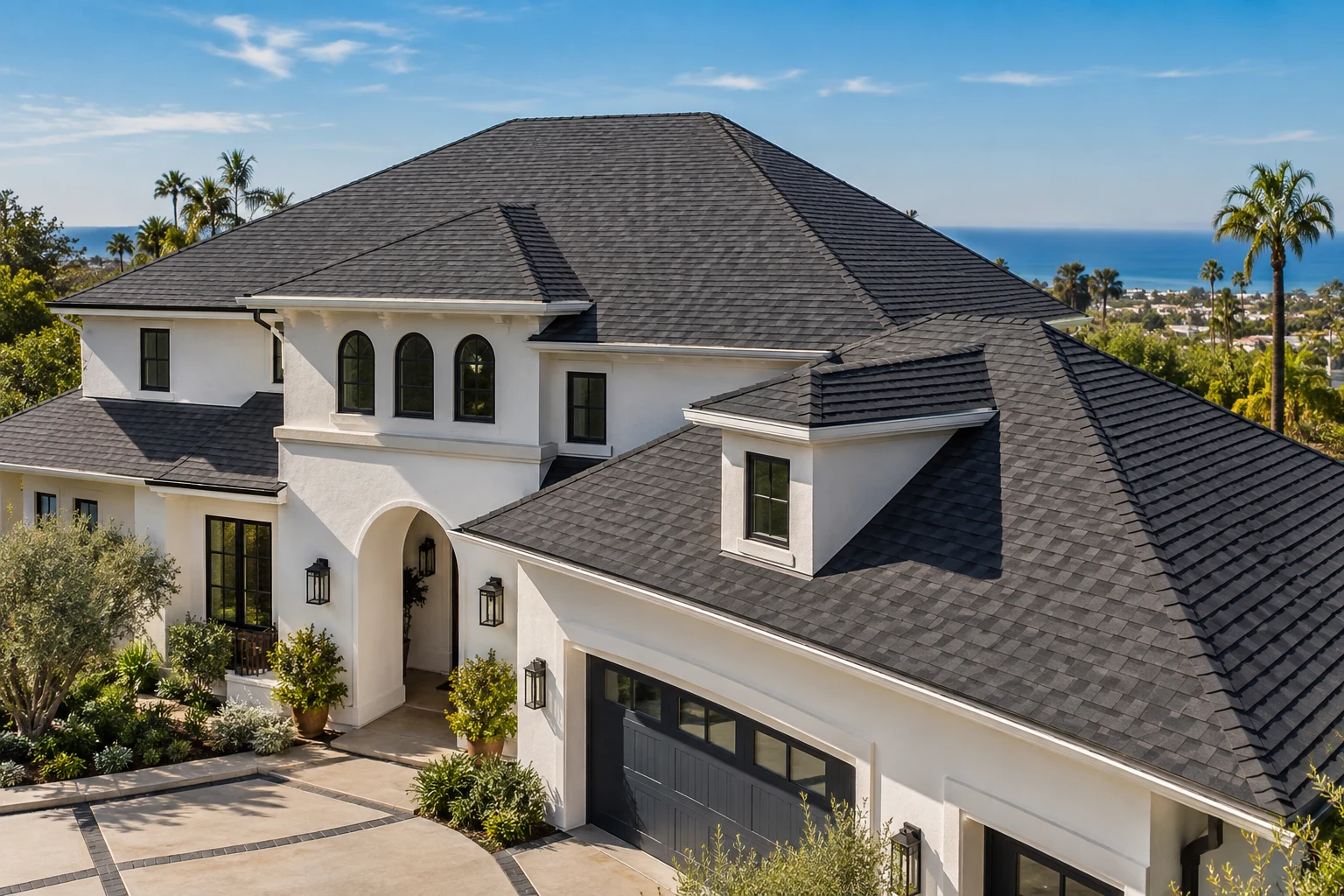
Learn what affects asphalt shingle roof replacement cost, lifespan, timing, and material choices for Southern California homes and long-term value.
A roof usually starts asking for replacement long before it fails dramatically. Homeowners often notice curling shingles, missing granules in the gutters, dark streaking, or higher attic temperatures before they ever see a leak. If you are weighing an asphalt shingle roof replacement, the real question is not just whether the roof can make it through another season. It is whether holding off still makes financial sense for your home.
For many Southern California homeowners, asphalt shingles remain one of the most practical choices for full roof replacement. They offer a good balance of appearance, performance, cost, and installation flexibility. That said, not every shingle system is the same, and not every roof is a good candidate for the same product. The right decision depends on your roof’s age, attic ventilation, sun exposure, home design, and how long you plan to stay in the property.
When asphalt shingle roof replacement makes sense
An older roof does not always fail all at once. It tends to wear down in layers. The protective granules start thinning, the shingles lose flexibility, the seal strips weaken, and the roof becomes more vulnerable to uplift and water intrusion. By the time you can see widespread deterioration from the ground, the system is often near the end of its reliable service life.
For most homeowners, replacement becomes the better path when deterioration is spread across large sections of the roof, when the roof has already reached advanced age, or when a new roof is needed before installing solar. If a home inspection has flagged roofing concerns before a sale or purchase, replacement may also provide more certainty than trying to stretch an aging system.
In Southern California, sun exposure is a major factor. Roofs in areas with intense heat, long UV exposure, and limited shade may age faster than homeowners expect. Even if water intrusion is not obvious, years of expansion, contraction, and direct sun can shorten shingle performance.
What affects asphalt shingle roof replacement cost
Homeowners understandably want a clear number, but roofing costs are shaped by the roof itself more than by the shingle alone. Size matters, of course, but so do pitch, roof complexity, tear-off requirements, decking condition, ventilation upgrades, flashing details, and local permit requirements.
A simple one-story home with straightforward roof lines is typically less expensive to replace than a two-story home with multiple valleys, penetrations, skylights, and steep sections. The material selection also affects cost. Basic three-tab products are less common for homeowners looking for long-term value, while architectural shingles generally provide a stronger appearance and better overall durability.
The lowest proposal is not always the best value. If one contractor is pricing a full system with underlayment, ventilation improvements, flashing replacement, and manufacturer-backed warranty coverage, and another is pricing only the visible shingle layer, those are not equal bids. A roof is a system, not a surface product.
Choosing the right shingle for a Southern California home
Asphalt shingles work well on many home styles, from traditional ranch homes to newer suburban builds. They are lighter than tile, available in a wide range of colors, and often faster to install than heavier roofing materials. For homeowners who want a clean appearance without the weight and cost of tile, shingles can be a very sensible option.
Still, the right shingle should match both the home and the climate. In hotter inland areas, reflective or energy-efficient roofing options may help reduce heat absorption. In coastal or mixed-climate areas, color choice, ventilation design, and underlayment quality all play a role in long-term performance. Darker shingles can create a rich look, but they may absorb more heat. Lighter tones may improve energy performance, but aesthetics and neighborhood style matter too.
This is one reason homeowners benefit from working with a contractor focused on complete residential roof replacement rather than patchwork decisions. Product recommendations should reflect how the entire system will perform over time, not just what looks good on installation day.
Why installation quality matters as much as the shingle
A premium shingle installed poorly will not deliver premium performance. Many roof problems that show up years later are tied to workmanship details, not just material defects. Flashing transitions, pipe penetrations, valley construction, starter shingles, ridge components, and attic ventilation all influence how long the roof will last.
Ventilation is especially important. If hot air is trapped in the attic, it can increase heat stress on the shingles and contribute to premature aging. Poor ventilation can also affect indoor comfort and energy use. A proper roof replacement is an opportunity to correct these issues rather than simply cover them over.
Homeowners should also pay attention to licensing and accountability. In California, roofing work should be performed by a properly licensed contractor. That matters for workmanship standards, insurance protection, code compliance, and recourse if problems arise. Team All Star Construction, CSLB #1009760, operates All Star Roof Replacement with a process built around full residential reroofing, clear communication, and long-term system performance.
What to expect during the replacement process
One of the biggest sources of stress for homeowners is not the roof itself. It is uncertainty. A well-run project should make the timeline, scope, and next steps clear before work starts.
The process typically begins with measurements, roof inspection, and a detailed estimate. Many homeowners appreciate virtual estimating tools because they allow the project to move faster, especially during early planning. Once the scope is confirmed, the contractor should explain material options, ventilation needs, permit requirements, and what happens if damaged decking is discovered after tear-off.
During installation, the old roofing material is removed down to the deck. The roof deck is inspected, any compromised wood is addressed as needed, and the new roofing system is installed in sequence. That includes underlayment, flashing components, shingle installation, ventilation details, and ridge finishing. Final cleanup and jobsite protection should be part of the standard process, not treated as an extra.
For most homes, the work moves quickly, but timing can vary depending on size and complexity. Homeowners should expect noise and active crew movement during the project. Good communication helps make that manageable.
Lifespan, warranties, and realistic expectations
Homeowners often ask how long a new asphalt shingle roof will last. The honest answer is that it depends. Product quality matters, but so do ventilation, installation, climate exposure, and maintenance history. A professionally installed architectural shingle system can provide many years of reliable service, but no roof ages in a lab environment.
This is where warranty language should be understood carefully. Manufacturer-backed warranties can add meaningful protection, especially when the roofing system is installed according to manufacturer specifications. But warranties do not erase the need for proper installation or realistic upkeep. They also vary in what they cover, for how long, and under what conditions.
A trustworthy contractor should explain the difference between material coverage and workmanship coverage in plain language. Homeowners do not need a sales pitch. They need to know what is protected and what is not.
Is asphalt shingle the best replacement choice?
Sometimes yes, sometimes no. Asphalt shingles are often an excellent fit for homeowners who want strong curb appeal, dependable weather protection, and a more moderate investment than premium materials. They also make sense for many homeowners preparing for solar, renovating an older property, or replacing a roof that has reached the end of its usable life.
But there are trade-offs. Shingles generally do not offer the same lifespan as some tile systems, and they may not be the right visual match for every home. If the home has a specific architectural style or HOA requirement, those factors should be reviewed early. The best roofing decision is the one that fits the structure, the budget, and the homeowner’s long-term plans.
How to make a confident decision
A good roof replacement decision usually comes down to clarity. You want to know what condition the current roof is in, what system is being proposed, what the warranty actually covers, and whether the investment makes sense over the next 15 to 25 years of ownership.
That is why education matters. A contractor should be able to explain not just the price, but the reasons behind the recommendation. Homeowners in Los Angeles, Orange, Riverside, San Bernardino, and Ventura Counties often face different climate pressures, attic conditions, and design considerations, yet they all benefit from the same thing: a replacement plan based on long-term protection rather than short-term guesswork.
If your roof is showing its age, this is a good time to ask better questions. A well-planned asphalt shingle roof replacement should leave you with more than a new look from the street. It should give you confidence every time the weather changes and every time you think about the value of the home underneath it.