
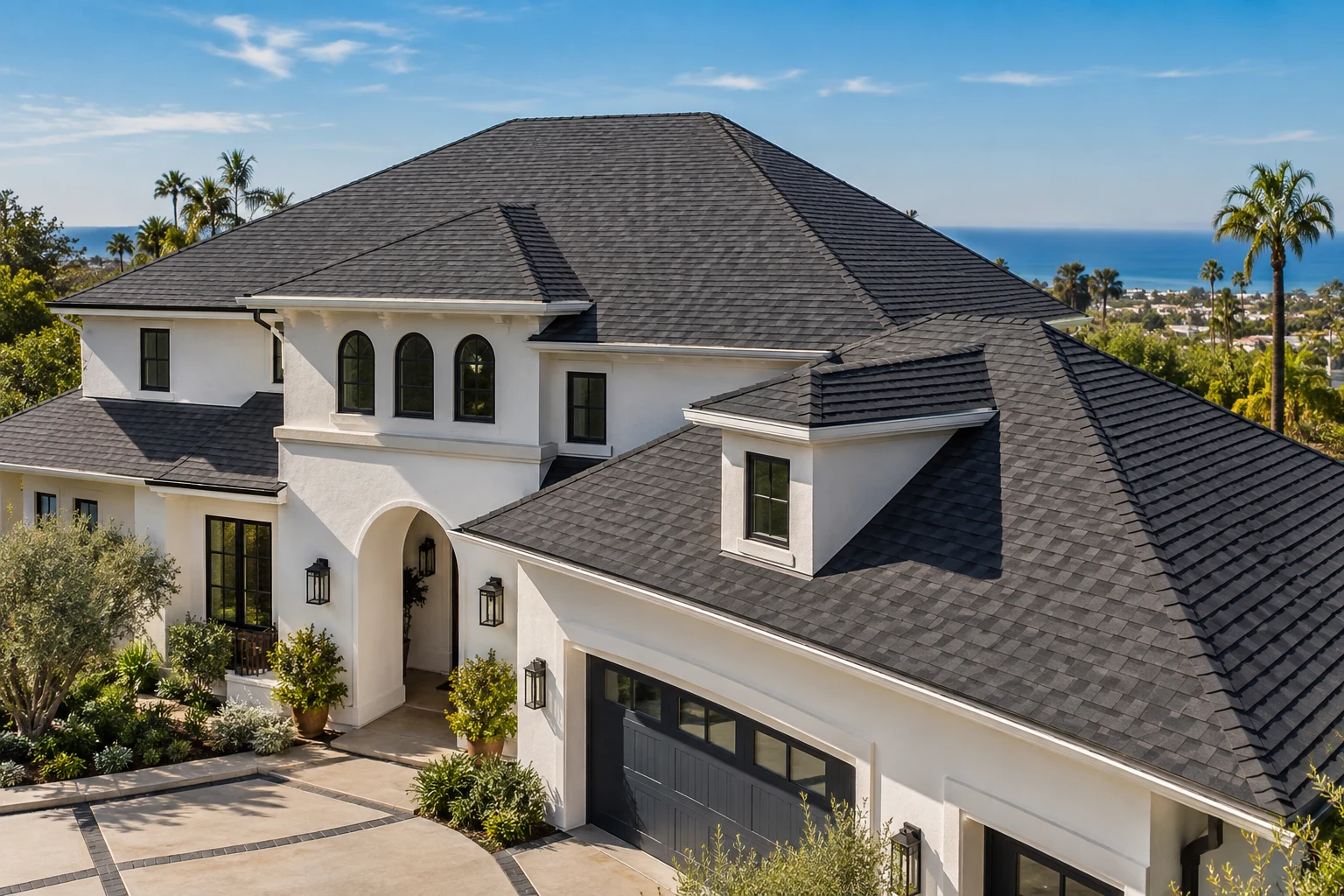
Learn how energy efficient roofing materials can lower heat gain, improve comfort, and help Southern California homeowners choose the right roof.
A roof can add heat to your home every afternoon without you seeing it happen. In Southern California, that matters. If your upstairs rooms stay hotter than the rest of the house or your AC seems to run too long, the roofing system above you may be part of the reason.
That is why many homeowners start researching energy efficient roofing materials when it is time for a full roof replacement. The right material can reduce heat absorption, improve indoor comfort, and support lower cooling demand. But the best choice is not the same for every home. Roof shape, attic ventilation, neighborhood style, solar plans, and budget all play a role.
What makes roofing materials energy efficient?
Most homeowners think of insulation first, but the roof surface matters too. Energy performance often comes down to how much solar heat a roof reflects and how much heat it releases after the sun moves on. A darker, heat-absorbing roof can transfer more warmth into the attic and living space. A more reflective roof can help reduce that heat load.
This is where terms like cool roof, solar reflectance, and thermal emittance come into the conversation. You do not need to memorize those standards to make a good decision. The practical takeaway is simple: some roofing materials and colors stay cooler in the sun than others, and that can affect comfort and energy use.
For homeowners planning a full reroof, it also helps to think beyond the surface material alone. Underlayment, ventilation, roof deck condition, and installation quality all influence real-world performance. An energy-saving product installed poorly will not deliver the same result as a complete roofing system designed correctly.
Energy efficient roofing materials homeowners should consider
Asphalt shingles
Asphalt shingles remain one of the most common residential roofing choices because they offer a good balance of cost, appearance, and performance. Not all shingles are equally energy efficient, though. Standard dark shingles tend to absorb more heat, while lighter-colored and specially rated cool roof shingles reflect more sunlight.
For many Southern California homeowners, cool roof asphalt shingles are a practical option because they can improve efficiency without dramatically changing the look of the home. This matters in neighborhoods where homeowners want a traditional architectural style rather than a more commercial-looking reflective surface.
The trade-off is that shingles usually do not match the thermal mass and long-term lifespan of premium tile systems. Still, when installed as part of a high-quality roofing system, they can be an excellent choice for homeowners who want strong value and lower heat gain.
Concrete tile
Concrete tile is a strong performer in hot climates and a common fit for Southern California architecture. It offers durability, curb appeal, and solid thermal performance, especially when paired with proper attic ventilation and modern underlayment. Many tile profiles also create natural air space beneath the tile, which can help reduce heat transfer.
Concrete tile can be a smart option for homeowners replacing an aging tile roof or upgrading from a lower-performing material. It also comes in colors and profiles that work well with Spanish, Mediterranean, and contemporary home designs.
The main trade-offs are weight and upfront cost. Tile systems generally require a larger investment than shingles, and the structure must be suitable for the material. But for homeowners focused on long-term value, concrete tile often makes sense.
Clay tile
Clay tile is well known for its appearance, but it also performs well in warm climates. It reflects heat better than many traditional roofing materials, and like concrete tile, it can support airflow beneath the tiles depending on the installation method and roof design.
For homeowners who want a premium look with long service life, clay tile is often attractive. It is especially popular on homes where architectural style is part of the property’s value.
The trade-off is price. Clay tile usually sits at the higher end of the replacement range, and not every homeowner wants to make that level of investment. It can be worth it for the right property, but it is not automatically the best energy choice just because it is more expensive.
Flat roofing systems
Low-slope and flat roof sections need a different conversation. These areas often benefit from highly reflective roofing membranes designed to reduce heat absorption. For homes with modern architecture, additions, patio covers tied into the roofline, or low-slope sections over garages and living spaces, a reflective flat roofing system can make a noticeable difference.
This is one area where the material selection has to be very intentional. Water drainage, slope, penetrations, and surface exposure all matter. A reflective membrane may offer excellent energy performance, but the correct system depends on the home’s design and how that section of roof is used.
Why color matters almost as much as material
Homeowners sometimes focus only on the product type and overlook color. In reality, color can have a major impact on solar heat gain. Light grays, tans, and reflective blends generally perform better than deep charcoal, black, or dark brown options.
That does not mean every homeowner needs a pale roof. Today, many cool roof products are designed to look richer and more dimensional while still meeting energy standards. The right choice is often about balancing appearance with performance.
If your home gets intense afternoon sun, color deserves extra attention. A roof that looks great on a sample board can behave very differently during a hot August week in inland communities like Riverside, Rancho Cucamonga, or San Bernardino.
Energy savings depend on the full roofing system
Ventilation and attic performance
A roof replacement is the right time to look at more than the top layer. If the attic is poorly ventilated, trapped heat can build up even with better roofing materials. Intake and exhaust ventilation help move hot air out and support more stable attic temperatures.
This matters for comfort, but it also affects roof longevity. Excessive heat can place more stress on roofing components over time. A well-designed roofing system should work as a complete assembly, not just a surface upgrade.
Underlayment and installation quality
Underlayment is not visible from the street, but it plays an important role in protecting the home and supporting long-term performance. The same is true for flashing, deck preparation, and manufacturer-approved installation methods.
That is one reason homeowners should be careful about comparing quotes based only on material names. Two contractors can offer the same visible roofing product with very different system quality underneath. For a major investment like reroofing, workmanship and system design matter just as much as the brochure.
How to choose the right energy efficient roof for your home
The best decision usually starts with a few practical questions. How long do you plan to stay in the home? Is summer heat already a problem indoors? Are you trying to match an existing neighborhood style or HOA requirement? Are you planning to install solar and want the roof replacement done first?
If budget is the top concern, cool roof asphalt shingles often provide the most accessible path to better efficiency. If you want longer-term durability and a look common across many Southern California neighborhoods, concrete tile may be the better fit. If architectural character and premium lifespan matter most, clay tile may be worth the added investment. If your home includes low-slope sections, a reflective flat roofing system may be essential.
For homeowners who want clarity before making a decision, this is where working with a licensed residential roof replacement specialist helps. A qualified contractor should explain not only the material options, but also how ventilation, slope, style, warranty coverage, and installation standards affect the outcome.
All Star Roof Replacement, the residential roofing division of Team All Star Construction, CSLB #1009760, takes that educational approach seriously because homeowners make better decisions when they understand the full system.
A few common misconceptions about energy efficient roofing materials
One common misconception is that any light-colored roof will automatically produce major utility savings. It can help, but the result depends on insulation levels, attic ventilation, window exposure, duct placement, and local climate.
Another is that the most expensive material is always the most efficient. In reality, a properly selected cool roof shingle can outperform a poorly chosen premium roof in terms of heat reflection.
Homeowners also sometimes assume energy efficiency and curb appeal are in conflict. They are not. Many current roofing products are designed to offer both, which is important when the roof is one of the most visible parts of the home.
A roof replacement is one of the few home upgrades that can improve protection, appearance, and day-to-day comfort at the same time. If you are comparing materials, look past simple labels and ask how the entire roofing system will perform on your specific home, in your specific climate, for the next several decades.