
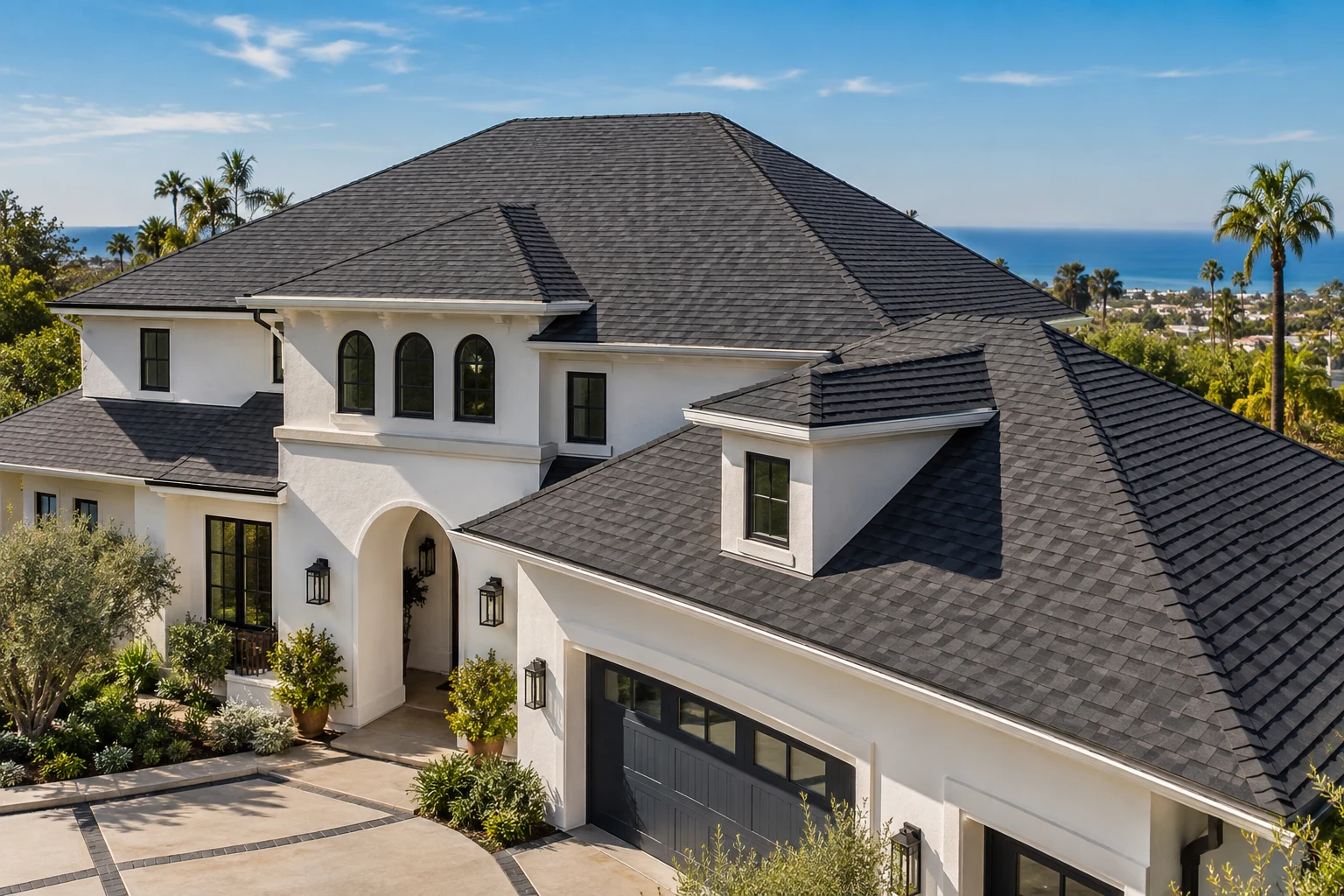
Looking for the best roof for hot climate homes? Compare tile, shingles, metal, and cool roof systems for energy savings and long-term value.
If your upstairs feels hotter than the rest of the house every summer, your roof is part of the story. For many Southern California homeowners, choosing the best roof for hot climate conditions is not just about stopping leaks. It is about lowering heat buildup, improving comfort, and making sure the next roof lasts in strong sun year after year.
A hot-climate roof has to do more than look good from the street. It needs to reflect solar heat when possible, handle UV exposure, support proper attic ventilation, and fit the structure and style of the home. That is why there is no one-size-fits-all answer. The best choice depends on your home’s design, your budget, local code requirements, and whether you want the lowest upfront cost or the strongest long-term performance.
What makes the best roof for hot climate conditions?
In hot regions, the roof takes direct punishment for months at a time. High surface temperatures, intense UV rays, and repeated expansion and contraction all wear roofing materials down. Some materials absorb and hold heat, while others reflect more sunlight and release heat faster.
When homeowners ask what performs best in the heat, the real answer comes down to a few factors working together. Material matters, but so do color, underlayment, insulation, attic ventilation, and installation quality. A premium material installed poorly can underperform. A well-designed roofing system, on the other hand, can noticeably improve indoor comfort and reduce strain on your HVAC system.
That is one reason complete roof replacement deserves careful planning. If your current roof is near the end of its service life, this is the right time to improve energy performance instead of simply replacing old material with the same thing.
Best roofing materials for hot climates
Clay tile
Clay tile is one of the strongest options for heat resistance, especially in sun-heavy regions. It has natural thermal performance, long lifespan potential, and a classic appearance that fits many Southern California homes. The air space beneath tile can also help reduce heat transfer into the home.
The trade-off is weight and cost. Not every structure is designed for tile, and some homes may need additional structural review before installation. Tile systems also require experienced installation because the performance of the roof depends on the full system, not just the tile itself.
For homeowners planning to stay in their home long term, clay tile is often a strong investment. It tends to deliver durability, curb appeal, and excellent hot-weather performance when properly installed.
Concrete tile
Concrete tile is another popular option in warm climates. It offers similar benefits to clay tile in terms of durability and heat resistance, often at a more approachable price point. It also comes in a wide range of profiles and colors, which gives homeowners flexibility if they want a tile look without the premium cost of some clay products.
Like clay, concrete tile is heavy. It also benefits from proper ventilation and high-quality underlayment beneath the tile field. In many reroof projects, the visible tile gets most of the attention, but the underlayment is what provides critical waterproofing protection.
Cool roof asphalt shingles
Many homeowners are surprised to learn that asphalt shingles can still be a very good option in hot climates, especially when using modern cool roof products. Reflective shingles are designed to reduce heat absorption compared with standard darker roofing materials.
This matters because asphalt shingles are often more budget-friendly than tile while still offering solid performance, attractive design options, and reliable protection. For homes where tile is not the right structural or financial fit, a quality shingle system can be the best roof for hot climate conditions from a practical standpoint.
The key is choosing the right product and color. Lighter, more reflective shingles generally perform better in the sun. A complete roofing system from a trusted manufacturer, such as Owens Corning, can also improve confidence in long-term performance and warranty support.
Metal roofing
Metal roofs can perform very well in heat because they reflect sunlight efficiently, especially when finished with reflective coatings. They are lightweight, durable, and known for long service life.
That said, metal is not automatically the perfect choice for every residential home. Style preference, neighborhood appearance, noise perception, and cost all affect whether it makes sense. In some Southern California neighborhoods, tile or architectural shingles may be a more natural fit for the home’s design and resale expectations.
Flat and low-slope cool roof systems
For homes with flat or low-slope sections, material choice becomes more specialized. In these areas, reflective cool roof systems are often the best solution because they are designed for heat exposure and proper water shedding on low-slope surfaces.
This is where experience matters. Flat roofing is not simply a different look. It is a different system with different performance demands. Homeowners with additions, patio covers integrated into the roofline, or modern low-slope designs should make sure the replacement plan fits each section of the home correctly.
Color matters more than many homeowners realize
Even the same roofing material can perform differently depending on color. Darker roofs absorb more heat. Lighter colors usually reflect more sunlight and stay cooler on the surface.
That does not mean every home needs a bright white roof. Today, many roofing products are available in lighter browns, grays, tans, and blended tones that improve reflectivity without clashing with the home’s exterior. If appearance matters as much as performance, there is usually a middle ground.
For homeowners concerned about energy costs, color is one of the simplest ways to improve hot-weather performance during a roof replacement.
The roofing system matters, not just the surface material
When people search for the best roof for hot climate homes, they often focus only on the top layer. In reality, the full system determines how well the roof performs.
Attic ventilation is a major factor. If hot air gets trapped in the attic, the house holds more heat and the roofing materials can age faster. Underlayment also matters because it protects the roof deck and supports system durability. In some homes, insulation improvements may also be worth evaluating during replacement planning.
This is why experienced residential roof replacement contractors look beyond the visible material. The goal is not simply to install a new roof. The goal is to build a system that protects the home, manages heat, and performs for years.
What is usually best for Southern California homes?
In Southern California, concrete tile, clay tile, cool roof shingles, and properly selected flat roofing systems are usually the most relevant options. The best choice depends on the home.
If you own a Spanish, Mediterranean, or higher-end custom home, clay or concrete tile may offer the best mix of appearance, durability, and heat performance. If you want a lower upfront investment with strong curb appeal and energy-conscious options, reflective asphalt shingles may be the better fit. If your home includes low-slope sections, those areas need a purpose-built cool roof system rather than a standard steep-slope product.
This is also where local experience matters. Roofing decisions in Los Angeles, Orange, Riverside, San Bernardino, and Ventura Counties should account for regional sun exposure, architectural styles, and long-term resale expectations.
How to make the right decision for your home
Start with your priorities. If your main goal is maximum longevity, tile may rise to the top. If you want a balance of value, performance, and design flexibility, cool roof shingles may make more sense. If your home has multiple roof sections, a combination of systems may be the smartest approach.
You should also think about the age of the home, the structure beneath the roof, HOA requirements if applicable, future plans for solar, and how long you expect to stay in the property. The right answer is not always the most expensive material. It is the system that fits the home and solves the homeowner’s actual problem.
A licensed contractor should be able to explain those trade-offs clearly, provide realistic options, and help you compare lifespan, appearance, efficiency, and cost without pressure. That educational approach is especially important for full roof replacement projects, where the stakes are much higher than a small cosmetic upgrade.
At All Star Roof Replacement, the residential roofing division of Team All Star Construction, CSLB #1009760, that is exactly how roof replacement decisions are approached – with clear guidance, manufacturer-backed systems, and a focus on long-term value for homeowners.
The best roof for a hot climate is the one that keeps your home protected, controls heat more effectively, and still makes sense for your structure, budget, and plans for the future. If you are replacing an aging roof, this is your chance to choose a system that works better every summer, not just one that looks new on day one.