
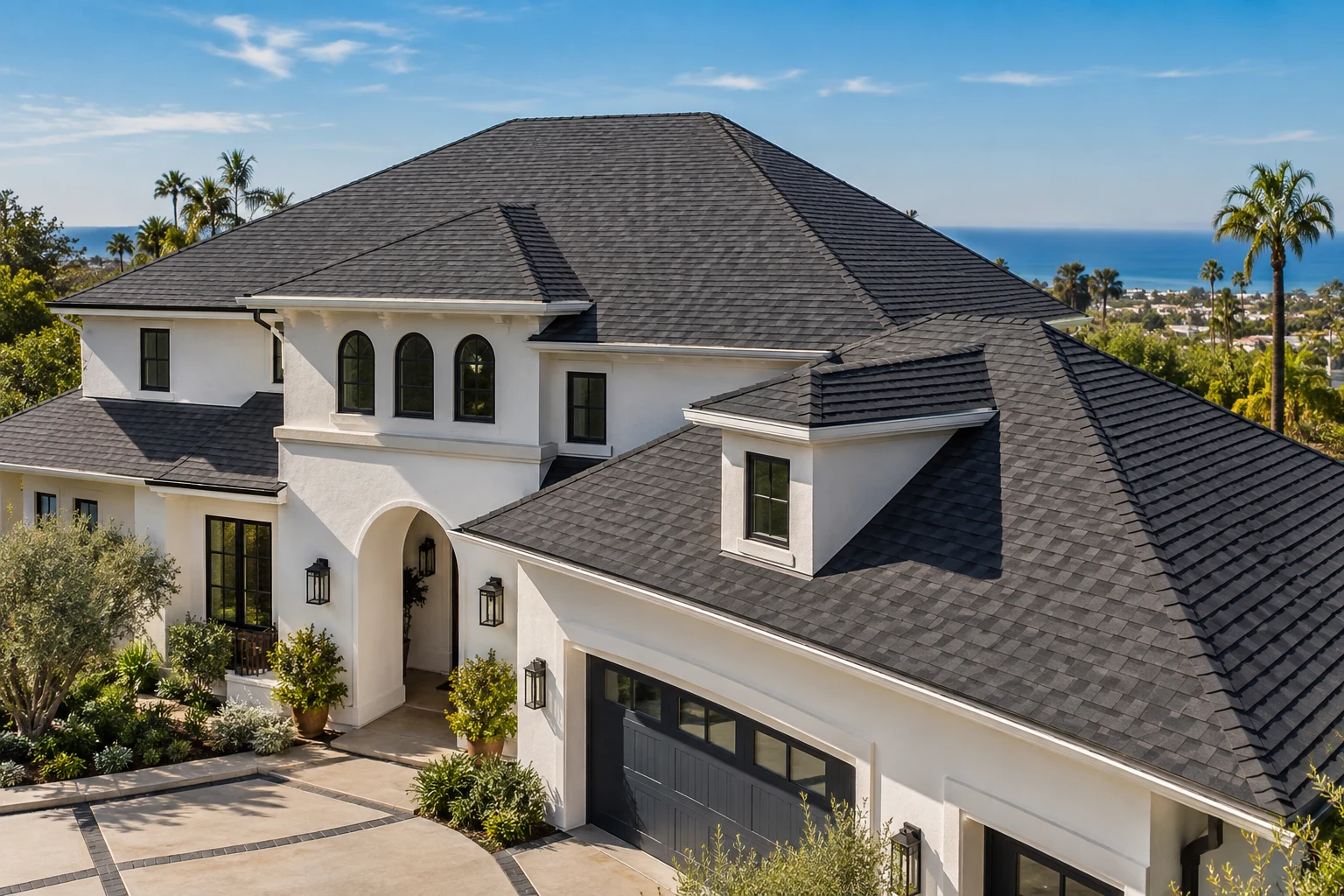
Why Roof Warranty Protection Matters for Your Home
A roof replacement represents one of the largest investments a Southern California homeowner makes. Most residential roofs cost between $8,000 and $25,000 installed, depending on square footage and material choice. That’s why warranty protection isn’t just fine print—it’s your safety net for the next 15, 20, or even 30 years.
Without solid warranty coverage, you’re exposed to two major risks. First, a manufacturing defect in the shingles or tiles can force costly repairs years after installation. Second, poor workmanship during installation can lead to leaks that damage your home’s interior. A comprehensive warranty guards against both scenarios.
Across Southern California’s diverse climate zones—from coastal salt spray in Orange County to intense desert heat in Riverside County—roofs face unique stressors. The right warranty reflects an understanding of these regional challenges and commits the contractor to standing behind their work.
Action: Before scheduling any roof replacement, ask potential contractors what warranty options they offer and request it in writing before signing.
Understanding Manufacturer Warranties: What They Actually Cover
The manufacturer warranty covers defects in the roofing materials themselves. If an Owens Corning shingle develops an unexpected granule loss or a tile develops a crack due to a manufacturing flaw, the manufacturer covers replacement materials.
Here’s the key limitation: manufacturer warranties typically cover materials only, not labor. If a defective shingle needs replacing after 8 years, the manufacturer might supply a new shingle at no cost, but you’ll still pay for the labor to remove the old one and install the replacement. Some premium warranties offer prorated labor coverage, which gradually decreases over time.
Manufacturer warranties vary significantly:
- Standard asphalt shingle warranties: 20-30 years for material defects
- Premium shingle warranties: 30-50 years, sometimes with limited labor coverage
- Tile warranties: Often lifetime for material defects, with strict installation requirements
- Metal roof warranties: 30-50 years depending on coating type
The fine print matters tremendously. Many warranties exclude damage from improper installation, severe weather events, or lack of maintenance. A roof installed incorrectly won’t be covered, which is why workmanship warranty becomes equally important.
Action: Request the full manufacturer warranty document before purchase, not just a summary sheet. Look specifically for what’s excluded and whether labor coverage is prorated.
Workmanship Warranties: The Installation Protection You Need
This is where many homeowners get confused. A manufacturer warranty protects the shingles or tiles—but who protects you if the roofer installs them incorrectly?
The workmanship warranty (also called installation warranty) is your contractor’s promise that the roof was installed to industry standards. It covers problems like improper flashing installation, inadequate ventilation, incorrect nailing patterns, or poor sealing that leads to leaks. This warranty is separate from the manufacturer’s promise about the materials themselves.
Workmanship warranties typically last 5, 10, or 25 years depending on the contractor and their confidence in their work. Higher-quality contractors often offer longer workmanship warranties because they trust their crews and craftsmanship. A contractor offering only a 2-year workmanship warranty should raise a red flag—it suggests limited confidence in their installation standards.
The workmanship warranty is critical in Southern California because our climate extremes put pressure on installation details. Coastal homes deal with wind-driven rain and salt spray. Desert homes experience extreme temperature swings that stress roof joints and seams. A roof installed to minimum standards might hold up in ideal conditions but fail in our regional climate.
Action: Always ask for a written workmanship warranty and verify whether it’s transferable if you sell your home (we’ll cover this further below).
Lifetime Warranty Options: Comparing True Coverage vs Marketing Claims
The term “lifetime warranty” sounds comprehensive, but it requires careful interpretation. A true lifetime warranty on materials means the manufacturer will cover defects for as long as you own the home. However, “lifetime” usually applies only to the first property owner—it often becomes non-transferable after sale, or coverage drops to a limited term for subsequent owners.
Some contractors advertise “lifetime workmanship warranties,” which means they’ll stand behind their installation indefinitely. This is genuinely valuable, but only if the company remains in business and solvent. A contractor operating 50 years ago might not exist today, leaving you with an unenforceable promise.
The reality of “lifetime” warranties includes other limitations:
- Prorated coverage: The warranty value decreases each year, so a claim in year 25 might cover only 10-20% of material costs
- Maintenance requirements: Most warranties require regular maintenance (gutter cleaning, debris removal, repairs)
- Environmental exclusions: Damage from severe storms, hail, or wind may not be covered
- Transferability limits: Second owners might receive only 10-20 year coverage, not true lifetime
Marketing language like “lifetime” isn’t inherently misleading, but it requires verification against the actual policy. A 30-year non-prorated warranty often provides better real-world protection than a “lifetime” warranty with extensive exclusions.
Action: Request the actual warranty document, not marketing materials. Compare the number of years of non-prorated coverage rather than focusing on “lifetime” claims.
How to Verify Your Warranty: What Questions to Ask
When discussing warranty with your roofing contractor, move beyond the basic pitch and ask these specific questions:
Material coverage: Does the warranty cover material defects for the full term, or does it become prorated after year 5? What percentage is covered in years 1, 10, and 20?
Labor inclusion: Does the warranty include labor for repairs, or materials only? If labor is included, is it prorated or full-coverage?
Installation standards: What specific installation standards does the workmanship warranty require? Ask for references to the industry standard (typically NRCA or manufacturer guidelines).
Regional considerations: Have they installed similar roofs in homes like yours facing similar weather conditions? Ask for local references in your county.
Transferability: If you sell, does the warranty fully transfer to the new owner, or does it reduce in scope? Some warranties transfer at full value, others reduce to 50% coverage for subsequent owners.
Company stability: How long has the contractor been in business? Request evidence that they’ve honored warranties for 10+ year claims.
Maintenance requirements: What specific maintenance does the homeowner need to perform to maintain the warranty? How often, and at what cost?
Document all answers in writing. A contractor who hesitates to provide detailed written responses should concern you—reputable installers welcome these questions.
Action: Create a one-page comparison sheet of warranty terms from 2-3 contractors before making your decision.
What All Star Roof Replacement Warranty Protection Includes
We stand behind our work with comprehensive warranty coverage that protects you long-term. As an Owens Corning Preferred Contractor across Southern California, we install premium materials backed by manufacturer protection that regional competitors often don’t emphasize.
Our warranty structure includes:
- Full manufacturer warranty on all Owens Corning asphalt shingles and architectural materials (30-50 years depending on product selection)
- 25-year comprehensive workmanship warranty covering all installation details and labor
- Transferable coverage to subsequent owners at full value (not prorated)
- Coverage for our service area from Los Angeles County through Ventura, Orange, San Bernardino, and Riverside counties
- Clear exclusions and maintenance requirements documented upfront
The 25-year workmanship warranty reflects our confidence in our installation processes. We’ve been operating for 45+ years combined experience, and we’re committed to honoring warranty claims from homeowners installed decades ago. This isn’t marketing—we stand behind our crews’ work because we’ve built them right from day one.
We also offer financing options with flexible terms so warranty coverage doesn’t force you to choose between a roof replacement and your family budget. Our free virtual satellite estimates let you understand your roof’s condition and warranty needs before any commitment.
Action: Schedule your free virtual estimate to understand what warranty options align with your specific home and roof condition.
Warranty Coverage Comparison: Standard vs Premium Options
Different homeowners need different warranty structures. We offer flexibility because one size doesn’t fit all Southern California homes.
Standard coverage suits homeowners planning to stay 10-15 years and want solid protection at a lower price point. This includes 20-year manufacturer material warranty plus our 25-year workmanship warranty. The combination covers manufacturing defects and installation quality throughout most ownership periods.
Premium coverage provides additional peace of mind for homeowners staying long-term or prioritizing maximum protection. This combines a 50-year manufacturer warranty on premium Owens Corning architectural shingles with our full 25-year workmanship warranty. The upgraded materials also include better wind resistance and color retention—meaningful advantages in Southern California’s coastal and desert regions.
The price difference between standard and premium options typically ranges from $1,500 to $3,500 across an average residential roof. That difference pays for itself through superior durability if you’re staying 20+ years. For a 10-year ownership timeline, standard coverage provides excellent protection at lower cost.
Material choice drives much of the warranty difference. Architectural shingles (sometimes called dimensional or laminated shingles) carry longer warranties than 3-tab shingles because they’re thicker and more resistant to weather exposure. Tile roofing offers the longest warranty periods but requires expertise in installation—improper installation voids coverage quickly.
Action: Calculate how long you plan to own your home, then choose standard or premium coverage accordingly. If you’re uncertain, standard coverage is rarely a regrettable choice.
Transferable Warranties: Protecting Your Home’s Resale Value
When you sell your home, the new owner inherits your roof’s remaining warranty period. If your warranty is fully transferable at the same value, it becomes a significant selling point. Buyers pay for homes with transfer protection because they’re reducing their risk.
Many warranties reduce coverage for subsequent owners—dropping to 50% of the original value or shortening the coverage period. This is common in the industry, but it significantly weakens your home’s appeal to buyers. A 25-year workmanship warranty transferable at full value is far more attractive than one that becomes 10 years non-transferable after sale.
Our warranty transfers at full value to subsequent owners. That means if you sell after 8 years with a 25-year workmanship warranty remaining, the new owner receives the full 17 years of remaining coverage at the same terms. This protects your home’s resale value and makes it genuinely more attractive to qualified buyers.
In Southern California’s competitive real estate market, where homes regularly turn over every 7-12 years, warranty transferability matters. Buyers conduct inspections and often ask about warranty status. A strong, fully transferable warranty can justify slightly higher listing prices or close deals that otherwise fall through.
Action: If home resale value matters to you (and for most Southern California homeowners, it does), prioritize contractors offering fully transferable warranties rather than those with ownership restrictions.
Common Warranty Gaps and How to Avoid Them
Smart homeowners know that warranty language creates gaps. Understanding these common exclusions helps you avoid nasty surprises years later.
Storm damage: Most warranties exclude damage from severe weather, hail, high wind, or lightning. This isn’t the contractor’s fault—it’s the manufacturer’s limitation. You’ll need homeowners insurance for weather-related damage, not warranty coverage.
Maintenance neglect: If you don’t clean gutters, remove debris, or perform basic maintenance, the warranty can be voided. This isn’t harsh—standing water or debris accelerates deterioration and isn’t related to manufacturing or installation quality.
Attic ventilation issues: If your attic lacks proper ventilation, shingles deteriorate faster and may not be covered under warranty. Before replacement, we assess ventilation to ensure your new roof gets the foundation it needs.
Existing damage: A new roof warranty doesn’t cover pre-existing leaks or damage from the old roof. A thorough roof inspection upfront prevents confusion later.
Improper repairs: If you hire someone other than the original contractor to repair the roof during the warranty period, it might void coverage. Check your warranty language before booking repairs.
Missing documentation: If you lose your warranty paperwork, enforcement becomes difficult. We provide digital copies to all clients and recommend storing them with home records.
The best way to avoid gaps is requesting the full warranty document, reading it completely, and asking your contractor to explain anything unclear. Don’t rely on summaries or verbal promises. Written documentation protects both you and the contractor by creating clear expectations.
Action: Before signing for roof replacement, request the complete warranty document and review it with someone you trust (spouse, financial advisor, or attorney).
Why All Star Roof Replacement Offers the Most Comprehensive Protection
Our warranty approach reflects our commitment to honest, long-term relationships with homeowners. We don’t hide behind marketing language or confusing exclusions.
Here’s what distinguishes our coverage across Southern California:
We’re an Owens Corning Preferred Contractor, which means we meet strict installation standards and get early access to new materials. This partnership ensures the materials we use carry full manufacturer backing without asterisks. We don’t install questionable materials to save money—our reputation depends on quality.
Our 25-year workmanship warranty is fully written and transferable. We don’t reduce coverage for subsequent owners. We’ve been in business over 45 years combined and we’re committed to honoring warranty claims. That’s not a promise we make lightly—we’ve seen contractors disappear or deny claims. We won’t do that.
We perform thorough pre-installation assessments. Before your new roof goes on, we evaluate attic ventilation, structural soundness, and regional climate factors specific to your location. This prevents warranty gaps caused by hidden pre-existing conditions.
We explain every option upfront without pressure. Our free virtual satellite estimates show you exactly what your roof needs, what materials are available, and what each warranty level costs. You decide without surprises later.
We offer flexible financing with $0 down, which means cost shouldn’t force you to choose inadequate warranty coverage. Whether you choose standard or premium protection, you can afford it through payment plans designed for homeowners.
Action: Schedule your free estimate today to see how our comprehensive warranty structure protects your specific home.
Choosing Your Warranty: Selection Guide for Southern California Homeowners
The right warranty depends on your specific situation. Use these criteria to guide your decision:
Ownership timeline: If you’re staying 20+ years, premium coverage with a 50-year manufacturer warranty makes sense. For 7-12 year ownership, standard coverage provides excellent protection at lower cost.
Climate exposure: Homes in coastal Orange County and Ventura County deal with salt spray and wind-driven rain—invest in premium materials and longer warranties. Desert homes in Riverside and San Bernardino counties face extreme heat—architectural shingles with superior color retention justify the premium. Los Angeles County properties experience variable conditions across microclimates, so assess your specific neighborhood.
Budget constraints: Don’t stretch financially just for a longer warranty. Standard coverage protects you adequately, and no warranty is worth financial stress. Our financing options help bridge the gap without forcing poor choices.
Resale intentions: If you plan to sell within 15 years, transferability matters enormously. A fully transferable warranty becomes a selling feature that pays for itself through higher home value or faster sale.
Material preference: Architectural shingles offer longer warranties than 3-tab shingles, and tile offers the longest terms but requires expert installation. Your material preference naturally drives warranty length.
Contractor reputation: The strongest warranty means nothing from a contractor who disappears or denies claims. Work with established contractors (10+ years in business) with verifiable references. Ask whether they’ve honored 10+ year warranty claims.
Southern California homeowners deserve straightforward warranty protection without confusion. You’re making a long-term investment in your home’s protection and value. We make warranty selection simple: choose standard coverage if you’re budget-conscious or selling within 15 years, or choose premium coverage if you’re staying long-term and want maximum protection. Either way, our 25-year transferable workmanship warranty and Owens Corning partnership ensure you’re protected.
Action: Contact us for your free virtual estimate. We’ll assess your roof, explain your warranty options in detail, and help you choose the protection that matches your Southern California home’s needs and your timeline.
Request a Free Roof Estimate If you’re considering roof replacement for your home, starting with a virtual estimate allows you to gather information without pressure. It’s a practical way to understand scope, cost, and options before scheduling an on-site visit. Call (310) 729-3013 or visit https://teamallstarconstruction.com/contact/
Frequently Asked Questions (FAQ)
What’s the difference between a manufacturer warranty and workmanship warranty?
We provide both types of protection because they cover different things. Our manufacturer warranty through Owens Corning covers defects in the roofing materials themselves, while our workmanship warranty protects you against installation errors we might make. Together, they give you complete peace of mind that your roof is protected from material failures and installation mistakes.
How do we verify that our lifetime warranties are legitimate?
We’re transparent about what “lifetime” actually means on our roofs. Our warranties are backed by Owens Corning, and we encourage you to ask us specific questions about coverage limits, exclusions, and what exactly is covered before you sign. We can provide you with detailed warranty documentation and answer any concerns you have so you know exactly what protection you’re getting.
Are All Star Roof Replacement’s warranties transferable if I sell my home?
Yes, we offer transferable warranties on many of our roof replacement options, which protects your home’s resale value. This means the next homeowner gets coverage benefits too, which is a major selling point when you list your property. We’ll discuss which warranty options are transferable during your free satellite estimate.