Introduction: Why Choosing the Right Roofing Material Matters More in Southern California
Selecting the Best Roofing Materials for Southern California Homes (2026 Guide) is not just a design decision—it’s a long-term investment that affects your home’s durability, energy efficiency, and overall cost of ownership.
Unlike other regions, Southern California presents unique environmental challenges. Constant sun exposure, high temperatures, occasional heavy rains, and even wildfire risks all play a role in how well your roof performs over time.
Many homeowners make the mistake of choosing roofing materials based only on upfront cost. While this may seem practical at first, it often leads to higher long-term expenses due to repairs, energy inefficiency, and premature replacement.
A well-chosen roofing system, on the other hand, can last decades, reduce your energy bills, and increase your property value. This guide will walk you through the best roofing materials available in 2026, helping you make an informed decision based on performance—not just price.
What Makes Southern California Roofing Unique?
Extreme Heat and UV Exposure
Southern California is known for its sunny climate—but that sunshine comes at a cost. UV rays continuously break down roofing materials, causing them to crack, dry out, and weaken over time.
This means materials that perform well in cooler climates may fail much faster in this region.
Thermal Expansion and Contraction
Daily temperature fluctuations cause roofing materials to expand during the day and contract at night. Over time, this repeated movement can lead to cracks, gaps, and structural wear.
Coastal and Environmental Conditions
Homes near the coast face salt air exposure, which can accelerate corrosion in certain materials. Inland areas may experience more intense heat, while hillside regions may face higher wind exposure.
Wildfire Risks and Building Regulations
In many parts of Southern California, wildfire resistance is a critical factor. Certain materials, like untreated wood shakes, may not meet modern fire safety standards.
Additionally, California’s Title 24 energy codes require roofing systems to meet specific efficiency standards, making material choice even more important.
Overview of the Best Roofing Materials
The best roofing materials for Southern California homes typically fall into these categories:
- Asphalt shingles
- Clay and concrete tiles
- Metal roofing
- Cool roof systems
- Flat roofing membranes
Each material offers a different balance of cost, durability, and performance.
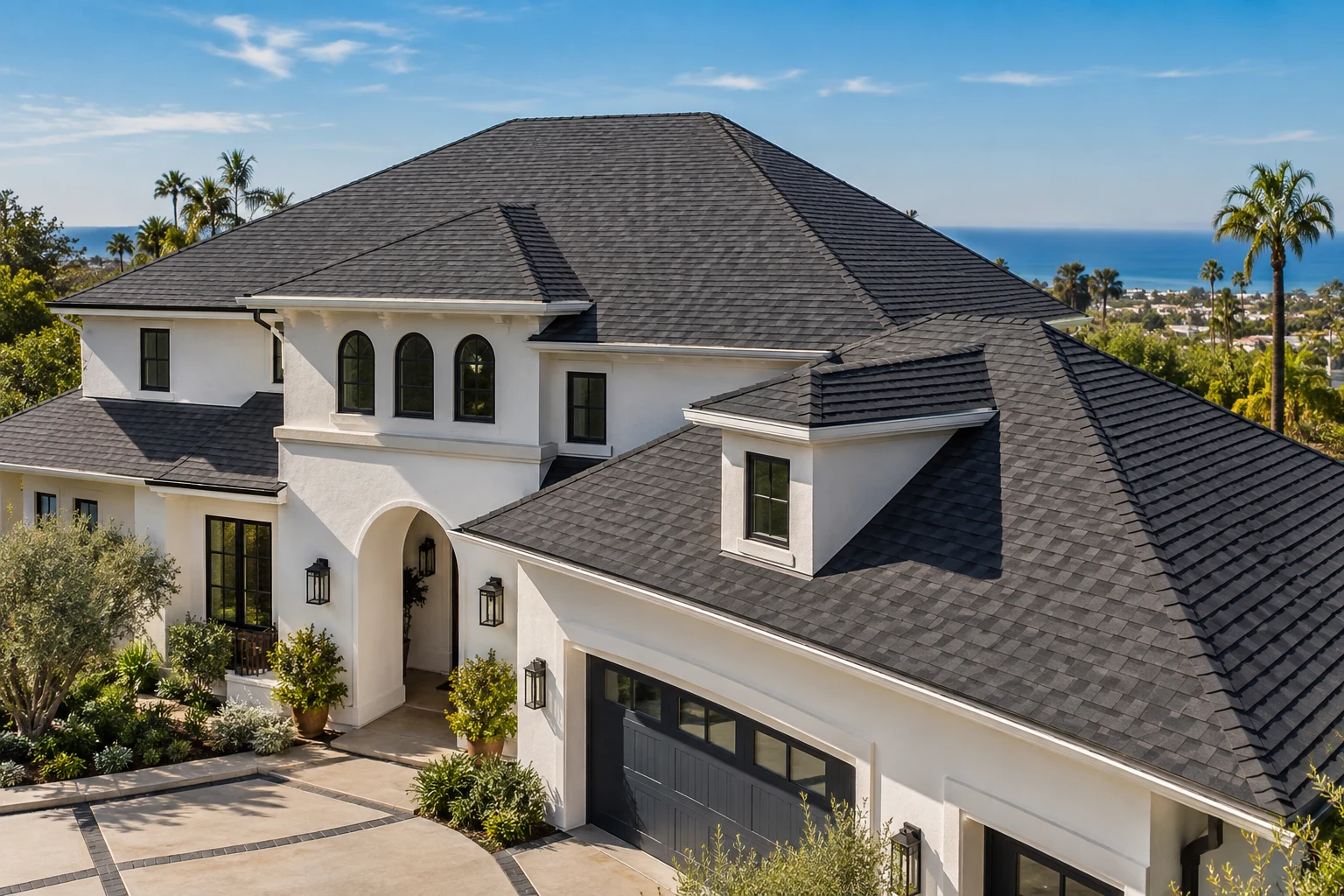
Southern California homes feature a wide range of roofing materials, each designed to handle heat, sun exposure, and long-term performance.
Asphalt Shingles: Affordable and Widely Used
Asphalt shingles remain one of the most popular roofing materials due to their affordability and accessibility.
Advantages
- Lower upfront cost
- Easy installation
- Wide range of styles and colors
- Simple repair process
Limitations in Southern California
While asphalt shingles are cost-effective, they tend to wear out faster in hot climates. Prolonged sun exposure can cause them to become brittle, leading to cracking and reduced lifespan.
In Southern California, their lifespan often falls on the lower end of the typical 15–25 year range.
Asphalt shingles are one of the most affordable roofing options, commonly used in Southern California for their versatility and ease of installation.
Clay and Concrete Tile Roofing: A California Staple
Tile roofing is one of the most recognizable and widely used options in Southern California.
Why Tile Roofs Are So Popular
- Exceptional durability
- Excellent heat resistance
- Long lifespan (30–50+ years)
- Strong resistance to UV damage
Important Considerations
Tile roofs are significantly heavier than other materials. This means your home must have the structural support required to handle the load.
Additionally, installation requires specialized expertise. Improper installation can lead to broken tiles, leaks, or reduced performance.
Clay and concrete tile roofs are a popular choice in Southern California due to their durability, heat resistance, and long lifespan.
Metal Roofing: Modern Performance and Longevity
Metal roofing is becoming increasingly popular among homeowners looking for long-term value.
Key Benefits
- Lifespan of 40+ years
- Reflects solar heat, improving energy efficiency
- Lightweight compared to tile
- Resistant to cracking and warping
Potential Drawbacks
- Higher upfront cost
- May require insulation for noise reduction
- Aesthetic may not suit all home styles
Metal roofing systems offer long-term durability and energy efficiency, making them an increasingly popular option for modern homes.
Cool Roof Systems: Energy Efficiency at Its Best
Cool roofing systems are specifically designed to reflect more sunlight and absorb less heat than traditional materials.
Why Cool Roofs Matter in Southern California
With rising energy costs, cool roofs offer a practical solution for reducing indoor temperatures and lowering utility bills.
Title 24 Compliance Explained
California’s Title 24 regulations require certain roofing systems to meet energy efficiency standards.
Cool roofs help:
- Reduce heat transfer
- Improve indoor comfort
- Lower air conditioning usage
This makes them one of the smartest long-term investments for homeowners.
Cool roof systems are designed to reflect sunlight and reduce heat absorption, helping homeowners lower energy costs in Southern California.
Flat Roof Materials: Best for Low-Slope Homes
Homes with flat or low-slope roofs require specialized materials.
Top Options
- TPO (Thermoplastic Polyolefin): Energy-efficient and cost-effective
- PVC Roofing: Highly durable and resistant to chemicals
- Modified Bitumen: Traditional and reliable
Performance Considerations
Flat roofs must be carefully installed to ensure proper drainage. Poor installation can lead to water pooling and leaks.
Flat roofing systems like TPO and PVC are commonly used on low-slope homes, offering durability and energy efficiency.
Wood Shake Roofing: Is It Still a Viable Option?
Wood shake roofs offer a natural and rustic appearance, but they come with significant drawbacks.
Major Concerns
- High fire risk
- Increased maintenance
- Limited compliance in fire-prone areas
Due to wildfire regulations in California, wood roofing is often restricted or discouraged.
Wood shake roofs provide a natural look but require careful consideration in Southern California due to fire risk and maintenance needs.
Cost Comparison of Roofing Materials in Southern California
Material | Cost Range | Lifespan | Maintenance
--- | --- | --- | ---
Asphalt Shingles | Low | 15–25 years | Moderate
Tile Roofing | Medium–High | 30–50+ years | Low
Metal Roofing | High | 40+ years | Low
Cool Roof Systems | Medium–High | 20–40 years | Low
Flat Roof Systems | Medium | 15–30 years | Moderate
Lifespan vs Long-Term Value
Choosing a roofing material isn’t just about upfront cost—it’s about long-term value.
A cheaper material that needs replacement sooner may end up costing more over time than a higher-quality option with a longer lifespan.
How to Choose the Right Roofing Material for Your Home
When selecting the best roofing material, consider:
- Your budget
- Climate exposure
- Roof structure and slope
- Energy efficiency goals
- Long-term maintenance expectations
Comparing roofing materials side-by-side helps homeowners understand differences in durability, cost, and performance.
Common Mistakes Homeowners Make
Many homeowners make avoidable mistakes when choosing roofing materials:
- Prioritizing price over performance
- Ignoring local climate conditions
- Overlooking ventilation needs
- Choosing materials without considering lifespan
FAQs About Roofing Materials in Southern California
What is the best roofing material for hot climates?
Tile and cool roofing systems perform best due to their heat resistance.
Are asphalt shingles a good choice?
They are affordable but may not last as long in extreme heat.
What roofing material lasts the longest?
Tile and metal roofing offer the longest lifespans.
Do cool roofs really reduce energy costs?
Yes, they significantly lower heat absorption and cooling expenses.
Is metal roofing worth the cost?
For long-term durability and efficiency, many homeowners find it worthwhile.
How do I choose the best option?
Consider long-term value, not just initial cost.
Conclusion: Making the Best Long-Term Investment
Choosing the Best Roofing Materials for Southern California Homes (2026 Guide) is about more than just aesthetics or upfront pricing—it’s about performance, durability, and long-term savings.
A well-designed roofing system protects your home, improves energy efficiency, and provides peace of mind for years to come.
Taking the time to evaluate your options now can prevent costly mistakes and ensure you make the right investment for your home.
Choosing the right roofing material often involves evaluating multiple options with a professional based on your home’s needs.
Get Clarity on the Best Roofing Option for Your Home
Choosing between different roofing materials can feel overwhelming—especially when every home has different needs, budgets, and long-term goals.
For a deeper breakdown of the full process, costs, and timelines, you can also explore our complete guide on roof replacement Southern California.
If you’re unsure which option makes the most sense for your situation, taking the next step doesn’t have to be complicated.
You can start with a free virtual satellite estimate to better understand:
- What roofing material fits your home
- Estimated cost range based on your roof
- Potential performance and lifespan
- What to expect before starting a project
There’s no need for an on-site visit or commitment—just a simple way to get clear, useful information.