
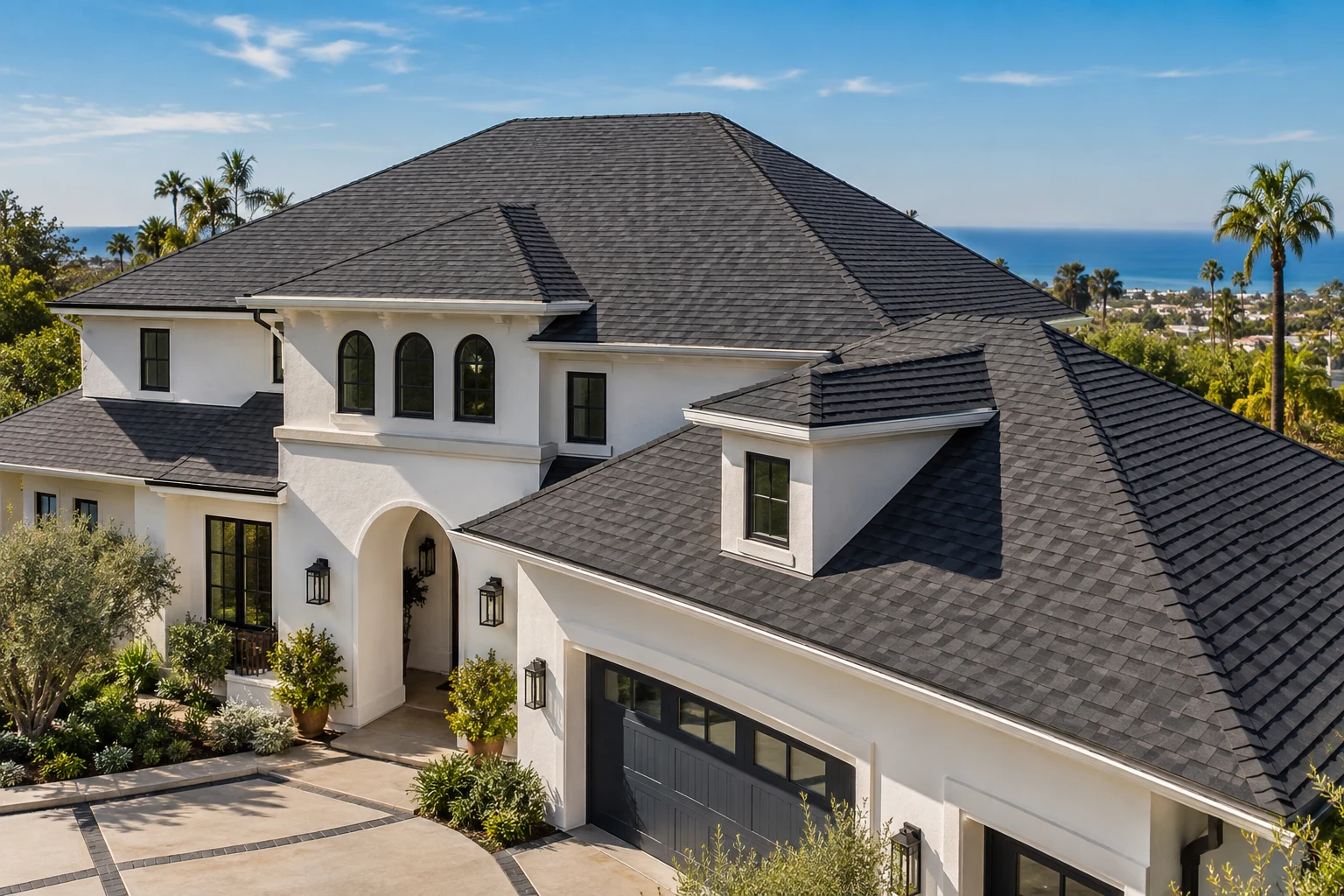
How Rising Heat Costs Are Draining Your Wallet
Southern California’s climate is brutal on roofs. Summers push temperatures well over 100 degrees, and your air conditioning system works overtime just to keep your home livable. If you’ve noticed your electricity bills climbing year after year, your roof might be part of the problem. Most standard roofing materials absorb heat rather than reflect it, which means your home’s interior temperature rises significantly, forcing your cooling system to run harder and longer than necessary.
We’ve worked with thousands of homeowners across Los Angeles, Orange, San Bernardino, Riverside, and Ventura counties who discovered that upgrading to cool roof materials cut their energy costs dramatically. The solution isn’t complicated, but it requires understanding how reflective roofing works and whether it’s right for your property.
Your roof absorbs solar radiation all day long. Standard asphalt shingles are dark colored and have a low solar reflectance rating, which means they absorb much of that heat instead of bouncing it away. This absorbed heat radiates downward into your attic and living spaces, raising indoor temperatures by 10 to 15 degrees on hot days. Your air conditioning system then has to work much harder to maintain comfortable temperatures.
For homeowners in Southern California, this translates to real money. During peak summer months, air conditioning can account for 40 to 60 percent of your total electricity bill. If your roof is dark and heat-absorbing, you’re essentially paying premium rates to fight your own roof every single day.
The financial impact compounds over time. A home with an older, dark roof might spend an extra $800 to $1,500 annually on cooling costs compared to a home with reflective roofing. Over a roof’s 20 to 30 year lifespan, that’s tens of thousands of dollars in unnecessary energy waste. Many homeowners don’t realize that their aging roof is sabotaging their utility bills until they get a quote for a replacement.
What Makes Cool Roofing Different from Standard Roofing
Cool roofing materials are engineered to reflect sunlight and emit absorbed heat more efficiently than conventional roofing. The key difference lies in their solar reflectance (how much sunlight they bounce back) and thermal emittance (how quickly they release heat they do absorb).
Standard asphalt shingles typically have a solar reflectance of 0.05 to 0.15, meaning they reflect only 5 to 15 percent of sunlight. Cool roof materials can achieve reflectance ratings of 0.65 or higher, meaning they bounce back 65 percent or more of that solar energy. That difference directly translates to lower surface temperatures and cooler attics.
Beyond the material science, cool roofs change how your entire home performs thermally. Your attic stays cooler, which reduces the thermal burden on your living spaces below. Your air conditioning system doesn’t have to work as hard, which extends its lifespan and reduces wear on compressors and other expensive components. The cumulative effect is lower energy consumption, lower bills, and a more comfortable home during the hottest parts of the year.
Understanding Reflective Coatings and How They Work
Reflective coatings are applied to roofing surfaces to enhance their solar reflectance properties. These coatings contain reflective pigments and binders that create a light-colored, durable finish. When sunlight hits the coating, those reflective pigments bounce much of it back into the atmosphere rather than allowing it to be absorbed and converted into heat.
The physics is straightforward: light-colored surfaces reflect light, dark surfaces absorb it. Cool roof coatings leverage this principle with specialized formulations designed to withstand harsh UV exposure, temperature cycling, and weather degradation over many years.
There are several types of reflective coatings used in residential roofing:
- Acrylic-based coatings are water-based, eco-friendly, and typically cost less, but they may require more frequent reapplication
- Silicone-based coatings offer excellent durability and water resistance, making them ideal for areas with heavy rain or moisture
- Polyurethane-based coatings provide superior impact resistance and flexibility, useful for homes in high-wind regions
When we apply reflective coatings, they typically add 0.2 to 0.3 inches to your roof surface. The application process is straightforward for our installation teams, and the coatings can be applied over existing roofing materials or as part of a full roof replacement project.
Asphalt Shingles vs. Reflective Tile Roofing for California Homes
Both material options can incorporate cool roofing technology, but they differ significantly in cost, appearance, and longevity.
Reflective asphalt shingles are the most affordable option for cool roof upgrades. They use light-colored asphalt formulations or reflective coatings applied to standard shingle profiles. Costs typically range from $8 to $12 per square foot installed. Reflective asphalt shingles maintain the traditional look many homeowners prefer and are compatible with most roof structures.
However, standard asphalt shingles have a lifespan of 20 to 25 years, and their reflective properties can diminish over time as the surface ages and accumulates dust or debris.
Reflective tile roofing offers superior durability and maintains reflectance properties longer. Tile comes in light-colored clay or concrete options that naturally reflect heat effectively. Installation costs range from $15 to $25 per square foot, but tile roofs last 40 to 50 years or longer. Tile is heavier and requires proper structural support, which sometimes necessitates additional reinforcement.
The aesthetic appeal is exceptional, and tile works beautifully in Mediterranean, Spanish, and contemporary home designs common throughout Southern California.
For most Southern California homeowners, the choice comes down to budget and long-term plans. If you’re planning to stay in your home for 20+ years and want the absolute best reflective performance with minimal maintenance, reflective tile roofing is the stronger investment. If you want immediate energy savings at a lower upfront cost, reflective asphalt shingles deliver solid performance and reasonable longevity.
Energy Savings You Can Expect with Cool Roof Installation
Real-world energy savings depend on several factors: your home’s size, insulation levels, current cooling system efficiency, local climate patterns, and your personal temperature preferences. However, research and our own customer data show consistent patterns.
A typical 2,000 square foot home in Southern California can expect to reduce cooling costs by 10 to 30 percent with a cool roof installation. For many homeowners, that means $1,000 to $2,000 in annual savings during hot years. Savings tend to be highest in inland areas like San Bernardino, Riverside, and the desert communities where summer temperatures regularly exceed 105 degrees.
Coastal areas like Los Angeles, Orange County, and Ventura County typically see more modest savings (10 to 15 percent) because ocean breezes moderate daytime temperatures. Homes with good attic insulation see greater savings than homes with poor insulation, since the reflective roof prevents heat from entering the attic in the first place.
Your specific savings can be estimated during our free satellite assessment. We’ll look at your roof’s square footage, orientation, current material, and your local climate zone to project realistic energy reductions and calculate payback periods. Many homeowners see their cool roof investment paid for within 8 to 12 years through energy savings alone.
Why All Star Roof Replacement Specializes in Cool Roof Solutions
We focus on cool roof materials because we understand Southern California’s climate demands. Our team has over 45 years of combined roofing experience, and we’ve watched energy costs rise while traditional roofing materials continue to absorb more and more heat. We’re an Owens Corning Preferred Contractor, which means we’ve been vetted and trained on the latest energy-efficient roofing technologies and installation best practices.
Our approach is practical. We don’t oversell cool roofs to every customer, but for homeowners experiencing high cooling costs or planning a long-term residence in Southern California, cool roofing makes financial and environmental sense. We use premium reflective asphalt shingles and light-colored tile options that are proven to perform in our region’s extreme heat.
We also leverage satellite technology to assess your roof before installation. Our free virtual estimates use advanced imagery to measure square footage accurately, identify potential structural issues, and present financing options upfront. This technology eliminates guesswork and gives you confidence in pricing before work begins.
The Lifespan and Durability of Reflective Roofing Materials
Reflective coatings maintain their effectiveness for varying periods depending on the product quality and environmental conditions. Premium acrylic coatings last 10 to 15 years before reflectance begins to degrade noticeably. Silicone and polyurethane coatings perform better, often lasting 15 to 20 years with minimal reflectance loss.
Reflective asphalt shingles follow standard shingle lifespans of 20 to 25 years, though the reflective properties may fade slightly in the final years. Quality matters here; we recommend shingles from manufacturers like Owens Corning that have tested their reflective formulations rigorously.
Reflective tile roofing is the durability champion. Clay and concrete tile maintain their reflective properties throughout their lifespan because the material itself is light-colored, not just coated. A quality tile roof installed properly will last 40 to 50 years, and the reflectance properties remain essentially unchanged across decades.
All roofing materials benefit from regular maintenance. Keeping your roof clean (removing debris, moss, or algae growth) helps preserve reflectance and extends lifespan. Most homeowners should have their roof inspected annually and cleaned every 2 to 3 years if debris accumulates.
Financing Your Cool Roof Upgrade with Zero Down Options
We know a roof replacement is a significant investment, even when energy savings will eventually recoup the cost. That’s why we offer flexible financing options with zero down payment required. You can upgrade to cool roofing materials and start saving on energy costs immediately without draining your savings account.
Our financing programs include:
- Zero down payment options to spread costs over manageable monthly installments
- Flexible terms ranging from 24 to 120 months depending on your financial situation
- No prepayment penalties if you want to pay off your roof early
- Competitive interest rates through established lending partners
For new projects completed in 2026, do not budget for the former federal homeowner energy credits under Sections 25C or 25D; eligibility ended after December 31, 2025. Check current utility or manufacturer offers for your exact address, product, installation date, and available funding.
The key insight is this: your monthly roof payment might be lower than your current monthly savings on cooling costs. That means upgrading to a cool roof could effectively pay for itself while improving your comfort.
Getting Your Free Virtual Satellite Estimate Today
The first step is understanding your current roof’s condition and your potential energy savings. We provide free virtual roof estimates using satellite imagery and thermal analysis. No contractors knocking on doors, no pushy sales pitches, just accurate data about your roof and realistic savings projections.
To request your estimate, visit our website or call our team. We serve all of Southern California, including Los Angeles County, Orange County, San Bernardino County, Riverside County, and Ventura County. If you’re in a specific area like Los Angeles County, we have detailed local knowledge about climate patterns and what works best in your neighborhoods.
After we assess your roof, we’ll present clear financing options and explain the trade-offs between reflective asphalt shingles and reflective tile roofing. You’ll have all the information needed to make an informed decision about whether a cool roof upgrade is right for you and your family.
Your roof doesn’t have to work against your wallet. Cool roofing materials and reflective coatings represent proven technology that reduces energy waste while keeping your home comfortable. Take the first step today with a free estimate and discover how much you could save.
Request a Free Roof Estimate If you’re considering roof replacement for your home, starting with a virtual estimate allows you to gather information without pressure. It’s a practical way to understand scope, cost, and options before scheduling an on-site visit. Call (310) 729-3013 or visit https://teamallstarconstruction.com/contact/
Frequently Asked Questions (FAQ)
How much can I save on energy costs with a cool roof?
We typically see our Southern California customers reduce their cooling costs by 10-30% annually, depending on their current roof color, local climate zone, and air conditioning usage patterns. The exact savings depend on factors like your home’s size, insulation, and how much direct sun exposure your roof receives throughout the day. We recommend scheduling a free virtual satellite estimate with us so we can analyze your specific property and provide a personalized projection.
What’s the difference between reflective coatings and cool roof shingles?
We apply reflective coatings as an overlay to your existing roof to boost its ability to reflect sunlight, while cool roof shingles are replacement materials engineered with reflective pigments built into the product itself. Reflective coatings work well for extending an older roof’s life, whereas cool shingles or tiles offer superior long-term performance and durability since the reflectivity is integral to the material.
Both options deliver measurable energy savings, and we can help determine which solution makes the most sense for your roof’s current condition and your budget.
Do reflective roofing materials really last as long as standard roofs?
Yes, our premium cool roof materials from manufacturers like Owens Corning actually match or exceed the lifespan of standard roofing products. We back our installations with lifetime warranty options, meaning we stand behind the durability of both the materials and our workmanship. The reflective properties remain effective for the entire life of the roof, so you won’t lose energy efficiency over time.