
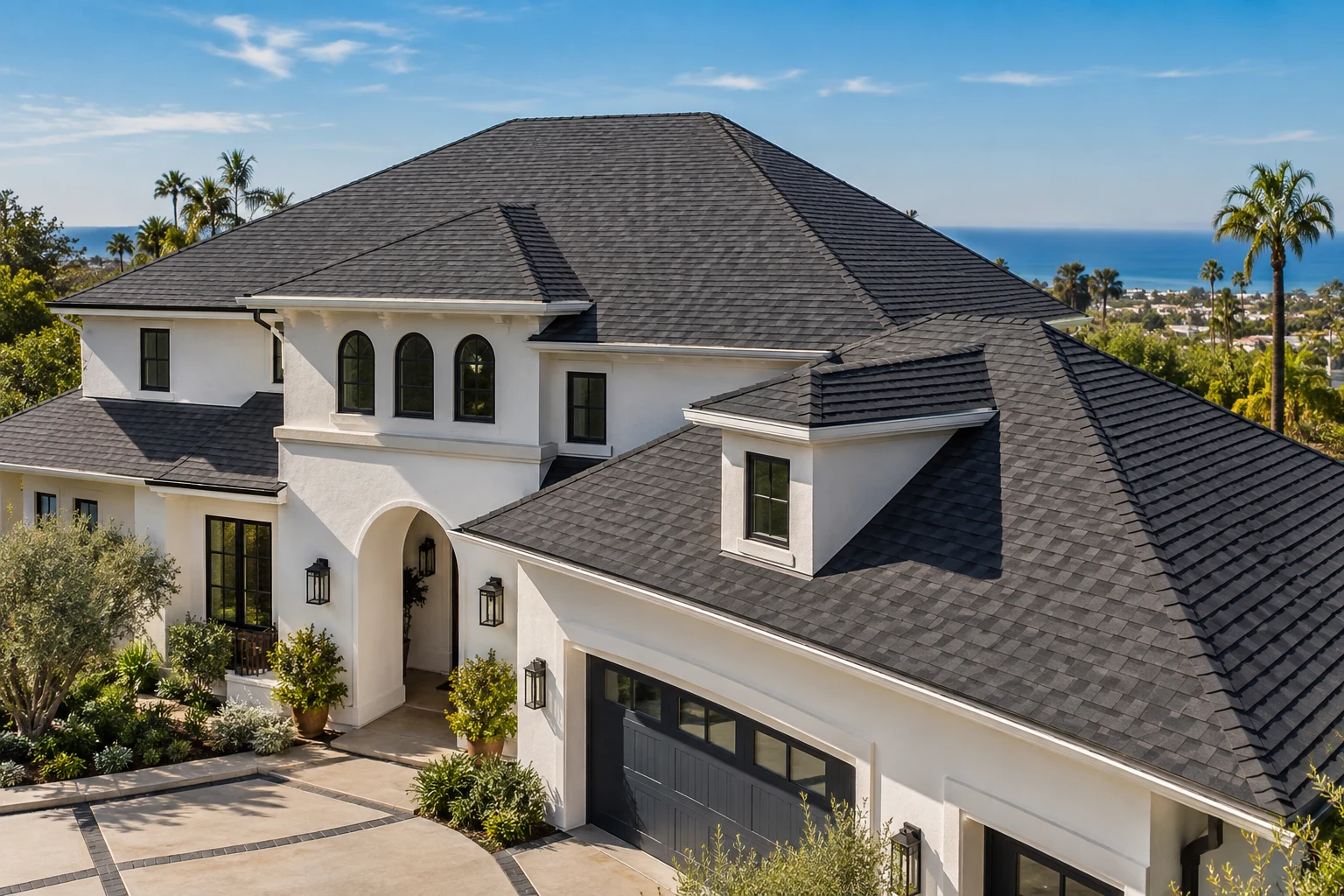
Compare cool roof vs standard options for Southern California homes. Learn costs, energy savings, lifespan, and which roof makes sense.
A roof that looks fine from the street can behave very differently once the afternoon sun hits it. For Southern California homeowners, the real question in a roof replacement is often not just material or color – it is cool roof vs standard, and how that choice affects indoor comfort, energy use, and long-term value.
If you are replacing an aging roof in Los Angeles, Orange, Riverside, San Bernardino, or Ventura County, this decision matters more than many homeowners expect. Hot summers, strong UV exposure, and rising utility costs can make the wrong roofing system feel expensive long after installation day.
Cool roof vs standard: what is the difference?
The simplest way to understand a cool roof is that it reflects more sunlight and absorbs less heat than a standard roof. A standard roof, depending on the material and color, tends to retain more solar heat. That extra heat transfers into the attic and, over time, into the living space below.
A cool roof is not one single product. It is a roofing system designed to improve solar reflectance and thermal emittance. In plain terms, it is built to send more heat away instead of storing it. You can find cool roof performance in several residential systems, including certain asphalt shingles, tile products, and some flat roofing materials.
Standard roofs are not necessarily poor roofs. In many cases, they still provide solid weather protection and good lifespan. The difference is that a standard roof may not offer the same energy performance under Southern California sun, especially on homes with older attic ventilation or limited insulation.
Why this matters more in Southern California
In cooler parts of the country, homeowners sometimes prioritize winter heat retention. That is not usually the main concern here. Across much of Southern California, long periods of sun exposure place more pressure on the roofing system to manage heat gain.
That is why cool roof requirements and energy-efficiency standards come up often during residential reroofing projects. A home in Pasadena, Riverside, Anaheim, or Thousand Oaks can experience significant roof surface temperature differences depending on the material and color selected. In practical terms, that can affect attic temperatures, HVAC workload, and how comfortable second-story rooms feel late in the day.
This is also where experienced guidance matters. Homeowners are not just choosing a color they like. They are choosing how the roof system performs over the next 20 to 30 years.
Energy savings: real, but not identical for every home
The biggest reason homeowners ask about cool roof vs standard options is energy savings. A cool roof can reduce heat absorption, which may lower cooling demand. That is the headline benefit, and for many homes it is meaningful.
But energy savings are not automatic or equal across every property. A one-story home with good attic ventilation, decent insulation, and heavy shade trees may see a different result than a two-story home with direct sun exposure and older ventilation design. Roof pitch, material type, attic assembly, duct placement, and even window efficiency all influence the final outcome.
That is why honest roofing advice should include some nuance. A cool roof can absolutely help reduce heat gain, but it works best as part of a complete roofing system. If a homeowner expects dramatic utility bill drops from reflectivity alone, that expectation may be too aggressive.
Cost differences between cool and standard roofing
In many cases, a cool roof costs more upfront than a standard option, but not always by a huge margin. The difference depends on the material you choose, the size and complexity of the roof, local code requirements, and whether the project includes upgraded underlayment, ventilation improvements, or deck repairs discovered during tear-off.
For example, some cool-rated shingles or tile products may carry a moderate premium over standard versions. Flat roofing systems can also vary depending on insulation and membrane selection. What matters is whether that upfront cost produces value over time through lower cooling demand, code compliance, better comfort, and stronger resale appeal.
This is where a full replacement estimate matters more than a generic online price range. The right comparison is not cool roof product versus standard product in isolation. It is complete roof system versus complete roof system.
Cool roof vs standard for asphalt shingles, tile, and flat roofs
Not every roofing category handles heat the same way.
For asphalt shingles, cool roof versions are available in select colors and product lines. These can be a smart middle ground for homeowners who want the familiar appearance and lower relative cost of shingles while improving energy performance. On many Southern California homes, that makes cool-rated shingles an appealing option.
Concrete and clay tile already offer some natural thermal advantages because of the air space created by the profile and installation method. Even so, cool-rated tile colors can improve reflectivity further. For homeowners replacing older tile roofs, this can be worth considering if energy efficiency is a priority alongside appearance.
Flat and low-slope residential roofs often show some of the clearest cool roof benefits because they receive direct sun over a broad surface area. In these systems, reflective membranes can significantly reduce heat absorption compared with darker standard surfaces.
The right answer depends on the home, not just the product category. A roofing contractor focused on full residential replacement should be able to explain how the entire system performs, not just hand over a brochure.
Appearance and curb appeal considerations
Years ago, some homeowners avoided cool roofs because they assumed the look would be limited or overly bright. That concern is less common today. Manufacturers now offer more color choices and more residential-friendly styles than they did in the past.
Even so, there can still be trade-offs. If you want a very dark roof for a specific architectural look, your cool roof options may be narrower. Some homeowners prioritize aesthetics over maximum reflectivity, and that is a valid decision as long as they understand the performance difference.
For many single-family homes, there is a workable balance between curb appeal and energy efficiency. The best choice is usually one that complements the home while still delivering practical heat performance for the climate.
Lifespan and maintenance expectations
A cool roof is not automatically longer-lasting than a standard roof. Lifespan depends heavily on material quality, installation standards, attic ventilation, underlayment, and local weather exposure. A poorly installed cool roof will not outperform a properly installed standard roof over the long term.
That said, reducing heat stress on the roofing assembly can support better overall performance in some conditions. Excessive heat can contribute to aging over time, particularly when combined with UV exposure. This is one reason system design and manufacturer-backed product selection matter.
Homeowners should also remember that replacement quality matters as much as product type. Choosing a licensed, insured residential roofing contractor with a clear installation process is often more important than chasing a single product label.
When a cool roof makes the most sense
A cool roof is often a strong fit for homes with heavy sun exposure, higher summer cooling costs, warmer inland locations, or second-story rooms that tend to overheat. It also makes sense for homeowners planning to stay in the home long enough to benefit from improved comfort and potential energy savings.
It can be especially worthwhile when the roof replacement already involves a full system upgrade. If you are investing in new underlayment, ventilation, and long-term protection, adding cool roof performance may be a smart step rather than an unnecessary extra.
For homeowners preparing for solar, a cooler attic environment can also support overall home efficiency planning, even though the roof itself still needs to be evaluated as a full assembly.
When a standard roof may still be the right choice
A standard roof can still be the better fit when budget is the primary concern, when the home already performs well thermally, or when appearance goals limit the available cool-rated options. Some homeowners simply want a reliable replacement using proven materials and workmanship without optimizing every efficiency variable.
That is a reasonable position as long as the choice is informed. A standard roof is not a mistake. It just may not offer the same heat-reflective performance, which matters more on some homes than others.
This is why transparent consultation matters. A trustworthy contractor should explain where a cool roof likely delivers value and where the difference may be modest.
Making the right replacement decision
The best cool roof vs standard decision usually comes down to three things: your climate exposure, your home’s existing ventilation and insulation conditions, and how long you plan to own the property. Product labels alone do not tell the full story.
At All Star Roof Replacement, the residential roofing division of Team All Star Construction, CSLB #1009760, this is the kind of decision homeowners should be guided through carefully. A complete roof replacement is a long-term investment, and the most useful estimate is one that explains system options clearly, not one that pushes a one-size-fits-all answer.
If your current roof is nearing the end of its life, this is a good time to think beyond color and price alone. The right roof should protect your home, fit your budget, and make daily life inside the house feel a little better every summer afternoon.