
If your AC seems to run longer than it should—or your home still feels warm even after hours of cooling—it’s easy to assume the system is the problem.
In many cases, it isn’t.
Your AC may be doing exactly what it’s supposed to do.
The issue is what it’s working against.
And one of the biggest factors is your roof.
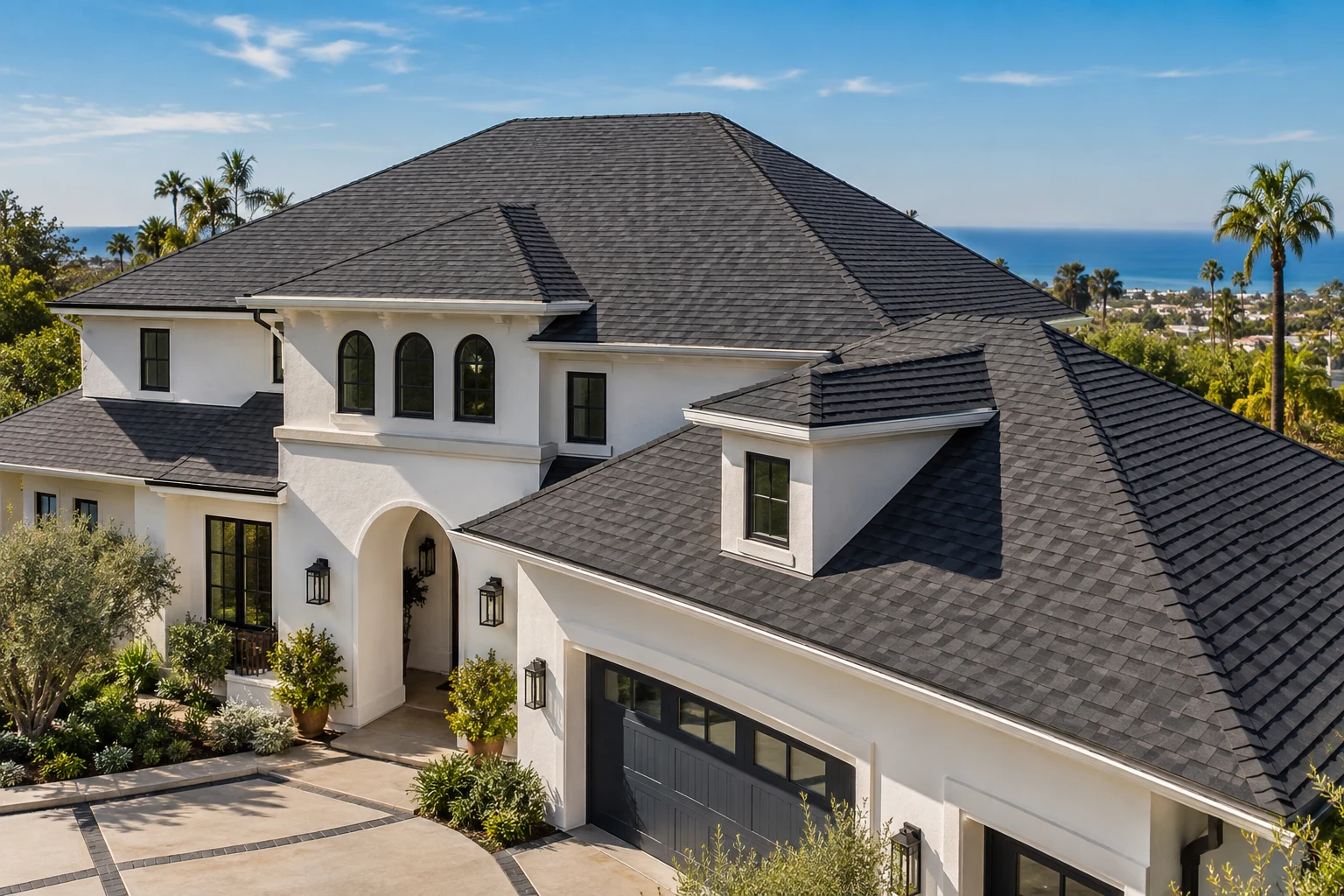
Your roof absorbs heat all day—your AC has to remove it.
The Core Issue: Your AC Is Fighting Constant Heat Entry
An air conditioning system doesn’t create cold air—it removes heat.
That means its performance depends on how much heat is entering your home.
If heat keeps entering throughout the day, your AC has to:
- run longer
- cycle more frequently
- work harder to maintain the same temperature
This is why you might notice:
- the system running almost nonstop
- uneven cooling between rooms
- rising energy bills without better comfort
The AC isn’t necessarily underperforming.
It’s being overloaded.
How the Roof Directly Impacts AC Performance
Your roof is the most exposed part of your home.
It absorbs direct sunlight for hours every day.
That heat doesn’t stay outside.
It transfers into the structure.
The process looks like this:
- solar heat builds on the roof surface
- roofing materials absorb that heat
- it passes into the attic
- heat accumulates and radiates downward
By the time it reaches your living space, it’s already affecting indoor temperature.
Your AC then has to remove that heat—continuously.
What Happens Inside the Attic
The attic is where the problem becomes most visible.
In many homes:
- attic temperatures reach 120°F to 150°F
- heat becomes trapped due to poor ventilation
- insulation slows—but does not stop—heat transfer
That trapped heat creates a constant pressure on the living space below.
Even if your AC cools the air, the ceiling continues to radiate warmth.
This is why cooling feels temporary.
Attic heat creates constant pressure on your cooling system.
Why Your AC Runs Longer in the Afternoon
A common pattern homeowners notice:
The house feels hottest later in the day.
Not in the morning.
Not even at noon.
This happens because heat builds over time.
By afternoon:
- the roof has absorbed hours of sunlight
- the attic is fully heated
- the structure is holding that heat
Even if outdoor temperatures start to drop, your home is still releasing stored heat.
Your AC is now working against both incoming and stored heat.
Windows Add More Load to the System
While the roof is a major source of heat, windows increase the load even further.
Especially older or inefficient windows.
They allow:
- direct sunlight into the home
- radiant heat buildup indoors
- continuous heat gain throughout the day
So your AC isn’t just dealing with heat from above.
It’s also handling heat entering from the sides.
That combination is what pushes systems to their limit.
Reducing total heat load—especially at the roof level—is key, and it’s exactly what approaches like
https://teamallstarconstruction.com/service-areas/pasadena-ca/reduce-heat-with-roofing/are designed to address.
Heat moves from your roof into your home throughout the day.
The Common Misunderstanding
Most homeowners think:
“My AC isn’t strong enough.”
So they:
- lower the thermostat
- run the system longer
- consider upgrading to a larger unit
But if the source of heat isn’t reduced, the same problem continues.
The system just consumes more energy.
That leads to:
- higher utility bills
- faster wear on the AC
- little improvement in comfort
Why Bigger AC Systems Don’t Fix It
Installing a larger AC unit might seem like a solution.
But it doesn’t reduce heat entry.
It only increases cooling capacity.
That means:
- higher upfront cost
- higher operating cost
- the same underlying issue
Without addressing heat gain, the system is still working harder than it should.
What Actually Reduces the Load on Your AC
To make a real difference, you need to reduce how much heat enters your home.
That starts with the roof.
Effective improvements include:
- reflective or cool roofing materials
- proper attic ventilation
- replacing aging roofing systems
- reducing heat absorption at the surface
When these are in place:
- attic temperatures decrease
- less heat reaches your living space
- your AC doesn’t have to work as hard
When heat keeps entering, your AC never gets a break.
Why Measurement Matters
This is where most homeowners go wrong.
They assume the cause.
They don’t verify it.
At All Star Roofing, we focus on showing what’s actually happening.
We:
- evaluate roof condition and heat exposure
- analyze how heat is affecting the structure
- identify where heat is entering and being retained
This isn’t guesswork.
You can see it clearly.
And once you do, it becomes obvious why your AC is struggling.
We show what’s happening—so you’re not guessing.
The Impact on Energy Efficiency
When your AC has to fight constant heat gain:
- it runs longer cycles
- it uses more electricity
- it wears out faster
This directly impacts your energy costs.
It also reduces the overall efficiency of your home.
Improving how your roof handles heat is one of the most effective ways to reduce that load.
You can explore how roofing choices affect efficiency here:
https://teamallstarconstruction.com/service-areas/pasadena-ca/energy-efficient-roofing/
Understanding the Bigger Picture
In most cases, this isn’t just an AC issue.
It’s a combination of:
- roofing performance
- window efficiency
- heat exposure patterns
If those aren’t addressed, the problem continues.
If they are, the difference is noticeable.
Reducing heat at the roof reduces the load on your AC.
Internal Resources
- https://teamallstarconstruction.com/service-areas/pasadena-ca/reduce-heat-with-roofing/
- https://teamallstarconstruction.com/service-areas/pasadena-ca/roof-repair-or-replacement/
Final Thought
Your AC isn’t always the problem.
Sometimes, it’s working exactly as it should—just under the wrong conditions.
If your roof is allowing significant heat into your home, your AC will always have to work harder.
Until that’s addressed, the cycle continues.
Find Out What’s Making Your AC Work Harder — Get a Free Roof Heat Evaluation
If your system is running longer than it should, there’s a reason behind it.
We’ll show you:
- how your roof is affecting your home
- where heat is entering
- what changes actually reduce the load
This isn’t an estimate—you’ll see exactly what’s happening.
Call (310) 729-3013