
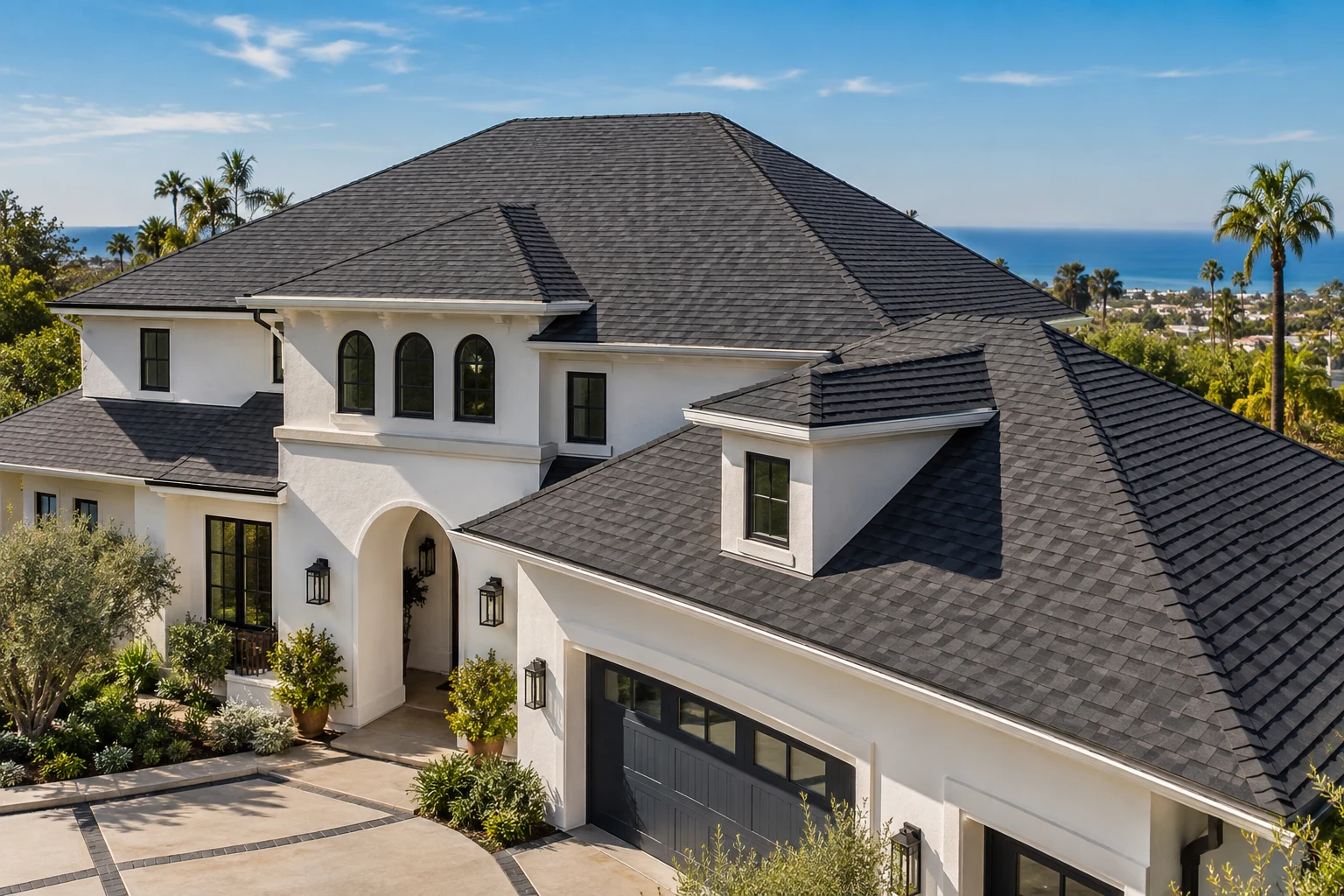
How long does a roof last? Learn what affects roof lifespan, material ranges, warning signs, and when replacement makes more sense than waiting.
A roof can look fine from the street and still be near the end of its usable life. That is why homeowners often ask, how long does a roof last, especially when they are seeing higher energy bills, aging shingles, cracked tile, or signs of wear before a home sale or solar project.
The honest answer is that roof lifespan depends on the material, the quality of installation, attic ventilation, sun exposure, and how well the system was designed for the home. In Southern California, intense UV exposure, heat, seasonal wind, and decades of expansion and contraction can age a roof differently than the same material in a milder climate. A roof is not just the outer layer you see. Its lifespan is tied to the full system beneath it.
How long does a roof last by material?
For most homes, asphalt shingle roofs last about 20 to 30 years. Higher-quality architectural shingles installed as a complete roofing system often perform longer than basic three-tab products, especially when paired with proper ventilation and manufacturer-backed components.
Concrete tile roofs often last 30 to 50 years, and clay tile roofs can last 50 years or more. That said, the tile itself is only part of the story. On many older Southern California homes, the underlayment beneath the tile reaches the end of its life before the tile does. Homeowners sometimes assume a tile roof is good forever because the tiles still look solid, but the waterproofing layer underneath may be the real issue.
Flat and low-slope residential roofing systems usually last about 15 to 30 years depending on the material, drainage design, sun exposure, and installation quality. Cool roof systems can also improve energy performance, but lifespan still depends on how well the roof assembly was built and maintained over time.
Those ranges are useful, but they are only starting points. A 25-year-old roof might still have several good years left, while a 17-year-old roof may already be failing if the original installation was poor or the attic is trapping heat.
What affects how long a roof lasts?
Material matters, but installation quality matters just as much. A roof replacement is a system, not just a surface product. If flashing details are weak, ventilation is inadequate, or components are mismatched, even a premium roofing material can age faster than expected.
Sun exposure is a major factor in California. Roof slopes that take direct afternoon sun often wear more quickly, especially with asphalt shingles. Over time, heat dries materials out, reduces flexibility, and contributes to surface deterioration. This is one reason two homes on the same block can have very different roof conditions.
Ventilation also has a direct effect on service life. When heat builds up in the attic, it can accelerate aging from below. That extra heat can also affect indoor comfort and energy use. A homeowner may focus on visible shingle or tile wear, but the real reason for premature failure may be poor airflow through the roof system.
Workmanship is another big variable. Proper tear-off, deck inspection, underlayment selection, flashing installation, and ventilation planning all influence how long a roof lasts. A roof installed by a licensed, experienced residential roofing contractor is much more likely to reach its expected lifespan than one installed with shortcuts.
Why older roofs in Southern California can be misleading
Many Southern California homes have roofs that age in uneven ways. You may see one section that still looks presentable and another that is clearly deteriorating. Tile roofs are especially deceptive because the tiles can remain intact while the underlayment beneath has become brittle or compromised.
Asphalt shingle roofs can also fool homeowners. Granule loss, curling edges, and subtle discoloration may not look urgent from the ground, yet they often signal that the roof is entering its final stage. By the time interior staining appears, the roofing system may have been declining for years.
This matters when homeowners are deciding whether to keep waiting or move forward with replacement. If a roof is already near the top end of its expected lifespan, age itself becomes part of the decision, even if major interior damage has not happened yet.
Signs your roof may be nearing the end
Age is the first clue, but it should not be the only one. If your roof is approaching the expected lifespan for its material, look at the condition more closely.
With asphalt shingles, common end-of-life signs include curling, cracking, granule loss, bare spots, and areas that look thin or uneven. With tile roofs, broken or slipped tiles are visible indicators, but the more important issue is often the condition of the underlayment and flashing. On flat roofing systems, ponding water, membrane wear, seam failure, or repeated surface deterioration can indicate that replacement is becoming the smarter long-term move.
Other signs show up inside the home. Hotter upstairs rooms, unexplained moisture staining, or a musty attic smell can point to a roofing system that is no longer performing as it should. Homeowners preparing for solar installation or listing a property for sale often discover these issues because the roof is finally being evaluated in detail.
How long does a roof last if it was installed correctly?
If the roof was installed correctly using quality materials and the right system design, it will usually land within or near the higher end of its expected lifespan range. That means a well-built shingle roof may perform for 25 to 30 years, a concrete tile roof may deliver decades of service, and a clay tile roof can last even longer when the underlayment and components are replaced as needed.
Still, no roof lasts forever. Even the best roofing system is exposed to weather, sun, structural movement, and material aging every single day. A good installation gives you full value from the roof. It does not make the roof permanent.
That is why experienced contractors focus on roof replacement as a full system upgrade rather than just replacing what is visible. Better ventilation, stronger underlayment, improved flashing details, and manufacturer-backed products all support a longer service life.
When replacement makes more sense than waiting
Homeowners often ask whether they should hold off for a few more years. Sometimes that is reasonable. Sometimes it costs more in the long run.
If your roof is near the end of its lifespan and showing multiple signs of wear, waiting usually increases uncertainty. You may still avoid visible interior damage for a while, but you are often living with a system that is less energy efficient, less reliable, and harder to insure or certify for real estate and solar transactions.
Replacement also makes more sense when the roof has broad, age-related deterioration rather than one isolated issue. Once a roofing system is worn out across large areas, the question is no longer whether it can survive another season. The better question is whether it still makes sense to depend on it.
For homeowners who plan to stay in the home, replacing an aging roof can improve comfort, appearance, and resale value while giving more predictable long-term costs. For those planning to sell, a new roof can remove a major objection during inspection and buyer negotiations.
Getting a more accurate answer for your home
If you are asking how long does a roof last, what you usually want to know is how much life your roof has left. That answer depends on material age, installation history, roof design, and visible condition. A roof that is 22 years old is not automatically failing, but it is old enough to deserve a serious evaluation.
A qualified residential roofing contractor should look at more than surface wear. They should consider the complete system, explain what they are seeing in plain language, and help you understand whether replacement is based on age, condition, or both. That kind of clarity matters, especially for homeowners who want to avoid making a rushed decision.
At All Star Roof Replacement, the residential roofing division of Team All Star Construction, CSLB #1009760, that educational approach is part of the process. Homeowners across Southern California often need more than a lifespan chart. They need a clear assessment of what their current roof is doing, what risks are increasing, and what a properly designed replacement would deliver in return.
A roof lasts longest when the material fits the home, the installation is done correctly, and the decision to replace is made before the old system starts creating bigger problems. If your roof is aging and the signs are beginning to add up, getting real answers now is usually the best way to protect both your home and your budget.