
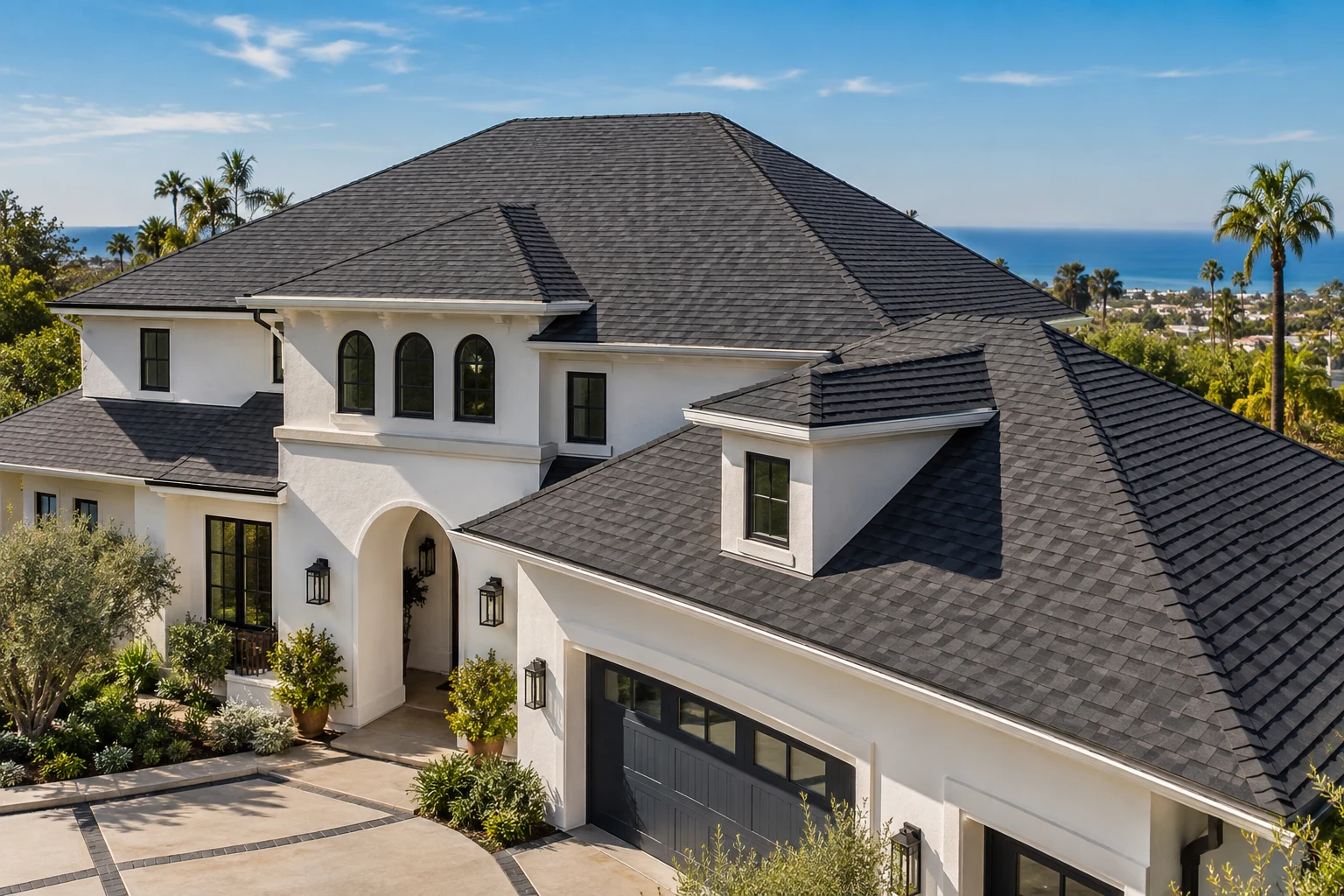
Learn how to budget for a new roof in Southern California, from material choices and hidden costs to financing, warranties, and a realistic plan today.
A roof replacement is one of the larger investments a homeowner makes, and the best time to create a plan is before the decision becomes urgent. Knowing how to budget for a new roof means looking beyond a single estimate and accounting for the roof system, your home’s condition, material choices, and the financial flexibility you want when it is time to move forward.
For Southern California homeowners, that planning also has a local dimension. Intense sun, heat, seasonal rain, Santa Ana winds, and energy costs can all influence which roofing system delivers the best long-term value. A thoughtful budget gives you room to choose protection and performance rather than making a rushed decision based only on the initial number.
Start With a Realistic Roof Replacement Scope
A complete roof replacement is more than the visible shingles or tiles. A reliable estimate should define the full scope of work: removal of existing roofing materials, preparation of the roof deck, underlayment, flashing, ventilation where applicable, new roofing material, and jobsite cleanup.
The size and shape of your roof matter as much as the square footage of your home. A simple, low-slope roof generally requires less labor and fewer material transitions than a home with multiple levels, steep pitches, skylights, valleys, chimneys, or solar equipment. Tile roofs may also require additional planning because of material weight and the details involved at roof edges and penetrations.
When setting your target budget, avoid relying on broad national averages. They often do not reflect California labor requirements, permit costs, local building standards, material availability, or the details of your particular home. Instead, begin with a professional assessment that measures the roof and identifies the system needed for a complete replacement.
A virtual roof estimate using satellite measurement technology can be a useful first step. It gives homeowners a practical starting point without guessing at roof size, and it helps establish a budget range before the final project details are confirmed.
How to Budget for a New Roof in Five Parts
A clear roof budget is easier to manage when you separate it into five categories: the base roofing system, home-specific conditions, permits and code requirements, a contingency reserve, and your payment plan.
The base system includes the materials and installation needed for the main roof area. Home-specific conditions may include complex roof geometry, replacement of deteriorated roof decking if discovered during the project, or work around skylights and other roof features. Permits and code items should be addressed openly rather than treated as an afterthought.
Finally, set aside a contingency reserve. This is not a sign that a contractor is uncertain. It is sensible planning for conditions that cannot always be fully verified until existing materials are removed. A reserve of roughly 10% to 15% of your expected project investment can help you make necessary decisions without disrupting the entire plan.
If your roof has solar panels, ask early how removal and reinstallation will be coordinated. This is a separate consideration that can affect timing, scheduling, and total project cost. Bringing it into the budget at the beginning is far easier than trying to accommodate it after a roofing date is set.
Choose Materials Based on Long-Term Value
Material selection can significantly change the budget, but the least expensive option is not automatically the most economical over the life of the roof. The right choice depends on your home’s architecture, local climate exposure, maintenance preferences, energy priorities, and how long you expect to own the property.
Asphalt shingles are a familiar choice for many Southern California homes and are available in styles that complement a wide range of exteriors. Concrete and clay tile can provide a distinctive architectural appearance and long service life when installed as part of a properly designed system. Flat roofing systems require material choices suited to low-slope applications and proper water management.
Cool roof options deserve particular consideration in warmer inland communities, where roof surface temperatures and summer cooling demand can be substantial. A reflective, energy-conscious roofing system may cost more upfront than a standard alternative, but it can support indoor comfort and help manage energy use over time. The actual benefit depends on the property, insulation, attic conditions, climate zone, and the selected system.
Ask each contractor to explain what is included with the material, not just the material name. Underlayment, flashing details, ventilation components, and manufacturer requirements all influence how the completed system performs. Owens Corning roofing systems, for example, are designed as coordinated components rather than a collection of unrelated products.
Compare Estimates Line by Line, Not Just by Total
A lower estimate can look appealing until you discover that it excludes work another contractor has already included. For a meaningful comparison, request written estimates that clearly describe the roofing material, underlayment, removal and disposal, flashing, permit responsibility, warranty information, and known exclusions.
Pay close attention to vague descriptions such as “as needed” without an explanation of how potential additional work will be documented and priced. A professional contractor should be able to explain the process for addressing unforeseen conditions, who approves added work, and how those conversations are handled before costs are incurred.
Licensing and insurance belong in the budget conversation because they protect the homeowner from avoidable risk. In California, verify that the contractor holds the appropriate active license and is properly insured. All Star Roof Replacement is operated by Team All Star Construction, CSLB #1009760, and specializes in complete residential reroofing for homeowners throughout Los Angeles, Orange, Riverside, San Bernardino, and Ventura Counties.
Plan the Payment Strategy Before You Select a Date
Once you have a realistic project range, decide how the investment will be funded. Some homeowners use savings because they prefer to avoid monthly payments. Others use financing to preserve cash reserves for other household needs or to select a roofing system with stronger long-term performance.
Financing can make sense when it allows you to complete a needed replacement on a predictable schedule while keeping emergency savings intact. The key is to review the monthly payment, interest rate, term length, and total amount paid over the life of the financing. A lower monthly payment may be helpful, but a longer term can increase the total cost.
If you are preparing to sell, your budget priorities may differ from those of a homeowner planning to stay for another 15 years. A new roof can strengthen curb appeal and reduce buyer concerns, but the best material choice should still fit the property and neighborhood. If you plan to remain in the home, energy performance, warranty coverage, and material longevity may deserve more weight in the decision.
Include Warranties in Your Value Calculation
Warranties should provide clarity, not confusion. A roofing budget should account for both the manufacturer’s coverage on eligible materials and the contractor’s workmanship coverage. These are different protections, and each has its own terms.
Ask what steps are required to qualify for manufacturer-backed warranty options. In many cases, coverage depends on using specified system components and following approved installation standards. Also ask what the workmanship warranty covers, how long it lasts, and how service requests are handled.
The goal is not to choose a roof based on the longest warranty label. It is to select a properly installed system from a qualified contractor with documentation you can keep for your home records. That is the combination most likely to protect your investment.
Build a Simple Roof Budget Timeline
A useful plan usually begins 6 to 12 months before you intend to replace the roof, whenever the roof’s condition allows for that timeline. Start by requesting a professional assessment and estimate range. Next, review material options, set your contingency reserve, and decide whether savings, financing, or a combination will fund the project.
As your target date approaches, confirm permit expectations, product availability, and any coordination needed for solar equipment. Keep all estimates, product selections, warranty documents, and payment records in one folder. That organization makes the project easier to manage and creates a useful record for future buyers or insurance discussions.
A well-planned roof budget is not about finding the smallest number. It is about making a confident investment in a complete roofing system that fits your home, your financial plan, and the years you expect it to protect.