
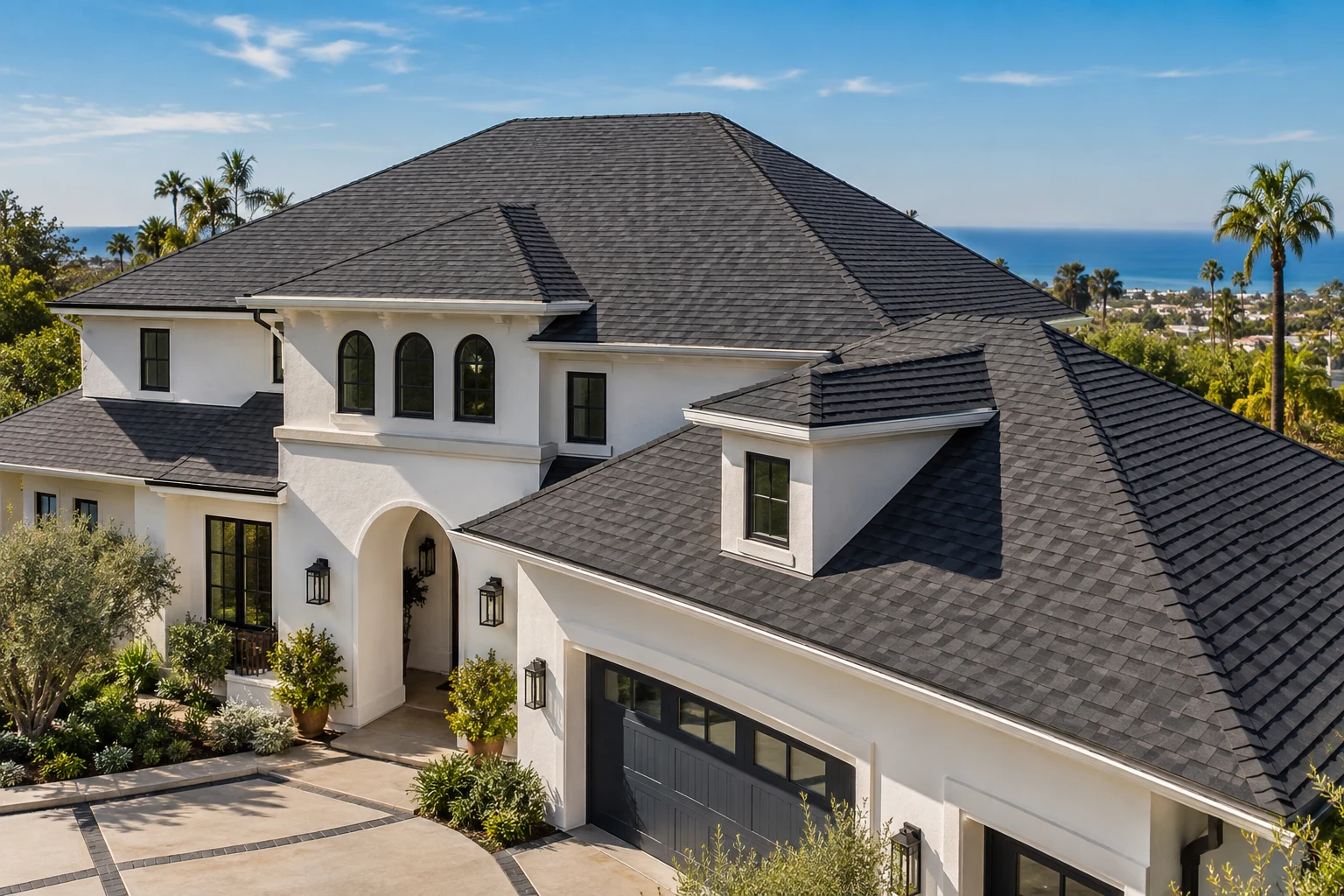
Residential reroofing guide California homeowners need for evaluating roof age, materials, permitting, warranties, project scope, costs, and licensed installers.
A roof can look acceptable from the street while the layers beneath it are nearing the end of their service life. In Southern California, years of UV exposure, heat swings, wind, and occasional heavy rain can gradually weaken shingles, underlayment, flashing, and tile components.
This residential reroofing guide California homeowners can use focuses on the decisions that protect the home for the long term: when replacement makes sense, which system fits the property, and how to choose a qualified contractor.
Start With the Roof’s Actual Condition
Age is a useful starting point, but it is not the whole story. An asphalt shingle roof may approach replacement age after roughly 20 to 30 years, depending on the product, installation quality, ventilation, shade, and exposure. Concrete and clay tile can last much longer, but the underlayment below the tile often has a shorter life cycle and may be the limiting factor.
Visible warning signs include widespread shingle granule loss, curling edges, brittle materials, missing or displaced tiles, recurring interior staining, deteriorated flashing, and sagging roof areas. A roof that has reached the end of its useful life should be evaluated as a complete system rather than as a collection of isolated symptoms. The deck, underlayment, ventilation, flashings, penetrations, and edge details all matter.
For homeowners preparing for solar, a whole-home renovation, or a sale, timing also matters. Replacing an aging roof before solar equipment is installed can prevent the added expense and disruption of removing and reinstalling panels later. A newer roof can also make inspections and buyer negotiations more straightforward.
California Reroofing Rules and Permit Considerations
California roofing projects are governed by state building standards and local city or county requirements. Permit requirements vary by jurisdiction, but a complete roof replacement commonly requires a permit. The permit process helps confirm that the new roof meets applicable building, fire, and energy requirements.
Local rules can affect material selection, especially in communities with wildfire exposure or homeowners associations. Some areas have specific fire classifications, aesthetic requirements, or documentation standards. A qualified contractor should identify these issues before installation begins, not after materials have been ordered.
Homeowners should also understand the difference between a new roof covering installed over existing material and a full tear-off. In many situations, removing the existing roof covering provides a clearer view of the roof deck and creates the proper foundation for a new roofing system. Whether an overlay is allowed or advisable depends on the existing assembly, local code, structural considerations, and the new material being installed.
It is not automatically the lower-cost choice once long-term performance is considered.
Choose Materials for Your Home, Not Just the Neighborhood
The right roofing material depends on the home’s architecture, slope, budget, energy priorities, local requirements, and desired maintenance profile. Southern California homeowners commonly consider asphalt shingles, concrete tile, clay tile, cool roof systems, and flat roofing systems.
Asphalt Shingle Roofing
Architectural asphalt shingles are a popular choice because they offer dependable weather protection, a broad range of colors, and a lower initial investment than many tile systems. They can suit many home styles and are available in reflective options that support energy-conscious design. The quality of the underlayment, flashing, ventilation, and installation details is just as important as the shingle selection.
Owens Corning roofing systems can be a strong option for homeowners who want coordinated components and manufacturer-backed warranty opportunities. A complete system is designed to work together rather than relying on mismatched materials.
Concrete and Clay Tile
Tile offers a distinctive appearance that fits many Spanish, Mediterranean, and contemporary Southern California homes. Concrete tile is durable and available in many profiles and colors. Clay tile offers classic character and can provide exceptional longevity when the supporting roof assembly is properly designed.
Tile is heavier than asphalt shingles, so the roof structure and existing conditions must be evaluated. Homeowners should not assume that intact-looking tile means the full system is still sound. The underlayment and flashing beneath the tile deserve careful attention during a reroofing evaluation.
Cool Roof and Flat Roofing Systems
A cool roof is designed to reflect more sunlight and absorb less heat than a darker, less reflective surface. For homes exposed to long periods of direct sun, this can improve comfort and may help reduce cooling demand. Results depend on insulation, attic ventilation, window exposure, HVAC performance, and household energy use, so no contractor should promise a specific utility-bill reduction.
Low-slope or flat sections need a system specifically designed for drainage, penetrations, and standing-water exposure. These areas should be evaluated independently from the sloped portions of the home. Using a material simply because it is common on another roof area can create avoidable performance issues.
Understand What Drives Reroofing Cost
A reliable estimate is based on more than square footage. Roof size is important, but complexity often changes the scope significantly. Steep slopes, multiple levels, skylights, chimneys, solar-related coordination, valleys, detailed flashing, tile removal, deck replacement, access limitations, and permit fees can all affect pricing.
Material choice also shapes the budget. Asphalt shingles generally have a lower upfront cost than tile, while tile systems may involve added labor, structural considerations, and specialized components. Cool roof and low-slope systems have their own material and installation requirements.
The most useful estimate is transparent about what is included. Homeowners should expect clear information about material type, tear-off scope, underlayment, flashing, ventilation, disposal, permits, workmanship coverage, and potential deck-related contingencies. A vague number without a defined scope can make it difficult to compare proposals fairly.
Financing can help homeowners plan a replacement around the condition of the roof rather than postponing a necessary project. The decision should still be based on the full installed value of the system, not only the monthly payment.
Select a California Roofing Contractor Carefully
Your contractor choice affects the roof’s performance as much as the material itself. Start by confirming that the contractor holds an active California license appropriate for roofing work, carries insurance, provides a written contract, and can explain the proposed system in plain language.
Ask who will manage permits, how the property will be protected during installation, what communication to expect, and how any concealed deck conditions will be documented. You should also ask about manufacturer warranty eligibility and what the contractor’s workmanship warranty covers. Manufacturer coverage and contractor workmanship coverage are different protections, and both should be explained clearly.
All Star Roof Replacement, the residential roofing division of Team All Star Construction, CSLB #1009760, specializes in complete roof replacement for homeowners throughout Los Angeles, Orange, Riverside, San Bernardino, and Ventura Counties. A process-driven approach, including virtual roof estimates using satellite measurement technology, can give homeowners an early understanding of scope before an on-site evaluation confirms the final details.
Prepare Your Home for Installation Day
A replacement project is temporary, but it is active. Move vehicles out of the driveway or garage access area if requested, secure fragile wall décor because roofing work can create vibration, and clear patio furniture or valuables from areas around the home. Let the contractor know about pets, gate access, irrigation controls, and any special property conditions before the crew arrives.
There will be noise, material deliveries, and work activity around the exterior. A professional installation team should provide a clear schedule, maintain a safe work area, and complete a final cleanup with attention to nails and debris. Good communication is not an extra feature. It is part of a well-managed reroofing project.
A new roof is one of the most consequential investments you can make in your home. The strongest decision is rarely the fastest or the cheapest one. It is the one built on an accurate assessment, a clearly defined roofing system, qualified installation, and a plan that protects your home well beyond the final day of construction.