
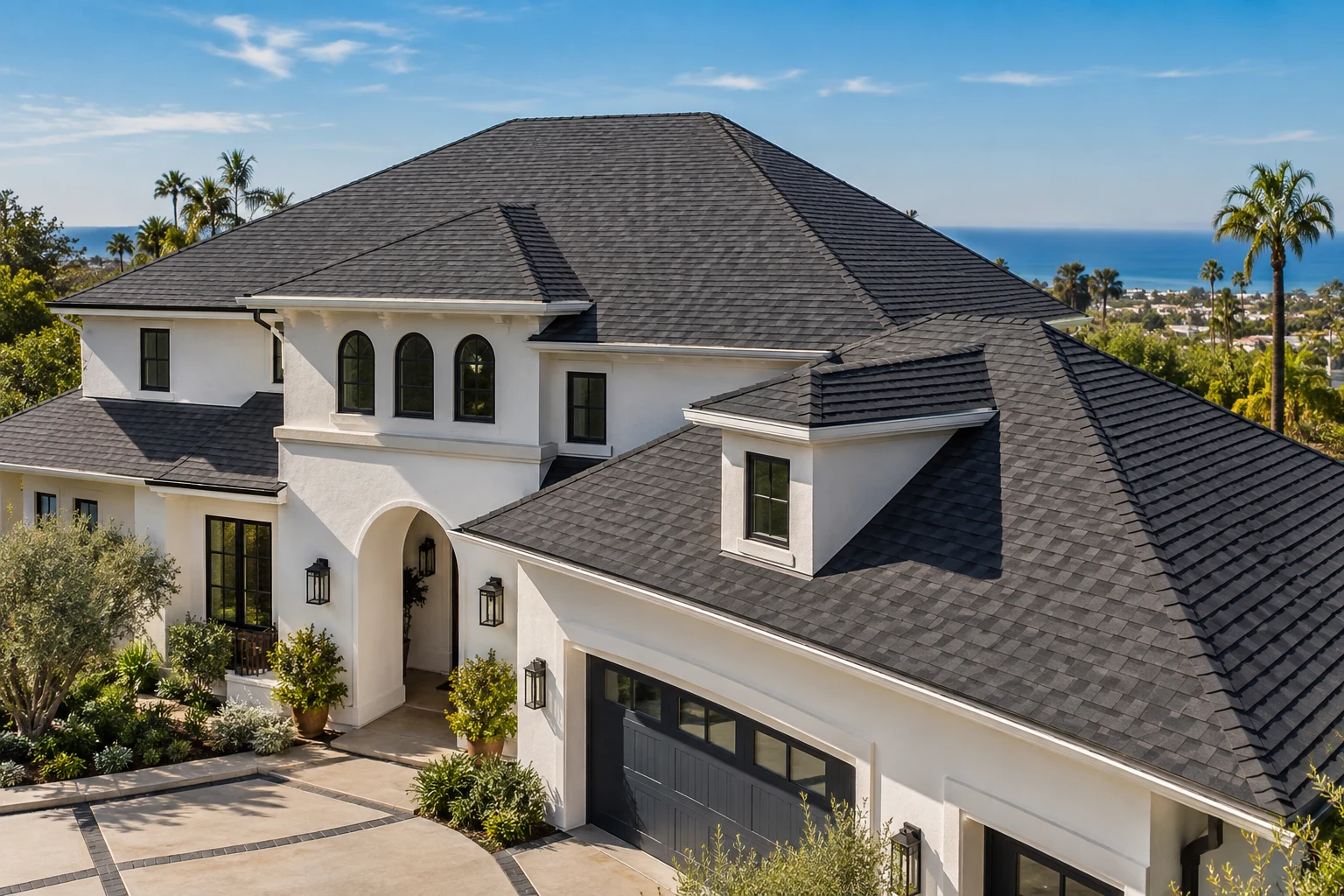
Use this residential roof replacement guide to compare materials, plan costs, evaluate contractors, and protect your Southern California home for decades.
A roof can look acceptable from the street while the system beneath it is nearing the end of its useful life. Worn underlayment, cracked tiles, granule loss, aging flashings, and years of Southern California sun exposure can all affect how well a home is protected. This residential roof replacement guide explains how to recognize the decision point, choose a system that fits your home, and move forward with confidence.
Start With the Whole Roofing System
A complete roof replacement is more than putting new shingles or tiles on the visible surface. A properly planned project addresses the full assembly: removal of the existing roofing material, inspection of the roof deck, installation of underlayment and flashing components, ventilation where appropriate, and installation of the new roof covering.
This distinction matters because the layers below the surface do much of the work. Underlayment provides a secondary barrier against water intrusion. Flashings direct water away from vulnerable transitions around chimneys, walls, skylights, valleys, and pipes. If those details are overlooked, even an attractive new roof may not deliver the long-term protection a homeowner expects.
A thorough estimate should explain what is included, what conditions may require additional work once the existing material is removed, and how the contractor will document those conditions. Homeowners should not be asked to make a major investment based on a vague description such as “new roof installed.”
Signs It Is Time to Plan a Replacement
Roofing decisions are usually easier when they are made before a small concern becomes a larger interior problem. Age is one factor, but it is not the only one. Material type, installation quality, sun exposure, ventilation, weather events, and prior alterations all influence service life.
For asphalt shingles, widespread granule loss, curling edges, brittle surfaces, or shingles that no longer lie flat can signal that replacement planning is appropriate. Tile roofs may retain their appearance longer, yet broken or displaced tiles, deteriorated underlayment, and worn flashing can indicate that the system beneath the tile needs attention. On low-slope sections, ponding water, splits, exposed reinforcement, or deteriorating seams deserve prompt professional evaluation.
A failed home inspection, an upcoming solar installation, a real estate sale, or a change in insurance requirements can also bring roofing needs into focus. Replacing an aging system before solar panels are installed often makes practical sense because it avoids disrupting the new solar investment later.
Choose Materials for Your Home and Climate
The best roofing material is not simply the one with the longest stated lifespan. It should suit the roof’s design, structural considerations, neighborhood character, budget, maintenance expectations, and Southern California climate.
Asphalt shingle roofing
Architectural asphalt shingles are a popular choice for many single-family homes because they provide a clean appearance, broad color selection, and dependable performance when installed as a complete system. Owens Corning roofing systems, for example, pair compatible components rather than treating shingles as a standalone product. This can support both performance and manufacturer-backed warranty eligibility when installation requirements are met.
Shingles can be especially practical on roofs with complex shapes, multiple valleys, and many penetrations. Color selection is more than a curb-appeal decision. Lighter or specially engineered reflective options may help reduce heat absorption, depending on the product and the home’s overall design.
Concrete and clay tile roofing
Concrete and clay tile complement many Mediterranean, Spanish, and traditional Southern California homes. Tile can offer striking architectural character and long service potential, but the visible tile is only one part of the system. The underlayment, flashings, fastening method, and tile condition all require careful planning.
Tile is heavier than shingles, so a qualified contractor should assess the existing roof assembly and applicable requirements. Homeowners also need to decide whether they want to retain the original style, change color, or select a different tile profile. The right choice balances appearance with practical details such as roof slope, availability, and compatibility with the home.
Cool roof and flat roofing systems
Cool roof options are designed to reflect more solar energy and reduce heat absorption. They can be particularly valuable on homes exposed to long periods of direct sun, although actual energy results depend on insulation, attic conditions, windows, HVAC performance, and household use.
Flat and low-slope roof areas need systems specifically designed for their drainage and exposure conditions. They should not be treated as an afterthought because water moves and drains differently on these sections than it does on a steep-slope roof. A replacement plan should clearly identify each roof area and the system specified for it.
Understand What Drives Roof Replacement Cost
A responsible contractor cannot provide an exact price from square footage alone. Roof size is important, but it is only one variable. The slope and complexity of the roof, number of valleys and penetrations, material selection, access to the property, tear-off requirements, deck conditions, code requirements, and disposal all affect the final scope.
The lowest proposal may leave out meaningful details, such as underlayment quality, flashing replacement, permit handling, ventilation components, or cleanup. A higher proposal is not automatically better either. The useful comparison is one that puts each contractor’s scope side by side and identifies exactly what each is providing.
Ask for a written proposal that names the roofing system, identifies the underlayment and key components, explains warranty coverage, and states how changes discovered during tear-off will be communicated. Financing can also help homeowners choose a long-term solution without forcing a decision based only on immediate cash flow. The terms, payments, and total cost should be reviewed carefully before signing.
How to Evaluate a Residential Roof Replacement Contractor
Your roof will protect one of your largest assets, so contractor qualifications deserve as much attention as material selection. In California, verify that the contractor holds the appropriate active license, carries insurance, and provides a clear written contract. Licensing is not a formality. It establishes accountability and helps confirm that the company is operating within California’s construction requirements.
Look for a contractor that specializes in complete residential replacement rather than treating reroofing as a side service. Ask who will manage communication, whether permits are included when required, how the property will be protected during the project, and how the crew handles daily cleanup. You should also understand the workmanship warranty separately from any manufacturer warranty. They cover different obligations.
All Star Roof Replacement, operated by Team All Star Construction, CSLB #1009760, focuses exclusively on complete residential reroofing for homeowners across Los Angeles, Orange, Riverside, San Bernardino, and Ventura Counties. A process-driven approach is particularly helpful in this region, where homes range from older tile-roof properties to newer tract homes with shingle, cool roof, and low-slope sections.
What the Replacement Process Should Feel Like
The process should be organized, not mysterious. It typically begins with an assessment and estimate. Satellite measurement technology can make the initial planning process more convenient, especially for homeowners who want a free virtual roof estimate before scheduling an on-site conversation. Final project details still need to account for the home’s actual conditions and selected system.
Before work begins, homeowners should receive information about scheduling, access, material delivery, parking, pets, outdoor furniture, and noise. Roofing is an active construction project. Clear preparation helps protect landscaping and exterior belongings while setting realistic expectations for the household.
During installation, the contractor should keep you informed about progress and any deck conditions found after existing materials are removed. This is one of the most important points of transparency. Hidden damage cannot always be confirmed until the roof is opened, but homeowners should receive an explanation and documented recommendation before additional authorized work proceeds.
At completion, expect a final walkthrough or clear closeout communication. Confirm that debris removal, magnetic nail sweeping, material documentation, warranty information, and final payment details are addressed. Keep these records with your home documents, particularly if you plan to sell or refinance.
Make the Decision on Long-Term Value
A new roof affects more than the view from the curb. It can support a home’s marketability, improve confidence during an inspection, prepare the property for solar, and help manage heat exposure with an appropriate material and color selection. Still, the value comes from the entire system and the quality of installation, not a label on the surface material.
Take time to compare written scopes, ask direct questions, and select the roofing system that makes sense for the next stage of owning your home. A well-planned replacement gives you something more useful than a new-looking roof: confidence that your home is protected by a system built for the years ahead.