
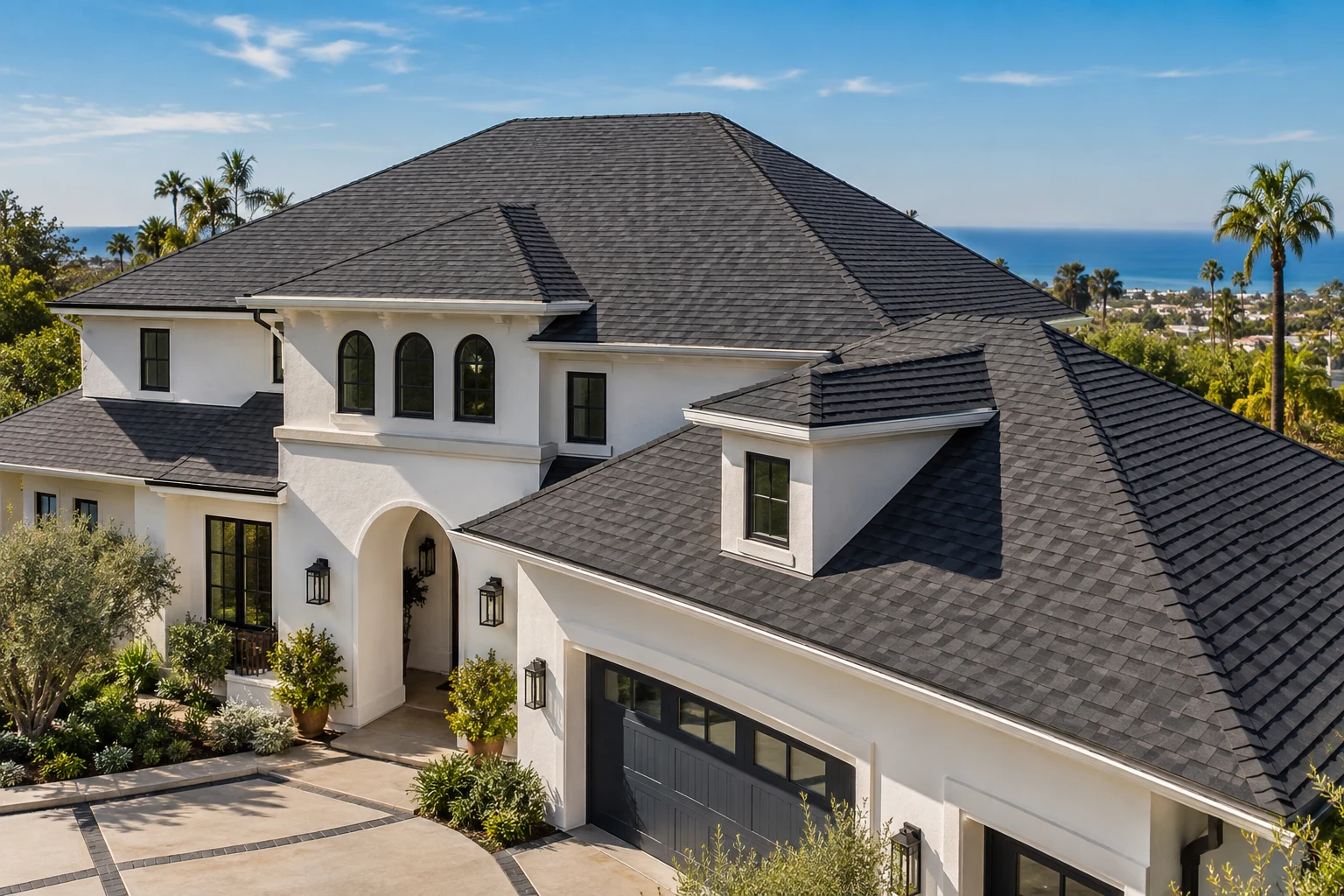
Why Scope Creep Destroys Roofing Budgets
Most homeowners expect a roof replacement to cost between $8,000 and $25,000. Then the bill arrives and it’s 40% higher. The culprit isn’t always price gouging—it’s scope creep, the slow accumulation of costs that nobody discussed upfront. We’ve spent over 45 years in Southern California roofing, and we’ve learned that the difference between a smooth project and a frustrating one comes down to one thing: absolute clarity about what’s included, what isn’t, and why.
This guide walks you through how we prevent surprise costs by defining your project scope before a single nail gets driven.
Scope creep happens when a project expands beyond its original plan without adjusting the timeline or budget. In roofing, it’s remarkably common because most initial estimates are based on incomplete information.
A roofer walks your roof for 20 minutes, gives you a price, and you think the job is straightforward. But once the old roof comes off, crews find rotted decking, damaged flashing around chimneys, structural issues under the eaves, or signs that the attic ventilation needs upgrading. Now the project that was supposed to cost $12,000 is pushing $17,000, and you’re stressed because nobody warned you.
The problem intensifies when homeowners accept verbal quotes or estimates that lack detail. Without written specifics about materials, labor breakdown, and existing conditions, there’s no shared understanding of what the work actually involves.
We prevent this by making scope crystal clear from the start. That means identifying existing damage before you commit to a price, listing every material that will be used, and explaining why certain costs exist. When you know what’s included—and what isn’t—you stay in control of your budget.
The Hidden Costs Most Roofers Don’t Disclose Upfront
Several cost categories slip past homeowners because they’re not obvious or aren’t mentioned during the initial conversation.
Structural repairs. If decking is rotted or water-damaged, it has to be replaced before new roofing goes down. This can add $1,500 to $5,000 depending on how much wood is affected. Many estimates skip this line item entirely, assuming you’ll accept it later.
Flashing and trim work. Chimneys, vents, skylights, and roof valleys all require metal flashing to seal water out. If existing flashing is corroded or improperly installed, replacing it costs $300 to $800 per detail. Cheap estimates often bundle this vaguely into “labor” rather than listing it separately.
Verify the contractor’s current license and applicable classification with CSLB.
Disposal and hauling. Tearing off an old roof generates 8 to 12 tons of debris. Proper disposal isn’t free. Budget $800 to $1,500 for this alone, depending on your roof size and local landfill fees.
Ventilation or attic upgrades. If your attic lacks proper ventilation, your new roof will fail prematurely. Correcting this might mean adding soffit vents, ridge vents, or gable vents. This can run $400 to $2,000.
Slope and accessibility. Steep roofs cost more to install safely and require more labor hours. Multi-level homes, homes near power lines, or roofs with difficult access eat into profitability fast, so crews justify higher per-square pricing.
The transparent approach is to list these categories upfront and explain which ones apply to your home. That’s what we do.
Our Free Virtual Satellite Estimates Reveal Everything
We use satellite technology to analyze your roof without climbing it initially. This tool shows us the roof’s dimensions, pitch, visible obstacles, and overall condition from above. It’s not perfect—we still do in-person inspections to assess flashing and structural integrity—but it’s a game-changer for transparency.
Satellite estimates let us identify potential costs early. If we spot a complex chimney situation, multiple vent penetrations, or a steeply pitched roof, we catch that before giving you a number. We can flag likely structural repairs and include them in our initial scope discussion.
This means your free virtual roof estimates aren’t guesses. They’re informed assessments that account for complexity most competitors miss.
When you request your estimate, we pair the satellite data with a detailed site visit. Our inspectors photograph existing conditions, test flashing integrity, examine decking, and check attic ventilation. Only then do we define your complete scope.
How We Define Your Complete Project Scope
A clear scope statement answers five questions: What’s being removed? What’s being replaced? What materials are we using? What repairs are included? What happens if we find unexpected damage?
We define scope in writing before you sign anything. This document includes:
- Exact square footage of roof being replaced
- Specific shingle brand, color, and warranty tier (we’re an Owens Corning Preferred Contractor, so we specify their product lines)
- Flashing details: chimney, vents, valleys, drip edge
- Any structural repairs identified during inspection, listed with labor and material costs
- Permitting and inspection responsibility
- Debris removal method and cost
- Warranty terms and what’s covered
- Timeline and crew size
This removes guesswork. You see exactly what you’re getting, and so do we.
If our inspection uncovers new issues—say, hidden water damage in the decking—we provide a change order before proceeding. You decide whether to proceed, modify the scope, or explore alternatives. No surprises, no resentment.
Materials, Labor, and Permits: Breaking Down the Real Numbers
Let’s talk numbers. A typical residential roof replacement in Southern California breaks down like this:
Materials typically represent 40-50% of the total cost. For an asphalt shingle roof on a 2,500 square-foot home, shingles alone might run $4,000 to $8,000 depending on quality tier. Add underlayment, flashing, nails, and sealant, and you’re looking at $6,500 to $10,000 in materials.
Labor usually accounts for 35-45% of the job. Removing old roofing, prepping the deck, installing new materials, and finishing details requires skill and time. A full replacement on a standard pitch roof might require 40-60 labor hours depending on complexity. We charge $50 to $75 per labor hour depending on roof difficulty and crew experience.
Permits and inspections run $200 to $500, depending on your county. Los Angeles County, San Bernardino County, and Orange County have slightly different fee structures, but permits are mandatory and non-negotiable.
Disposal costs $800 to $1,500. This covers hauling, tipping fees, and responsible waste handling.
Contingency (for unexpected repairs) should be 5-10% of the total estimate. If your estimate is $15,000, set aside $750 to $1,500 for surprises. This isn’t padding—it’s realism.
A mid-range residential roof replacement in our service areas typically runs $12,000 to $20,000 fully loaded. Higher-end materials and complex roofs can exceed $25,000. Simpler jobs with quality materials might stay under $12,000.
Our Transparent Pricing Structure with Zero Surprises
We price roofing in tiers so you understand what drives cost differences.
Standard tier uses quality asphalt shingles from Owens Corning’s mid-range, standard underlayment, and basic flashing. This tier emphasizes durability and value, not budget-conscious cutting corners.
Premium tier upgrades to Owens Corning’s architectural shingles (thicker, longer-lasting), ice-and-water shield underlayment for enhanced leak protection, and upgraded metal flashing with longer warranties.
Luxury tier features premium architectural shingles, premium ventilation solutions, copper or aluminum flashing with extended warranties, and comprehensive attic upgrades if needed.
Each tier is priced transparently. We don’t hide charges in vague line items. You see material costs, labor costs, permits, and disposal separately. If structural repairs are needed, they’re listed with photos and labor estimates.
Material and workmanship warranties have separate terms. Coverage depends on the selected products, installation program, and written warranty; review the duration, exclusions, transfer rules, and claim process before proceeding.
Flexible Financing Options That Keep Costs Predictable
Many homeowners can’t pay $15,000 upfront, and we understand that. We offer flexible financing with $0 down to make replacement affordable without derailing your budget.
Our financing partners provide terms ranging from 24 to 84 months, letting you choose monthly payments that work for your situation. Monthly costs are transparent—no hidden fees, no rate spikes. You know exactly what you’re paying each month before signing anything.
This financing is separate from your roof cost, so it doesn’t change the scope or materials. You’re not paying more for the roof; you’re just spreading the payment across time.
For homeowners in San Bernardino County or Riverside County, where homes tend to be older and roofs often need replacement urgently, this flexibility is crucial.
What’s Included in Our Lifetime Warranty Coverage
We stand behind our work with warranty coverage that most contractors won’t match.
Owens Corning manufacturer’s warranty covers material defects for 10 to 30 years depending on the shingle tier you select. This covers premature deterioration, manufacturing defects, and loss of granules.
Coverage details: Warranties cover leaks caused by installation error, missing fasteners, improper flashing installation, and faulty sealing. They don’t cover damage from extreme weather events, impact, or lack of maintenance (like clogged gutters causing backed-up water).
We document everything with photos and written records, so there’s no confusion if you need to file a claim years later.
How We Handle Unexpected Issues During Installation
Despite the best planning, we sometimes find problems once the old roof is off. A section of decking is softer than it looked. Plumbing vents are deteriorated. The attic framing shows old water damage.
Here’s our protocol: Our crew stops, takes photos, and calls you or your designated representative. We explain what we found, why it’s a problem, and what the repair costs. You decide whether to proceed, and we provide a change order in writing before continuing. This protects you from bill shock and keeps us from guessing about your priorities.
If you choose to skip a recommended repair, we document that decision in writing. We install the new roof as planned, but it’s clear that you opted not to address that issue. This protects both of us.
Most homeowners appreciate this honesty. They’d rather know about a $2,000 decking repair before the roof goes on than discover it during an inspection before selling the home.
Your Complete Cost Protection Guarantee
From the free virtual estimate through the final inspection, we protect your budget with clarity, documentation, and integrity.
We give you detailed written estimates, not verbal quotes. We identify existing damage before asking for your commitment. We break down every cost category so you understand where your money goes. We explain why each element matters. We offer flexible financing to fit your budget. We warranty both materials and labor. And we handle surprises with transparency rather than surprise bills.
This approach takes longer than the roofers who give you a quick price and hope for the best. But it’s the difference between a project you’re confident in and one that leaves you stressed.
When you’re ready to move forward, request a free roof estimate. We’ll analyze your roof, explain what you need, break down the costs, and give you the clarity you deserve. No pressure, no surprises—just straightforward roofing expertise from a team that’s been doing this across Southern California for over 45 years.
Request a Free Roof Estimate
If you’re considering roof replacement for your home, starting with a virtual estimate allows you to gather information without pressure. It’s a practical way to understand scope, cost, and options before scheduling an on-site visit. Call (310) 729-3013 or visit https://teamallstarconstruction.com/contact/
Frequently Asked Questions (FAQ)
What hidden costs should I expect during a roof replacement project?
We’ve found that most homeowners get surprised by permit fees, structural repairs discovered after removal, and disposal costs that weren’t initially visible. That’s why we use satellite technology during our free estimates to identify potential issues before work begins, and we provide a detailed breakdown of materials, labor, and permits upfront so nothing catches you off guard.
How do you prevent scope creep and unexpected charges?
We define your complete project scope in writing before any work starts, including what’s covered under our warranty and what constitutes additional work. When we discover unexpected issues during installation, we photograph and document everything, then present you with options and pricing before proceeding so you maintain full control over your budget.
Can you explain how your financing keeps costs predictable?
Financing may be available through third-party lenders for qualified applicants. Availability, APR, fees, down payment, and repayment terms depend on the lender and approval. Review the complete loan terms before accepting.