
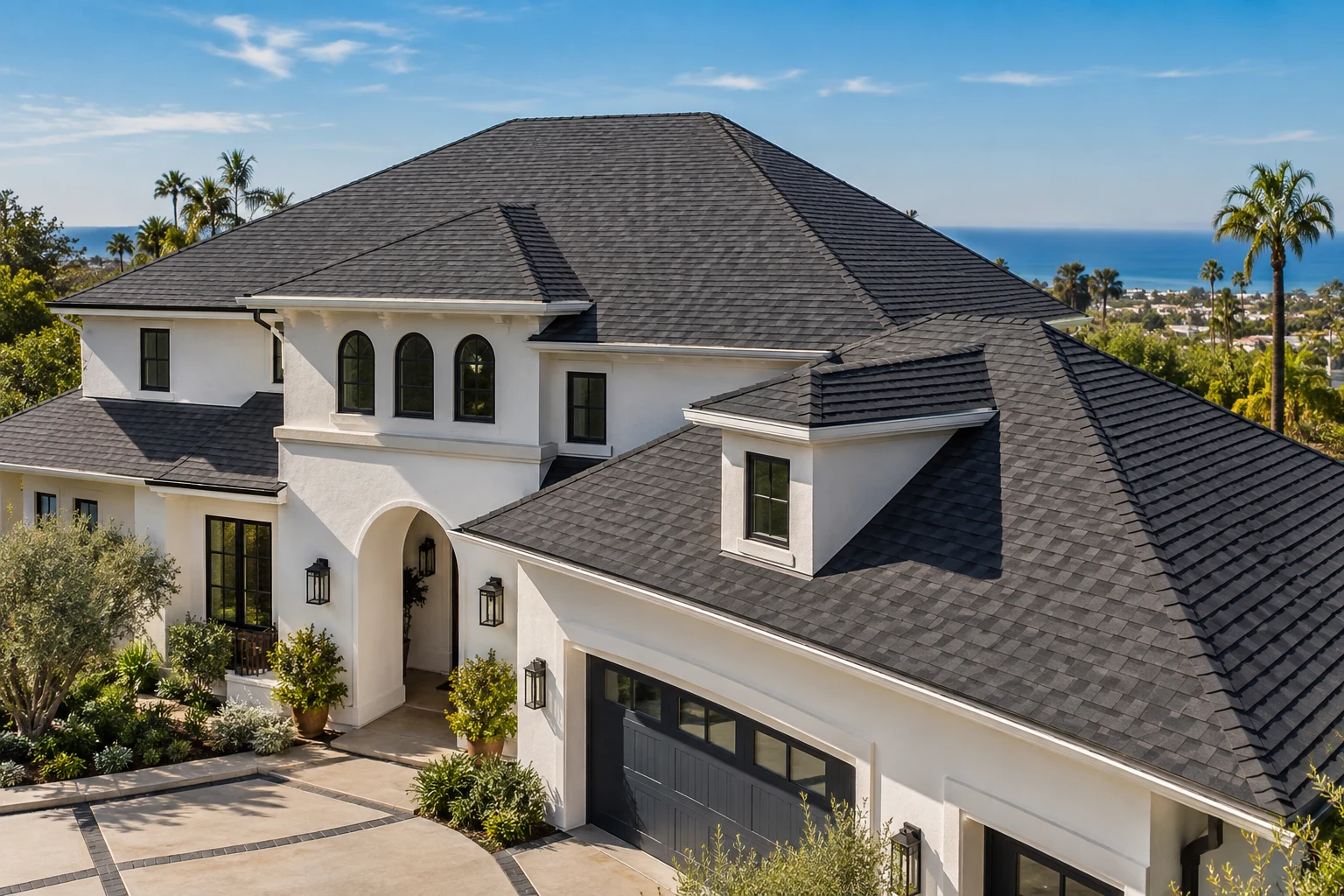
Comparing tile roof versus shingles for Southern California homes? Learn cost, lifespan, energy efficiency, and replacement factors to weigh.
If you are weighing a tile roof versus shingles, you are probably not just picking a color or style. You are deciding how your home will handle heat, curb appeal, maintenance, and long-term replacement costs for decades. In Southern California, where sun exposure, resale value, and energy performance all matter, the right answer depends on your home, your budget, and how long you plan to stay.
Tile roof versus shingles: the biggest difference
At the most basic level, tile and shingle roofs solve the same problem in very different ways. Asphalt shingles are a lighter, more budget-friendly roofing system that works well on many homes and can deliver strong performance when installed as a complete replacement system. Tile roofs, whether concrete or clay, are heavier, longer-lasting, and often chosen for their appearance as much as their durability.
That difference affects almost everything else, including cost, structural requirements, underlayment choices, installation complexity, and how the roof ages over time. For homeowners, this is why material comparisons should never stop at the visible surface.
Cost matters, but so does the timeline
For most homeowners, price is the first major dividing line. In a straight comparison, asphalt shingles usually have a lower upfront replacement cost than tile. That can make shingles appealing if you want a reliable new roof without the higher initial investment that often comes with concrete or clay tile.
Tile usually costs more because the material itself is more expensive, installation takes more labor, and some homes may require structural evaluation before a tile reroof or tile replacement can move forward. A roof system that weighs significantly more than shingles cannot be treated like a simple swap.
That said, lower upfront cost does not always mean lower lifetime cost. Shingles may need replacement sooner than tile, especially depending on product quality, attic ventilation, sun exposure, and how well the roof was installed. Homeowners who expect to stay in the house for many years sometimes decide the higher cost of tile is worth it. Others prefer shingles because they offer strong performance, good aesthetics, and a more manageable starting budget.
Lifespan is not just about the surface material
One of the biggest reasons homeowners compare tile roof versus shingles is expected service life. Tile is widely known for longevity. Concrete and clay tile can last for decades, and the tiles themselves often outlast other roof components.
But there is an important detail many homeowners miss. A tile roof is not just tile. The underlayment beneath the tile is critical, and in many replacement projects, that layer becomes the real driver of long-term performance. If the underlayment ages out, the roof system may need significant work even if many of the tiles still look usable.
Shingle roofs generally have a shorter lifespan than tile systems, but they are more straightforward as a complete integrated roofing system. With quality materials, proper ventilation, and professional installation, shingles can be an excellent long-term option for many Southern California homes. In practical terms, homeowners should think in terms of system life, not just material life.
Appearance can help or hurt home value
Style matters more than people admit. The roof is one of the largest visual features on the home, and the wrong material can make a house look mismatched.
Tile is often a natural fit for Spanish, Mediterranean, and many upscale Southern California home styles. It adds depth, texture, and a premium look that many buyers recognize immediately. On the right home, tile can support curb appeal in a way shingles may not fully match.
Shingles are more versatile than some homeowners expect. They work well on traditional, contemporary, and many suburban home designs. Modern shingle color options also allow for a cleaner architectural look, and high-quality asphalt systems can significantly improve the appearance of an aging roof.
The key is fit. A beautiful tile roof on a home not designed for tile can feel forced. A well-chosen shingle roof on the right property can look sharp, balanced, and entirely appropriate.
Weight and structure are a real consideration
This is where the decision becomes less about preference and more about feasibility. Tile is much heavier than asphalt shingles. If a home currently has shingles and the owner wants to switch to tile, the structure may need review to determine whether it can support the added load.
That does not automatically rule out tile. It simply means the project has to be evaluated properly. A licensed residential roofing contractor should look at the roof structure, the existing system, and local code requirements before making promises.
For many homes, especially when cost and simplicity matter, shingles remain the easier replacement path. They place less stress on the structure and typically allow for a more streamlined reroof process.
Energy efficiency in Southern California
In hot inland areas like Riverside, Corona, Rancho Cucamonga, and parts of the San Fernando Valley, energy performance matters. Roof color, ventilation, underlayment, and attic conditions all influence how hot your home gets.
Tile can help with heat performance because its profile may allow some air movement beneath the tiles, and lighter colors can reflect more sunlight. That said, shingles also come in energy-efficient options, including cool roof products designed to help reduce heat absorption.
This is why there is no one-size-fits-all winner. A properly designed shingle roof with the right system components may perform better than an outdated tile roof with failing underlayment or poor attic ventilation. Material matters, but full system design matters more.
Maintenance and replacement realities
Tile has a reputation for toughness, and in many ways it earns it. But tile roofs are not maintenance-free. Individual tiles can crack from impact or foot traffic, and matching older tile can become difficult over time depending on product availability.
Shingles do not usually have that same piece-by-piece issue, but they can show more visible wear as they age. Granule loss, curling, and sun-related deterioration are signs homeowners often notice as a shingle roof nears the end of its useful life.
When it is time for full replacement, shingles are generally faster and simpler to remove and reinstall. Tile projects can involve more sorting, handling, and detail work, especially when reusable tiles are part of the plan. That complexity is one reason contractor experience matters so much.
Which roof is better for resale?
The better resale choice is the one that fits the house, neighborhood, and buyer expectations. In some communities, tile may be seen as a premium feature that supports home value. In others, a brand-new architectural shingle roof with a strong warranty may be equally attractive because buyers appreciate the lower maintenance concerns and fresh system installation.
Homeowners planning to sell in the near future should think about what creates confidence for buyers. A visibly worn roof, regardless of material, can raise concerns about insurance, inspections, and future expenses. A professionally installed replacement roof from a licensed contractor often does more for buyer confidence than simply choosing the more expensive material.
How to decide between tile and shingles
If you are choosing between the two, start with the house itself. Consider the architectural style, the current roof structure, your budget, and how long you plan to keep the property. Then think about what matters most to you: lower upfront cost, longer material life, energy performance, or the visual impact of the finished roof.
This is also where professional guidance becomes valuable. A complete roof replacement is not a commodity purchase. The correct recommendation should account for slope, ventilation, decking condition, local climate exposure, and whether the home is better suited for asphalt shingles, concrete tile, or clay tile as a full system.
For homeowners across Los Angeles, Orange, Riverside, San Bernardino, and Ventura Counties, those local conditions matter. Coastal exposure, inland heat, HOA expectations, and property style can all affect the right choice.
A company focused specifically on residential roof replacement can usually give clearer guidance than a generalist approach. All Star Roof Replacement, the residential roofing division of Team All Star Construction, CSLB #1009760, works with homeowners who need long-term reroofing solutions, not short-term guesswork. That matters when you are comparing roof systems with very different costs and performance profiles.
The right choice depends on your priorities
If you want a lower upfront investment, broad design flexibility, and a dependable full replacement system, shingles are often the practical choice. If you want a longer-lasting material, premium curb appeal, and your home is structurally suited for it, tile may be the stronger fit.
Neither option is automatically better for every homeowner. The best roof is the one that matches your home, your goals, and the reality of the structure underneath it. When the decision is made carefully, a new roof should feel less like a gamble and more like one of the smartest upgrades you can make to your home.