
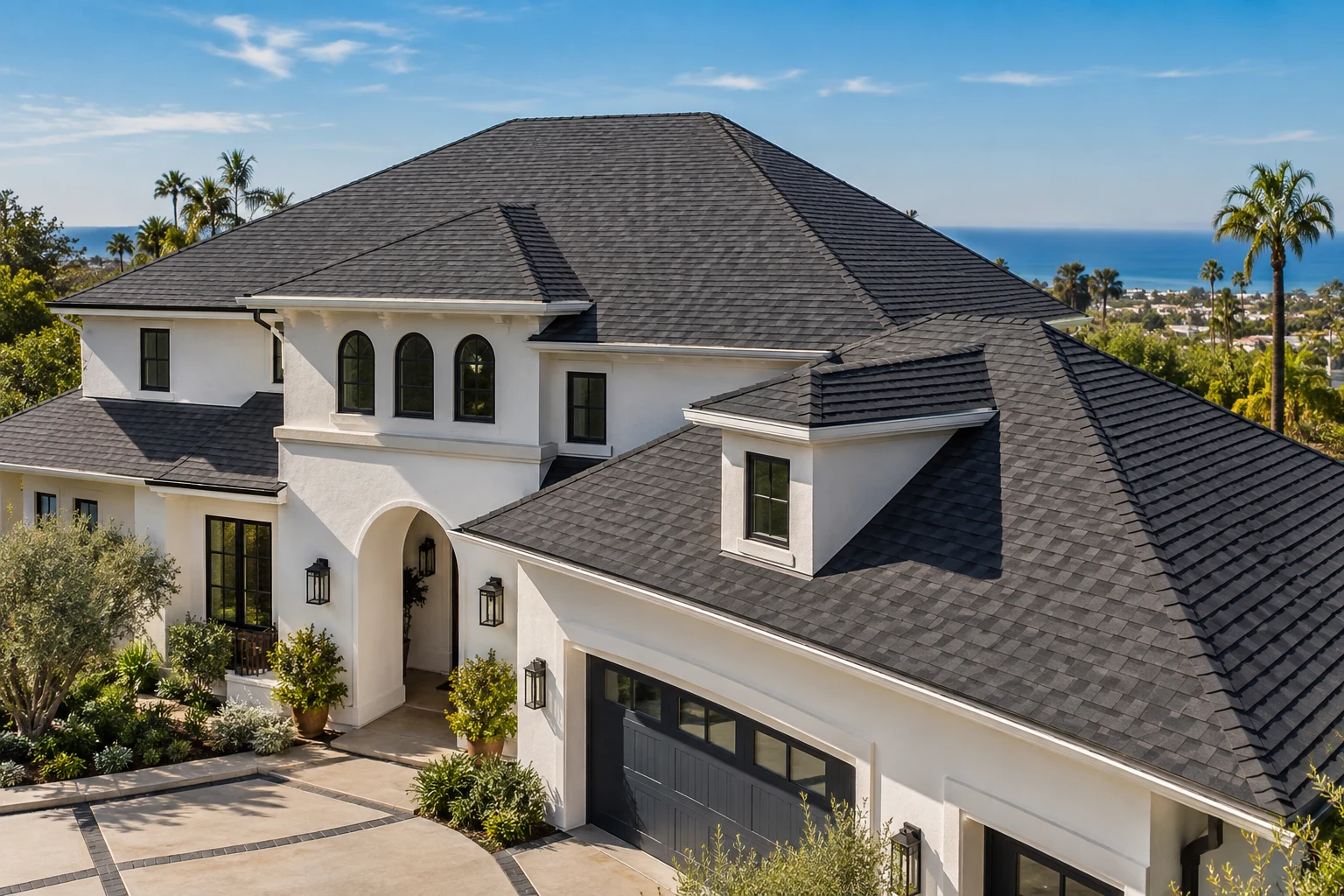
If your AC is running most of the day but your home still feels warm—or certain rooms never seem to cool down—the issue usually isn’t the AC unit itself.
It’s the amount of heat entering your home.
Most homeowners assume something is wrong with:
- the thermostat
- the ductwork
- the AC system
But in many cases, the real problem is structural.
Heat is entering the home faster than your AC can remove it.
And one of the biggest sources of that heat is the roof.
Most indoor heat starts at the roof—long before your AC can handle it.
The Core Issue: Your AC Is Working Against Continuous Heat Gain
An air conditioning system doesn’t create “cool air” the way most people think.
It removes heat from inside your home.
So if your home keeps gaining heat throughout the day, your AC ends up running continuously just to keep up.
That’s why you experience:
- rooms that feel warm even with the AC on
- temperature differences between floors
- longer cooling cycles in the afternoon
- rising energy bills without improved comfort
The system isn’t necessarily failing.
It’s being overwhelmed.
Why the Roof Plays a Bigger Role Than You Think
Your roof is the part of your home that receives the most direct sun exposure.
For hours each day, it absorbs solar heat and transfers that energy into the structure.
That heat moves through:
- roofing materials
- underlayment
- attic space
- ceiling surfaces
By the time it reaches your living space, it’s already built up significantly.
In many homes, attic temperatures can exceed 120°F or more during peak hours.
That heat doesn’t stay in the attic.
It radiates downward.
Even with insulation in place, enough heat transfers through to impact indoor comfort.
Attic heat builds up fast—and pushes that heat into your living space.
What Happens When Roofing Systems Start Failing
The problem becomes more noticeable as roofing systems age.
Even if there are no obvious leaks, subtle issues begin to affect performance.
We commonly see:
- materials that absorb and retain more heat over time
- ventilation systems that are no longer effective
- deteriorating layers that allow more heat transfer
- areas where heat gets trapped instead of released
These aren’t always visible from the ground.
But they directly affect how your home feels inside.
This is something we can actually show and measure during inspection—not guess.
If you’re already noticing these signs, it’s worth understanding the early indicators outlined here:
https://teamallstarconstruction.com/service-areas/anaheim-ca/signs-you-need-new-roof/
Windows Multiply the Problem
While the roof is the largest source of heat gain, windows add another layer.
Especially older or inefficient windows.
They allow:
- direct sunlight to enter
- radiant heat to build up indoors
- UV exposure that increases interior temperature
So instead of heat coming from just one direction, your home is dealing with:
- heat from above (roof)
- heat from the sides (windows)
This combination is what creates persistent indoor warmth—even when your AC is running.
It’s also why some homes never feel fully comfortable during hot days.
Reducing that heat load isn’t about cooling harder—it’s about controlling how much heat enters in the first place, which is exactly what strategies like
https://teamallstarconstruction.com/service-areas/anaheim-ca/reduce-heat-with-roofing/ are designed to address.
Heat doesn’t come from one place—it enters from above and through glass at the same time.
Why Some Rooms Feel Worse Than Others
If you’ve noticed that certain areas of your home are consistently hotter, there’s usually a pattern behind it.
For example:
- upstairs rooms tend to trap more heat rising from below
- rooms directly under the roof receive more radiant heat
- west-facing rooms heat up more in the afternoon
These patterns aren’t random.
They reflect how heat moves through your home.
And in many cases, they point back to roofing and window performance.
If certain rooms stay hot, heat is overpowering your cooling system.
The Common Mistake: Trying to Fix It From Inside
One of the biggest mistakes homeowners make is trying to solve this problem from inside the house.
They upgrade:
- the AC unit
- the thermostat
- the insulation
Sometimes those changes help slightly.
But they don’t address the root cause.
If heat continues entering the home at a high rate, even a new system will struggle.
This leads to:
- unnecessary upgrades
- higher costs
- little long-term improvement
The source of the problem remains untouched.
What Actually Reduces Indoor Heat
To make a real difference, you have to reduce how much heat enters the home in the first place.
That starts with the roof.
Effective solutions include:
- installing reflective or “cool roof” materials
- improving attic ventilation to release trapped heat
- replacing aging roofing systems that retain heat
- reducing heat absorption at the surface level
When these are done correctly, the impact is noticeable:
- indoor temperatures stabilize
- AC run time decreases
- comfort improves across all rooms
Reducing heat at the roof level lowers indoor temperature and AC demand.
Why This Also Affects Your Energy Costs
When your home constantly gains heat, your AC has to run longer and more often.
That increases:
- electricity usage
- system wear and tear
- monthly utility bills
Many homeowners assume rising energy costs are due to usage habits.
But in reality, it’s often due to reduced efficiency.
Your home is working against itself.
How We Approach This Differently
At All Star Roofing, we don’t rely on assumptions.
We evaluate what’s actually happening.
That includes:
- inspecting roof condition and material performance
- analyzing how heat is affecting the structure
- identifying areas where heat is entering or being trapped
These improvements fall under broader energy-efficiency upgrades, which you can explore further here:
https://teamallstarconstruction.com/service-areas/anaheim-ca/energy-efficient-roofing/
We use satellite-based evaluation along with on-site inspection to provide a clear picture.
You’re not left guessing.
You can see exactly what’s happening and why.
Understanding the Full Picture
In many cases, what seems like an AC problem is really a combination of:
- roofing performance
- window efficiency
- heat exposure patterns
If those factors aren’t addressed, the problem continues.
But once they are, the difference is noticeable.
Not just in temperature—but in comfort and cost.
Internal Resources
- https://teamallstarconstruction.com/service-areas/anaheim-ca/reduce-heat-with-roofing/
- https://teamallstarconstruction.com/service-areas/anaheim-ca/roof-lifespan/
Final Thought
If your house feels hot even with the AC running, the system itself isn’t always the issue.
The real problem is how much heat your home is allowing in.
Your roof and windows play a bigger role than most homeowners realize.
And until that’s addressed, cooling alone won’t solve it.
We don’t guess—we show and measure what’s actually happening.
Find Out Why Your Home Stays Hot — Get a Free Roof Heat Evaluation
If you want to understand why your home stays hot, we can walk you through it.
We’ll show you:
- where the heat is coming from
- how your roof is contributing
- what options actually make a difference
Call (310) 729-3013