
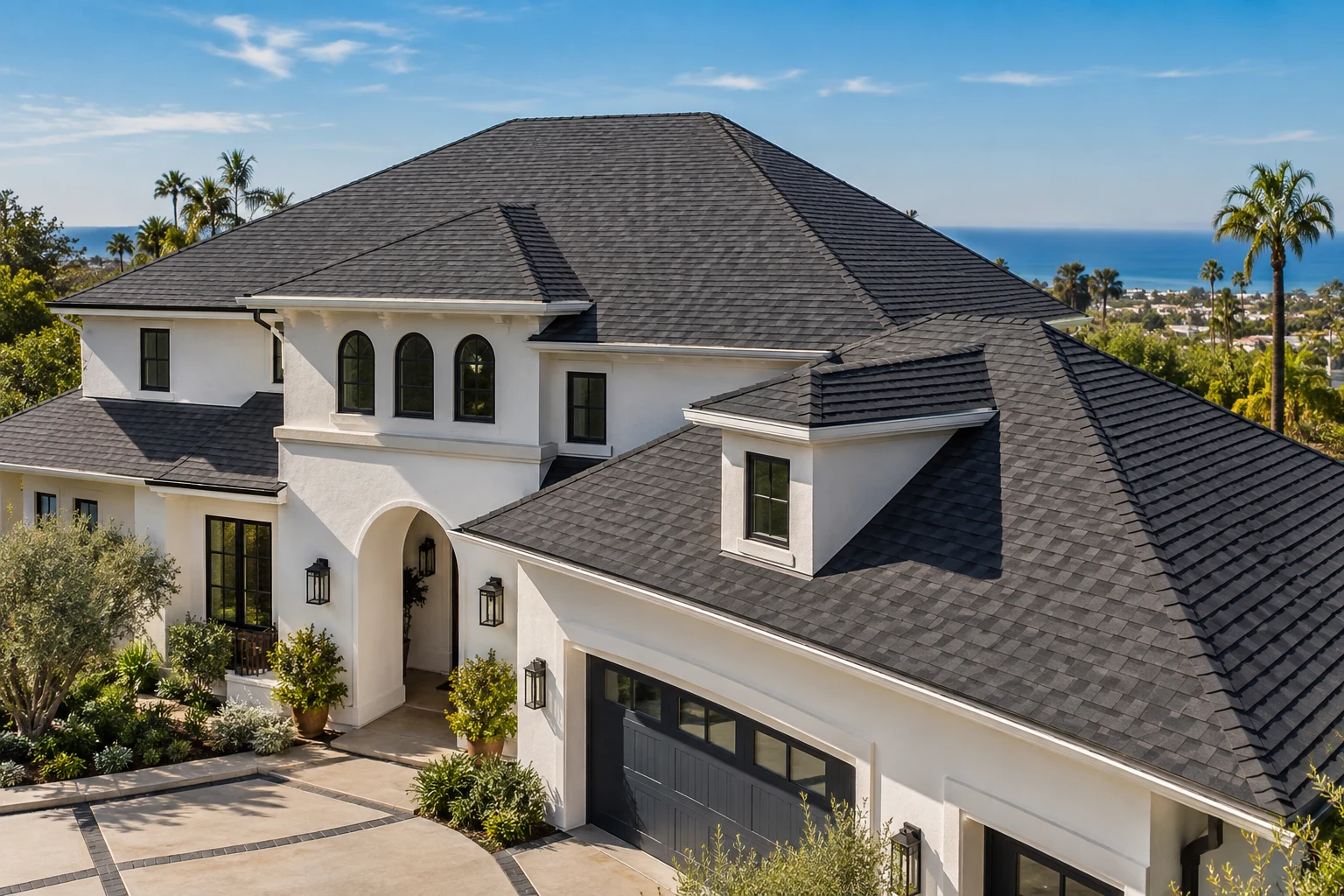
In Downey, a roof’s lifespan varies significantly based on materials, installation quality, and the local climate’s impact. Typically, residential roofs last anywhere from 15 to over 50 years when the entire roofing system is properly maintained and installed. At All Star Roof Replacement, we focus on realistic, system-level evaluations that consider underlayment, decking, flashing, and ventilation—not just the visible shingles or tiles.
Downey’s intense sun, strong UV radiation, and seasonal Santa Ana winds play a major role in accelerating material aging. Understanding how these factors influence roof longevity helps homeowners make informed decisions about replacement timing and roofing system upgrades.
Why Roof Lifespan Varies in Downey, California
Climate Impacts: Heat, UV, and Wind
Downey homes endure long stretches of hot weather and high UV exposure, conditions that degrade roofing materials faster than in milder regions. Asphalt shingles lose granules more quickly, and underlayment materials—often overlooked—become brittle under the sun’s relentless rays.
Santa Ana winds add another challenge by stressing roof fasteners and ridge caps, increasing the risk of tile lifting or shingle blow-off, which can compromise waterproofing. Additionally, heavy rains from atmospheric river events test moisture management systems like flashing and low-slope drainage.
Because of these local climate elements, we often see roofs in Downey with underperforming ventilation systems or aging flashings that contribute to premature roof failure.
Material and System Factors Affecting Longevity
Different roofing materials respond uniquely to Downey’s climate. For example, concrete and clay tiles can last 50 years or more, but their underlayment—commonly felt or synthetic membranes—typically needs replacement every 20 to 30 years. Many homeowners don’t realize that beneath the durable tiles, the waterproof barrier can degrade long before the tiles themselves show wear.
Architectural asphalt shingles usually last between 18 and 28 years here, heavily influenced by roof ventilation and sun exposure. Low-slope membrane roofs, such as TPO or PVC, have variable lifespans ranging from 15 to 30 years, with vulnerabilities to ponding water and seam failures accelerating wear.
Beyond surface materials, system components like decking quality, flashing materials, and proper ventilation design critically affect overall roof durability in Downey’s harsh conditions.
Installation Quality and System Components
Proper installation extends roof life significantly. For example, well-designed attic ventilation with ridge and intake vents reduces attic heat buildup, protecting both shingles and underlayment from accelerated deterioration. Synthetic underlayment or self-adhered membranes offer better waterproofing than traditional felt and can stretch roof life effectively.
We commonly identify issues during roof inspections stemming from inadequate flashings, improperly secured drip edges, or fasteners not rated for local wind loads. These details might seem minor but can cause early roof failure in Downey’s windy environment.
Choosing a professional installer who understands these specifics, like All Star Roof Replacement in Downey, ensures a roofing system designed for long-term performance without guesswork or quick fixes.
Consequences of Ignoring Roof Age and System Degradation in Downey
Common Signs Roof Life is Expiring
Across many Downey homes, signs like curling or cupped shingles and significant granule loss point to asphalt roofing nearing the end of its lifecycle. For tile roofs, brittle or failing underlayment often leads to slipping tiles, allowing moisture to reach decking and cause wood rot.
After seasonal rainstorms, frequent leaks around flashings and roof valleys are red flags that the entire roofing system may be compromised. Poor attic ventilation worsens these issues by accelerating material aging from trapped heat.
Risks of Continued Use Without Replacement
Delaying replacement can lead to hidden moisture buildup as compromised underlayment fails, resulting in structural damage to decking and supports. Many homeowners find that repetitive patch repairs quickly add up in cost without extending roof life meaningfully, especially under Downey’s relentless heat and wind pressures.
Overlaying a new roof layer over an existing one may seem cost-effective but creates problems such as trapped heat and moisture, roofing system warranty voids, and hidden decking issues—factors we advise against for Downey homes.
What is the Typical Lifespan of Roof Materials in Downey?
Roof Material | Typical Lifespan | Key Downey Climate Considerations
--- | --- | ---
Architectural Asphalt Shingles | 18–28 years | Sun & heat degrade granules; ventilation critical; cool shingles extend life
Concrete & Clay Tile | 50+ years (tile); 20–30 years (underlayment) | Underlayment replacement needed; lift-and-relay extends system life; flashings age
Low-Slope Membranes (TPO, PVC, Modified Bitumen) | 15–30 years | Ponding water risks; seam integrity; reflective membranes reduce heat stress
System components like ventilation, flashing quality, and decking condition influence all roof material lifespans, making regular inspections critical to catch early issues. Learn more about roof material lifespan and reflective roofing that can improve durability in Downey’s climate.
Homeowner Decision Support: When to Replace vs. Expect More Life
Signs that Indicate Replacement is Necessary in Downey’s Conditions
If your roof’s age exceeds the typical lifespan for its material under Downey’s heat and UV stress, it’s time to seriously consider replacement. Multiple leaks, brittle tile underlayment, or shingles with persistent granule loss are clear warning signs. Structural issues like decking rot or dry rot in fascia, visible or suspected during an inspection, also dictate replacement.
In addition, inadequate ventilation that causes hot attic conditions speeds up roof deterioration, making full system replacement a practical choice.
When Repair May Still Be Feasible
Repairs can be effective for younger roofs with isolated issues—for instance, minor flashing failures, small single leaks, or limited granule loss on shingles less than 12 to 15 years old. For tile roofs, underlayment less than 20 years old may only require localized fixes.
Why Full Replacement is Often the Cleaner, More Cost-Effective Long-Term Choice
Replacing your roof system completely at the right time addresses all components—underlayment, decking, flashings, and ventilation—together. In Downey’s climate, frequent patch repairs often lead to repeated callbacks and rising costs. A professionally executed roof replacement with premium components results in longer durability and improved warranty coverage.
Explore our detailed repair vs replacement guidance for Downey homeowners.
Frequently Asked Questions About Roof Lifespan in Downey, CA
How long do asphalt shingles typically last in Downey?
Architectural asphalt shingles generally last between 18 and 28 years in Downey, depending largely on ventilation quality, sun exposure, and installation details.
When should I replace my tile roof underlayment?
Tile roof underlayment typically needs replacement every 20 to 30 years. The lift-and-relay method can preserve the tiles while installing new, durable underlayment.
What factors shorten a roof’s lifespan in Downey?
Key factors include intense sun and UV radiation, repeated heat cycles, Santa Ana wind stress, poor attic ventilation, flashings failure, and general roofing system aging.
Is reroofing (overlay) advisable in Downey?
Reroofing over existing layers is generally not recommended due to risks of trapping heat and moisture, hiding decking issues, and voiding warranties. It also fails to address systemic aging problems.
How does ventilation affect roof life here?
Proper intake and exhaust ventilation reduce attic heat, slowing material degradation and extending the overall roof system’s service life.
Can upgrading to cool roofing extend roof life?
Yes, installing CRRC-rated shingles or reflective membranes can reduce heat absorption and UV damage, helping slow roof aging in Downey’s harsh sun.
How does roofing system replacement timing impact energy bills in Downey?
New roofing systems with improved underlayment, ventilation, and cool roofing materials reduce attic temperatures. This eases air conditioning loads, helping lower energy bills over time.
Next Steps: Schedule a Roof Life Assessment in Downey
At All Star Roof Replacement, we provide thorough and objective roof inspections focused on your entire roofing system—underlayment, decking, flashing, and ventilation—tailored to Downey’s specific climate challenges. Our evaluations offer realistic lifespan expectations based on your roof’s condition without pressure or overhype.
Contact us today at (310) 729-3013 or teamallstarconstruction@gmail.com to schedule your no-obligation inspection and replacement estimate. Learn more about our roof inspection and replacement process, explore roof financing options, and understand warranty coverage to protect your investment.
With All Star Roof Replacement, you get clear, expert guidance tailored to Downey homeowners who want a durable, energy-efficient roof built to handle Southern California’s conditions.