
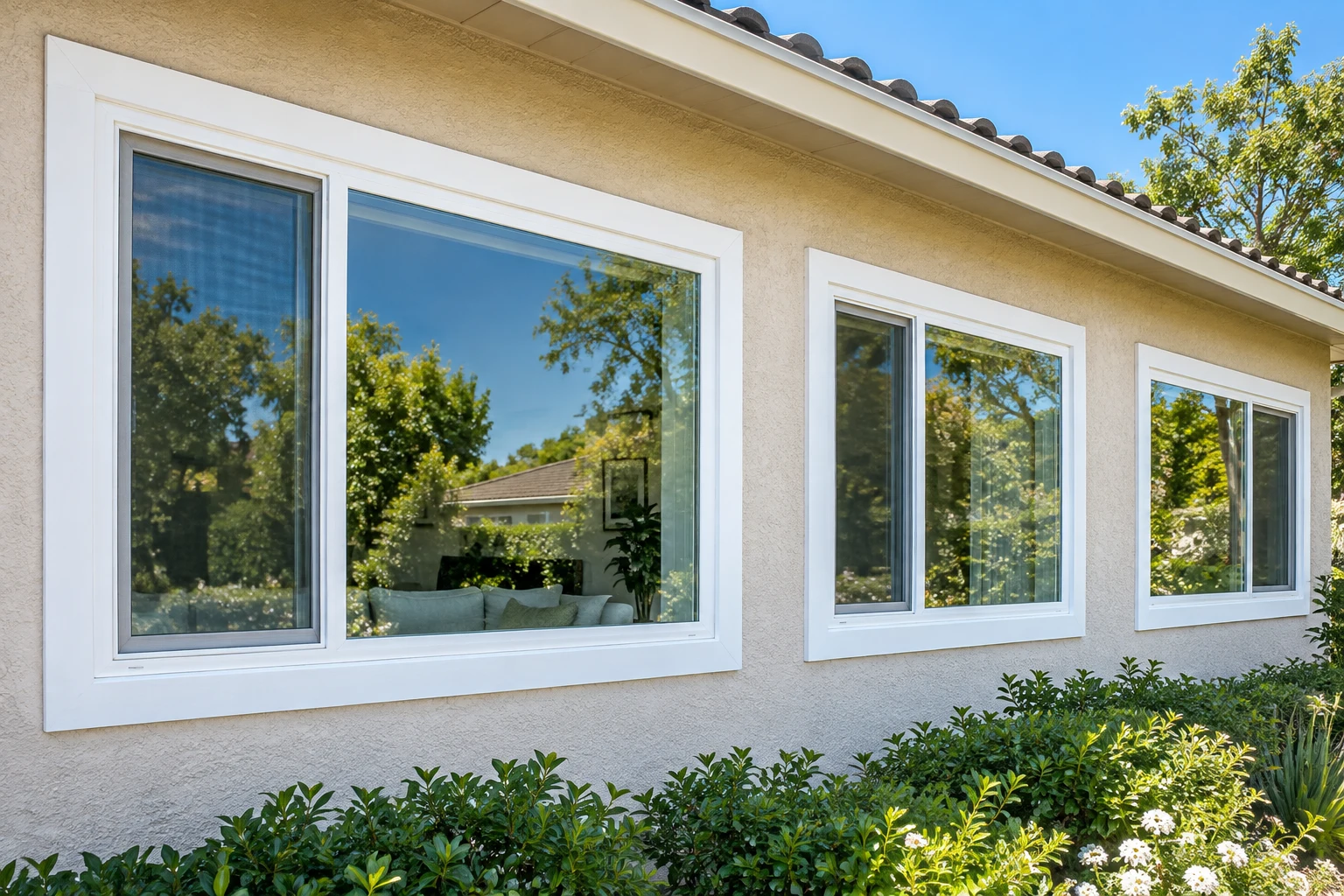
It depends—but in many Santa Monica homes, replacing all windows at once delivers better long-term performance and cost efficiency. Total Home Windows helps homeowners compare both approaches by measuring how heat is actually entering the home and showing which option makes the most sense.
If you’re dealing with rising indoor temperatures, uneven comfort, or high energy bills, your windows are often the main cause. You can learn more about how this happens here: why homes stay hot even with AC.
Replacing All Windows vs. Phased Replacement
Short answer: Replacing all windows at once creates consistent energy performance, while phased replacement can reduce upfront cost but often delays full comfort improvement.
When you replace all windows at once, your home benefits from uniform insulation, sealing, and glass performance. Phased replacement—doing a few windows at a time—can work, but it often leads to uneven results.
In homes across Santa Monica, we often see homeowners replace front-facing windows first due to sun exposure, only to realize later that heat is still entering through untreated areas.
If you’re unsure which option is right, a quick evaluation can help.
How Santa Monica Conditions Affect This Decision
Short answer: Santa Monica’s sun exposure, coastal air, and older construction make full replacement more beneficial in many cases.
Homes in Santa Monica deal with strong afternoon sun, mild but persistent coastal humidity, and many properties still have older window systems. These factors increase heat transfer and reduce efficiency over time.
While working with homes in Santa Monica, we often notice that older aluminum or single-pane windows allow significant heat gain—even when only part of the home is exposed to direct sunlight.
Upgrading all windows at once ensures the entire home performs consistently under these conditions. Learn more about window replacement in Santa Monica and what works best locally.
Cost Differences: Upfront vs. Long-Term Value
Short answer: Phased replacement lowers initial cost, but full replacement often reduces total cost over time due to efficiency and labor savings.
Replacing windows in stages spreads out expenses, but it can increase total project costs due to repeated labor, setup, and material inconsistencies.
A common situation during installation is returning months later to match new windows with older ones, which can limit product options and affect performance consistency.
Many homeowners don’t realize that full replacement projects often qualify for better pricing and faster completion timelines. You can explore typical pricing here: window replacement cost breakdown.
Energy Efficiency and Comfort Impact
Short answer: Full replacement provides immediate, whole-home comfort improvement, while partial upgrades leave weak points where heat still enters.
Heat enters through windows—and if only some are upgraded, the remaining windows continue to transfer heat inside.
Total Home Windows measures where heat is entering and compares how different window options perform in your specific home. We don’t guess—we demonstrate exactly what’s happening and how much improvement you can expect.
For example, upgrading to Low-E windows can significantly reduce heat transfer, but the full benefit is only achieved when the entire home envelope is addressed.
When It Makes Sense to Replace All Windows at Once
Short answer: Replace all windows at once if your home has widespread heat issues, older windows, or you plan to stay long-term.
- Most or all windows are outdated or inefficient
- You experience uneven temperatures across rooms
- Energy bills are consistently high
- You want a one-time upgrade with long-term results
This approach creates a clean, consistent system that performs as intended.
When Phased Replacement Might Work
Short answer: Phased replacement works if only certain windows are failing or budget is a limiting factor.
- Only a few windows are damaged or inefficient
- You need to spread out costs over time
- Specific areas receive extreme sun exposure
However, this approach should be planned carefully to avoid mismatched performance and repeated labor costs.
Choosing the wrong window strategy can lead to ongoing heat and energy issues.
How Total Home Windows Helps You Decide
Short answer: Total Home Windows evaluates your home’s actual heat patterns and shows whether full or phased replacement will perform better.
We use real measurements—not assumptions—to identify where heat is entering and how each window contributes to the problem.
Then we compare options based on your home’s layout, sun exposure, and existing window condition. This allows you to make a decision based on performance, not guesswork.
If you’re considering window replacement, knowing what to expect can make the process much easier and stress-free.
Related Window Services in Santa Monica
- Window replacement services
- Low-E energy-efficient windows
- Compare replacing all windows vs phased approach
Get Clear Guidance on the Right Window Strategy for Your Home
Choosing the right window option makes a big difference in comfort and energy use.
Total Home Windows will help you compare options based on your home and give clear, honest recommendations. No pressure—just guidance you can trust.
or visit:
> Contact
“Contact” — Total Home Windows
Request Free Estimate
Related Content
Do Windows Help With Noise in Santa Monica
What Type Of Windows Are Best For Hot Climates in Santa Monica
Milgard Vs Andersen Windows in Santa Monica
Vinyl vs Fiberglass Windows in Santa Monica
Best Window Brands in Santa Monica
Window Upgrade ROI in Santa Monica
Helpful Resources for Homeowners
Whether you’re researching energy-efficient windows, looking for ways to reduce heat and noise, or comparing replacement options for an older home, these resources cover some of the most common questions homeowners ask. Browse the articles below for practical guidance and expert insights on choosing the right windows for your home.