
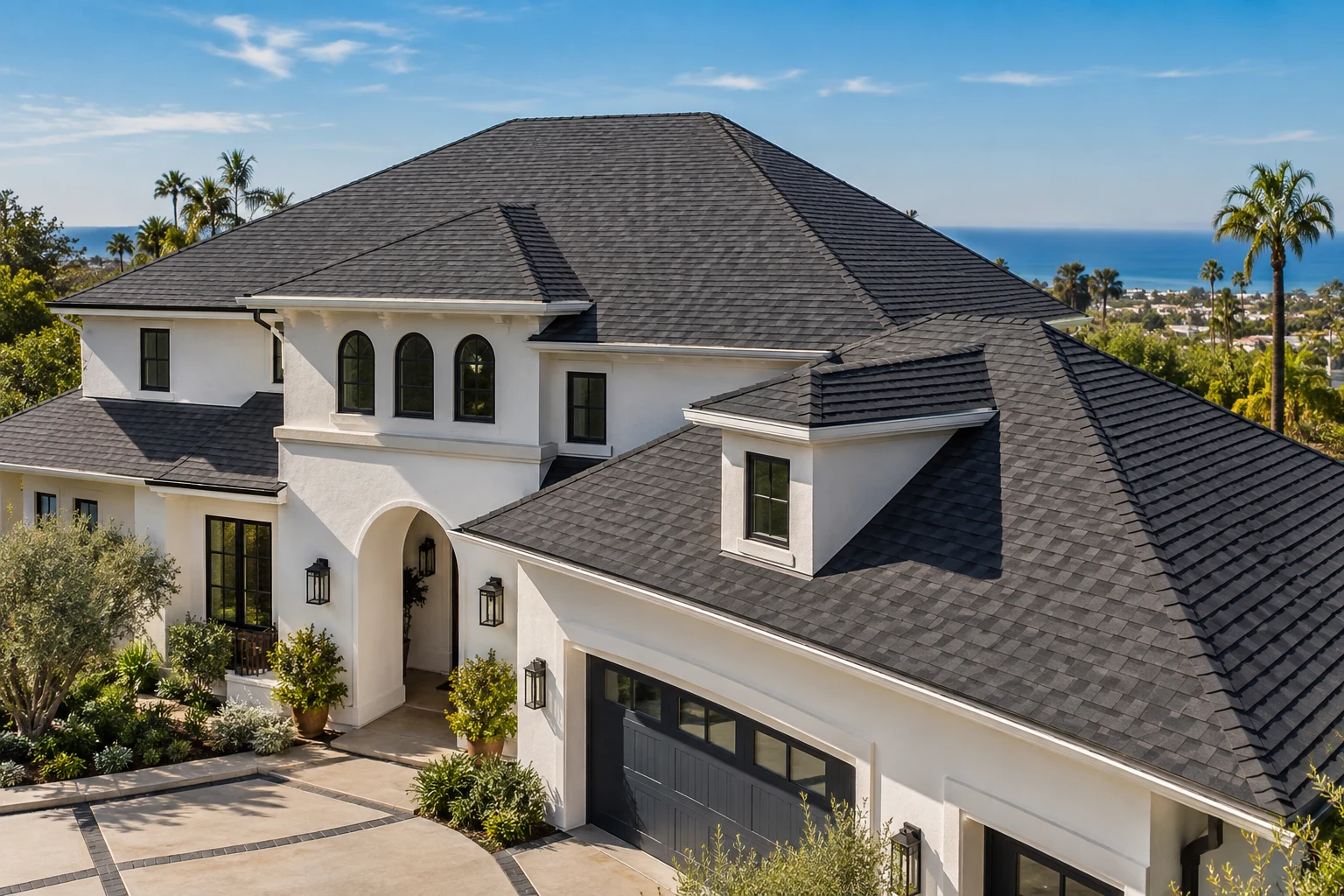
Choosing the best roofing material for your Whittier home means selecting a system designed to handle intense summer heat, strong UV rays, seasonal rains, and Santa Ana winds. At All Star Roof Replacement, we specialize in full-system evaluations, making sure your roof’s decking, underlayment, ventilation, and flashing work together to provide lasting protection in Southern California’s Mediterranean climate.
Many older homes across Whittier face accelerated roofing challenges due to these conditions, and a smart material choice is key to addressing aging roofs, leaks, and energy loss effectively.
How Whittier’s Climate Affects Roofing Material Performance
In homes across Whittier, we often see that long stretches of heat combined with high UV exposure cause traditional asphalt shingles and underlayment to degrade faster than in cooler areas. Asphalt granules can wear off prematurely, leaving shingles vulnerable, while felt underlayments become dry and brittle, increasing the risk of leaks.
Strong Santa Ana winds, frequently blowing at 30 to 50+ mph, challenge roofing systems that aren’t fastened correctly, putting ridge and hip areas at greatest risk. Moreover, during our seasonal rains, poor ventilation or rusted flashing often leads to underlying water intrusion, especially on older roofs.
For Whittier homeowners, these factors make the correct roofing material and ventilation system more than a preference—they are essentials to durability and energy efficiency. Properly chosen materials paired with expert ventilation can reduce attic temperatures of 130–150°F on summer days, protecting your investment.
Common Roofing Materials and Their Suitability for Whittier Homes
Architectural Asphalt Shingles
Architectural asphalt shingles remain a popular, cost-effective option for Whittier homes. Many premium shingles carry cool roof ratings and meet Class A fire standards, making them well-suited for hot, dry Southern California conditions. However, their lifespan—usually 18 to 28 years—is closely tied to attic ventilation and proper installation. We often advise a six-nail fastening pattern to secure shingles against Santa Ana winds effectively.
While asphalt shingles are versatile, homeowners should be aware that without adequate ventilation and high-quality underlayment, these roofs may degrade faster due to heat and UV exposure.
Concrete and Clay Tile Roofing
Concrete and clay tile roofs are well-matched to Whittier’s hillside communities and neighborhoods with homeowner associations (HOAs) that favor this traditional look. Tile offers excellent fire resistance and heat tolerance, helping keep homes cooler. But the underlayment beneath tiles is critical—its condition and quality often dictate the roof’s overall longevity.
In inspections, we frequently find that older tile roofs need underlayment replacement every 20 to 30 years to maintain performance. The “lift-and-reset” method lets tiles be temporarily removed to replace the underlayment without full reroofing. However, poorly maintained underlayment can lead to leaks or structural damage over time.
Low-Slope Roofing Membranes (Modified Bitumen, TPO, PVC)
For flat or low-pitched sections common to garages and patios in Whittier, low-slope membranes like TPO or modified bitumen provide excellent solutions. These membranes often feature white or reflective surfaces that comply with Title 24 energy codes and improve energy efficiency by reflecting sunlight. They resist UV degradation but depend on carefully sealed seams and flashing to avoid leaks, especially during heavy rains.
Metal Roofing (Less Common)
Metal roofing, though less frequent in Whittier residential roofing, is an option for those seeking premium durability and fire resistance. Its reflective surfaces reduce heat absorption, and properly installed metal roofs can withstand strong winds with minimal maintenance. Higher upfront costs often limit their use to custom or hillside properties but offer an excellent long-term life expectancy.
Material | Heat & UV Performance | Lifespan | Wind Resistance | Typical Cost Range
--- | --- | --- | --- | ---
Architectural Asphalt Shingles | Good with cool roof options | 18–28 years | Good with 6-nail fastening | Economical
Concrete/Clay Tile | Excellent heat tolerance | 40–75+ years (underlayment ~20–30) | Excellent with mechanical fastening | Mid to high
Low-Slope Membranes (TPO/PVC) | Reflective and UV resistant | 20–30 years | Good with sealed seams | Mid-range
Metal Roofing | Highly reflective | 40+ years | Excellent with fasteners | Premium
Why Underlayment and Ventilation Matter More than Materials Alone
A common issue during inspections is discovering that even the best roofing material will fail prematurely if underlayment and ventilation are subpar. Underlayment in Whittier’s climate faces intense heat that causes standard 30 lb felt to become brittle in 20 to 30 years, especially under tile roofs.
Synthetic or high-temperature breathable underlayments extend that timeline and resist deterioration, making them a smart upgrade. Proper attic ventilation is equally important—it lowers attic temperatures, reducing thermal stress on roofing materials and saving on summer cooling costs. Experts recommend a net free ventilation area ratio of 1:150, or 1:300 if intake and exhaust vents are balanced correctly.
Inadequate ventilation can accelerate asphalt shingle aging and cause condensation damage under tile roofs, so Airflow and underlayment choices are as critical as the roofing material itself.
Factors to Consider When Choosing Roofing Material for Your Whittier Home
Many homeowners don’t realize that budget, neighborhood guidelines, and roof design all play important roles in picking the right roofing system. Asphalt shingles generally offer lower upfront costs but may require replacement sooner due to Whittier’s heat stress. Meanwhile, tile roofs bring longer lifespans but higher initial investment and possible HOA style limits on color or profile.
Roof slope also matters. Low-slope areas are well-suited for membranes, while steeper roofs handle shingles and tiles better. Consider how long you want your roof to last and whether energy-saving upgrades like cool roofs and synthetic underlayments fit your goals.
For a deeper look at local pricing and architectural restrictions, visit our roof replacement cost in Whittier and tile vs shingle roof in Whittier pages.
Decision Support: Repair or Replace Your Roof Based on Material Performance
Many Whittier homeowners face the choice between repairing or replacing their roofs after years of wear. While repairs might suffice for limited damage on relatively new roofs, widespread problems like brittle underlayment, exposed decking, or continuous leaks usually mean replacement is a better investment.
Heat and wind accelerate edge failures in asphalt shingles and fatigue underlayments under tiles, making patch repairs temporary fixes at best. Additionally, overlaying new shingles on older layers traps heat and can hide structural issues—a concern in our climate. We encourage full roof replacement with system upgrades for long-term peace of mind.
For guidance on this decision, see our detailed advice at repair or replace in Whittier.
FAQs About Choosing Roofing Materials in Whittier
What roofing material lasts longest in Whittier’s climate?
Tile roofs generally last 40 to 75+ years, but their underlayment between tiles usually needs replacement every 20 to 30 years. Architectural asphalt shingles last around 18 to 28 years, with lifespan greatly influenced by ventilation and UV protection.
Are cool roof shingles available for asphalt roofs in Whittier?
Yes, many architectural asphalt shingles carry cool roof ratings certified by the Cool Roof Rating Council (CRRC), helping reduce heat absorption and supporting Title 24 compliance for energy savings.
Can I reuse my existing tile during replacement?
Tiles in good shape are often removed and reset after installing new underlayment, but brittle or discontinued tiles may need a full re-tiling for safety and appearance.
How important is attic ventilation when re-roofing?
Proper ventilation is essential for reducing attic temperatures, extending roof material life, preventing dry rot, and lowering cooling costs during our hot Whittier summers.
Does my HOA affect roofing material choice?
Yes, many Whittier HOAs regulate acceptable tile profiles and colors and require architectural approval for roof replacements, so check your local guidelines before deciding.
What roofing material is most wind-resistant in Whittier?
All roofing materials require proper fastening to resist Santa Ana winds. Architectural shingles installed with the six-nail pattern and mechanically fastened tile systems typically perform best in high winds.
How do I know if I should repair or replace my roof?
If your roof shows frequent leaks, exposed or damaged underlayment, granule loss on shingles, or aged tile underlayment, replacement is usually the safer and more cost-effective choice.
Contact All Star Roof Replacement for Your Whittier Roof Material Consultation
At All Star Roof Replacement, we offer thorough roof inspections tailored to Whittier homes. Our approach is straightforward: no pressure, clear explanations about the best roofing materials, and respect for your schedule and budget. We assess your roof system holistically—decking, underlayment, ventilation, and flashing—to guide you toward durable, energy-efficient options.
Ready to take the next step? Call us at (310) 729-3013 or email teamallstarconstruction@gmail.com to schedule your inspection and receive a detailed estimate.
Learn more about our comprehensive roof replacement process in Whittier and why we’re a trusted roofing contractor near me for homeowners just like you.