
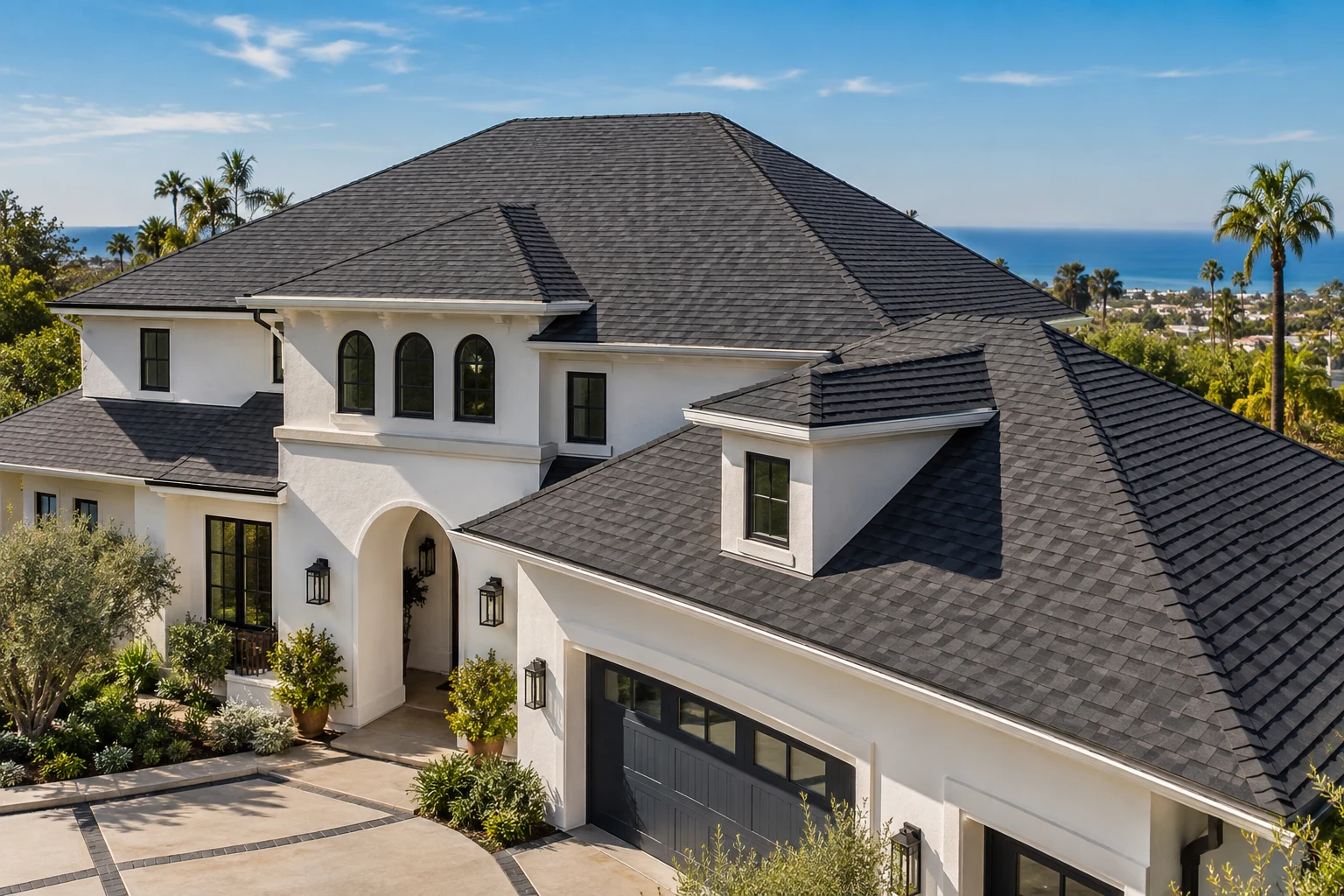
Choosing the right roof replacement in Whittier means understanding how tile and shingle systems perform in our hot Mediterranean climate. At All Star Roof Replacement, we specialize in thorough roof evaluations that look beyond surface materials to the entire roofing system — underlayment, decking, flashings, and ventilation — so you can make an informed decision that lasts.
In homes across Whittier, we often see tile roofs on hillside and HOA properties, while shingles are more common in tract neighborhoods and newer replacements. Each roofing type has unique benefits and challenges in our local climate.
Understanding Tile and Shingle Roofs in Whittier’s Climate
Tile roofs are prized for their fire resistance, longevity, and ability to handle intense heat, often lasting 40 years or more. But the underlayment beneath tile deteriorates from sun exposure and usually needs replacement every 20 to 30 years. Proper attic ventilation and flashing quality are critical to extending these lifespans.
Shingle roofs offer lower upfront costs and simpler installation or replacement. However, Whittier’s strong UV rays cause accelerated aging—in the form of granule loss and curling—reducing their useful life to roughly 18 to 28 years. Good attic ventilation also plays a major role in keeping shingles performing well through our warm summers and occasional wet winters.
A common issue during inspections is homeowners focusing on the visible tiles or shingles without considering the system’s components below. We always advise looking at ventilation and flashings as equally important to surface materials for long-term durability.
Learn more about roof ventilation and cool roof options to improve heat resistance on our cool roof page and energy-efficient roofing page.
Why Tile and Shingle Roof Issues Occur in Whittier
In Whittier, our hot sun causes asphalt shingle binders to dry out and crack, speeding granule loss. Tile roofs suffer mainly from underlayment brittleness due to UV damage. Another local factor is the Santa Ana winds, which often loosen ridge or hip tiles and blow off improperly fastened shingles. Repeated windstorms worsen these problems over time.
Seasonal rains reveal underlayment failures and flashing deterioration, which often leaks despite otherwise sound-looking shingles or tiles. Many homeowners don’t realize the underlayment is typically the first component to fail, not the tiles or shingles themselves.
For more on spotting roof wear and damage from Whittier weather, visit our signs you need a new roof page and for emergency advice check our roof leak protocol page.
Consequences of Ignoring Tile vs Shingle Roof Wear in Whittier
Ignoring wear speeds up costly problems. Shingles lose granules and become brittle, increasing leaks and causing heat infiltration that drives up energy bills. Tile underlayment failures allow water beneath the tiles, risking wood deck rot and structural damage.
Poor ventilation worsens attic heat buildup—sometimes reaching 130–150°F in summer—accelerating material breakdown and reducing roof lifespan. In many Whittier homes, repeated patch repairs focusing on symptoms rather than systemic issues lead to higher long-term costs.
If you’re debating whether to repair or replace, find guidance on long-term value on our roof repair or replacement page.
Tile vs Shingle Roof Systems: Key Differences and What They Mean for Whittier Homeowners
Tile roofs in Whittier are composed of heavy tiles, underlayment (the lifespan-limiting component), battens, flashings, and ventilation systems. Typically, lift-and-reset replacement is common, where tiles are carefully removed, underlayment replaced, and tiles reset. Proper structural support for the heavier tile roof is especially critical on hillside properties.
Shingle roofs consist of asphalt shingles, synthetic or felt underlayment, roof decking, metal flashings, and ridge and soffit vents. Shingles are lighter, easier to replace, and generally less complex.
Tile roofs offer exceptional fire resistance and better heat tolerance, while shingles provide cost savings and faster installation. Deciding which system suits your Whittier home depends on budget, home style, and local requirements.
For more detail on roofing materials and replacement steps, check our best roofing materials and roof replacement process pages.
Pros and Cons of Tile vs Shingle Roofs for Whittier’s Climate and Neighborhoods
Feature | Tile Roofs | Shingle Roofs
--- | --- | ---
Fire Resistance | High fire rating | Moderate fire resistance
Longevity | 40+ years for tiles (underlayment replacement needed) | 18–28 years depending on care
Heat Deflection | Better heat deflection, reduces attic heat | Available cool roof options to improve heat resistance
Initial Cost | Higher upfront cost, especially with tile lift-and-reset | Lower upfront cost, faster installation
Maintenance | Underlayment replacement required; fragile to walk on | More frequent replacement cycles; easier spot repairs
Weight & Structure | Heavier; needs proper deck support (important for hillside homes) | Lighter; minimal structural concern
Neighborhood Preference | Favored in HOA and hillside neighborhoods | Common in tract and newer developments
HOA guidelines often lean toward tile roofing for aesthetic and fire safety reasons. Learn more about HOA rules and permitting on our HOA and permit guide page, plus energy benefits on our cool roof options page.
When Tile or Shingle Roof Replacement Makes Sense in Whittier
Tile roofs typically need a major lift-and-reset or full replacement between 20 and 30 years due to underlayment failure risk, especially when leaks appear after seasonal rains. Shingle roofs usually require replacement after 18–28 years when granule loss, curling, and repairs become frequent.
Regardless of surface material, failed ventilation, flashing leaks, or decking damage demand replacement. Repair is best limited to isolated damage on roofs less than 12 years old or for single slipped tiles or shingle blow-offs.
Homeowners navigating these decisions can find helpful information on our roof repair or replacement decision page and diagnostic signs on our signs you need a new roof page.
Supporting Elements: Underlayment, Flashings, and Ventilation in Tile vs Shingle Roofs
Underlayment is often the first roofing component to show failure under tile roofs, damaged by UV heat cycling and mechanical stress from battens and nails. Using synthetic high-temp underlayment can extend its life significantly.
Shingle roof underlayments also degrade from heat damage and dry rot. Synthetic underlayments offer better moisture resistance and longevity than traditional felt. Flashings around roof valleys, walls, and penetrations age prematurely and must be replaced during reroofing to prevent leaks.
Proper attic ventilation is crucial for both roof types. Balanced intake and exhaust airflow with ratios of 1:150 or 1:300 helps lower attic temperatures, slows material degradation, and cuts energy costs during Whittier’s hot summers.
For detailed insight on ventilation, see our roof ventilation resource and deep dive into underlayment lifespan on this tile vs shingle roof page.
FAQs About Tile vs Shingle Roof Replacement in Whittier, CA
How much does it typically cost to replace a tile vs a shingle roof in Whittier?
Tile lift-and-reset with new underlayment usually ranges around $450 to $800 per square, while full new concrete tile installations can run $1,050 to $1,600 or more per square. Shingle roofs generally fall between $700 and $1,150 per square. Actual costs vary with roof size, complexity, deck repairs, and ventilation upgrades.
Which roofing material lasts longer under Whittier’s climate conditions?
Tile roofs can last 40 to 75 years or more, with underlayment replacement recommended every 20 to 30 years. Shingles typically last 18 to 28 years depending on ventilation, UV exposure, and maintenance practices.
Is a tile roof heavier than a shingle roof, and does that affect my home?
Yes. Tile roofs are much heavier and require sufficient structural deck support, especially on hillside homes common in Whittier. A structural evaluation is important before proceeding with a tile roof replacement.
Can tiles be reused during a replacement?
Often, yes. If the tiles are still in good condition and the model is available, a lift-and-reset process allows careful removal, underlayment replacement, and tile resetting, resulting in cost savings compared to full tile replacement.
What are the ventilation requirements for tile vs shingle roofs?
Both systems need balanced attic ventilation to reduce heat buildup. In Whittier, the recommended net free ventilation area ratio is 1:150 or 1:300, with balanced intake and exhaust vents designed to maximize roof system lifespan.
How do Santa Ana winds affect tile and shingle roofs differently?
Santa Ana winds can loosen ridge and hip tiles and blow off shingles not properly fastened. Tile roofing requires mechanical securement on hips and ridges, while shingles should have proper six-nail patterns and well-adhered starter strips to withstand wind uplift.
Do I need a permit to replace my tile or shingle roof in Whittier?
Yes. The City of Whittier requires permits for reroofing projects, including full tear-offs. Inspections during the process ensure code compliance for fire safety, ventilation, and Title 24 energy rules when applicable.
Next Steps — Schedule Your Roof System Evaluation in Whittier
Replacing your roof is a major investment that starts with a comprehensive roofing system inspection. All Star Roof Replacement assesses underlayment condition, decking integrity, ventilation, and flashings to provide detailed, no-pressure estimates tailored to Whittier’s climate and housing styles.
We manage ordinance compliance, permit acquisition, and HOA approval coordination. Our goal is to deliver a roofing solution that protects your home long-term while improving energy efficiency.
Contact us today at (310) 729-3013 or email teamallstarconstruction@gmail.com to schedule your roof evaluation and get a clear path forward.
Learn more about the replacement process and financing options at roof replacement process and financing options.