
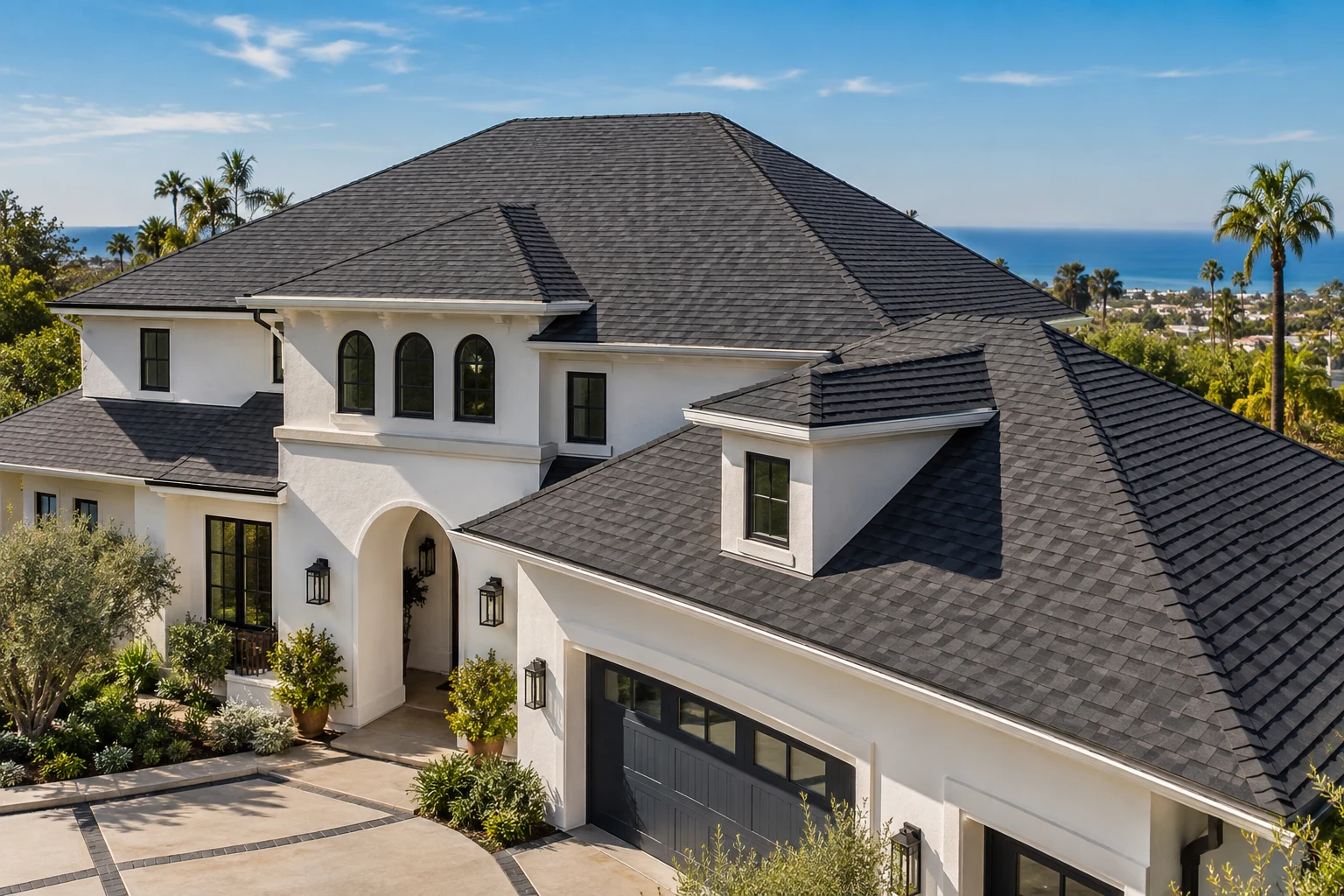
In Dana Point, choosing the best roofing material means balancing durability, coastal weather resistance, and neighborhood standards. At All Star Roof Replacement, we specialize in residential roof replacements designed for this unique environment, ensuring you select materials that stand up to Dana Point’s UV exposure, salt air, and wind challenges.
Many homeowners don’t realize that the roofing material is only one part of a roofing system; underlayments, decking, flashings, and ventilation also heavily influence roof longevity and performance here. Our thorough inspections help you understand all these factors before making a decision.
Why Roofing Material Selection Is Critical in Dana Point’s Climate
Dana Point’s coastal location exposes roofs to intense UV rays, salt aerosols, and the seasonal Santa Ana winds. This combination accelerates material wear in ways inland homes rarely face. For example, shingle granules break down faster under strong sunlight and salt, and metal flashings exposed to salt air can corrode prematurely.
A common issue during inspections is deterioration of underlayment and flashings caused by marine moisture, especially near valleys and eaves, leading to leaks that might not be visible until damage becomes advanced. Santa Ana winds also place a premium on high wind-resistant roofing materials and fastening methods.
Because of this, choosing roofing materials that are tested and proven in coastal climates is essential for a Dana Point home. For more on materials suited to these conditions, you can explore our detailed best roofing materials resource.
How Roofing Materials Perform in Dana Point: Pros and Limitations
In Dana Point, each roofing material has strengths and trade-offs influenced by the marine climate and local home styles.
Architectural Asphalt Shingles
Architectural shingles are often preferred for their lower upfront cost and lighter weight. Near the coast, we see their lifespan typically ranges from 18 to 25 years due to UV and salt air deterioration. Installing these shingles with corrosion-resistant fasteners and enhanced wind sealing can help extend their service life.
This option works well on older homes in Dana Point neighborhoods like Lantern Village or Capistrano Beach, where HOA restrictions are minimal. However, in some communities, shingles may not meet aesthetic guidelines.
Concrete or Clay Tiles
Concrete and clay tile roofs are favored in Dana Point’s upscale areas, such as Monarch Beach, because of their classic look and excellent longevity. The tiles themselves often last 50 years or more, but underlayment typically requires replacement every 20 to 30 years under coastal conditions.
Tile roofs require upgraded high-temperature underlayments and coastal-grade, corrosion-resistant flashings to combat moisture and salt damage. Due to their heavier weight, deck reinforcement is usually necessary. For detailed insights, visit our tile lift-and-relay page explaining underlayment replacement options.
Low-Slope Membranes (TPO, PVC, Modified Bitumen)
Flat or low-slope areas on Dana Point homes benefit from membrane roofing systems like TPO or PVC. These materials offer reflective surfaces that help reduce attic temperatures in Dana Point’s hot Mediterranean climate. Lifespans vary, generally between 15 to 25 years, depending on installation and maintenance.
Proper drainage and tapered insulation prevent water ponding, which is crucial for these systems’ longevity. Learn more about these specialized low-slope roofing materials on our dedicated page.
Metal Roofing
Metal roofs, especially stainless steel or aluminum alloys, offer premium lifespan and excellent resistance to high winds—a big plus during Dana Point’s Santa Anas. They are less common in traditional tract homes due to HOA preferences but are increasingly popular on custom oceanfront properties.
For homeowners considering metal, our standing seam metal roofing page explains material options and benefits in detail.
Material | Average Lifespan | Coastal Suitability | Typical Uses | Considerations
--- | --- | --- | --- | ---
Architectural Asphalt Shingles | 18–25 years | Good with corrosion-resistant fixes | Older Dana Point homes, cost-conscious | UV and salt air accelerate wear; HOA restrictions possible
Concrete / Clay Tiles | 50+ years (tiles), 20–30 years (underlayment) | Excellent if upgraded underlayment used | High-end homes, HOA communities | Heavy load; requires stronger decking; costly
Low-Slope Membranes (TPO, PVC) | 15–25 years | Good reflector, needs proper drainage | Flat roof sections | Requires attentive drainage design
Metal Roofing (Aluminum, Stainless Steel) | 40+ years | Excellent wind and corrosion resistance | Custom oceanfront homes | Less common due to HOA; premium cost
Roofing as a Full System: More Than Just Material
Choosing the right roofing material in Dana Point is only one piece of the durability puzzle. The entire roofing system—including underlayment, flashings, decking, and ventilation—plays a vital role in resisting coastal elements and extending roof service life.
Underlayment acts as the primary waterproof barrier. Traditional 30 lb felt breaks down faster here due to heat and salt air, so we recommend upgraded synthetic or high-temperature underlayments. Coastal-grade flashings made from stainless steel, aluminum, or copper prevent early corrosion better than galvanized metals.
At All Star Roof Replacement, our inspections often reveal dry rot or decking damage near eaves caused by splash-back and wind-driven rain. Addressing these issues is critical before installing the new roof to avoid premature failure. For more details on wood repairs, see our wood repair standards.
Balanced attic ventilation is often overlooked but crucial. Proper ventilation—typically 1/150 net free area—reduces heat and moisture buildup in the attic, slowing the degradation of shingles and underlayment. Discover more about ventilation improvements on our attic ventilation upgrades page.
We also use specialized fasteners and starter strips to increase wind resistance per code and best practice, protecting your home from Dana Point’s Santa Ana winds. Learn more on our coastal flashing and fastener options page.
Decision Support: How to Choose the Best Roofing Material for Your Dana Point Home
Selecting the ideal roofing material depends on several factors unique to your home and neighborhood. Many Dana Point HOAs require tile roofing because of aesthetic standards and durability expectations. This makes concrete or clay tile a common choice in areas like Monarch Beach, despite higher initial costs.
In less restrictive neighborhoods such as Lantern Village, architectural asphalt shingles can be a practical, budget-friendly option if installed with corrosion-resistant details and ventilation upgrades. Many homeowners don’t realize the benefits of upgrading underlayment to extend roof life in our intense sun and salt air.
Regardless of material, quality installation by experienced roofers increases longevity and reduces future problems. At All Star Roof Replacement, we take a system approach—addressing decking, ventilation, flashings, and drainage alongside material selection.
For guidance on whether to repair or fully replace your roof, we invite you to review our helpful roof repair or replacement information. For comprehensive options, our best roofing materials page provides detailed comparisons.
FAQs About Roofing Materials in Dana Point, California
What roofing material lasts longest in Dana Point?
Concrete or clay tile roofs, when installed with upgraded underlayment and coastal-grade flashings, typically have the longest lifespan. Tiles can last 50+ years, though the underlayment generally needs replacement every 20 to 30 years due to coastal conditions.
Are architectural shingles a good choice for Dana Point’s coastal weather?
Yes, architectural shingles can perform well if installed with corrosion-resistant fasteners, enhanced wind-resistant details, and balanced attic ventilation. Their lifespan is typically 18 to 25 years near the coast.
Why does the underlayment fail before the tile?
Underlayment is exposed to intense heat cycling, UV rays especially in valleys and eaves, salt air corrosion around fastener penetrations, and can degrade faster if attic ventilation is poor.
When should I choose tile lift-and-relay over full tile replacement?
Lift-and-relay is a smart option when tiles are intact but underlayment and flashings have reached the end of their service life, commonly after 20 to 30 years. It preserves roofing aesthetics while refreshing the waterproof layer.
How does ventilation affect roofing material lifespan in Dana Point?
Proper attic ventilation reduces heat and moisture buildup, significantly slowing the degradation of shingles and underlayment. This is especially important in Dana Point’s hot sun and Santa Ana wind seasons.
Is a cool roof beneficial in Dana Point’s climate?
Yes. CRRC-rated cool shingles or membranes reflect sunlight, lowering attic temperatures and reducing air conditioning loads. While not mandatory, this is a practical upgrade for comfort and extending roof life.
Do HOA requirements affect roofing material choice in Dana Point?
Yes, many HOAs specify tile profiles and colors and require architectural approval before reroofs. Asphalt shingles may be restricted or subject to strict guidelines in certain neighborhoods.
Ready to Evaluate Your Roofing Material Options? Contact All Star Roof Replacement in Dana Point
When you’re ready to review roofing material options, start with a thorough inspection from All Star Roof Replacement. We evaluate attic conditions, decking integrity, ventilation status, and flashing performance, then provide documented photos and an easy-to-understand report tailored to Dana Point’s unique climate.
There’s no pressure—just expert guidance to help you decide the best roofing system. Call us at (310) 729-3013 or email teamallstarconstruction@gmail.com for your estimate or questions.
We focus on quality installation and a full roofing system approach to withstand salt corrosion, Santa Ana winds, and HOA standards—avoiding overlays and quick fixes. Learn more about the next steps on our roof replacement process page, identify signs you need a new roof, and see our detailed roof warranty information.