
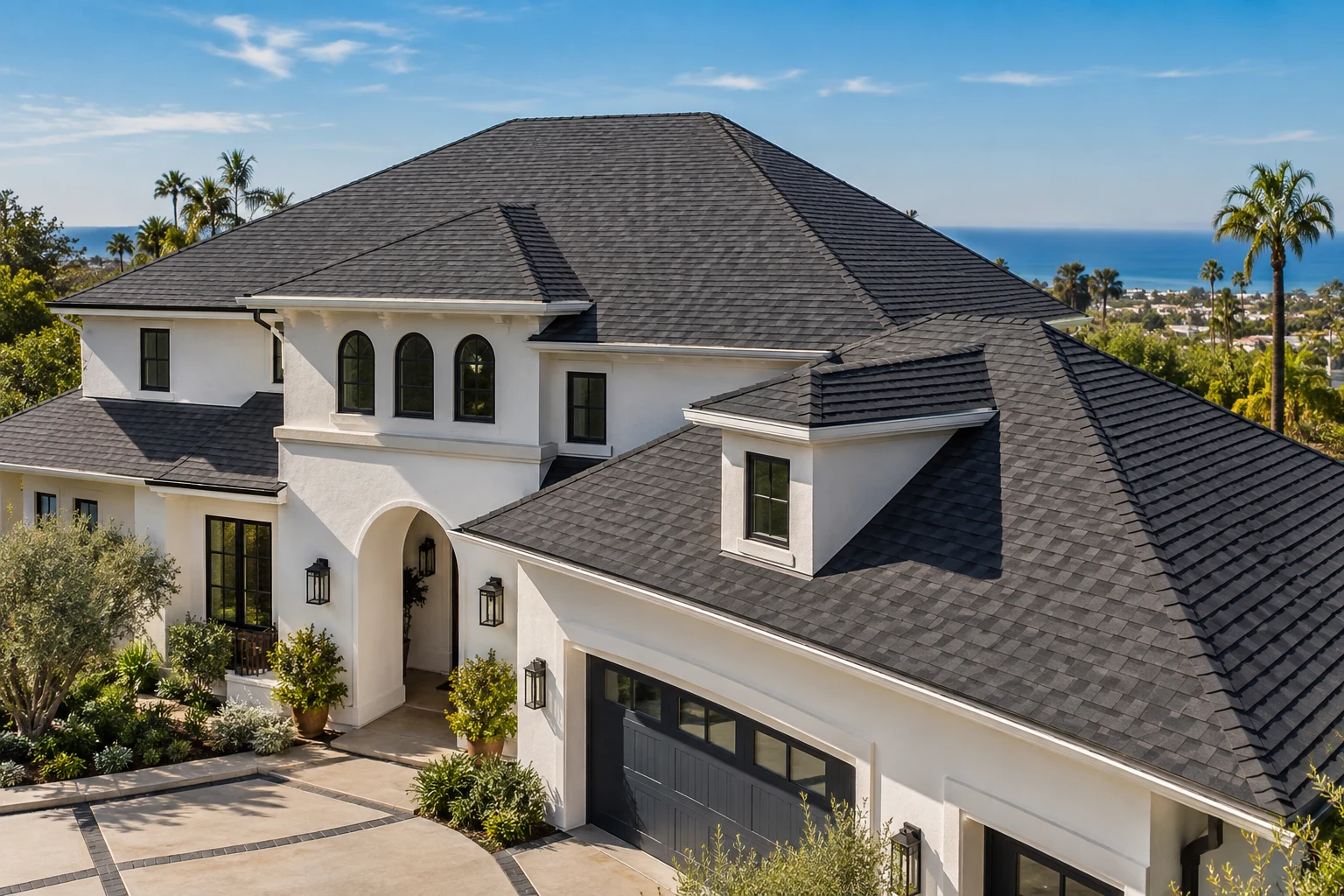
When it comes to residential roof replacement in Dana Point, choosing between tile and shingle roofing is a common question. At All Star Roof Replacement, we provide experienced inspections and clear, practical advice tailored to the unique coastal climate and home styles in Dana Point. Understanding the full roofing system—not just tiles or shingles—is key to making the best choice for your home’s durability and energy efficiency.
Direct Comparison Overview: Tile vs Shingle Roofs for Dana Point Homes
Why This Matter Arises in Dana Point’s Climate and Housing Stock
In homes across Dana Point, our inspections reveal that the marine Mediterranean climate plays a major role in roofing performance. Constant sun exposure causes shingles to lose granules and become brittle faster. Salt air accelerates corrosion of flashings, affecting both tile and shingle systems. Many neighborhoods from the 1980s through 2000s feature tile roofs over older underlayments that often fail decades before the tiles themselves.
Shingle roofs, more common in certain older Dana Point communities like Lantern Village, face accelerated wear of about 18–25 years because of coastal UV and salt exposure. Santa Ana winds also cause mechanical stresses on roof edges, leading to blown-off shingles or cracked tiles, especially if fastening and flashings are not up to coastal standards.
So, it’s not just about tile versus shingle but about how the entire roofing system performs in Dana Point’s specific climate and building stock.
Consequences of Ignoring Roof System Differences
Many homeowners don’t realize that underlayment and flashing conditions often drive roof failures. In Dana Point, failing underlayment under long-lasting tile roofs can lead to leaks and wood rot even when tiles look fine. Similarly, repeated patchwork on shingle roofs typically signals systemic issues rather than mere surface wear.
Ignoring these system components can cause costly interior damage, raise energy costs due to poor ventilation or degraded reflective materials, and reduce the effective lifespan of your roof. Replacing just the surface materials without addressing decking, flashings, and ventilation often results in recurring roof problems.
Core Explanation: Tile and Shingle Roof Systems in Dana Point – What You Need to Know
Tile roofs offer a durable, attractive exterior layer that can last 50 years or more in Dana Point. However, the underlayment beneath the tiles is critical and often needs replacing every 20–30 years; older felt underlayments become brittle and leak-prone. Plus, flashings must be corrosion-resistant alloys like stainless steel or copper to withstand the salty coastal air.
Architectural asphalt shingles rely on integrated waterproofing through asphalt binders and fiberglass mats but generally last less near the coast—about 18 to 25 years. Proper attic ventilation with balanced airflow is essential to extend shingle life here.
In summary, both tile and shingle roofs are part of a full system including decking integrity, ventilation, and durable flashings that must be tailored to Dana Point’s environmental challenges.
For a detailed look at roof longevity and system components tailored to Dana Point homes, see our roof lifespan in Dana Point page and our guide on coastal flashing and fastener options.
When to Choose Tile vs Shingle for Roof Replacement in Dana Point
Pros and Cons for Tile Roofing
Tile roofs align well with the aesthetic requirements of many Dana Point HOAs and provide impressive longevity when maintained properly. The airspace beneath tiles helps cool the attic, lowering energy costs during hot summers. Tiles installed with coastal-specific nailing patterns and corrosion-resistant flashings hold up well against strong winds including Santa Ana events.
However, tiles have higher upfront installation costs and require that the roof decking be structurally sound to support their weight. The underlayment beneath tiles must be upgraded to SBS-modified or high-temperature self-adhered membranes for lasting protection against coastal heat and salt. Tile surfaces are also fragile underfoot, making maintenance and roof access more challenging.
Many Dana Point homeowners benefit from our tile lift-and-relay service, replacing underlayment and flashings while preserving existing tiles when conditions allow.
Pros and Cons for Architectural Asphalt Shingles
Architectural shingles typically have lower upfront costs and are easier to install and work with around roof penetrations like skylights and vents. Cool shingle options certified by the Cool Roof Rating Council (CRRC) reduce heat absorption for better energy efficiency in Dana Point’s sun-heavy climate. Shingle roofs are also easier to maintain and update with repairs or partial replacements.
That said, shingles demand more frequent replacement—usually every 18 to 25 years—due to UV degradation and salt air exposure. Older 3-tab shingles are not recommended in Dana Point because they degrade too quickly and are prone to wind blow-offs especially with seasonal Santa Ana winds.
For homeowners prioritizing budget and ease of future updates, cool roof shingles available locally provide sensible choices. See our cool roof options in Dana Point for more.
When Each Makes Practical Sense in Dana Point
Tile roofs suit homeowners with HOA requirements for tile, those wanting a long-lasting roof, and homes with adequate structural support. When tiles are sound but underlayment has aged, a lift-and-relay roof replacement can save costs while extending roof life.
Shingle roofs work well for budget-conscious owners with simple roof geometry and without strict HOA mandates. These roofs require planned re-roofing every 20 years or so but are simpler to replace and adapt over time.
No matter the choice, a professional evaluation of roofing systems—including decking, ventilation, and flashing—is critical to maximize lifespan and performance. We recommend reviewing our advice on roof repair or replacement in Dana Point to guide your decision.
Key Considerations on Roofing Systems: Beyond Shingles and Tiles
Roof Underlayment and Flashing Challenges in Dana Point
In Dana Point’s coastal environment, roof underlayment faces accelerated aging from heat, UV rays, and salt air. Many older tile roofs still use legacy felt underlayments that typically fail after 20–30 years, allowing water infiltration beneath tiles that last much longer. That’s why reroofing often requires complete underlayment replacement even when tiles remain intact.
Flashing materials must be carefully selected to resist salt corrosion. Common galvanized metals deteriorate quickly here, causing leaks around roof edges, valleys, and penetrations. High-quality stainless steel, copper, or aluminum flashings combined with appropriate fastening and sealing methods are essential for a watertight system.
See our coastal flashing and fastener options resource for details on materials that withstand Dana Point’s climate.
Decking, Ventilation, and Vent Pipe Details
Older Dana Point homes often exhibit dry rot in fascia and roof decking due to accumulated moisture from salt air and episodic rain. We carefully inspect and recommend necessary decking repairs during roof replacement.
Balanced attic ventilation is a must to reduce heat and airborne moisture buildup that accelerates shingle and underlayment degradation. Tile roofs also benefit from dedicated tile vents (such as O’Hagin-style vents) to maintain airflow beneath tiles and extend underlayment life.
Our attic ventilation upgrades in Dana Point cover these critical airflow improvements.
Energy Efficiency and Cool Roof Benefits
Energy efficiency is a key concern for Dana Point homeowners, as the coastal sun and UV exposure drive cooling costs. Tile roofs naturally create an airspace that cools attics and can reduce air conditioning loads, but only when underlayment and ventilation systems are effective.
Cool shingle products certified by the CRRC reflect more solar radiation, lowering roof surface temperatures and helping preserve roofing materials. Reflective membranes and coatings can also reduce energy bills when combined with adequate ventilation.
We discuss energy-saving options further in our energy efficient roofing in Dana Point guide.
Decision Support: Repair vs Replacement and Roof Type Selection in Dana Point
Signs Your Dana Point Roof Needs Replacement Rather Than Repair
Recurring leaks around valleys, skylights, and flashing are a clear sign. Homes often show brittle or cracked shingles and exposed, deteriorated underlayment beneath tiles. Multiple previous repairs or patches usually indicate widespread system aging rather than isolated damage.
Soft or rotten decking discovered during inspection and rusted flashings at vents or chimneys also suggest replacement is needed. Rising energy bills can signal poor attic ventilation or failing cool roof components that replacement can remedy.
When Partial Repairs Are Appropriate
Isolated damage such as a few lifted shingles or cracked tiles on relatively young roofs (under 15 years) may be temporarily repaired. Emergency patches before the rainy season or targeted flashing fixes can protect your home while you plan a full replacement.
We advise combining smaller fixes with a planned upgrade to ventilation or flashing systems to maximize overall roof performance.
How Climate Influences Replacement Timing
Dana Point homeowners face risks from winter atmospheric river storms that can exacerbate leaks under failing underlayments. Replacing your roof before heavy rain minimizes emergency repairs. Santa Ana winds increase the chance of shingle blow-offs or tile cracking, making preemptive replacement with high wind-rated components a smart strategy.
Salt air demands replacement of flashings and fasteners every 20 to 30 years to maintain waterproofing and protect decking.
For help deciding the best timing and approach, see our page on repair or replace your roof in Dana Point and signs you need a new roof in Dana Point.
Frequently Asked Questions About Tile vs Shingle Roofs in Dana Point
Q1: How much does it cost to replace a tile vs shingle roof in Dana Point?
Tile roof replacements often range from approximately $35,000 to $70,000 or more, due to the need for underlayment and flashing upgrades. Shingle roofs usually fall between $15,000 and $35,000. Costs vary based on labor, permits, decking repairs, and any HOA requirements.
Q2: What is the typical lifespan of a tile roof compared to a shingle roof in Dana Point?
Tile roof bodies can last over 50 years, though underlayment typically requires replacement every 20–30 years. Shingle roofs near the coast generally last around 18 to 25 years because of UV degradation and salt exposure.
Q3: Can I reuse my existing tiles during roof replacement?
Yes, existing tiles can often be reused if they are in good condition and meet HOA color and profile rules. The lift-and-relay method replaces underlayment and flashings while preserving tiles. Broken or obsolete tiles usually require full replacement.
Q4: How long does a typical roof replacement take in Dana Point?
Shingle replacements usually take 2 to 4 days. Tile lift-and-relay projects can take 5 to 10 days, while full tile roof replacements average 7 to 14 days. HOA approvals, permitting, and solar panel removal can add to the timeline.
Q5: What are the energy benefits of tile vs shingle roofs in Dana Point?
Tile roofs help cool your attic naturally through the airspace beneath the tiles, lowering air conditioning loads. Architectural shingles with CRRC cool roof certifications also reduce heat gain. Proper ventilation enhances these benefits for both roof types.
Q6: Is a cool roof required in Dana Point?
Cool roofs are not typically mandated for steep-slope residential roofs here, but using cool roofing materials helps reduce attic heat, prolong material life, and lower energy costs.
Q7: Can roof replacement be financed in Dana Point?
Yes, homeowners can finance roof replacements through unsecured home-improvement loans, HELOCs, or PACE programs in some areas. Monthly payments depend on loan terms and credit qualifications.
Ready to Discuss Your Tile or Shingle Roof Replacement in Dana Point? Contact All Star Roof Replacement
At All Star Roof Replacement, we specialize in comprehensive roof inspections and system-level recommendations that account for decking, ventilation, and flashing requirements unique to Dana Point’s coastal climate. Our licensed and insured team provides workmanship warranties tailored to local conditions, ensuring your investment is protected.
We offer no-pressure consultations to help you understand your options clearly and plan your roof replacement with confidence. For step-by-step guidance, visit our roof replacement process in Dana Point page.
Need financing? Learn more at our finance your roof replacement in Dana Point page.
Looking for a trusted local professional? Check our licensed roofing contractor in Dana Point resource.
Contact us today at (310) 729-3013 or email teamallstarconstruction@gmail.com for your no-obligation roof replacement estimate in Dana Point.