
Prices and performance figures in this guide are planning examples, not a project quote or a promise of savings. Your estimate and results depend on the products, installation scope, existing home, climate, and energy use.
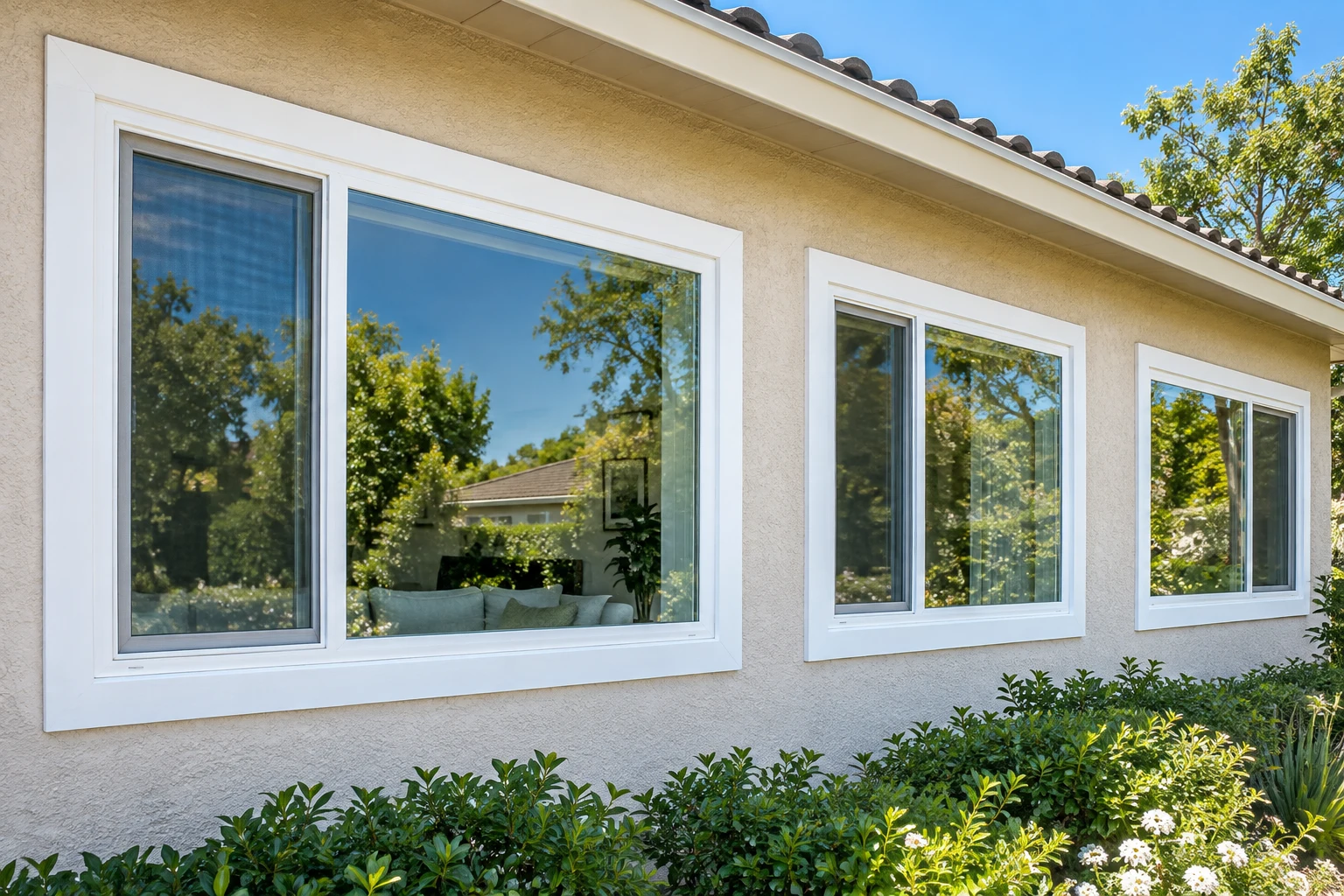
The windows that block heat best in Huntington Beach are dual-pane windows with Low-E glass and properly sealed frames. These systems reduce how much solar heat enters your home, keeping indoor temperatures more stable even during long sun exposure.
At Total Home Windows, we focus on identifying exactly how heat is entering your home—not guessing. In many Huntington Beach homes, especially those near the coast or with large sun-facing windows, excess heat is coming directly through the glass, not from a failing AC system.
If your home feels hot in the afternoon or your AC runs constantly without keeping up, your windows are likely the problem. You can explore more about this issue on our
why homes stay hot even with AC in Huntington Beach page.
For a full overview of services in your area, visit our
Huntington Beach window solutions page or learn more about
window replacement in Huntington Beach.
Why Heat Comes Through Windows in Huntington Beach Homes
Huntington Beach has a unique mix of coastal sunlight, reflective surfaces, and older housing stock. Even with ocean breezes, direct sun exposure through windows can significantly raise indoor temperatures.
A common issue we find is that homes with large west-facing windows trap heat in the afternoon. The glass absorbs solar energy and transfers it directly into the living space, making rooms feel noticeably warmer than the rest of the house.
The simple answer: heat enters your home through windows when the glass and framing aren’t designed to block or reflect it.
Older single-pane windows are the biggest contributor. They provide almost no insulation and allow heat to pass through easily. Even older dual-pane units can fail over time, losing their ability to regulate temperature.
In homes across Huntington Beach, we often see temperature differences of 10–15 degrees between rooms based solely on window exposure. That’s not an HVAC issue—it’s a window performance issue.
What Makes a Window Effective at Blocking Heat
Not all “energy-efficient” windows perform the same. The ability to block heat depends on specific components working together—not just the number of panes.
The key factors that determine heat blocking performance are:
- Glass coating (Low-E)
- Number of panes (dual vs triple)
- Gas fills between panes
- Frame material and sealing
The most effective solution for Huntington Beach homes is typically a dual-pane window with advanced Low-E coating. This combination reflects solar heat while still allowing natural light in.
The short answer: Low-E glass is the single most important feature for blocking heat in Southern California homes.
Low-E Glass: The Biggest Difference Maker
Low-E (low emissivity) glass has a thin, invisible coating that reflects heat away from your home. Instead of absorbing solar energy, the glass pushes it back outside.
This is especially important in Huntington Beach, where consistent sun exposure—even near the coast—can gradually heat interior spaces throughout the day.
Without Low-E coating, your windows act like a heat collector. With it, they act as a barrier.
If you want a deeper breakdown, visit our page on
Low-E windows in Huntington Beach.
The direct answer: windows without Low-E glass will not effectively block heat, regardless of how new they are.
Dual-Pane vs Triple-Pane: What Actually Works Here
Many homeowners assume triple-pane windows are always better. In colder climates, that’s often true. But in Huntington Beach, the goal is heat reflection—not maximum insulation.
Dual-pane windows with the right Low-E coating typically outperform triple-pane setups for this specific environment. They provide strong heat control without unnecessary cost or weight.
A common issue we find is homeowners overpaying for triple-pane windows that don’t significantly improve comfort compared to properly designed dual-pane systems.
The clear answer: dual-pane Low-E windows are usually the best balance of performance and efficiency for Huntington Beach homes.
Frame Material Matters More Than Most People Think
The glass gets most of the attention, but the frame plays a major role in heat transfer and overall performance.
Poorly insulated frames allow heat to bypass the glass entirely, reducing the effectiveness of even high-quality window systems.
The two most common options are:
- Vinyl: Strong insulation, cost-effective, low maintenance
- Fiberglass: More durable, slightly better long-term performance
In Huntington Beach, both materials can perform well when installed correctly. The bigger issue is not the material—it’s whether the window is properly sealed and fitted to your home.
The direct answer: a high-performance window with poor installation will still allow heat in.
Why Installation Quality Impacts Heat More Than You Expect
Even the best heat-blocking window won’t perform if it’s not installed correctly. Gaps, poor sealing, or misalignment allow hot air to leak into the home.
At Total Home Windows, we focus heavily on installation because it directly affects comfort. Before recommending anything, we measure where heat is entering and how your current windows are performing.
We don’t rely on assumptions. We show you.
In homes across Huntington Beach, we often see newer windows that still allow heat in because they were installed without proper sealing or evaluation of sun exposure.
The simple answer: installation quality can make or break the effectiveness of heat-blocking windows.
How Sun Exposure Affects Window Performance in Huntington Beach
Not all windows in your home experience the same conditions. Orientation plays a major role in how much heat enters your space.
West- and south-facing windows receive the most intense sunlight, especially in the afternoon. These areas are usually the biggest contributors to indoor heat buildup.
East-facing windows tend to warm up rooms in the morning, while north-facing windows receive the least direct heat.
A common issue we find is homeowners replacing all windows with the same glass type, instead of adjusting for sun exposure. This leads to inconsistent results.
The clear answer: the best heat-blocking windows are often customized based on which direction they face.
At Total Home Windows, we measure heat at each window location to determine where upgrades will have the biggest impact.
Signs Your Current Windows Are Letting Heat In
Many homeowners don’t realize how much heat their windows are allowing inside until it’s measured directly.
Common signs include:
- Rooms that heat up quickly in the afternoon
- AC running constantly without reaching set temperature
- Hot spots near windows
- Fading furniture or flooring from sun exposure
The direct answer: if your home feels uneven or consistently warm despite AC use, your windows are likely the source of the problem.
In Huntington Beach, this is especially common in older homes or properties that still have original windows installed decades ago.
And in many cases, homeowners assume they need a bigger AC unit—when the real issue is heat entering through inefficient glass.
How Much Heat-Blocking Windows Actually Improve Comfort
Most homeowners aren’t just looking for better windows—they want a cooler, more comfortable home.
The direct answer: properly selected heat-blocking windows can reduce indoor temperatures by several degrees in sun-exposed rooms.
In Huntington Beach homes, the biggest difference is felt in the afternoon. Rooms that were previously uncomfortable or rarely used become livable again without constantly lowering the thermostat.
At Total Home Windows, we regularly measure surface temperatures before and after upgrades. It’s common to see a noticeable drop in heat coming off the glass once Low-E dual-pane systems are installed.
That translates into less strain on your AC and more consistent temperatures throughout the house.
Another direct answer: windows don’t just “help”—they directly control how much heat enters your home in the first place.
Do Heat-Blocking Windows Lower Energy Bills?
Yes—but not in the way most people expect.
Windows don’t make your AC stronger. They reduce how often it needs to run.
When less heat enters your home, your cooling system cycles less frequently and maintains temperature more easily. Over time, this leads to lower energy usage.
The exact savings depend on how inefficient your current windows are. Homes with older single-pane or failing dual-pane windows typically see the biggest improvement.
If you’re evaluating long-term savings, you can learn more about how
new windows reduce energy bills in Huntington Beach.
From what we’ve seen in local homes, the biggest benefit isn’t just cost—it’s stability. The house holds its temperature longer instead of constantly fighting outdoor heat.
What Most Homeowners Get Wrong When Choosing Heat-Blocking Windows
A common mistake is focusing only on the product—not the problem.
Homeowners often choose windows based on brand, price, or pane count without understanding where heat is actually entering.
The result is uneven performance. Some rooms improve, others don’t.
The direct answer: the “best” window depends on your home’s specific sun exposure and existing conditions—not just the product itself.
At Total Home Windows, we approach this differently. We measure heat at the window level and show you which areas are causing the biggest issues.
In many Huntington Beach homes, only certain elevations need high-performance upgrades, while others require less aggressive solutions.
This is how you avoid overspending while still solving the real problem.
Should You Replace All Windows or Just Problem Areas?
Not every home requires a full replacement.
The answer depends on how widespread the heat issue is.
If your home has consistent discomfort across multiple rooms, a full upgrade often makes sense. But if heat is concentrated on one side of the house—typically west-facing windows—you may be able to target those areas first.
We’ve seen many Huntington Beach homeowners start with the hottest rooms and expand later once they feel the difference.
If you’re unsure, it helps to understand your options around
whether to replace all windows or not in Huntington Beach.
The key is not guessing. Measure first, then decide.
What to Expect During a Heat-Focused Window Evaluation
This is where most companies fall short—they recommend products without proving the problem.
At Total Home Windows, the process is built around showing you what’s happening inside your home.
- We measure heat levels at specific windows
- Identify which glass surfaces are contributing most
- Explain how different window options will perform in your exact conditions
- Recommend solutions based on real data—not assumptions
One thing we consistently notice in Huntington Beach homes: homeowners are often surprised by which windows are actually causing the problem. It’s not always the oldest or most obvious ones.
That’s why measurement matters.
How to Choose the Right Window Without Overpaying
There’s a wide range of window options available, but more expensive doesn’t always mean better performance for your situation.
The direct answer: the right window is the one that solves your heat problem—not the one with the most features.
For Huntington Beach homes, that typically means:
- Dual-pane glass with advanced Low-E coating
- Proper sealing and installation
- Frame material suited to your home’s exposure
Triple-pane upgrades, premium brand markups, or unnecessary add-ons often don’t deliver proportional benefits in this climate.
What matters is performance where your home needs it most.
Related Window Answers in Huntington Beach
- Energy-efficient windows in Huntington Beach
- Dual-pane vs triple-pane windows in Huntington Beach
- Vinyl vs fiberglass windows in Huntington Beach
- Window replacement cost in Huntington Beach
Frequently Asked Questions About What Windows Block Heat Best in Huntington Beach
How much do heat-blocking windows cost in Huntington Beach?
Most homeowners can expect between $800 and $1,200 per window depending on size, materials, and installation complexity. Homes with severe heat issues may benefit more from targeted upgrades rather than full replacement.
Are triple-pane windows better for blocking heat?
Not necessarily. In Huntington Beach, dual-pane windows with high-quality Low-E coatings typically perform better for solar heat control without the added cost of triple-pane systems.
How long does installation take?
Most installations are completed in one to two days depending on the number of windows. Proper installation is critical to ensure heat-blocking performance.
Will new windows completely eliminate heat in my home?
They significantly reduce it, but results depend on sun exposure, insulation, and overall home construction. The goal is to control and reduce heat—not rely entirely on AC to compensate.
How do I know if my windows are the problem?
If certain rooms heat up faster, feel warmer near the glass, or your AC runs constantly, your windows are likely allowing heat in. The best way to confirm is through direct measurement.
Get Your Free Window Replacement Estimate In Huntington Beach
If your home still feels hot even with the AC running, it’s time to find out why.
Total Home Windows will show you exactly where heat is entering your home and what’s causing the problem. No guessing. No pressure.
contact page to schedule your free estimate.
If you’re ready to fix the problem at the source, learn more about
window replacement in Huntington Beach with Total Home Windows.
Request Free Estimate
Related Content
Best Windows for Homes in Huntington Beach
Should I Replace All Windows At Once in Huntington Beach
What Type Of Windows Are Best For Hot Climates in Huntington Beach
Milgard Vs Andersen Windows in Huntington Beach
Best Window Brands in Huntington Beach
Helpful Resources for Homeowners
Whether you’re researching energy-efficient windows, looking for ways to reduce heat and noise, or comparing replacement options for an older home, these resources cover some of the most common questions homeowners ask. Browse the articles below for practical guidance and expert insights on choosing the right windows for your home.