
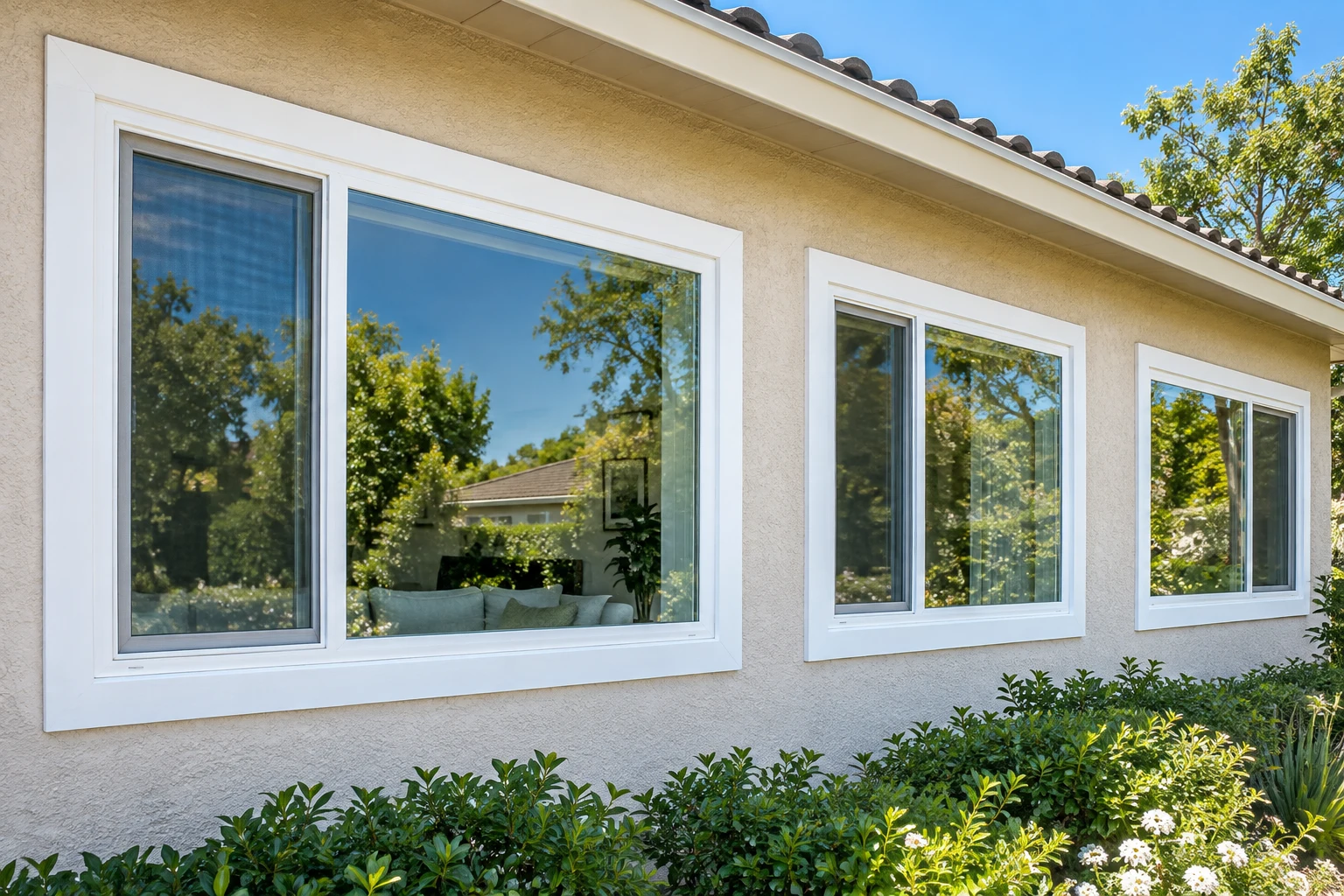
If your house in Huntington Beach still feels hot even when the AC is running, the issue is usually heat entering through your windows—not a failing HVAC system. At Total Home Windows, we consistently find that inefficient or outdated windows allow heat to pass inside faster than your AC can remove it.
This is a common problem across Huntington Beach homes, especially in properties with older glass or poor insulation. The result is uneven temperatures, constant AC usage, and rooms that never fully cool down.
The Real Reason Your Home Won’t Cool Down
Your AC is designed to control temperature—not fight continuous heat intrusion. When heat enters your home all day through windows, your system is forced to run longer without ever reaching consistent comfort.
In simple terms: your home feels hot because heat is getting in faster than your AC can push it out.
A common issue we find in homes across Huntington Beach is that windows act like a heat transfer point. Sunlight hits the glass, heats it up, and that heat moves directly into your living space.
This is why you can lower the thermostat and still feel warm—your AC is working, but the problem hasn’t been addressed at the source.
Why This Happens in Huntington Beach Homes
Huntington Beach has a coastal climate, but that doesn’t mean homes stay cool. Direct sun exposure, especially on west- and south-facing windows, can significantly increase indoor temperatures.
Even near the coast, solar heat gain through glass is one of the biggest contributors to indoor discomfort.
In homes across Huntington Beach, we often see:
- Older windows without modern heat-blocking technology
- Single-pane or early dual-pane glass that no longer performs
- Frames that allow air leakage and heat infiltration
- Large window openings facing direct afternoon sun
Each of these allows heat to enter your home throughout the day, building up faster than your AC can compensate.
The short answer: your home isn’t staying cool because your windows aren’t stopping heat.
How Windows Turn Into Heat Sources
Most homeowners don’t realize that glass is one of the weakest thermal barriers in the home. When sunlight passes through standard windows, it brings heat with it.
That heat becomes trapped inside, especially in rooms with poor airflow or large window areas.
Here’s what’s happening at the window level:
- Sunlight passes through the glass
- Interior surfaces absorb and hold that heat
- Heat builds up faster than it can escape
- Your AC runs longer trying to offset the gain
In homes with outdated windows, this process happens all day long.
That’s why homeowners searching for answers about why their house is hot even with AC in Huntington Beach often discover the issue isn’t the AC—it’s the windows allowing continuous heat entry.
Signs Your Windows Are Causing the Problem
If your windows are the source of heat gain, your home will show clear patterns. These aren’t random comfort issues—they’re consistent and predictable.
A common issue we find is that certain rooms feel significantly hotter than others, especially in the afternoon or early evening.
- Rooms with direct sunlight feel much warmer
- Hot spots near windows or glass doors
- AC runs constantly but never fully cools the home
- Noticeable temperature swings throughout the day
- Higher-than-expected energy bills
If you’re experiencing even two or three of these, there’s a strong chance your windows are allowing heat to pass through.
The short answer: uneven comfort and constant AC use are usually signs of window-related heat gain.
Why Older Windows Struggle in Coastal Southern California
Many Huntington Beach homes were built when energy efficiency standards were very different. Windows installed 15–25 years ago were not designed to block heat the way modern systems do.
Even if they still “look fine,” they often fail at controlling temperature.
In homes across Huntington Beach, we often see older windows that:
- Lack Low-E coatings to reflect heat
- Have broken or degraded seals between panes
- Allow air leaks around the frame
- Transfer outdoor heat directly inside
Salt air and coastal conditions can also accelerate wear, making windows less effective over time.
The result is simple: your home absorbs more heat, and your AC works harder to compensate.
Why Your AC Can’t Fix This Problem
It’s easy to assume your air conditioning system is the issue. But in most cases, the AC is doing exactly what it’s supposed to do—it just can’t keep up.
Your AC removes heat from inside your home. It does not stop heat from entering.
If heat is constantly coming through your windows, your AC is stuck in a losing cycle:
- Heat enters through the glass
- The AC removes some of it
- More heat immediately replaces it
This leads to longer run times, increased wear on your system, and higher energy bills.
The short answer: if the source of heat isn’t addressed, your AC will never fully solve the problem.
What Actually Needs to Be Fixed
To make your home comfortable, you have to stop heat before it enters—not after it’s already inside.
That means improving the performance of your windows.
At Total Home Windows, we focus on identifying exactly where and how heat is entering your home. We don’t guess based on age or appearance—we measure it directly at the window level.
This allows us to show you:
- Which windows are allowing the most heat in
- How much heat is entering each area
- Why certain rooms feel hotter than others
From there, we recommend solutions that are designed to reduce heat transfer, not just replace glass.
Many homeowners exploring window replacement in Huntington Beach are surprised to learn that the goal isn’t new windows—it’s a cooler, more controlled indoor environment.
How Modern Windows Reduce Heat
Today’s energy-efficient windows are built specifically to limit heat transfer. The biggest difference is how they handle solar energy.
Instead of letting heat pass through, modern glass reflects and filters it.
Key improvements include:
- Low-E coatings that reflect infrared heat
- Dual-pane systems that reduce thermal transfer
- Improved seals that prevent air leakage
- Frames designed for insulation, not just structure
If you want to understand which options perform best locally, it’s worth looking into the best windows to block heat in Huntington Beach, especially for homes with strong sun exposure.
The short answer: the right windows don’t just look better—they actively reduce the amount of heat entering your home every day.
What Happens If You Don’t Fix the Windows
If heat is entering through your windows and nothing changes, the problem doesn’t stay the same—it gets worse over time.
Your AC will continue running longer cycles, your energy bills will keep climbing, and comfort will stay inconsistent throughout the home. More importantly, your system experiences more wear, which can lead to earlier breakdowns or costly repairs.
Direct answer: if your windows are the source of heat, your home will not get consistently cooler until that heat transfer is reduced.
We’ve seen this repeatedly in Huntington Beach homes where homeowners upgraded their HVAC systems first. The airflow improved, but the house still felt warm in the afternoon. The issue wasn’t capacity—it was heat continuously entering through the glass.
That’s why solving the window problem first often changes everything else in the home.
Window Performance: What Actually Makes a Difference
Not all windows perform the same, even if they look similar. The difference comes down to how well they block, reflect, and resist heat transfer.
The most important factors include:
- Glass technology: Low-E coatings reduce solar heat gain
- Pane structure: Dual-pane glass creates insulation between layers
- Seal quality: Prevents outside air and heat from leaking in
- Frame material: Affects insulation and long-term durability
Direct answer: Low-E dual-pane windows are typically the most effective solution for reducing heat in Huntington Beach homes.
If you want a deeper understanding of how glass technology works, reviewing Low-E windows in Huntington Beach helps clarify why standard glass fails in high sun exposure areas.
In real homes, the difference is noticeable. Rooms that were previously avoided in the afternoon become usable again, and temperature swings start to level out.
Comparing Old Windows vs Modern Energy-Efficient Windows
The gap between older windows and modern systems is significant—not just in materials, but in performance.
Older windows:
- Allow direct heat transmission
- Often have weakened seals or air gaps
- Provide little resistance to solar gain
Modern energy-efficient windows:
- Reflect a large portion of solar heat
- Reduce heat buildup inside the home
- Maintain more stable indoor temperatures
Direct answer: modern windows don’t just slow heat—they actively reduce how much of it enters your home.
At Total Home Windows, we regularly measure before-and-after conditions. In many Huntington Beach homes, the temperature near problem windows drops noticeably once heat-blocking glass is installed.
Should You Replace All Windows or Just Problem Areas?
This is one of the most common decisions homeowners face.
The answer depends on how widespread the issue is.
If only a few rooms overheat—typically those with direct sun exposure—targeted replacement may solve the problem. But if temperature inconsistency exists throughout the home, it usually points to system-wide window inefficiency.
In Huntington Beach, we often find that west-facing and large-panel windows contribute the most heat. However, once testing is done, multiple areas typically show similar performance issues.
At Total Home Windows, we don’t assume full replacement—we measure and show you exactly where the problems are so you can make the right decision.
What Kind of Results Should You Expect?
Homeowners want to know what actually changes after upgrading their windows.
Here’s what typically improves:
- Reduced indoor heat buildup during the day
- More even temperatures across rooms
- Less strain on your AC system
- Lower monthly energy costs over time
Direct answer: replacing inefficient windows reduces heat gain, which allows your AC to cool your home more effectively and consistently.
Another common observation: homeowners notice the biggest difference in the late afternoon and early evening—when heat used to peak inside the home.
Instead of chasing the temperature, your home starts to maintain it.
Cost vs Long-Term Value
Window replacement is an investment, but it directly addresses ongoing energy loss and comfort issues.
Costs vary based on size, materials, and scope, but what matters most is performance—not just price.
Many homeowners initially focus on upfront cost. But when windows are the cause of heat gain, the long-term savings in energy usage and reduced HVAC strain become part of the equation.
If you’re evaluating numbers, reviewing window replacement cost in Huntington Beach can help you understand what affects pricing and what to expect.
The key is this: you’re not just paying for new windows—you’re reducing a daily energy problem.
Why Measurement Matters Before Replacement
One of the biggest mistakes homeowners make is replacing windows without understanding the actual heat problem.
Not every window performs equally, and not every home has the same exposure patterns.
At Total Home Windows, we take a different approach. We measure heat at the window level inside your home before making any recommendations.
This allows us to:
- Pinpoint the exact source of heat gain
- Identify the worst-performing windows
- Recommend solutions based on real data—not assumptions
That’s the difference between guessing and solving the problem.
Related Window Answers in Huntington Beach
- Energy-efficient windows in Huntington Beach
- Do new windows reduce energy bills in Huntington Beach?
- Dual-pane vs triple-pane windows in Huntington Beach
- Should you replace all windows or not?
Frequently Asked Questions About Why Is My House Hot Even With AC in Huntington Beach
Will replacing windows really make my house cooler?
Yes—if your current windows are allowing heat in. Modern windows reduce solar heat gain, which helps your AC maintain a consistent indoor temperature instead of constantly catching up.
How do I know if my windows are the main problem?
If your home has hot spots near windows, uneven room temperatures, or an AC that runs constantly, windows are a likely cause. Total Home Windows can measure heat at each window to confirm it.
How long does window replacement take?
Most installations are completed within one to two days, depending on the number of windows and complexity of the project.
Is it better to upgrade AC or replace windows first?
In most Huntington Beach homes, fixing the windows first is more effective. If heat is entering through the glass, a new AC system will still struggle to keep up.
Are energy-efficient windows worth the cost?
When windows are the source of heat gain, energy-efficient upgrades reduce monthly cooling costs and improve comfort, making them a practical long-term investment.
Get Your Free Window Replacement Estimate In Huntington Beach
If your home still feels hot even with the AC running, the next step is to find out where that heat is coming from.
Total Home Windows will measure heat at your windows, show you exactly what’s happening, and explain what can be done to fix it.
No guesswork. No pressure. Just clear answers based on what’s actually happening inside your home.
Request Free Estimate
Related Content
Best Windows for Homes in Huntington Beach
Should I Replace All Windows At Once in Huntington Beach
What Type Of Windows Are Best For Hot Climates in Huntington Beach
Milgard Vs Andersen Windows in Huntington Beach
Vinyl vs Fiberglass Windows in Huntington Beach
Best Window Brands in Huntington Beach
Helpful Resources for Homeowners
Whether you’re researching energy-efficient windows, looking for ways to reduce heat and noise, or comparing replacement options for an older home, these resources cover some of the most common questions homeowners ask. Browse the articles below for practical guidance and expert insights on choosing the right windows for your home.