
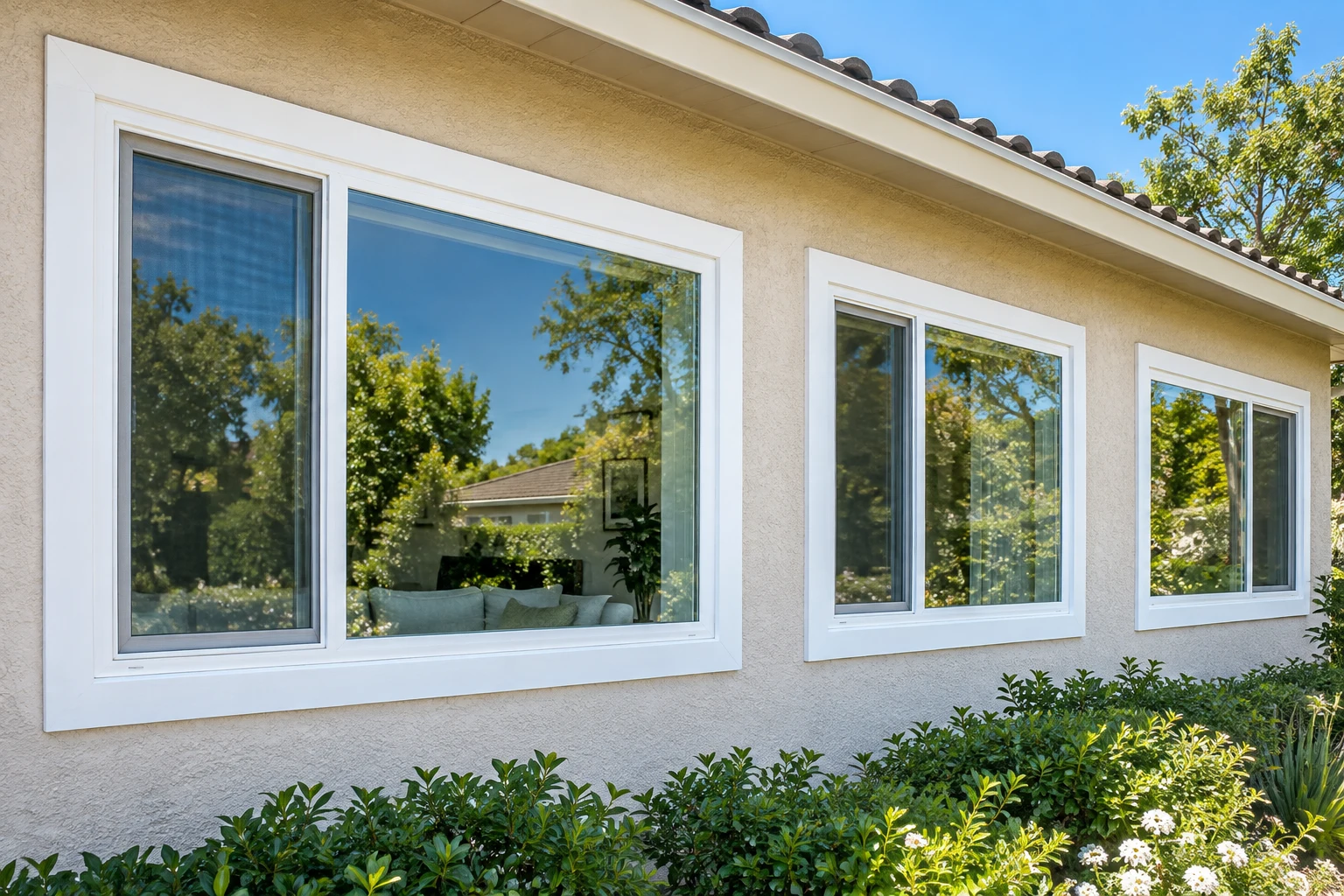
In most Huntington Beach homes, replacing all windows at once is the most effective way to fix comfort and heat problems—but it depends on how much heat is entering and where. At Total Home Windows, we measure the actual heat coming through your windows so you can decide based on real data, not guesswork.
If your home feels hot even with the AC running, replacing only a few windows usually won’t solve the problem. In many cases, the heat is entering from multiple sides of the house, especially with coastal sun exposure and older window systems common in the area.
For a full breakdown of services in your area, visit our
Huntington Beach window solutions page, or explore
window replacement in Huntington Beach to see how we approach full-home upgrades.
When Replacing All Windows Makes Sense
If most of your windows are original, outdated, or inefficient, replacing them all at once is usually the right move. Partial replacement often leaves the main problem unresolved—heat continues entering through the remaining windows.
In homes across Huntington Beach, we often see uneven temperatures from room to room. One side of the house feels manageable, while another becomes unbearable in the afternoon. That’s not an AC issue—it’s inconsistent window performance.
Clear answer: If your home has widespread heat or comfort issues, replacing all windows at once is the most effective solution.
Huntington Beach homes are especially vulnerable due to:
- Strong afternoon sun exposure from the west
- Older dual-pane or single-pane windows in coastal neighborhoods
- Salt air wear that degrades seals over time
- Open floor plans that allow heat to spread quickly
When multiple windows are underperforming, replacing just a few creates an imbalance. You fix one area, but the rest of the house continues to absorb heat.
Bottom line: If heat is entering from multiple sides, a full replacement is usually necessary to stabilize indoor temperature.
Why Partial Replacement Often Falls Short
It’s common to consider replacing only the “worst” windows first. On paper, it seems cost-effective. In reality, it often leads to ongoing discomfort and higher long-term costs.
A common issue we find is homeowners replacing front-facing windows, only to realize later that bedrooms or rear-facing rooms are still overheating. The problem wasn’t isolated—it was spread across the home.
Clear answer: Replacing only some windows may improve one area, but it rarely solves whole-home heat issues.
Here’s what typically happens with partial replacement:
- AC still runs constantly because heat continues entering elsewhere
- Rooms feel uneven—some cool, some hot
- Energy bills stay high despite the upgrade
- You end up replacing the rest later anyway
This is especially true if your home already struggles with
staying cool even with the AC running. In that case, the issue is rarely isolated to just one or two windows.
Simple truth: Heat doesn’t enter your home in one spot—it comes through every weak window.
The Real Issue: Heat Entry, Not Just Old Windows
Most homeowners think they’re replacing windows because they’re “old.” That’s only part of the story. The real issue is how much heat those windows are allowing inside.
At Total Home Windows, we don’t just look at age or appearance. We measure heat at the window level and show you exactly where the problem is happening.
In Huntington Beach, even homes that feel “close to the ocean” still deal with significant solar heat gain—especially in the afternoon. Large glass areas, sliding doors, and west-facing windows are major contributors.
Clear answer: The decision to replace all windows should be based on how much heat is entering—not just how old they are.
This is where most companies get it wrong. They recommend replacing everything—or only a few—without actually showing you what’s happening.
We take a different approach:
- Measure heat coming through each window
- Identify which areas are causing discomfort
- Show you the difference between windows in your own home
- Recommend full or partial replacement based on proof
We don’t guess. We demonstrate.
When It Might Make Sense to Replace Only Some Windows
There are cases where a partial replacement is reasonable—but they’re more limited than most homeowners expect.
If only a small number of windows are exposed to direct sun or showing clear failure (fogging, drafts, extreme heat transfer), you may not need to replace everything immediately.
Clear answer: Partial replacement works if the problem is isolated and confirmed through measurement.
Examples where partial replacement may make sense:
- One side of the home gets intense sun exposure
- A recent remodel already updated part of the house
- Only specific rooms are uncomfortable
However, even in these cases, it’s important to verify the source of the heat. What feels like a single problem area often connects to a larger issue.
In homes across Huntington Beach, we often see homeowners assume the living room is the issue—only to find that heat is entering through bedrooms, hallways, and secondary windows as well.
Key takeaway: Don’t rely on assumptions. Measure first, then decide.
Energy Efficiency: Why Full Replacement Has a Bigger Impact
If your goal is lower energy bills and a consistently comfortable home, full window replacement almost always delivers better results.
Modern energy-efficient windows are designed to reduce heat transfer across the entire home—not just in isolated areas. When you upgrade everything, the system works together.
Clear answer: Replacing all windows creates a consistent thermal barrier, which significantly improves energy efficiency.
This is especially important in Huntington Beach, where:
- Cooling costs continue to rise
- Homes rely heavily on AC during warmer months
- Sun exposure varies throughout the day across different sides of the home
Upgrading to
energy-efficient windows in Huntington Beach helps reduce the workload on your AC—but only if the majority of heat entry points are addressed.
If you leave older windows in place, they continue to undermine the performance of the new ones.
Simple reality: One weak window can offset the benefit of several new ones.
Cost Consideration: All at Once vs. Phased Approach
Cost is often the biggest reason homeowners consider replacing windows in phases. While that can seem more manageable upfront, it doesn’t always save money long term.
Multiple installation phases can increase labor costs, extend project timelines, and delay the comfort improvements you’re trying to achieve.
Clear answer: Replacing all windows at once is usually more cost-efficient per window and delivers faster results.
There are also practical advantages:
- One installation process instead of multiple disruptions
- Immediate improvement in comfort across the entire home
- Better consistency in appearance and performance
If budget is a concern, it’s still worth understanding the full scope of the problem first. Many homeowners start with a partial plan, only to expand it after seeing where the heat is really coming from.
Important: The right decision isn’t based on budget alone—it’s based on how your home is actually performing.
That’s why Total Home Windows focuses on showing you the data inside your home before making any recommendation.
What Changes When You Replace All Windows vs. Just a Few
The difference between full and partial replacement shows up immediately in how your home feels.
When all windows are replaced, you create a consistent barrier against heat. Every room benefits at the same time. Temperatures stabilize, and your AC no longer has to fight constant heat gain from different areas.
With partial replacement, performance stays uneven. One room improves, but others continue pulling heat into the home.
Clear answer: Full replacement fixes the system. Partial replacement treats symptoms.
In Huntington Beach homes, this matters more than most people expect. Coastal light may feel mild, but it’s consistent throughout the day. That steady exposure adds up, especially on larger glass surfaces.
We regularly see homes where the living room feels comfortable after replacing windows—but bedrooms still trap heat well into the evening. The issue wasn’t solved, just shifted.
How Heat Behavior Affects Your Decision
Heat doesn’t stay where it enters. Once it gets inside, it spreads.
That’s why a single hot room can affect the entire house. Open layouts, hallways, and airflow allow that heat to move freely, making your AC work harder everywhere—not just in one space.
Clear answer: If heat is entering through multiple windows, it becomes a whole-home problem—not a room-by-room issue.
This is also why focusing only on the “hottest room” can be misleading. That room might be the most noticeable, but it’s rarely the only source.
At Total Home Windows, we measure each window individually so you can see how heat is distributed across your home. In many cases, homeowners are surprised to find that the worst-performing windows aren’t where they expected.
Choosing the Right Windows Matters More Than Timing
Whether you replace all your windows or just a few, the type of window you choose will determine how much improvement you actually see.
Not all windows are designed to block heat effectively—especially in Southern California conditions.
That’s why we guide homeowners toward options specifically built for this environment, including
windows designed to block heat in Huntington Beach homes .
Low-E glass, proper sealing, and correct installation all play a role. If any of those are off, even a full replacement won’t deliver the results you expect.
Clear answer: The right window system, installed correctly, matters just as much as how many windows you replace.
We’ve seen homeowners invest in partial upgrades with the wrong glass type and get minimal results. We’ve also seen full replacements done correctly that completely change how a home feels within a day.
Real-World Expectations After Replacement
A full window replacement won’t turn your home into a refrigerator—but it will remove the constant heat pressure that makes your AC struggle.
Here’s what most homeowners in Huntington Beach notice after replacing all windows:
- Indoor temperatures stay more consistent throughout the day
- Rooms that used to overheat become usable again
- AC cycles less frequently instead of running constantly
- Less glare and reduced sun intensity near windows
One common observation we hear: the home feels “quieter” in temperature swings. Instead of sharp increases in heat during the afternoon, the indoor climate stays steady.
Another pattern we see—especially near the coast—is that homeowners didn’t realize how much heat was entering until it stopped. The difference becomes obvious once the source is removed.
Making the Right Decision for Your Home
The decision isn’t really about replacing all windows at once—it’s about understanding how your home is performing.
If the majority of your windows are allowing heat in, a full replacement makes sense. If the issue is isolated and proven, partial replacement may be enough.
What doesn’t work is guessing.
That’s where Total Home Windows separates from typical contractors. We don’t recommend full or partial replacement upfront. We measure, show you the results, and let the data guide the decision.
Bottom line: Replace all windows when the problem is widespread. Replace selectively only when the issue is clearly isolated and verified.
Related Window Answers in Huntington Beach
- How much does window replacement cost in Huntington Beach?
- How long does window installation take?
- What are Low-E windows and do they work?
- What is the ROI of replacing windows?
Frequently Asked Questions About Should I Replace All Windows At Once in Huntington Beach
Is it cheaper to replace all windows at once?
Yes, in most cases. Replacing all windows at once reduces labor duplication and avoids multiple installation phases. It also delivers immediate results instead of spreading improvements over time.
Will replacing all windows really make my home cooler?
If your current windows are allowing heat in, yes. Full replacement reduces overall heat gain, making it easier for your AC to maintain a consistent temperature.
How do I know if I need full or partial replacement?
The only reliable way is to measure heat at each window. Visual inspection isn’t enough. Homes often have multiple problem areas that aren’t obvious without testing.
How long does full window replacement take?
Most full-home projects in Huntington Beach can be completed in one to two days, depending on the number of windows and installation complexity.
Can I replace windows in phases if needed?
Yes, but it should be based on verified problem areas—not assumptions. Otherwise, you risk delaying the real solution and increasing total costs over time.
Get Your Free Window Replacement Estimate In Huntington Beach
If your home still feels hot, your windows are likely the reason—not your AC.
Total Home Windows will show you exactly where heat is entering and whether you need full or partial replacement based on real measurements inside your home.
No guesswork. No pressure. Just clear answers.
Request Free Estimate
Related Content
Do Windows Help With Noise in Huntington Beach
What Type Of Windows Are Best For Hot Climates in Huntington Beach
Milgard Vs Andersen Windows in Huntington Beach
Vinyl vs Fiberglass Windows in Huntington Beach
Best Window Brands in Huntington Beach
Window Upgrade ROI in Huntington Beach
Helpful Resources for Homeowners
Whether you’re researching energy-efficient windows, looking for ways to reduce heat and noise, or comparing replacement options for an older home, these resources cover some of the most common questions homeowners ask. Browse the articles below for practical guidance and expert insights on choosing the right windows for your home.