
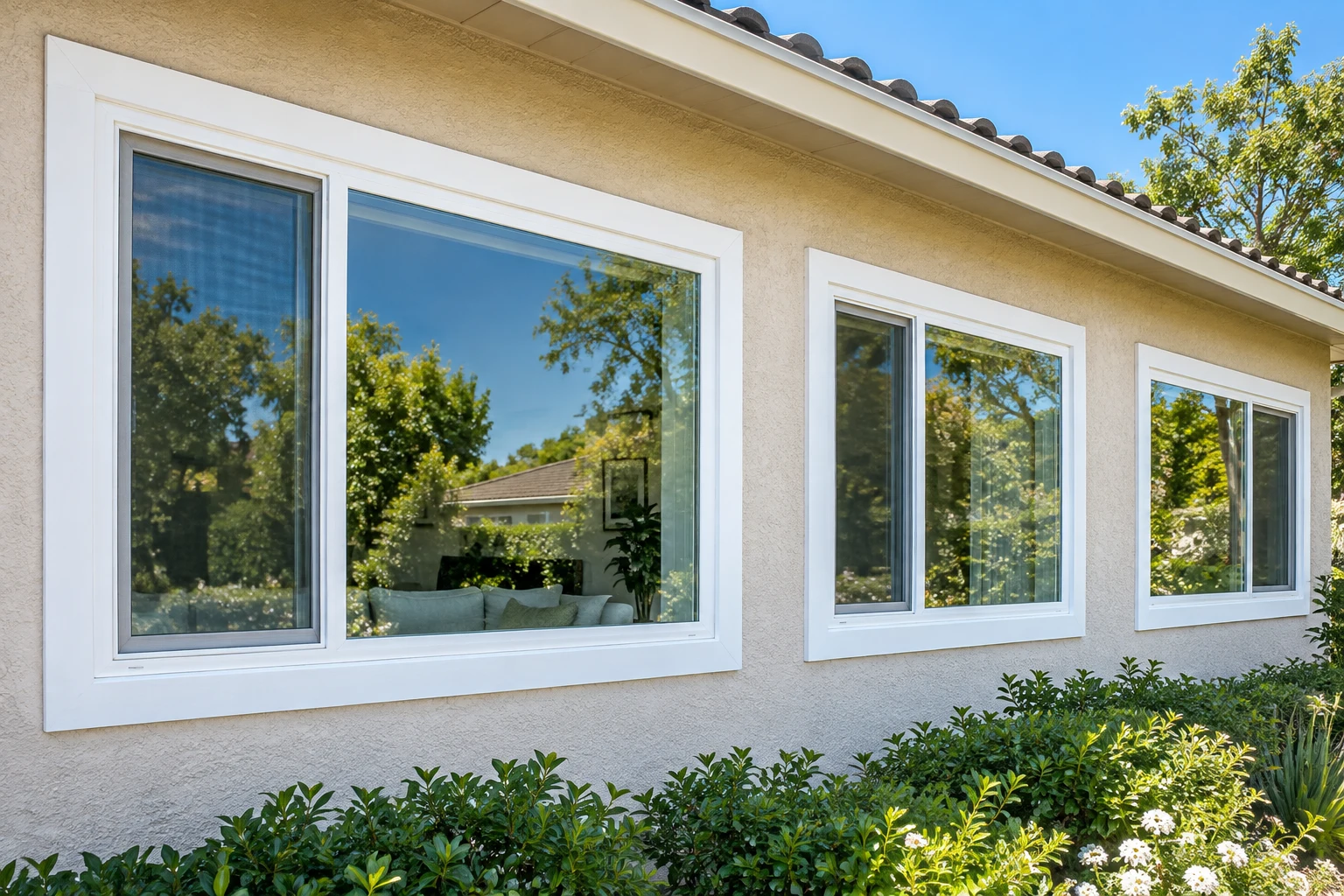
Prices and performance figures in this guide are planning examples, not a project quote or a promise of savings. Your estimate and results depend on the products, installation scope, existing home, climate, and energy use.
Vinyl windows are more affordable and energy-efficient for most homes, while fiberglass windows are stronger and more durable in extreme conditions. In Huntington Beach, the better choice depends on how much heat your windows are letting in—not just the material itself.
At Total Home Windows, we don’t start with materials—we start by identifying where heat is entering your home. Many homeowners comparing vinyl vs fiberglass are actually dealing with rooms that stay hot, rising energy bills, and AC systems that never seem to catch up. In most cases, the real issue isn’t the AC—it’s the windows.
If you’re exploring options in your area, you can start with an overview of window solutions in Huntington Beach and how different window types perform in coastal conditions.
Why Vinyl vs Fiberglass Matters in Huntington Beach
Huntington Beach homes deal with a unique mix of coastal sun, salt air, and older construction. Many homes were built with windows that weren’t designed for modern energy efficiency, which means heat passes through easily—especially during long afternoon sun exposure.
A common issue we find is that homeowners focus on frame material when the bigger problem is heat transfer through the glass and poor sealing. The material matters—but only after you understand how your current windows are performing.
Short answer: Both vinyl and fiberglass can reduce heat, but only when paired with the right glass and proper installation.
In homes across Huntington Beach, we often see west-facing windows causing the biggest temperature spikes. By mid-afternoon, those rooms can be 10–15 degrees hotter than the rest of the house—even with the AC running.
Vinyl Windows: Cost-Effective and Energy Efficient
Vinyl windows are the most common choice for residential window replacement in Southern California—and for good reason. They offer solid insulation, low maintenance, and strong performance when properly installed.
The main advantage of vinyl is its ability to reduce heat transfer at a lower cost. The frames don’t conduct heat easily, which helps keep indoor temperatures more stable throughout the day.
Short answer: Vinyl windows are ideal for homeowners who want strong energy efficiency without the higher price of fiberglass.
When combined with Low-E glass, vinyl windows can significantly reduce how much solar heat enters your home. If your house feels hot even with the AC running, upgrading to modern vinyl windows can make a noticeable difference.
Many homeowners looking into window replacement in Huntington Beach choose vinyl because it solves the problem quickly and efficiently without overcomplicating the project.
A common issue we find is older aluminum or single-pane windows still installed in coastal homes. These allow heat to pass through almost instantly. Switching to vinyl with modern glass drastically improves comfort.
Where Vinyl Works Best
- Homes with standard window sizes
- Homeowners focused on reducing energy bills
- Properties with moderate sun exposure
- Full-home window replacement projects
Short answer: Vinyl is the practical, proven solution for most Huntington Beach homes dealing with heat and energy loss.
Fiberglass Windows: Strength and Long-Term Durability
Fiberglass windows are built for strength and longevity. The material expands and contracts less than vinyl, which helps maintain a tight seal over time—especially in areas with temperature swings.
In Huntington Beach, the coastal climate introduces moisture and salt air, which can wear down lower-quality materials over time. Fiberglass handles these conditions well and maintains its structure longer.
Short answer: Fiberglass is best for homeowners who prioritize durability and structural stability over upfront cost.
However, fiberglass alone does not solve heat problems. The glass package and installation quality still determine how much heat enters your home.
In homes across Huntington Beach, we often see homeowners upgrade to fiberglass expecting a dramatic comfort improvement—only to find that without the right glass, the temperature issue remains.
Where Fiberglass Makes Sense
- Large window openings or custom designs
- Homes with intense, direct sun exposure
- Homeowners planning long-term ownership
- Projects requiring added structural strength
Short answer: Fiberglass is a premium option, but it only outperforms vinyl when the overall window system is designed correctly.
The Real Difference: How Each Material Handles Heat
Most homeowners think the frame material is the main factor in heat reduction. It’s not. The majority of heat enters through the glass—not the frame.
That’s why at Total Home Windows, we measure heat directly at the window level before recommending vinyl or fiberglass. We show you exactly where the problem is coming from.
Short answer: The right glass matters more than the frame—but the frame still supports overall performance.
For example, upgrading to Low-E windows in Huntington Beach can significantly reduce solar heat gain by reflecting infrared energy away from your home.
This is especially important in Huntington Beach, where sunlight is consistent year-round. Even coastal breezes don’t offset the heat coming through inefficient glass.
A common issue we find is homeowners blaming insulation or HVAC systems, when the real source of discomfort is direct solar heat entering through outdated windows.
Vinyl vs Fiberglass: Which Is Better for Hot Homes?
If your home feels hot even with the AC running, both vinyl and fiberglass can help—but only when configured correctly.
Short answer: For most hot homes in Huntington Beach, vinyl windows with high-performance glass provide the best balance of cost and comfort.
Fiberglass becomes the better option when structural demands or long-term durability are the priority—but it doesn’t automatically block more heat.
If you’re dealing with persistent temperature issues, it’s worth understanding why your home stays hot in the first place. Many homeowners are surprised to learn how much heat comes directly through the glass. Learn more about why homes stay hot even with AC in Huntington Beach.
In homes across Huntington Beach, we often see that replacing the worst-performing windows—regardless of material—creates the biggest improvement in comfort.
Cost Differences Between Vinyl and Fiberglass
Vinyl windows are typically more affordable, while fiberglass windows come at a higher upfront cost due to their strength and manufacturing process.
Short answer: Vinyl costs less upfront, while fiberglass costs more but may last longer in certain conditions.
However, the real cost isn’t just the material—it’s how well the windows solve your problem. If your home is still hot after installation, the investment didn’t actually fix anything.
That’s why we focus on performance first. Before discussing price, we identify which windows are causing the most heat gain and why.
If you’re comparing options, understanding window replacement cost in Huntington Beach can help you set realistic expectations based on your home’s layout and needs.
A common issue we find is homeowners overpaying for premium materials without addressing the underlying heat problem. The result is minimal improvement despite a larger investment.
Short answer: The best value comes from choosing the right window system—not just the more expensive material.
How to Choose Between Vinyl and Fiberglass for Your Home
Most homeowners in Huntington Beach don’t actually need help choosing between vinyl and fiberglass—they need help identifying which windows are causing the problem.
At Total Home Windows, we see this all the time. Someone calls asking about fiberglass because they’ve heard it’s “better,” but when we measure the heat coming through their windows, the issue has nothing to do with the frame material.
Short answer: The best choice depends on which windows are letting in the most heat—not which material sounds stronger.
In many homes, only a few windows are responsible for most of the discomfort. These are typically:
- West-facing living room windows
- Large glass sliders or picture windows
- Older aluminum or single-pane windows
- Rooms with direct afternoon sun exposure
Replacing those problem areas with the right window system—whether vinyl or fiberglass—often delivers a bigger improvement than replacing every window with a premium material.
What Actually Changes After Replacement
Homeowners usually expect one thing: cooler rooms. But the real changes go beyond temperature.
When windows are properly replaced and sealed, you’ll notice:
- More consistent temperatures from room to room
- Less strain on your AC system
- Reduced glare and sun exposure
- Improved indoor comfort throughout the day
Short answer: The biggest improvement is stability—your home stops fighting against outside heat.
In Huntington Beach, this is especially noticeable in the afternoon. Homes that used to heat up quickly stay more controlled, even during long sun exposure.
We’ve worked on homes where the thermostat stayed the same—but the house felt completely different because the heat source was reduced at the window level.
Common Mistakes When Comparing Vinyl vs Fiberglass
Most comparison articles focus on specs. Homeowners focus on results. The gap between those two is where mistakes happen.
Here are the most common issues we see:
Choosing Based on Material Alone
Vinyl vs fiberglass is only one part of the equation. Glass type, installation quality, and sealing matter just as much—often more.
Short answer: A poorly configured fiberglass window will underperform compared to a properly installed vinyl window.
Overpaying Without Solving the Problem
Some homeowners invest in fiberglass expecting a major difference in comfort, but if the glass isn’t designed to block heat, the improvement is minimal.
We’ve seen cases where homeowners upgraded to high-end windows but still had hot rooms—because the solar heat gain wasn’t addressed.
Replacing Everything Instead of Targeting the Problem
Not every window in your home contributes equally to heat gain.
In many Huntington Beach homes, 20–30% of the windows are responsible for most of the discomfort. Replacing those first can dramatically improve comfort without a full-home project.
Performance Over Time: What to Expect
Both vinyl and fiberglass windows are designed to last—but they age differently.
Vinyl windows:
- Maintain strong energy performance for decades
- Require minimal maintenance
- Perform consistently in mild coastal climates
Fiberglass windows:
- Offer greater structural rigidity over time
- Handle expansion and contraction better
- Maintain seals well in more extreme conditions
Short answer: In Huntington Beach, both materials perform well long-term—the difference is durability under stress, not everyday comfort.
Because the coastal climate is relatively moderate, vinyl windows already perform at a high level for most homes. Fiberglass becomes more relevant in larger openings or custom designs where strength matters more.
Installation Quality Matters More Than Material
Even the best window will underperform if it’s installed incorrectly.
At Total Home Windows, we focus heavily on installation because gaps, poor sealing, and misalignment allow heat to bypass even high-performance glass.
Short answer: Installation determines whether your windows actually solve the problem.
A common issue we find is air leakage around the frame—not through the glass. This creates drafts, uneven temperatures, and ongoing energy loss.
That’s why we measure, inspect, and show you exactly where performance breaks down before recommending a solution.
Real-World Results in Huntington Beach Homes
In homes across Huntington Beach, we often see a consistent pattern:
The living room feels hot. The back bedrooms feel fine. The AC runs constantly. Energy bills are higher than expected.
When we measure the windows, the issue becomes clear—specific windows are pulling in heat throughout the day.
After replacement, the change is immediate in those problem areas. Rooms that were previously uncomfortable become usable again without overcooling the rest of the house.
Another observation: homeowners often expect noise reduction as a secondary benefit, especially near busy streets or coastal activity. While both vinyl and fiberglass help, the improvement depends more on the glass configuration than the frame itself.
Making the Right Decision
If you’re deciding between vinyl and fiberglass, the goal shouldn’t be picking the “best” material—it should be solving the heat problem in your home.
Ask yourself:
- Which rooms feel the hottest?
- When does the temperature spike?
- Are certain windows worse than others?
Short answer: The right decision starts with identifying the source of heat—not choosing a material upfront.
At Total Home Windows, we walk through this process with you. We measure, explain, and show you exactly what’s happening so you can make a decision based on real data—not assumptions.
Related Window Answers in Huntington Beach
- Energy-efficient windows in Huntington Beach
- Do new windows reduce energy bills in Huntington Beach
- How long window installation takes in Huntington Beach
- Should you replace all windows or just some
Frequently Asked Questions About Vinyl vs Fiberglass Windows in Huntington Beach
Are fiberglass windows worth the extra cost?
They can be, but only in specific situations. Fiberglass is stronger and more durable, which makes it useful for large openings or long-term ownership. For most homes in Huntington Beach, vinyl delivers similar energy performance at a lower cost.
Do vinyl windows block heat as well as fiberglass?
Yes—when paired with the right glass. Heat reduction depends more on the glass package than the frame material. A properly designed vinyl window can block just as much heat as fiberglass.
How much does the price differ between vinyl and fiberglass?
Fiberglass windows typically cost more upfront than vinyl. The exact difference depends on window size, design, and installation complexity, but vinyl is generally the more budget-friendly option.
Will replacing windows actually make my home cooler?
Yes, if the windows are the source of heat gain. In many Huntington Beach homes, outdated windows are a major contributor to indoor heat, especially in sun-exposed areas.
How do I know which windows to replace?
The best way is to measure where heat is entering your home. At Total Home Windows, we identify the worst-performing windows so you can focus on what will make the biggest difference.
Get Your Free Window Replacement Estimate In Huntington Beach
If your home feels hot, your AC runs constantly, or certain rooms are uncomfortable, your windows may be the reason.
Total Home Windows will show you exactly where heat is entering your home and help you understand whether vinyl or fiberglass is the right solution—based on real measurements, not guesswork.
Call us at (310) 729-3013, email teamallstarconstruction@gmail.com, or request an estimate through our contact page.
We’ll walk your home, measure the problem areas, and give you clear answers so you can move forward with confidence.
Request Free Estimate
Related Content
Do Windows Help With Noise in Huntington Beach
Should I Replace All Windows At Once in Huntington Beach
What Type Of Windows Are Best For Hot Climates in Huntington Beach
Milgard Vs Andersen Windows in Huntington Beach
Best Window Brands in Huntington Beach
Window Upgrade ROI in Huntington Beach
Helpful Resources for Homeowners
Whether you’re researching energy-efficient windows, looking for ways to reduce heat and noise, or comparing replacement options for an older home, these resources cover some of the most common questions homeowners ask. Browse the articles below for practical guidance and expert insights on choosing the right windows for your home.