
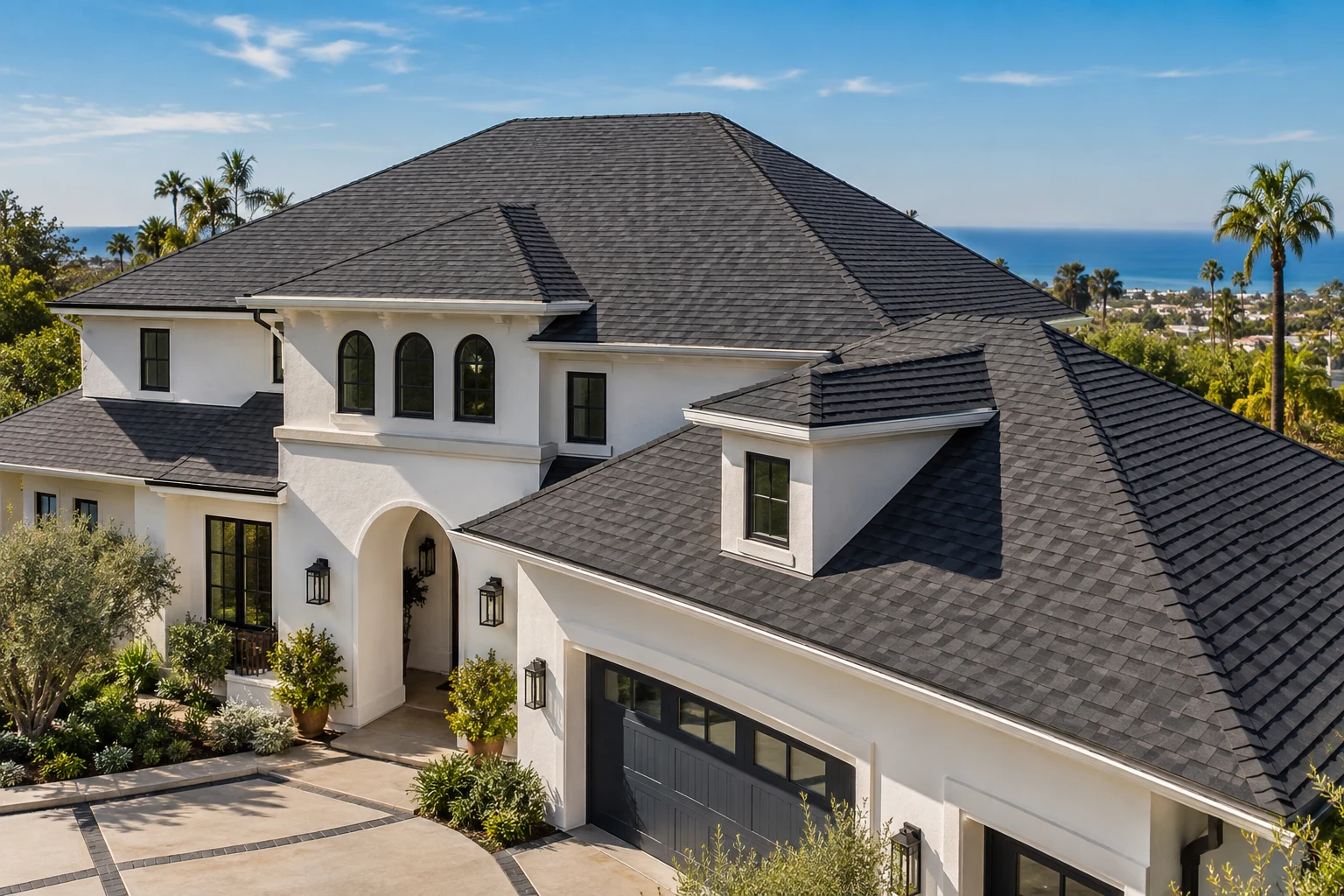
In Irvine’s warm Southern California climate, controlling heat buildup in your roof is crucial for protecting your home and lowering energy costs. At All Star Roof Replacement, we specialize in residential roof replacement systems designed to reduce heat by addressing every component of your roof — from underlayment and decking to ventilation and flashing. If you’re considering a new roof, understanding how roofing in Irvine can reduce heat will help you make the best choice for durability and comfort.
Understanding the Heat Problem on Irvine Roofs
Why Roofs Get Hot in Irvine’s Climate
Homes across Irvine face intense sun and ultraviolet (UV) exposure almost year-round. The city’s inland location creates warmer temperatures than nearby coastal areas, often pushing summer temps beyond 80°F and sometimes into the 90s or low 100s. This environment increases the stress on roofing materials.
A common issue during inspections is seeing roof underlayments and shingles that have become brittle or cracked due to prolonged UV rays combined with Santa Ana winds. These dry, hot winds worsen evaporation and cause roof materials like tiles to expand and contract unevenly, accelerating granular loss and thermal cracking.
Because Irvine receives limited but intense rainfall, especially during atmospheric river events, compromised roofing materials often allow moisture intrusion, which worsens heat retention and roof deterioration.
Effects of Excess Roof Heat on Your Home
Excessive heat buildup in your roof translates directly into higher attic temperatures. Many Irvine homeowners don’t realize that their hot attic significantly increases the load on air conditioning systems during summer, raising energy bills.
Heat also accelerates wear on roof materials, causing flashings to crack and shingles or tiles to loosen. In tile roofs common in Irvine, underlayment degradation after 20 to 30 years is a particular concern, as heat causes the organic felt layer to dry out and become vulnerable to leaks.
Ensuring your roof can manage heat effectively protects your home’s structural health and reduces long-term maintenance needs. Learn more about the importance of proper roof ventilation upgrades and signs that point to needing a new roof in Irvine here.
How Roofing in Irvine Works to Reduce Heat
Roofing as a Full System to Control Heat
Reducing heat buildup isn’t just about picking a reflective surface. In Irvine, an effective roofing system integrates several components: a reflective roof surface, heat-resistant underlayment, balanced ventilation, and properly sealed flashings.
Many homeowners believe that tile roofs naturally “breathe,” but in reality, relying on tile porosity alone is inadequate, especially under the strong drying forces of Santa Ana winds. Proper ventilation through balanced intake at soffits and exhaust vents like ridge or O’Hagin vents is essential to remove hot air from the attic and prevent heat buildup.
Sealed flashings and penetration points keep hot air and moisture from entering attic spaces, improving overall thermal performance and prolonging roofing materials’ lifespan.
Reflective (Cool) Roofing Materials
Using cool roofing materials is one of the most effective ways to reduce heat. In Irvine, cool-color concrete or clay tiles that meet CRRC (Cool Roof Rating Council) standards reflect more sunlight and absorb less heat. These reflective tiles can reduce roof surface temperatures by 10 to 30 degrees Fahrenheit.
For homes with flat or low-slope roofs—common in Irvine townhomes—white or light-colored TPO or PVC membrane roofs provide excellent solar reflectivity, helping to lower interior temperatures and reduce cooling costs.
Choosing reflective roofing materials directly lowers radiant heat transfer into your attic, maximizing comfort and energy savings throughout Southern California summers. Find out more about cool roof options in Irvine to see which materials suit your home.
Ventilation’s Role in Heat Reduction
Balanced attic ventilation is critical in Irvine’s hot, dry environment. Proper intake vents at the soffits and exhaust vents placed near or along the ridge keep attic air circulating and reduce trapped heat that increases cooling loads and accelerates material aging.
Santa Ana winds highlight the need for vents that resist wind-driven air infiltration while maintaining ventilation performance. Older roofs often lack this balance, leading to trapped heat and moisture buildup, which can cause shingle deterioration and flashing failure.
Insulation and Radiant Barriers (Supporting Options)
While roofing materials and ventilation are primary heat control measures, radiant barriers and added insulation inside the attic complement these systems. Radiant barriers reflect heat upward, while additional insulation slows heat transfer into the living space.
However, these measures require good ventilation to function properly and avoid trapping heat or moisture inside the attic. Many Irvine homeowners upgrade insulation and radiant barriers during roof replacement for optimal overall thermal performance.
Steps to Take When Replacing Your Roof to Reduce Heat
Inspection and Evaluation of Existing Heat Issues
Before replacement, All Star Roof Replacement conducts thorough inspections assessing roof materials for heat damage. We check for brittle underlayments, UV deterioration, attic temperature levels, and whether the existing ventilation system is adequate.
In homes across Irvine, we often find multiple leak points or soft decking caused by heat stress and moisture, both of which contribute to excessive attic temperatures. We also review any HOA restrictions on roofing colors and materials to ensure your new roof complies with local guidelines.
Material Selection for Heat Reduction
Selecting materials that reflect solar energy is key. We recommend CRRC-rated reflective tiles or shingles that meet HOA standards for color and style. Synthetic, heat-resistant underlayments outperform traditional felt and better resist Irvine’s intense UV radiation.
Ventilation components such as ventilated ridge caps, soffit baffles, and O’Hagin vents are selected to complement your roof’s design and maintain continuous airflow, which is vital to reducing attic heat.
Installation Quality and System Integration
Proper installation is just as important as material choice. During reroofing, we inspect and replace damaged decking to ensure a stable foundation that won’t warp or soften under heat and moisture stress.
Careful flashing installation around stucco walls and roof penetrations seals potential hot air leaks and water entry points. Customized ventilation layout matching your roof geometry balances airflow, preventing heat pockets and improving thermal regulation.
HOA and City Permit Considerations
Many Irvine neighborhoods have HOA guidelines that limit roofing colors and materials. Early consultation with your HOA helps prevent delays in approval. Our team prepares complete submittal packages for quick review.
City of Irvine roofing permits typically follow Title 24 energy efficiency requirements, which your heat-reducing roof replacement will satisfy. Proper permits and inspections ensure your new roof meets current standards, avoiding costly rework.
Explore detailed HOA guidance with our resource on Irvine HOA roofing rules and learn about our efficient roof replacement process here.
Decision Guide: When to Prioritize Heat Reduction in Roof Replacement
Signs Your Roof Is Contributing to Excess Heat
If your attic consistently overheats during summer and your air conditioning bills climb, your roof may be a factor. In Irvine, we see common signs such as brittle, cracked shingles or tile underlayment with granule loss. These symptoms often appear on roofs 15-25 years old for shingles and 20-30 years for tile underlayment.
Multiple leak issues or areas of soft decking found during inspections also indicate heat-related deterioration. These conditions reduce insulation effectiveness and worsen home energy loss.
Repair vs Full Replacement for Heat Control
Spot repairs or partial fixes rarely resolve systemic heat problems. Patching flashings or replacing isolated tiles doesn’t improve ventilation or upgrade reflective surfaces. In contrast, a full roof replacement lets you install updated materials, synthetic underlayments, and balanced ventilation for comprehensive heat management.
Partial overlays risk hiding underlying decking damage and restricting airflow, which may result in continuing heat buildup and premature roof failure.
Impact of Ventilation Upgrades on Heat
Improving ventilation during roof replacement is one of the most effective steps to reduce attic heat in Irvine. Older homes often have insufficient soffit intake vents or use outdated vent styles that can’t handle Santa Ana wind pressures.
Adding modern ridge vents, soffit baffles, or O’Hagin vents during reroofing lowers attic temperatures, prolongs roof life, and reduces cooling bills.
We encourage you to consider ventilation upgrades alongside any roof replacement. Read more about when to repair or replace your roof here and discover our ventilation upgrade options in Irvine.
FAQs About Reducing Heat with Roofing in Irvine, CA
How does roofing reduce heat in Irvine’s hot climate?
Roofing controls heat by using reflective materials, optimizing attic ventilation, and sealing gaps to prevent hot air infiltration, all crucial in Irvine’s intense sun and heat.
What types of roofing materials reflect heat best in Irvine?
Cool-color asphalt shingles, CRRC-rated concrete or clay tiles, and white or light-colored TPO/PVC membranes on low-slope roofs provide the best heat reflection in Irvine.
Is ventilation important for heat reduction on my roof?
Yes. Proper balanced ventilation prevents attic heat buildup common in Irvine’s climate, extending roof component life and improving energy efficiency.
Can I upgrade ventilation during a roof replacement?
Yes. Roof replacement is the best time to add or improve intake and exhaust vents like soffit baffles, ridge vents, or O’Hagin vents, especially under tile roofs.
Do cool roofs cost more in Irvine?
Cool roofs may have a modest upfront cost increase due to CRRC-certified materials or coatings but typically save money long term by lowering energy bills and improving roof longevity.
Can HOA rules limit my cool roof options in Irvine?
Many HOAs have color and style restrictions but usually approve cool-color shingles and tiles matching local aesthetics. Early HOA consultation helps avoid conflicts.
How long does a cool roof last compared to traditional roofing in Irvine?
With proper installation and ventilation, cool roofs last as long or longer due to less thermal stress; tile roofs frequently exceed 50 years with underlayment replaced every 20-30 years.
What are signs that my roof is causing excess heat in Irvine?
Signs include consistently overheated attics in summer, brittle or cracked shingles, granule loss on tiles, multiple leaks, or soft decking, often indicating heat-related deterioration.
Ready to Improve Your Home’s Comfort? Contact All Star Roof Replacement
At All Star Roof Replacement, we provide thorough, no-pressure inspections to assess your roof’s heat reduction potential and energy impact. We explain material choices, ventilation options, and help navigate HOA and city permitting processes tailored to Irvine’s unique climate challenges.
Licensed and insured with CSLB #1009760, our team understands the local conditions that impact your roof’s performance.
Call us today at (310) 729-3013 or email teamallstarconstruction@gmail.com to schedule a consultation focused on your home’s cooling and roofing needs.
Explore additional resources on roof inspection costs and financing your roof replacement to plan your next step with confidence.