
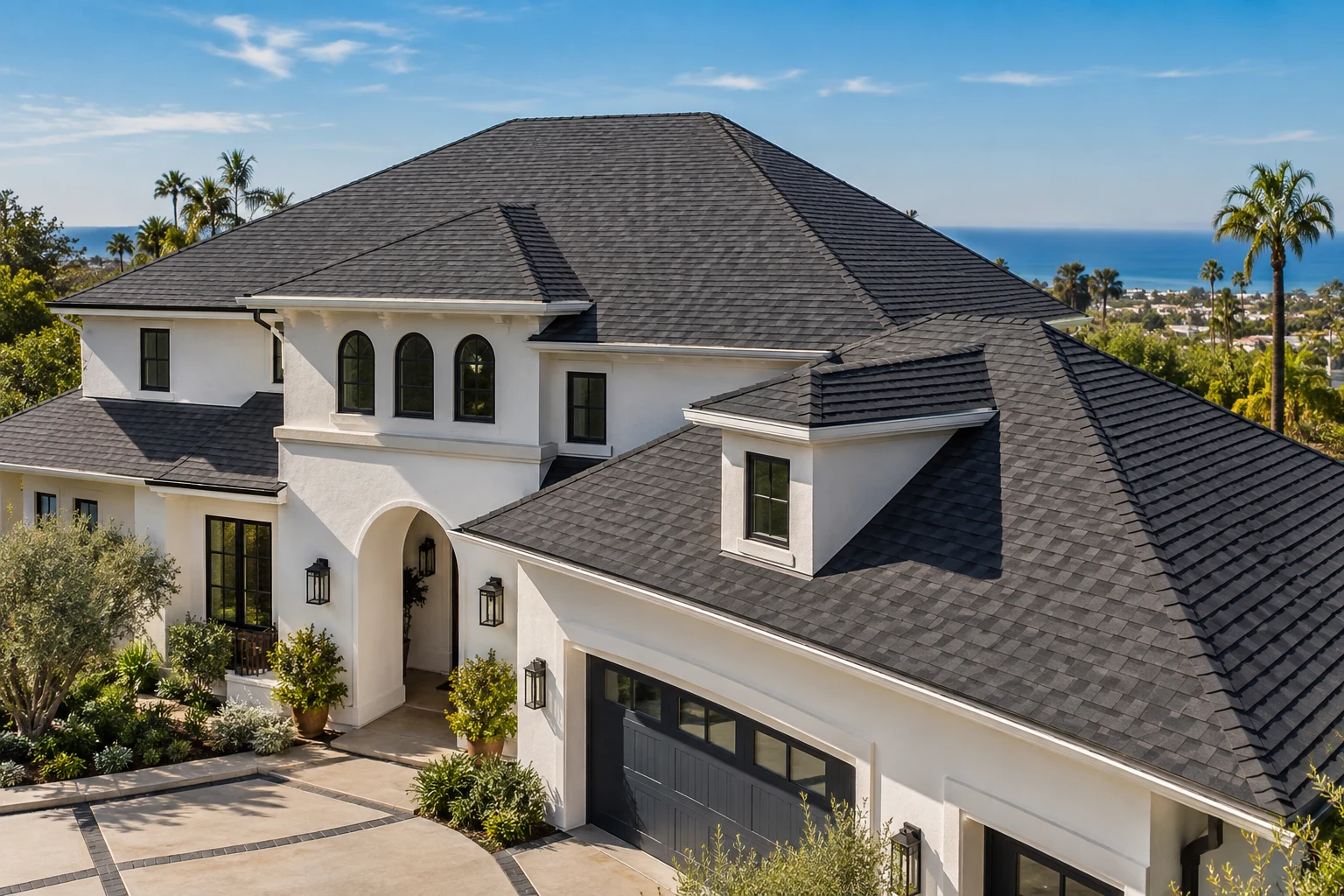
Homeowners in Irvine often ask how long their roofs will last given our unique Southern California climate. At All Star Roof Replacement, an experienced roofing contractor in Irvine, we understand that roof lifespan depends on many factors including material type, system quality, and local weather stresses. We provide thorough inspections and clear evaluations to help you know where your roof stands today and what to expect.
What Determines Roof Lifespan in Irvine?
Climate and Environmental Factors Affecting Roof Life
In Irvine, roofs face a mix of warm Mediterranean and semi-arid conditions that accelerate aging. The intense UV rays and summer heat break down organic materials and asphalt shingles faster than in cooler climates. Many homeowners don’t realize how much those relentless sun and heat cycles impact roofing materials beneath roof tiles or shingles.
Santa Ana winds, which can gust between 30–60 mph and even stronger at times, put mechanical stress on roofs. They lift shingles at the edges or cause displacement and occasional breakage of clay and concrete tiles. These high winds increase wear and tear especially on weaker flashing and unsecured tiles.
A direct factor to roof longevity here is also the seasonal rains and atmospheric river events. These episodic storms subject flashings and underlayments to intense moisture penetration pressures. If materials are already degraded, leaks quickly develop.
Roof System Components Beyond Surface Materials
In homes across Irvine, a common issue during inspections is that the visible roofing material may be in fair shape while the underlayment beneath is deteriorating. Tile roofs often last well beyond 50 years, but the organic or even synthetic underlayment usually only performs about 20–30 years before needing replacement. This underlayment failure is a frequent culprit for leaks even when tiles look intact.
The roof deck’s condition, which can be compromised by trapped moisture or termite damage common in older Irvine homes, plays a big role in how long a roof system actually lasts. Flashings, especially where stucco walls meet chimneys or roof edges, also require careful maintenance or replacement. When flashing fails, water intrusion accelerates dry rot and compromises structural integrity.
Proper ventilation is critical here to reduce excessive attic heat. Without good airflow, flashing and shingles degrade faster under the amplified heat typical of Irvine summers. Upgrading ventilation can extend the life of your entire roof system.
Typical Lifespans of Common Roof Types in Irvine
Architectural Asphalt Shingle Roofs
Architectural asphalt shingles are common on Irvine homes and generally last 20–30 years with quality installation and good ventilation. However, exposure to intense UV light results in granule loss, causing shingles to become brittle, curl, and crack over time. Santa Ana winds worsen edge lift and can crack tabs.
Routine inspection of flashing and ventilation is key to preventing early failure. Many homes we service benefit from targeted upgrades before shingles reach the end of their useful lifespan.
Concrete and Clay Tile Roofs
Concrete and clay tiles often last well beyond 50 years, making them a durable option for Southern California. Nonetheless, the underlayment beneath these tiles requires replacement roughly every 20–30 years. Without this lift-and-reset maintenance, leaks and costly damage become a serious threat.
Tile damage also occurs from foot traffic, solar panel installation, or wind. Broken tiles should be replaced promptly to maintain roof performance. Lift-and-reset services can extend system life affordably by addressing underlayment and flashing issues without replacing the entire roof.
Low-Slope Roof Membranes (TPO, PVC, Modified Bitumen)
Low-slope roofs on Irvine homes typically last 15–25 years depending on membrane quality and roof drainage. UV exposure can degrade membranes, while ponding water and seam failures cause common vulnerabilities.
In particular, white reflective membranes are popular here since they improve energy efficiency by reducing heat gain during hot summers.
Roof Type | Typical Lifespan in Irvine | Key Strengths | Common Wear Factors
--- | --- | --- | ---
Architectural Asphalt Shingles | 20–30 years | Cost-effective, widely available | UV granule loss, wind damage, flashing issues
Concrete/Clay Tiles | 50+ years (tiles); 20–30 years (underlayment) | Durability, aesthetic appeal | Underlayment failure, tile breakage
Low-Slope Membranes (TPO, PVC) | 15–25 years | Reflective properties, waterproofing | UV degradation, ponding water, seam failure
Why Ignoring Roof Age and Component Failure Can Lead to Bigger Problems
Many homeowners don’t realize that aging underlayment beneath tile roofs often fails long before tiles themselves show signs of trouble. This failure allows wind-driven rain to penetrate, causing dry rot on roof decking and eaves.
Repeated shingle repairs on older asphalt roofs tend to be ineffective because brittle materials and deteriorated flashing compromise patch durability. Poor attic ventilation, which is common in Irvine without proper upgrades, speeds up flashing failures and raises energy bills due to excessive attic heat.
Hidden deck damage, flashings pulling away, or rotted eaves can go undetected until repair costs rise dramatically. It’s vital to address these systemic issues proactively instead of waiting for leaks.
How to Tell If Your Roof is Near the End of Its Life in Irvine
Signs your roof may be nearing replacement include multiple leaks developing in different locations rather than isolated patches. Tile roofs older than 20 years with brittle underlayment and rotted or stained eaves need careful evaluation.
Architectural asphalt shingles showing widespread granule loss, curling edges, and multiple prior patches suggest diminishing life expectancy. Visible sagging or soft spots point to decking problems that require immediate attention.
Homes with poor attic ventilation often have excessive attic heat or moisture buildup, causing shingle blistering and accelerating failure. These symptoms highlight the importance of ventilation upgrades during roof replacement.
Decision Support: Repair Vs. Replacement for Aging Irvine Roofs
In Irvine, repair may make sense for isolated damage on younger roofs without underlying system failures. However, many tile roofs with failing underlayment and flashing require lift-and-reset or full replacement to stop recurring leaks. Asphalt shingle roofs 20 years or older with granule loss and persistent leaks are also better candidates for replacement.
Overlays that try to install new shingles over old are often disallowed by Irvine HOAs and building codes, plus they usually worsen wind resistance and hide underlying problems. Full roof tear-off and replacement allow deck inspection and ventilation upgrades—critical for long-term durability under Irvine’s sun and wind conditions.
Frequently Asked Questions About Roof Lifespan in Irvine, CA
How long do architectural shingle roofs typically last in Irvine?
With proper ventilation and quality materials, architectural shingles usually last between 20 and 30 years in Irvine’s climate.
Why do tile roof underlayments fail sooner than tiles?
Underlayments, especially older organic felt types, become brittle from prolonged heat and UV exposure. Synthetic underlayments last longer but still need replacement every 20–30 years to prevent leaks.
Can a tile roof last 50 years without full replacement?
Tile itself can exceed 50 years, but the underlayment and flashings need periodic lift-and-reset maintenance to maintain leak protection.
Does Irvine’s sun and Santa Ana wind shorten shingle roof life?
Yes, intense UV rays cause granule loss and brittleness, while strong winds lift tabs and damage flashing, especially if ventilation is poor.
What signs suggest my roof decking needs replacement?
Soft spots, sagging areas, water stains, or termite damage in the attic indicate that roof decking may require replacement.
Is it better to overlay shingles or do a full tear-off in Irvine?
Full tear-off is generally preferred due to HOA limits, code compliance, and the opportunity to inspect decking and upgrade ventilation.
How does ventilation affect roof lifespan in Irvine?
Proper ventilation reduces attic heat and moisture, slowing material aging and preventing flashing failures common in Irvine’s climate.
Contact All Star Roof Replacement for a Roof Lifespan Evaluation in Irvine, CA
If your roof shows signs of age, leaks, or you want a clear understanding of its expected lifespan, contact All Star Roof Replacement. We offer no-pressure consultations that evaluate your roof’s age, entire system condition—including decking, underlayment, flashings, and ventilation—and help you decide the best path forward.
Verify the current CSLB record for license #1009760 and confirm the appropriately licensed contractor responsible for your roofing scope in the written agreement. Let us prepare an accurate estimate factoring in Irvine’s climate challenges and material performance.
Call us today at (310) 729-3013 or email teamallstarconstruction@gmail.com to schedule your professional roof lifespan evaluation.
Learn more about our roof replacement process in Irvine and why proper roof ventilation upgrades matter for long-term durability.