
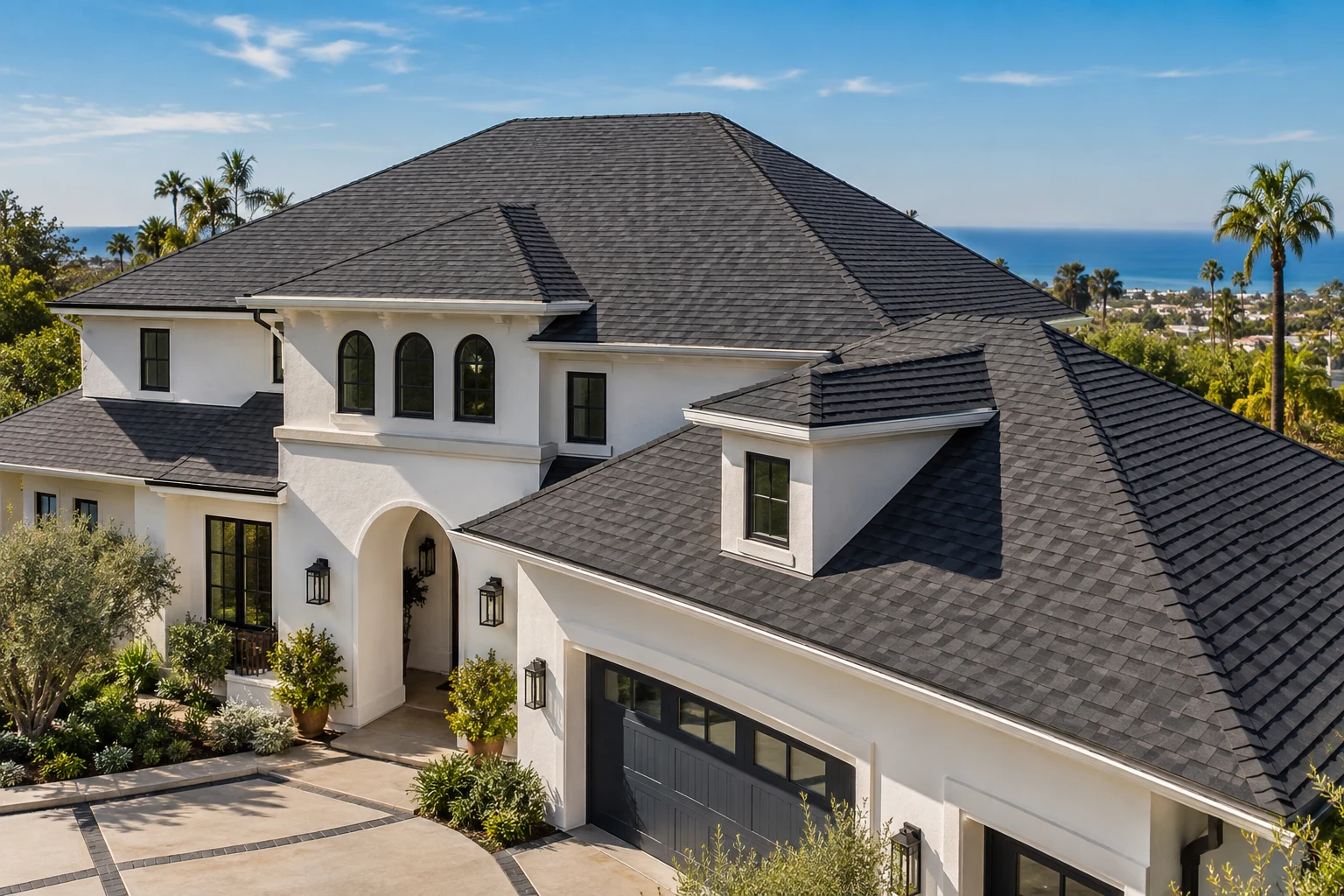
Choosing the best roofing material for your Laguna Niguel home means balancing the region’s unique climate with your budget and HOA guidelines. At All Star Roof Replacement, we provide experienced evaluations to help homeowners select the right roofing system that suits Southern California’s intense sun, marine air, and seasonal winds.
In Laguna Niguel, roofing materials must perform together as a system — including underlayment, flashings, decking, and ventilation — to withstand UV exposure, coastal salt air, and occasional heavy rains. Here’s what you need to know to make the most practical choice for your roof replacement.
Best Roofing Materials for Laguna Niguel’s Climate and Conditions
The most effective roof replacements here typically use one of three main materials: tile (concrete or clay), architectural asphalt shingles, or low-slope membrane systems like TPO or PVC. Concrete and clay tiles are favored for their 50+ year lifespan and strong fire resistance, but the underlayment and metal flashings underneath generally require updates every 20 to 30 years to prevent leaks.
We often advise Laguna Niguel homeowners to invest in high-quality underlayment upgrades during tile reroofs to extend the entire system’s durability.
Architecture-grade asphalt shingles have improved significantly with cool-roof coatings and high wind ratings that are well suited for Santa Ana wind exposure. They provide a cost-effective option with a typical lifespan of 18 to 25 years, especially suited for complex roof shapes or budgets constrained by tile installation costs.
For flat or low-slope sections such as patio coverings, white TPO or PVC membranes help reduce heat gain on your home. These membranes excel at reflecting sunlight, reducing air conditioning costs. They also perform well with proper drainage and corrosion-resistant edge metal details.
Learn more about best roofing materials available in Laguna Niguel.
Why Laguna Niguel’s Climate Demands Specific Roofing System Choices
Laguna Niguel’s coastal environment creates a challenging context for any roofing system. Intense UV exposure causes asphalt shingles to lose their granules faster, especially on sun-facing slopes. Marine salt air accelerates corrosion on common metal flashings and fasteners, which is why we recommend stainless steel or galvanized metals with premium protective coatings for roofs near the coast.
Santa Ana winds, often gusting over 50 mph, demand properly engineered fastening patterns for shingles and secure tile installation. Insufficient nailing or crimping can lead to tile displacement and shingle loss. Many Laguna Niguel homes experience this after windstorms when roof systems were not updated for modern wind performance.
Concentrated winter rains can expose weaknesses in older roofs, especially tile roofs with original underlayment that has degraded. Replacing the underlayment during a tile lift-and-reset is critical for maintaining waterproof performance.
Due to wildfire risks in canyon-adjacent neighborhoods, roofing systems must include Class A fire-rated assemblies and ember-resistant attic vents to reduce ignition hazards.
For detailed information, consider our attic ventilation upgrades and fire-rated roofing assemblies explanations.
Common Roofing Issues from Using the Wrong Materials in Laguna Niguel
From our inspections across Laguna Niguel, a common issue is underlayment failure beneath tile roofs, especially when old organic felts remain in place. These materials deteriorate quickly under intense heat cycling and UV exposure at edges, leading to leaks.
Another frequent problem is corrosion of inferior metal flashings, resulting in leaks around valleys and eaves. Coastal salt air speeds deterioration of exposed metals, and some contractors have cut corners using untreated or low-quality flashing metals.
Poor attic ventilation accelerates shingle aging by trapping heat and moisture, leading to premature blistering and growth of algae on shaded roof surfaces exposed to moisture from the marine layer. Additionally, neglecting the required wind ratings or recommended fastening methods can result in significant shingle and tile loss during Santa Ana wind events.
If you want to understand these problems better, see our detailed page on tile lift-and-reset underlayment replacement and how attic ventilation upgrades can extend your roof’s life.
Core Roofing Material Choices for Laguna Niguel: Pros and Limitations
Concrete and Clay Tile Roofs
Tile roofs are iconic in Laguna Niguel, offering longevity that exceeds most other materials — often 50 years or more. Their thermal mass helps moderate attic temperatures when installed with proper airflow underneath. Clay and concrete tile also provide excellent fire resistance and are often required or preferred by HOAs.
However, the underlayment and flashings beneath the tiles will generally not last as long and need periodic replacement. Our team frequently performs lift-and-reset tile reroofs where tiles are reused but old underlayment is replaced to restore roofing system integrity. Installation quality matters significantly here to combat marine corrosion and meet wind uplift resistance standards.
Read more about full tile roof replacement projects we handle.
Architectural Asphalt Shingles
Architectural asphalt shingles provide versatility for complex roof designs and are cost-effective compared to tile. Modern shingles with cool roof coatings help reduce heat buildup inside homes during summer, which is essential in Laguna Niguel’s hot climate.
With a typical lifespan of 18 to 25 years, shingles need installation with premium underlayment and excellent attic ventilation to counteract UV wear and heat damage. We specify high wind-rated shingles to handle Santa Ana gusts, avoiding lifted and damaged shingles after storms.
For more on asphalt shingles, see our asphalt shingle roof replacement details.
Low-Slope Membranes (TPO/PVC, Modified Bitumen)
Low-slope residential roofs, including many patio covers and accessory structures in Laguna Niguel, perform best with white TPO or PVC membranes. Their reflective surfaces significantly decrease heat absorption, reducing cooling loads in hot weather.
Proper drainage is crucial for longevity, as ponding water can cause membrane failures. Edge metals and perimeter detailing must be corrosion-resistant due to coastal exposure as well.
Explore our low-slope TPO and PVC roofing options for more information.
Material | Longevity (Years) | Key Benefits | Common Laguna Niguel Issues | Typical Cost Range (Full Replacement)
--- | --- | --- | --- | ---
Concrete/Clay Tile | 50+ | Fire resistant, HOA approved, thermal mass | Underlayment failure, flashing corrosion | $24,000 – $60,000+
Architectural Asphalt Shingle | 18–25 | Cost-effective, variety of colors, cool roof options | UV damage, wind uplift if improperly fastened | $12,000 – $28,000+
Low-Slope Membranes (TPO/PVC) | 15–25 | Reflective, energy efficient | Ponding damage, edge corrosion | $8,000 – $30,000
How to Choose the Right Roof Material for Your Laguna Niguel Home
Selecting the ideal roofing material means considering HOA standards, your budget, and roof complexities. Tile roofs fit best for long-term owners prioritizing durability and aesthetic conformance with neighborhood covenants. Meanwhile, architectural shingles offer an economical solution for those seeking reliable performance with flexibility in design.
Regardless of material, we stress the importance of premium underlayment, corrosion-resistant metal flashings, and Class A fire-rated assemblies to address Laguna Niguel’s marine air and wildfire risks. Attention to attic ventilation is equally critical, as it mitigates heat buildup and prolongs roofing components.
Energy savings from cool roof materials can influence your decision—light-colored tile and white low-slope membranes significantly reduce summer cooling costs compared to darker asphalt shingles.
Not sure if you should repair or replace your roof? Visit our roof repair or replacement guide to help you decide.
Frequently Asked Questions about Roofing Materials in Laguna Niguel
What roofing material lasts longest in Laguna Niguel?
Concrete and clay tile roofs typically last more than 50 years. However, to maintain waterproofing, underlayment replacement is recommended every 20 to 30 years during reroofs.
Is asphalt shingle a good choice for Laguna Niguel’s climate?
Yes, if you select high-wind, cool-rated architectural shingles combined with premium underlayment and enhance attic ventilation. This combination defends well against UV damage and heat stress.
Can I reuse my existing tile when reroofing in Laguna Niguel?
Often, yes. If your tiles remain intact and meet HOA requirements, we can perform a lift-and-reset reroof. Expect around 5–10% tile breakage during removal.
How does marine salt air affect roofing materials here?
Marine salt air accelerates corrosion on exposed metal flashings and fasteners. We recommend premium coatings and stainless or galvanized metals to extend metal component durability.
Why is proper attic ventilation important in Laguna Niguel’s roofs?
Ventilation helps lower attic temperatures, reduces shingle degradation, prevents moisture buildup, and limits algae growth on shaded marine-side roof slopes.
Are cool roofing materials beneficial in Laguna Niguel?
Absolutely. Cool roofs reduce heat gain inside your home and lower air conditioning costs during our hot, sunny summers.
What makes a roofing system suitable for wildfire risk in Laguna Niguel?
A suitable system includes Class A fire ratings, ember-resistant vents, and fire-rated underlayment to protect homes near wildfire-prone canyons.
Find more FAQs on roof lifespan, roof warranties, and steps to take if you have leaks at roof leak what to do.
Contact All Star Roof Replacement for a Local Roof Material Evaluation in Laguna Niguel
At All Star Roof Replacement, we specialize in thorough roof system inspections tailored to Laguna Niguel’s conditions. Our evaluations include decking, underlayment, flashing, and ventilation assessments to recommend the best roofing materials for your home’s specific needs.
No pressure, just clear information on what materials meet your HOA requirements, withstand coastal and wildfire risks, and improve your home’s energy performance.
Call us at (310) 729-3013 or email teamallstarconstruction@gmail.com to schedule your comprehensive roof evaluation.
Learn more about pricing and financing options starting with a detailed roof inspection cost and available roof financing plans.