
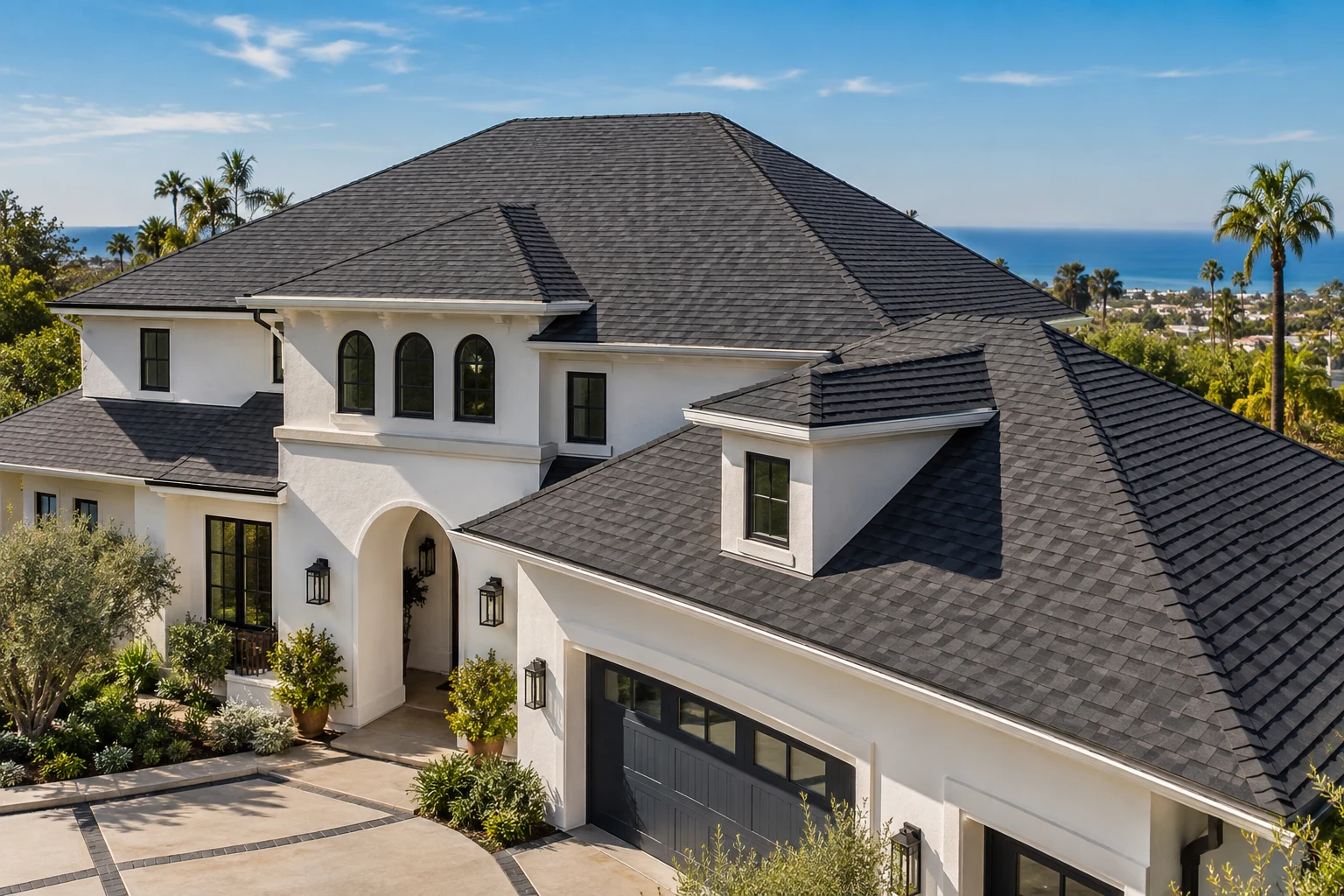
Homeowners in Mission Viejo know all too well how relentless summer heat and strong sun exposure drive up attic temperatures, causing higher energy bills and faster roof aging. At All Star Roof Replacement, we specialize in residential roof replacement that tackles heat reduction across your entire roofing system — from ventilation and underlayment to reflective materials — not just the rooftop surface.
Reducing heat through roofing means upgrading systems designed for Southern California’s intense sun and seasonal heat waves, extending your roof’s life while saving on cooling costs.
Why Heat Issues Occur in Mission Viejo Roofs
In homes across Mission Viejo, the combination of inland heat, UV exposure, and aging roofing materials creates a unique challenge. Mission Viejo’s Mediterranean climate regularly sees temperatures climbing into the mid-80s and low-90s, with heat waves reaching above 100°F during summer. This intense heat bakes traditional roofing components like asphalt shingles and tile underlayment, accelerating material breakdown.
A common issue during inspections is the widespread deterioration of original 30-pound felt underlayment beneath concrete tile roofs, which is typical for many older Mission Viejo homes. This felt becomes brittle and prone to tearing after 20 to 30 years, especially under UV assault. Combined with limited attic ventilation—often due to blocked soffit or ridge vents—heat becomes trapped and raises attic temperatures well beyond outdoor levels.
Mission Viejo’s popular Spanish-style tile roofs shed rain efficiently but don’t prevent heat penetration. South- and west-facing roof slopes receive direct afternoon sun, magnifying the heat load on roofing materials. Add seasonal Santa Ana winds, which stress fasteners and flashings already weakened by heat, and you see how roofing systems here face a tough environment.
Because of these local heat factors, many Mission Viejo homeowners don’t realize that roof heat issues go beyond surface damage and affect underlayment, sealants, and decking, risking premature leaks and higher energy use.
For homeowners considering improvements, understanding these local challenges can help you choose the right options. Our roof replacement services in Mission Viejo include thorough evaluation of ventilation and underlayment alongside material selection to combat heat.
Consequences of Ignoring Roofing Heat Reduction
Ignoring heat-related roof degradation can cost you more than just your comfort. In many Mission Viejo homes, elevated attic temperatures increase air conditioning needs by 5 to 15%, especially in those with older insulation or less efficient HVAC systems. This heat drives up monthly utility bills and places unnecessary strain on cooling equipment.
We often find during inspections that damaged underlayment and brittle decking under the roof cover result in leaks and moisture infiltration. Mission Viejo’s coastal mornings often bring marine layer condensation, adding to moisture risks that can cause dry rot along eaves and even structural damage.
Asphalt shingles under extreme heat lose granules faster and begin curling, which is a common sign we observe in roofs nearing replacement age. Without addressing attic ventilation and underlying heat sources, shingle repairs only mask deeper problems. Continued heat stress can encourage mold growth and deterioration in attic framing and insulation beyond just the roof surface.
If you notice repeated roofing repairs or unexplained energy losses, it’s critical to consider a proactive approach rather than patchwork fixes. Learn to recognize signs you need a new roof early to avoid costly consequences. Our team can help you decide if replacement is the better path through our detailed roof repair or replacement evaluations.
Core Methods to Reduce Heat Through Roofing Systems
Material Selection for Reflectance and Durability
One of the most effective ways to cut roof heat is choosing roofing materials designed to reflect solar radiation. Mission Viejo homeowners benefit from cool-rated shingles certified by the Cool Roof Rating Council (CRRC). These architectural shingles are treated to reduce heat absorption, lowering attic temperatures significantly.
For flat or low-slope roofs found on some homes or attached structures, white or light gray TPO membranes provide excellent thermal reflection compared to traditional black built-up roofs. This choice can drastically reduce the heat load on those surfaces during peak afternoon sun.
Beyond surface materials, upgrading to synthetic or SBS-modified underlayments is critical in our climate. These underlayments resist UV damage and heat brittleness much better than old 30-lb felt, offering extended protection beneath tile or shingles. When combined with reflective shingles or tiles, they contribute to a roofing system that stands up to Mission Viejo’s heat year-round.
Ventilation Upgrades as Heat Management
Proper attic ventilation is a cornerstone of heat reduction. In many Mission Viejo homes, soffit vents are clogged with insulation or debris, and ridge vents are missing or sealed. This traps heat and moisture, accelerating degradation.
We recommend balanced ventilation systems that combine continuous soffit intake with ridge vents or specialized under-tile vents like O’Hagin vents. This allows hot air to exhaust naturally, reducing attic temperatures and protecting roofing materials.
Effective ventilation also minimizes moisture buildup that contributes to mold and rot. During reroofing, we inspect and upgrade ventilation components to meet high-wind standards suited for Santa Ana events, ensuring durability under local conditions.
System-Level Waterproofing and Insulation
Heat disrupts sealants and flashing fasteners, causing leaks when waterproofing fails. That’s why our roof replacements use advanced flashing details along with synthetic underlayment to strengthen barrier performance under heat stress.
Insulation and attic air sealing work hand in hand with roofing upgrades. Sealing attic bypasses and improving insulation during reroofing not only reduces heat transfer into your home but also helps your HVAC system operate efficiently.
Our cool roof options, combined with ventilation upgrades and tile roof underlayment replacement services, create a comprehensive solution tailored to Mission Viejo’s climate and roof types.
Homeowner Decision Guide: Repair vs Replacement for Heat Reduction
Many homeowners ask whether they should repair or replace their roof when facing heat issues. At All Star Roof Replacement, we advise considering replacement when systemic heat-related issues exist—not just isolated leaks.
If your roofing has brittle or torn underlayment, widespread shingle or tile damage, or inadequate ventilation, repair typically won’t solve the root problems. In Mission Viejo, where roofs endure higher-than-average heat and UV exposure, these issues worsen quickly, making roof replacement a wiser long-term investment.
Roof replacement allows you to upgrade to cool roofing materials and improve ventilation simultaneously, maximizing attic temperature control and energy savings. If your roof is over 20 to 25 years old or shows multiple signs of wear, replacement is often the more cost-effective option for sustained performance.
We help our clients weigh these factors carefully with transparent evaluations. Learn more about your options on our roof repair or replacement page and identify early signs on our signs you need a new roof resource.
FAQs About Reducing Heat with Roofing in Mission Viejo
How much does a cool roof upgrade cost in Mission Viejo?
Costs vary depending on the materials and complexity of your roof. Upgrading to CRRC-rated shingles or white TPO membranes often carries a modest premium but can lead to energy savings over time.
How long does a roof last under Mission Viejo heat conditions?
Architectural shingles typically last 18 to 28 years, while tile on the surface can last many decades. However, underlayment often deteriorates after 20 to 35 years due to heat and UV exposure.
Can ventilation upgrades really reduce attic heat?
Yes. Properly installed soffit intake and ridge exhaust vents, or specialized under-tile vents, reduce attic temperatures significantly, extending your roof’s life and lowering cooling costs.
Is reroofing necessary if I have repeated attic heat problems?
If heat causes material brittleness, leaks, or high energy bills, a full reroof with improved ventilation and cool materials is the most effective long-term solution.
Does HOA allow cool roofing materials in Mission Viejo?
Homeowners associations usually allow “in-kind” color and profile replacements. Cool roofs are generally permitted but require approval through the Architectural Review Committee (ARC), so coordination is important.
What is the best roofing material to reduce heat in Mission Viejo?
Class A asphalt shingles with cool roof ratings or light-colored concrete tiles combined with synthetic underlayment and proper ventilation provide the best combination of heat reduction and durability.
Can a tile roof be retrofitted to reduce attic heat?
Yes. Adding O’Hagin-style vents and upgraded reflective underlayment beneath tile can improve heat management without replacing the tiles themselves.
Schedule Your Heat-Reducing Roof System Inspection in Mission Viejo
At All Star Roof Replacement, we provide no-pressure, thorough roof inspections focusing on the entire roofing system to identify heat-related risks. Our expert evaluations cover cool roof materials, ventilation upgrades, and underlayment condition to help you make informed decisions.
With deep local knowledge of Mission Viejo’s climate challenges and HOA processes, we ensure your roofing projects comply with permits and wind codes while delivering lasting protection and comfort.
Contact us today at (310) 729-3013 or email teamallstarconstruction@gmail.com for an estimate or to schedule your roof inspection consultation.
Learn more about our roof replacement process, find a Mission Viejo roofing contractor near you, or review roof inspection cost details to prepare for your project.