
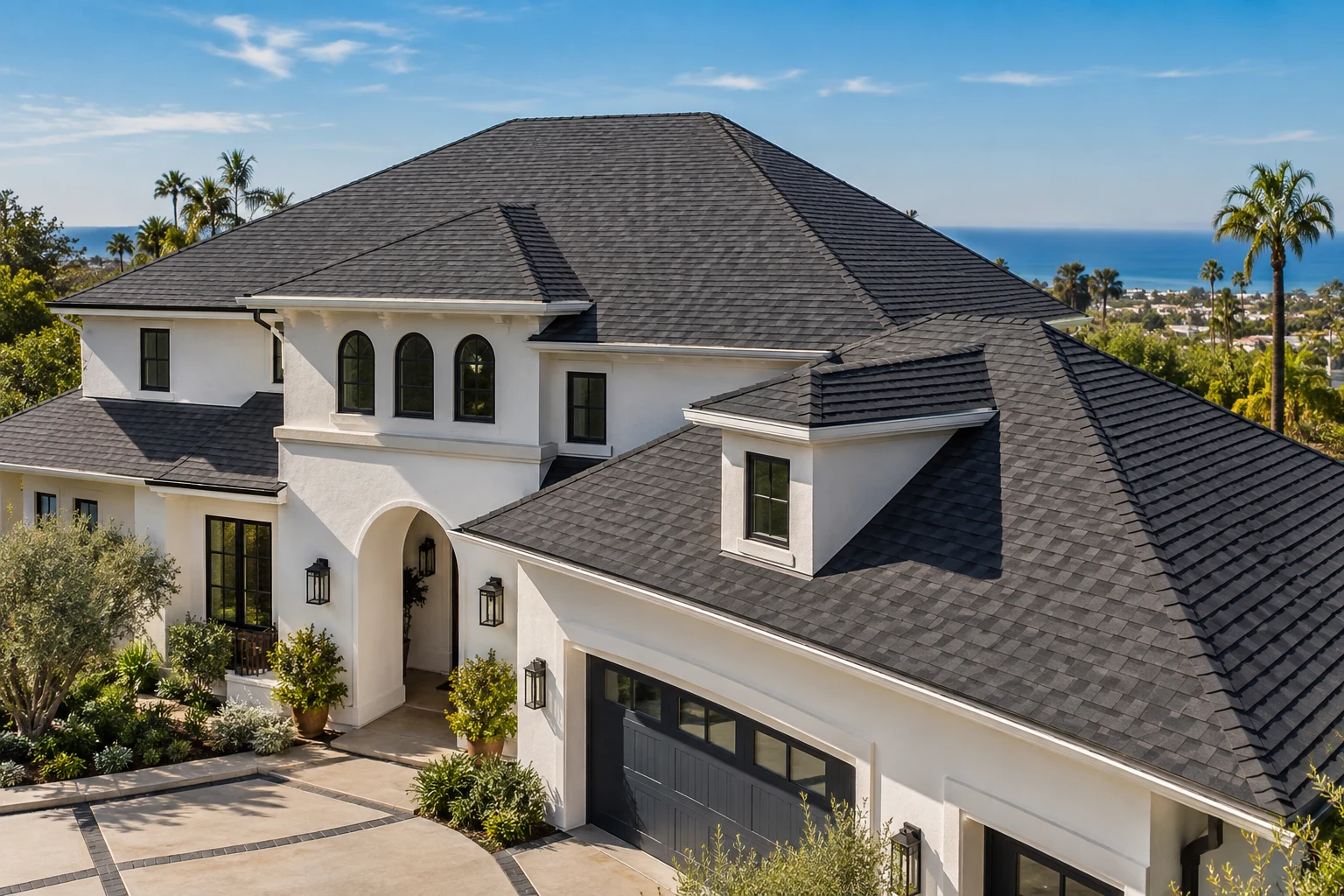
In Mission Viejo, roofing systems face unique challenges due to our Southern California climate. At All Star Roof Replacement, we’ve worked on hundreds of residential roofs here and understand how factors like intense UV exposure, seasonal winds, and aging building materials affect roof lifespans. Typically, a well-installed roof lasts between 18 to 50 years, depending on material and maintenance.
If you’re wondering how long your roof can realistically last in Mission Viejo, we provide honest evaluations to guide your replacement decisions.
Your roof protects your home from heat, wind, and rain, but it’s more than just the surface shingles or tiles. The entire roofing system—including underlayment, decking, flashing, and ventilation—needs to work together to last. In homes across Mission Viejo, we often see roofing materials lasting near their expected limits, while the hidden components under the surface wear out sooner, leading to leaks and damage.
Common Lifespans by Roofing Material and System in Mission Viejo
One of the biggest factors influencing roof life is the type of roofing material used. Most Mission Viejo homes from the 1970s through 2000s feature either architectural asphalt shingles or concrete/clay tile roofs. Low-slope membrane roofs are also common on additions and flat sections. Here’s what you can expect locally:
Roof Type | Typical Lifespan | Notes on Local Factors
--- | --- | ---
Architectural Asphalt Shingles | 18–28 years | Ventilation quality and wind fastening significantly affect life.
Concrete/Clay Tile (tile only) | 50+ years | Underlayment replaces every 20–35 years; flashing is critical.
Low-Slope Membrane Roofs | 15–25 years | Proper maintenance vital; UV and ponding cause early failure.
For architectural asphalt shingles, the Southern California sun causes granule loss and material fatigue over time. With good ventilation and superior wind-resistant installation designed for our Santa Ana winds, shingles can reach upper lifespan ranges. For more on choosing the best roofing materials for Mission Viejo climate, visit our detailed guide.
Concrete or clay tile roofs last longer due to durable tile materials, but the underlayment beneath them deteriorates faster under our heat and dry-wet cycles and often needs replacement every two or three decades. Many homeowners don’t realize that flashing and fastener integrity are just as important in tile systems. Our Mission Viejo roof replacement services include thorough system checks to account for these factors.
Why Roofs Age Faster in Mission Viejo’s Climate
Our local climate accelerates roofing wear in several ways. Strong summer heat and intense UV rays break down shingle granules, leading to curling, cracking, and loss of waterproofing, especially on south- and west-facing slopes. During inspections, a common issue we note is embrittled underlayment that fails well before visible roofing materials degrade.
Another factor is the Santa Ana winds, which regularly test the fastening strength of shingles and tiles. Without proper fastening that meets high-wind standards, roofs can suffer blow-offs or tile uplift. The shifting marine layer combined with daily moisture from morning fog and nighttime dew causes repeated wet-dry cycles. This pattern hastens the breakdown of underlayments and can lead to dry rot in eave wood trim if left unchecked.
Many homeowners don’t realize how these environmental elements compound over time, making regular roof aging evaluations critical. For more about preparing your home for these winds, see our Santa Ana wind-resistant roofing information.
Signs Your Roof Is Nearing the End of Its Service Life
Identifying when your roof is ready for replacement can save you from costly interior repairs. In Mission Viejo, asphalt shingle roofs that show widespread granule loss in gutters, curling or cracking shingles, and repeated blow-offs during wind events are often at the end of their useful life.
Tile roofs may look great on the surface but can harbor hidden issues like brittle or torn underlayment, dry rot at vulnerable eaves, loosened or broken tiles, or leaks around valleys and skylights. We frequently find these issues during detailed inspections before visible symptoms appear inside your home.
Interior signs include water stains on ceilings, moisture buildup in the attic, or even visible daylight through roof deck boards. If you notice any of these, it’s wise to consider a full system evaluation. Learn more about common signs you need a new roof in Mission Viejo.
What Happens if You Ignore Roof Aging in Mission Viejo
Ignoring aging roofs often leads to failing underlayment and flashing, which causes leaks and interior water damage. Dry rot can develop in wooden decking and fascia, threatening structural integrity. During inspections, we often see long-term patching attempts that don’t address these systemic failures.
Repeated repairs without full replacement increase overall costs and risk HOA non-compliance since many communities enforce roof maintenance standards. Roof damage worsens under continued heat and wind exposure, cutting lifespan short. It’s much more cost-effective over time to invest in a proper roof replacement rather than temporary fixes.
For guidance on when to consider repair versus replacement, visit our page on repair or replace your roof.
Roofing System Components That Impact Longevity
Remember, a roofing system is more than just its surface materials. Underlayment, decking, flashing, ventilation, and drainage must all be sound for your roof to reach its full lifespan. On many Mission Viejo homes, older 30-lb felt underlayment fails long before tiles or shingles wear out.
We recommend upgraded synthetic or SBS-modified underlayment for tile roofs to stretch system life beyond 30 years. Proper ventilation using ridge vents, soffit vents, and O’Hagin vents reduces heat buildup, preventing material degradation while avoiding moisture buildup inside the attic.
Many homeowners underestimate the importance of ventilation and high-quality flashing on roof longevity. For improvements tailored to Mission Viejo’s climate, see our resources on roof ventilation upgrades in Mission Viejo and tile roof underlayment replacement.
Decision Guide: Repair vs Roof Replacement in Mission Viejo
If your roof is under 20 years old and damage is limited to isolated areas, repair may be cost-effective. However, in Mission Viejo, roofs older than 20 years often show multiple systemic issues such as brittle underlayment, ventilation failure, and chronic leaks. In these cases, replacement is usually the best long-term decision.
We advise against overlays, which only delay necessary repairs and can reduce warranty coverage. Proper tear-off and decking inspections during replacement ensure that your next roof is durable and reliably protects your home in our demanding climate.
For details on making the right call, check out our repair versus replacement decision guide and is reroofing worth it insights.
Frequently Asked Questions About Roof Lifespan in Mission Viejo
How long do asphalt shingle roofs last in Mission Viejo?
Architectural asphalt shingles typically last between 18 and 28 years here. Lifespan depends on sun exposure, attic ventilation, and how well the roof withstands heat cycle aging.
What is the lifespan of tile roofs in Mission Viejo?
Tiles themselves can last over 50 years, but underlayment and flashing usually require replacement every 20 to 35 years due to embrittlement and cracking caused by our heat and moisture cycles.
Can I expect longer roof life with better ventilation?
Yes. Improved attic ventilation lowers heat stress on roofing materials and slows degradation. This can extend your roofing system’s life by several years.
How do Santa Ana winds affect roof lifespan?
Santa Ana winds increase the risk of shingle blow-offs and tile dislodgement if fastening does not meet high-wind standards, accelerating premature roof failures.
What roof signs indicate it’s time for replacement instead of repair?
Widespread material failure, multiple leaks, brittle/torn underlayment, dry rot at eaves, and repeated costly repairs are strong signals that roof replacement is needed.
Does reusing tile affect roof lifespan?
Reusing tiles can be practical if they remain structurally sound, but underlayment and flashing must be replaced to ensure the overall system lasts as expected.
How does Mission Viejo’s climate impact roof replacement timing?
Our hot, dry summers and wet, windy winters speed up underlayment aging. It’s best to plan replacements proactively, before leaks or structural damage appear.
Contact All Star Roof Replacement for a Roof Longevity Inspection in Mission Viejo
If you’re concerned about your roof’s age or condition, All Star Roof Replacement offers thorough, no-pressure roof longevity inspections in Mission Viejo. We assess underlayment, flashing, decking, and ventilation to give you clear advice on whether repair or replacement will best protect your home.
Our licensed, experienced Mission Viejo roofing contractors are familiar with local HOA and permit requirements and can help you plan your roof replacement to avoid costly interior damage and unexpected failures. Call us today at (310) 729-3013 or email teamallstarconstruction@gmail.com to schedule your inspection and estimate.
Learn more about inspection costs and process on our roof inspection cost page.