For homeowners in Newport Beach, choosing the best roofing material means balancing durability, coastal climate challenges, HOA guidelines, and energy efficiency. At All Star Roof Replacement, we help you evaluate your current roof and recommend materials that withstand Southern California’s intense sun, salt air corrosion, and occasional Santa Ana winds.
With decades of local roofing experience, we understand how every roofing system component—from shingles or tiles to underlayment and ventilation—works together to protect your home.
Overview: Why Roofing Material Choice Matters in Newport Beach
Newport Beach’s coastal Mediterranean climate demands roofing materials that resist persistent UV exposure, salt air corrosion, and wind-driven rain. Many homes here face accelerated wear because salt air corrodes metal flashing, fasteners, and valleys, which are crucial to preventing leaks. It’s not just what lies on top of your roof but also what’s underneath—high-quality underlayment and proper ventilation profoundly affect how long your roof lasts.
In homes across Newport Beach, we often find too little attic ventilation leads to trapped heat and moisture, causing premature shingle fading, underlayment breakdown, and wood decking damage. Selecting roofing materials specifically designed or rated for coastal climates—combined with installing corrosion-resistant metals and maintaining airflow—will significantly increase your roof’s longevity. Learn more about our approach to ventilation solutions and corrosion-resistant flashings.
Common Roofing Materials in Newport Beach and How They Perform
Concrete and Clay Tile Roofs
Tile roofs are the hallmark of upscale Newport Beach neighborhoods, favored not only for their stunning Mediterranean style but also for exceptional longevity—often lasting over 50 years. However, many homeowners don’t realize that while the tiles can endure, the underlayment beneath typically needs full replacement every 20 to 30 years.
The “lift-and-reset” method allows us to carefully remove and reinstall existing tiles while replacing worn underlayment and corroded metal flashings, preserving your HOA-approved tile profile and colors.
The coastal environment requires specialty flashings and fasteners made of stainless steel, aluminum, or coated metals to resist salt air corrosion. A common issue we observe are cracked or deteriorating mortar ridge caps, damaged by UV exposure and roof movement, which need repair during replacement work. For more on tile roof care and reinstallations, see our dedicated tile lift-and-reset page.
Architectural Asphalt Shingles
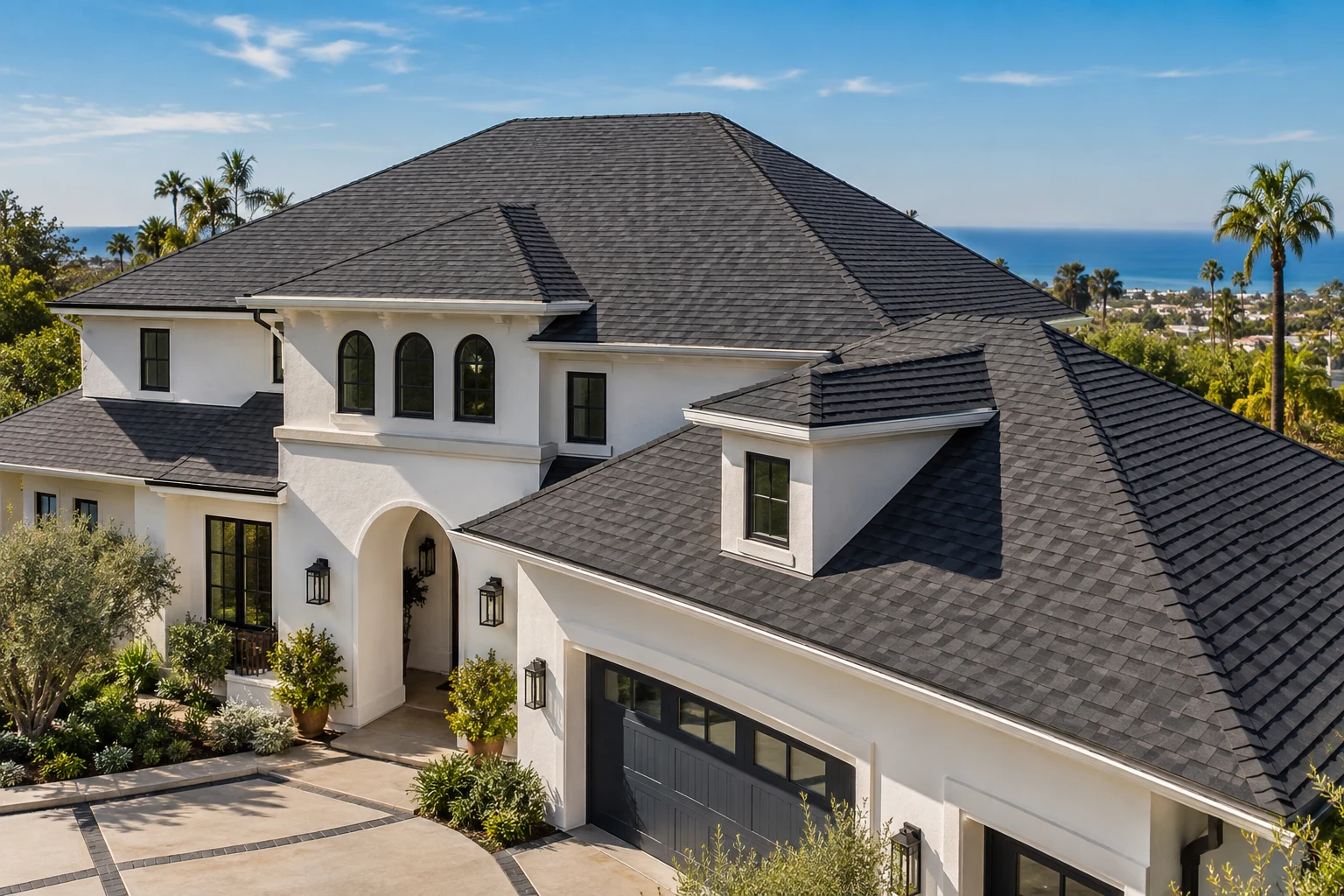
Architectural asphalt shingles are a popular, cost-effective choice for many Newport Beach homes, especially those inland or outside strict HOA areas. These shingles typically last 18 to 25 years but must be installed with high-quality UV-resistant products and underlayment to withstand the strong Pacific sun. Another key is balanced ventilation; without it, asphalt shingles age faster and may curl or blister prematurely.
Salt air is less damaging to asphalt shingles than metal components, though corrosion-resistant flashings remain essential. We recommend algae-resistant, cool-colored shingles to reduce heat absorption and help lower attic temperatures. Discover detailed benefits and options on our architectural shingles page.
Low-Slope Membrane Roofs (TPO, PVC, Modified Bitumen)
Flatter roofs commonly found on peninsula homes and newer modern styles require specialized membrane materials like TPO, PVC, or modified bitumen, which offer excellent UV resistance and energy savings through cool roofing technology. Proper design—ensuring good drainage, tapered insulation, and corrosion-resistant metal terminations—is critical because ponding water drastically reduces membrane life and increases leak risk.
Modified bitumen membranes need vigilant detailing to prevent UV wear and water infiltration at seams, while TPO and PVC membranes also provide long-term reflectivity. Homeowners with low-slope roofs can find comprehensive details on the latest options on our low-slope roofing page.
Metal Roofs
Metal roofs, especially aluminum or marine-grade coated steel, are increasingly popular in coastal Newport Beach because of their lightweight, longevity, and resistance to salt-air corrosion. We strongly advise against bare galvanized steel given its rapid degradation near the ocean. Metal roofs come with higher upfront costs but often outlast traditional shingles or tiles if installed correctly with quality fasteners and flashings.
Proper installation is essential for coastal durability to prevent leaks and corrosion issues. If you’re considering metal roofing, get full details on materials and installation best practices on our metal roofing page.
Key Coastal Issues That Influence Material Selection in Newport Beach
Newport Beach’s proximity to the ocean means salt air is one of the biggest enemies of roofing materials. It accelerates rust and corrosion on flashings, valleys, skylight frames, and fasteners, weakening the roof system over time. Homeowners don’t always realize how quickly cheaper metals can fail in this setting, leading to hidden leaks and rot.
The region also experiences strong Santa Ana winds bringing wind-driven rain. When roofing materials and flashings are not properly sealed and integrated, water can infiltrate at roof-wall joints or roof penetrations, causing damage.
The frequent marine layer and morning fog keep roofing assemblies damp longer, which increases risk for underlayment failure particularly if attic ventilation is marginal. For technical guidance on mitigating these risks, see our detailed pages on metal flashing corrosion resistance and proper attic ventilation.
What Happens When Material Choice or System Installation is Inadequate?
A common discovery during our roof inspections in Newport Beach is underlayment failure beneath seemingly sound tiles or shingles. When the felt or synthetic underlayment becomes brittle or waterlogged, leaks can develop even if the exterior roof looks intact. Corroded valley metals also often cause leaks that damage the roof deck and eaves over time.
Homes with poor ventilation suffer accelerated heat and moisture buildup in the attic. This raises shingle temperatures, causing faster degradation, shortens underlayment life, and even warps decking. Beyond reduced roof lifespan, this leads to uncomfortable indoor temperatures and higher energy costs.
Inadequate corrosion protection is a costly hidden risk. Flashing leaks and fastener failures promote dry rot and structural damage that require expensive repairs and sometimes full roof replacement. For signs that it’s time to replace your roof system rather than patch, visit our roof replacement indicators page and roof repair vs replacement guide.
Decision Guide: Selecting the Best Material for Your Newport Beach Home
Choosing the best roofing material depends on your home’s style, HOA requirements, budget, and the current roof’s condition. In coastal HOAs, tile roofing generally remains the preferred option for its appearance and classic look compatible with neighborhood standards. For homes inland or with tighter budgets, architectural asphalt shingles offer a solid balance of cost and performance.
Remember that roofing is a complete system involving underlayment, flashings, ventilation, and decking—not just tiles or shingles alone. Considering factors like roofing lifespan expectancy, ongoing maintenance, energy efficiency potentials including cool roof options, and local wind/fire resistance will ensure your choice matches Newport Beach’s unique environment.
We recommend reviewing our roof repair vs replacement guidance, exploring energy-efficient roofing options, and understanding roof lifespan expectations on our roof lifespan page.
Material | Lifespan | Coastal Suitability | Typical Cost Range | Energy Efficiency
--- | --- | --- | --- | ---
Concrete & Clay Tile | 50+ years (tiles), 20-30 years (underlayment) | Excellent with proper flashings | Higher | Moderate
Architectural Asphalt Shingles | 18-25 years | Good with UV/ventilation | Moderate | Cool color options available
Low-Slope Membranes (TPO, PVC) | 20+ years | Good when detailed properly | Moderate to High | High (Cool roofs)
Metal (Aluminum, Marine-Coated Steel) | 40+ years | Excellent if marine-grade | High | Good
FAQs About Roofing Materials in Newport Beach
What is the best roofing material for a Newport Beach home?
The best material depends on your home’s location, HOA rules, and budget. Tile roofs are preferred in coastal HOAs for longevity and appearance, while architectural asphalt shingles are common inland or where budgets are tighter. Coastal conditions require corrosion-resistant construction regardless of material.
How long do different roofing materials last here?
Tile roofs can last over 50 years if underlayment and metals are maintained. Architectural shingles typically last 18–25 years with good ventilation and UV protection. Metal and membrane roofs vary but generally range from 20 to over 40 years.
When should I replace underlayment instead of just tiles or shingles?
If underlayment shows widespread tears, water stains, or if metal flashings are corroded, it’s better to replace the entire system rather than patch. This prevents leaks and protects decking, especially since tiles or shingles alone often conceal underlying damage.
What is a cool roof and does it help in Newport Beach?
Cool roofs reflect sunlight and reduce heat absorption, lowering attic temperatures. In Newport Beach, TPO membranes on flat roofs and cool-colored shingles on slopes improve energy efficiency and comfort.
How long does roof replacement take in Newport Beach?
Shingle roof replacement typically takes 2–5 days. Tile lift-and-reset or full tile roof replacements can take longer, sometimes up to two weeks, depending on HOA approvals and permit processing.
Can I finance a roof replacement locally?
Yes, many homeowners finance roof replacements through third-party lenders or home equity loans. Monthly payments vary based on project size and loan terms; we’re happy to discuss options during your consultation.
Should I repair or replace an older shingle or tile roof?
If roof issues like leaks or deteriorated underlayment recur frequently, full replacement usually provides better value and system performance. Our roof repair vs replacement guide can help you decide.
Schedule Your Newport Beach Roof Material Consultation
If your roof is aging, leaking, or losing energy efficiency, All Star Roof Replacement is here to provide a thorough, no-pressure evaluation. We explain every aspect of your roofing system—material options, underlayment condition, ventilation needs, and HOA compliance—so you can make an informed decision tailored to Newport Beach’s unique climate.
Contact us today at (310) 729-3013 or teamallstarconstruction@gmail.com to schedule your inspection. Learn more about what to expect during the process on our roof replacement process page, or find out why choosing a qualified Newport Beach roofing contractor matters for your home’s long-term protection.