
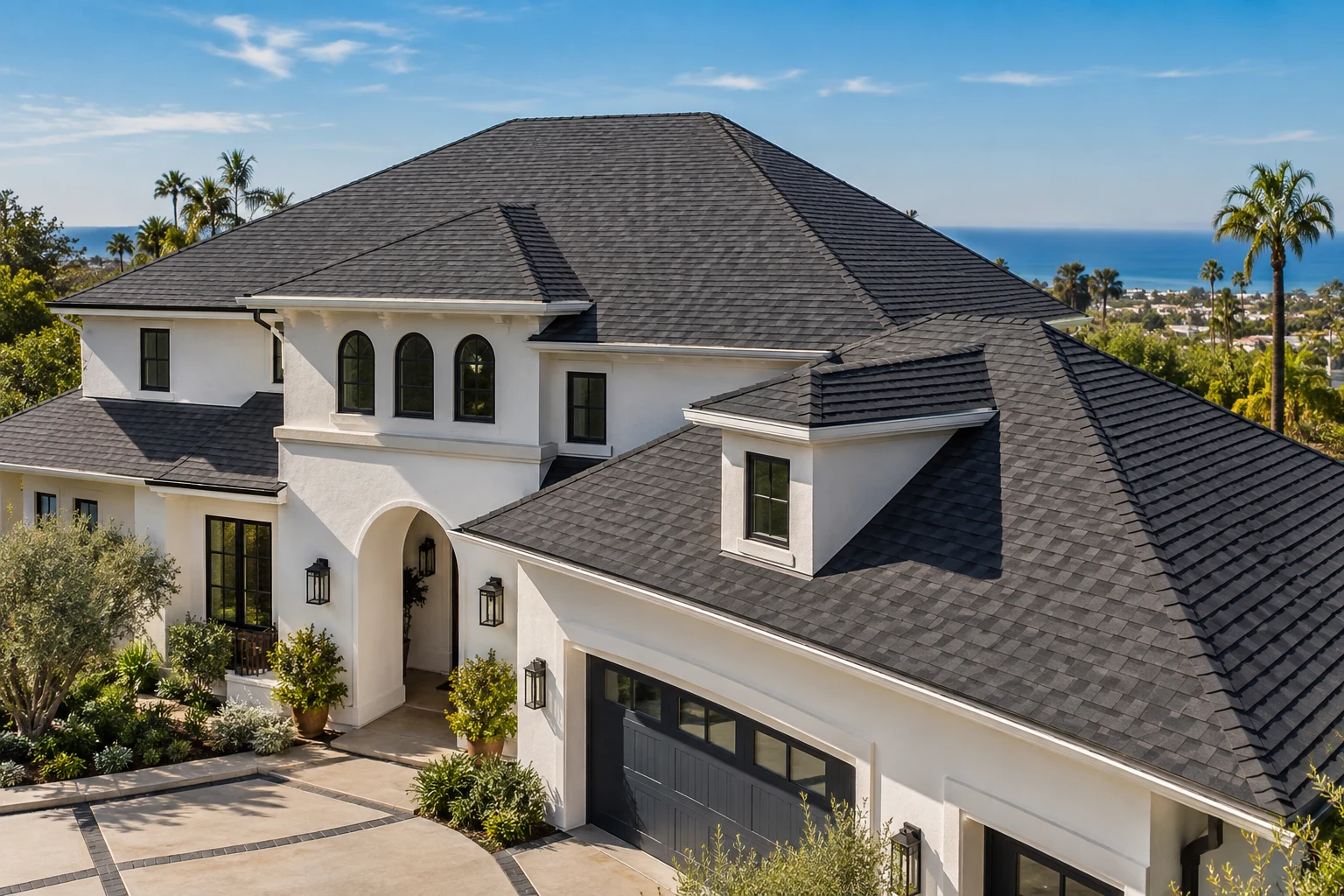
When it comes to energy-efficient residential roof replacement in Newport Beach, All Star Roof Replacement stands out as a trusted local contractor. We understand the unique challenges coastal Southern California homes face—from strong year-round UV exposure to salty air and moist marine layers. Our comprehensive roof replacements don’t just swap shingles; we upgrade every roofing system component to improve energy performance and extend roof lifespan.
In homes across Newport Beach, we often see roofing systems aging prematurely due to these environmental factors. A properly designed energy-efficient roof can significantly reduce attic heat buildup, lower energy bills, and protect your investment for decades to come.
Understanding Why Energy Efficiency Matters for Newport Beach Roofs
Newport Beach’s climate is distinctive. The Mediterranean coastal environment means your home endures intense UV rays throughout the year, accelerating shingle granule loss and breaking down underlayment materials faster than in inland areas. This degradation raises attic temperatures and puts extra load on your HVAC system.
Moreover, a common issue during inspections is the impact of the morning marine layer and persistent coastal fog, which increase moisture retention in roofing materials and attic spaces. Without effective ventilation, this dampness and heat cause humidity buildup that stresses the roof structure and reduces energy efficiency.
On top of that, salt-air exposure accelerates corrosion of metal flashings and fasteners, compromising roof seals and letting heat and moisture enter. Many homeowners don’t realize how these conditions weaken their roofs over time, leading to energy loss and costly repairs.
If you want to explore broader roofing services tailored for Newport Beach, visit our roof replacement in Newport Beach page.
Consequences of Ignoring Energy Efficiency in Your Roof Replacement
Rooftops that neglect energy-efficient design suffer faster material breakdown. Elevated attic temperatures speed up underlayment, decking, and shingle deterioration. This leads not only to frequent premature replacements but also continuous increases in your home’s cooling costs, especially during Newport Beach’s warm summers.
Poor ventilation combined with inadequate reflective materials traps heat inside your attic, forcing your air conditioner to work harder even when the outside temperature is moderate. We frequently find homes with corroded flashings and compromised roofing components, resulting in leaks and moisture intrusion that can cause mold problems and interior damage.
Addressing energy efficiency means protecting your home’s structural integrity as well as your comfort and utility expenses. Learn more about when to repair or replace your roof and how lifespan factors into your decision on our roof lifespan page.
What Does Energy-Efficient Roofing Involve in Newport Beach?
Roofing as a Full System, Not Just Materials
Energy-efficient roofing is more than just choosing the right shingles or tiles. A successful system upgrade includes high-temp synthetic underlayments capable of withstanding Newport Beach’s UV intensity, balanced attic ventilation that prevents heat and moisture buildup, and corrosion-resistant metal flashings designed for salt-air durability.
For coastal homes, reflective cool roofs—like TPO or PVC membranes on flat or low-slope sections or stone-coated metal roofs on steep slopes—help reduce heat absorption markedly. Ensuring your roof decking is sound and making any necessary wood repairs is also a key step to support the roofing system’s longevity and performance.
Material Considerations for Energy Efficiency
Tile roofs perform best when paired with synthetic underlayments and vented battens that promote airflow and moisture management. This combination slows aging and improves insulation performance.
Architectural shingles with lighter, reflective colors can reduce radiant heat absorption but require well-balanced ventilation to prevent heat trapping in the attic.
For low-slope roofs common in modern Newport Beach homes, single-ply TPO or PVC membranes offer excellent reflectivity and resistance to UV and salt-air conditions.
Using coastal-grade metals and flashings that resist corrosion is critical to avoid thermal bridging and moisture intrusion, ensuring insulation works effectively throughout the roofing system.
Ventilation and Insulation Integration
Balanced ventilation—ideally one square foot of net free ventilation per 150 square feet of attic space—allows hot air to escape while drawing in cooler outside air. This lowers attic temperatures significantly, the most critical factor in Newport Beach homes where marine layer moisture complicates airflow.
We often see that adding attic air sealing and upgrading insulation in combination with roofing system improvements results in measurable reductions in cooling demand and greater home comfort.
Poor ventilation accelerates underlayment and decking damage, which indirectly reduces overall energy efficiency by weakening the roofing envelope.
More on ventilation importance can be found in our roof replacement process and upgraded underlayment options on our roof underlayments page. We also offer cool roof solutions ideal for energy savings in Newport Beach’s climate.
Material Type | Energy Efficiency Features | Typical Lifespan* | Coastal Considerations | Reflectivity | Ventilation Needs
--- | --- | --- | --- | --- | ---
Tile (Concrete/Clay) | Vented battens, synthetic underlayment | 50+ years tile body, 20–30 years underlayment | Salt-air resistant flashings required | Moderate (lighter colors help) | Critical for underlayment life
Architectural Shingles | Cool-color options, synthetic underlayment | 18–25 years | UV accelerates granule loss | Moderate to high | Balanced intake and exhaust vents
TPO/PVC Membrane | Highly reflective, heat resistant | 15–25 years | Corrosion-resistant metals needed | Very high | Proper slope and edge metal needed
Metal Roofing | Reflective coatings, quick heat shedding | 30–50+ years | Aluminum or marine-grade steel needed | High | Ventilation critical for attic temp
*Lifespan varies by installation quality and maintenance.
Decision Support: Repair vs Replacement for Energy Efficiency
Many homeowners ask if repairs can boost their roof’s energy efficiency. However, repairs rarely address core issues such as degraded underlayment or inadequate ventilation. A roof replacement allows a full system upgrade—installing high-quality synthetic underlayment, corrosion-resistant coastal flashings, reflective materials, and improved ventilation—to maximize energy savings and durability.
We recommend replacement especially for roofs over 18–25 years old for shingles or 20–30 years for tile underlayment. This age range typically signals the end of a roof’s effective energy-saving function due to material wear.
Explore our repair or replace guide and signs you need a new roof on the signs you need a new roof page for more details.
FAQs About Energy-Efficient Roofing in Newport Beach
How much does energy-efficient roof replacement cost in Newport Beach?
Costs vary depending on materials and system upgrades, such as advanced underlayments, ventilation, and coastal-grade metals. Expect pricing in a similar range as standard full replacements, with additional scope for performance-focused enhancements. Contact us for a no-obligation estimate tailored to your home’s needs.
How long will an energy-efficient roof last in Newport Beach?
Lifespan depends on your chosen materials: asphalt shingles typically last 18–25 years; tile roofs can exceed 50 years though underlayments usually need replacement every 20–30 years; TPO/PVC membranes last 15–25 years. Quality installation and proper ventilation greatly extend service life.
Can I repair my roof to improve energy efficiency instead of replacing it?
Minor repairs don’t resolve systemic problems like ventilation imbalances or underlayment failure integral to energy efficiency. To realize meaningful savings and system longevity, replacement is typically required.
What are the best roofing materials for energy efficiency in Newport Beach?
Tile roofs with synthetic underlayment and vented battens combine aesthetics and longevity. Architectural cool-colored shingles offer cost-effective reflectivity, while TPO/PVC membranes excel on low-slope roofs. All options require balanced ventilation for optimal performance.
How does ventilation affect my roof’s energy efficiency?
Effective ventilation lowers attic temperatures by exhausting hot air and drawing in cooler exterior air. This reduces cooling costs and slows material degradation, which is especially important in Newport Beach’s marine-layer environment with persistent UV exposure.
Are there financing options for energy-efficient roof replacement?
Yes, many homeowners choose contractor-arranged loans, home equity financing, or other plans. Financing terms vary, so consult your roofing contractor or financial advisor to find the best fit for your budget.
How long does a typical energy-efficient roof replacement take?
Asphalt shingle replacements typically take 2–5 days, while tile roofs requiring lift-and-reset or new tile installation can take 5–14 days. Additional time may be needed for permits, HOA approvals, and weather considerations.
For more answers, visit our roof replacement in Newport Beach FAQ section, including cost details, financing options, and top roofing materials.
Contact All Star Roof Replacement For Your Newport Beach Energy-Efficient Roof Estimate
At All Star Roof Replacement, we provide thorough, no-pressure roof inspections tailored to Newport Beach’s coastal environment. Our licensed team evaluates every detail—attic conditions, ventilation balance, deck integrity, and corrosion risks—to design an energy-efficient roofing system just for your home.
We specialize in full-system replacements using coastal-grade materials and ventilation best practices that stand up to Newport Beach’s UV exposure, salt air, and marine layer moisture. Homeowners appreciate our clear explanations, transparent timelines, and honest recommendations, helping them make informed decisions without rush or obligation.
Schedule your detailed inspection and consultation by calling us at (310) 729-3013 or emailing teamallstarconstruction@gmail.com. Discover how an energy-efficient roof replacement can improve your home’s comfort, value, and durability.
Learn more about our roof replacement process in Newport Beach and review our contractor credentials to get started with confidence.