
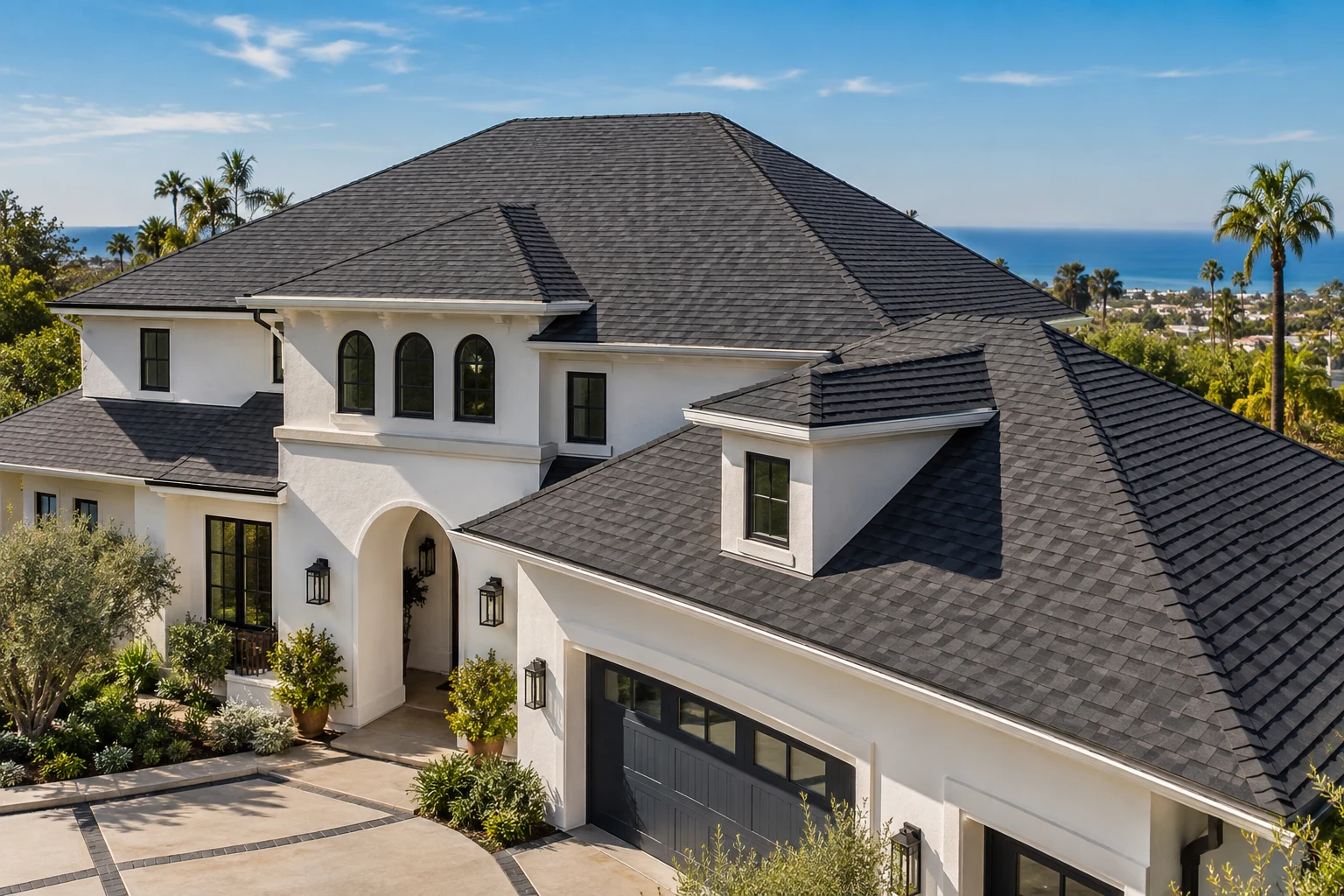
If your Santa Ana home is showing signs of roof aging, leaking, or rising energy bills, investing in an energy-efficient roof replacement can provide lasting relief. All Star Roof Replacement specializes in residential roof replacement systems designed for Southern California’s unique climate, combining material performance, ventilation, and building code compliance to reduce heat gain and improve comfort year-round.
We understand how Santa Ana’s intense UV exposure and drying winds take a toll on roofs. Our inspections identify exact weaknesses and recommend energy-saving options aligned with California’s Title 24 cool roof standards to help your home stay cooler and more efficient.
Why Energy Efficiency Matters for Roofs in Santa Ana
In homes across Santa Ana, we often see asphalt shingles deteriorate faster than in cooler or less sunny regions. The Mediterranean climate brings strong sun combined with dry, hot summers and the notorious Santa Ana winds. These winds not only dry out shingles but also put physical strain on flashing and roof components, leading to leaks and performance loss.
Energy efficiency matters because aging roofs absorb more heat, transferring it into attics and living spaces. This results in increased cooling demand, driving up utility bills and wearing out air conditioning systems faster. Many homeowners don’t realize that poor roof ventilation can trap this heat, compounding the problem.
Addressing these issues with the right roofing system helps protect your home against accelerated material breakdown and lowers indoor temperatures, reducing overall energy use for air conditioning—a critical benefit in Santa Ana’s climate. For an overview of the broader roof replacement options in Santa Ana, see our roof replacement in Santa Ana page.
Consequences of Ignoring Energy Efficiency in Your Roof
Ignoring energy efficiency in your roof can cost more over time. Higher attic temperatures increase strain on your HVAC system, potentially shortening its lifespan and requiring costly repairs or early replacement. During many roof inspections in Santa Ana, we notice underlayment and decking damage accelerated by heat, sometimes hidden beneath tile or shingles until failure occurs.
Without proper ventilation and reflective materials, trapped heat and moisture create ideal conditions for mold, mildew, and wood dry rot—conditions that weaken the entire roof structure. Even if your roof doesn’t leak yet, these hidden damages can compromise your home’s safety and comfort.
These outcomes are why we emphasize energy-efficient roofing as a whole-system approach. More details on roof lifespan and how to recognize damage are available on our roof lifespan page.
Understanding Energy-Efficient Roofing Systems for Santa Ana Homes
Roofing as a Complete System, Not Just Material
Many homeowners think energy efficiency is just a roofing material choice, but in Santa Ana, it’s the full roofing system that counts. This includes reflective shingles or tiles, synthetic underlayment designed to withstand intense heat, high-quality flashing to prevent leaks, balanced attic ventilation (like soffit and ridge vents), and sometimes insulated decking for added thermal resistance.
A common issue during inspections is underlayment breakdown beneath tile roofs, which can be mitigated by synthetic underlayments that extend roof life and reduce heat transfer. Proper flashing and ventilation not only protect against moisture but actively reduce attic temperature, complementing cool roofing materials for maximum energy savings.
For a deeper dive into system components and the step-by-step replacement process, check our roof replacement process page.
Compliant Materials for Title 24 Cool Roof Standards
California’s Title 24 requires roofs to meet Solar Reflectance Index (SRI) standards to qualify as cool roofs. In Santa Ana, this means selecting roofing materials that reflect more solar radiation and absorb less heat. Popular options include asphalt shingles with solar-reflective granules like Owens Corning Duration COOL and CertainTeed Landmark Solaris, which maintain aesthetics while meeting SRI 16 for sloped roofs.
Clay and concrete tiles are common here and offer excellent durability and natural reflectance, but they require attention to the underlayment since heat can degrade it rapidly under these heavier materials. Flat roofs typically use reflective membranes such as TPO or PVC that meet the higher SRI 75 requirement.
Learn more about the best materials for energy efficiency in Santa Ana on our best roofing materials and cool roof pages.
The Role of Attic Ventilation in Energy Efficiency
Balanced attic ventilation is a core part of energy-efficient roofing in Santa Ana. Properly installed intake vents at the soffit and exhaust vents near the roof ridge allow hot air to escape, preventing it from heating up your attic and living spaces. Without this airflow, heat and moisture build up, accelerating damage to sheathing and underlayment.
Attic ventilation also controls moisture, which is a common issue due to Santa Ana’s marine air and morning dew. This minimizes mold and wood rot risk, preserving your roof’s integrity and helping cool roof materials perform at their best. Many homeowners don’t realize that even the most reflective roof will underperform without proper ventilation.
To explore how ventilation fits into energy efficiency, visit our roof replacement process and reduce heat with roofing pages.
Decision Guide: Repair vs Replacement for Energy Efficiency
In Santa Ana, roofs older than 15 to 20 years often lose shingle flexibility and underlayment effectiveness due to constant sun and wind exposure. While localized repairs can stop leaks temporarily, they rarely restore the level of energy efficiency required under current standards. Because aging roofing components degrade hidden beneath the surface, only a full replacement ensures your roof will perform efficiently.
Overlaying new shingles on old roofs (reroofing) is discouraged in Santa Ana’s climate due to additional weight, hidden damage risks, and potential warranty voids. This increases long-term costs and limits your energy efficiency improvements.
If you’re weighing repair versus replacement, our roof repair or replacement and is reroofing worth it? pages help clarify the best path forward.
Cost Considerations for Energy-Efficient Roof Replacement in Santa Ana
The cost of energy-efficient roof replacement in Santa Ana typically reflects the home’s size, choice of materials, roofing system complexity, and needed decking repairs—common in older local homes. While upfront expenses for reflective shingles or tiles and synthetic underlayment may be higher, these investments reduce energy bills and extend roof life.
Additional cost factors include permitting, debris disposal, and repairs for dry rot or compromised decking, which are frequent in houses exposed to Santa Ana winds and sunlight over decades. Although pricing varies, an understanding of material options and lifespans helps homeowners plan better.
Material | Typical Lifespan | Energy Performance | Comments
--- | --- | --- | ---
Asphalt Cool Shingles | 20–30 years | Meets Title 24 SRI 16 | Affordable, reflective granules, common for sloped roofs
Clay/Concrete Tiles | 50+ years | Excellent reflectance with proper underlayment | Durable, heavier, requires synthetic underlayment replacement
Flat Roof Membranes (TPO/PVC) | 20–25 years | Meets SRI 75 | Ideal for flat or low-slope roofs, highly reflective
For more on pricing structures, see our roof replacement cost and cost per square roof pages.
Typical Timeline and Process for Installing Energy-Efficient Roofs in Santa Ana
The energy-efficient roof replacement process typically begins with a thorough inspection and evaluation to identify decking condition and ventilation needs. Next, permits are filed with the city—a process that can take 15 or more days if plan checks are needed. On-site work usually takes 3 to 5 days depending on the roof’s size and complexity.
Work begins by removing the existing roof materials, replacing any damaged decking, and installing synthetic underlayment and flashing. Then, ventilation components like ridge and soffit vents are added before the final roofing material goes on. The project concludes with a city final inspection and debris cleanup, often with extra care due to neighboring homes.
All Star Roof Replacement prioritizes controlling dust and preserving neighborhood air quality throughout this process. For detailed steps and scheduling, visit our roof replacement process and roof replacement timeline pages.
Frequently Asked Questions About Energy-Efficient Roofing in Santa Ana
What does energy-efficient roofing mean in Santa Ana?
Energy-efficient roofing here means installing roofing systems that meet Title 24 cool roof standards, using reflective materials and balanced ventilation to reduce interior heat gain and lower energy consumption in your home.
How much does an energy-efficient roof replacement cost in Santa Ana?
These replacements usually cost slightly more than average due to premium reflective materials and synthetic underlayment but help reduce long-term energy costs. Typical projects start around $21,000 and vary with home size and roof complexity.
Can I repair my roof to improve energy efficiency, or do I need a full replacement?
Repairs rarely restore energy efficiency if your roof is aged or has compromised decking and underlayment. Full replacement is generally needed to comply with cool roofing standards and ensure warranty coverage.
How long does an energy-efficient roof last in Santa Ana?
Asphalt cool roofs last about 20–30 years, while tile roofs can exceed 50 years if the underlayment is replaced every 20–30 years to combat heat degradation.
What roofing materials are best for energy efficiency in Santa Ana?
Cool-roof-rated asphalt shingles with reflective granules, clay or concrete tiles with upgraded synthetic underlayment, and reflective membranes for flat roofs perform best in this region.
How does attic ventilation affect my energy-efficient roof’s performance?
Proper attic ventilation expels hot air and moisture, preventing damage and enhancing the effectiveness of reflective roofing materials, leading to better energy savings and longer roof life.
Are there financing options for energy-efficient roof replacements in Santa Ana?
Yes, options include unsecured home improvement loans, PACE financing programs, and home equity lines of credit (HELOCs), which can help manage upfront costs for energy-compliant roof systems.
For detailed financial advice, visit our finance roof replacement page. For warranty details, see roof warranty explained. Need expert help? Our roofing contractor near me guide assists in selecting certified professionals in Santa Ana.
Contact All Star Roof Replacement for a No-Pressure Energy-Efficient Roof Inspection
At All Star Roof Replacement, we focus exclusively on residential roof replacements in Santa Ana, combining experience with deep knowledge of local building codes and climate challenges. Our no-pressure roof inspections include a detailed evaluation of your decking, underlayment, flashing, and ventilation systems with clear explanations of your best energy-saving options.
We guide you through the permitting process and help you understand the benefits and requirements for Title 24 compliance, ensuring your new roof withstands Santa Ana’s sun and winds for decades to come. Schedule your consultation by calling (310) 729-3013 or emailing teamallstarconstruction@gmail.com.
Learn more about what to expect during your inspection on our roof inspection cost and roof replacement process pages. Trust All Star Roof Replacement to protect your home with an energy-efficient roof built for Santa Ana’s demands.