
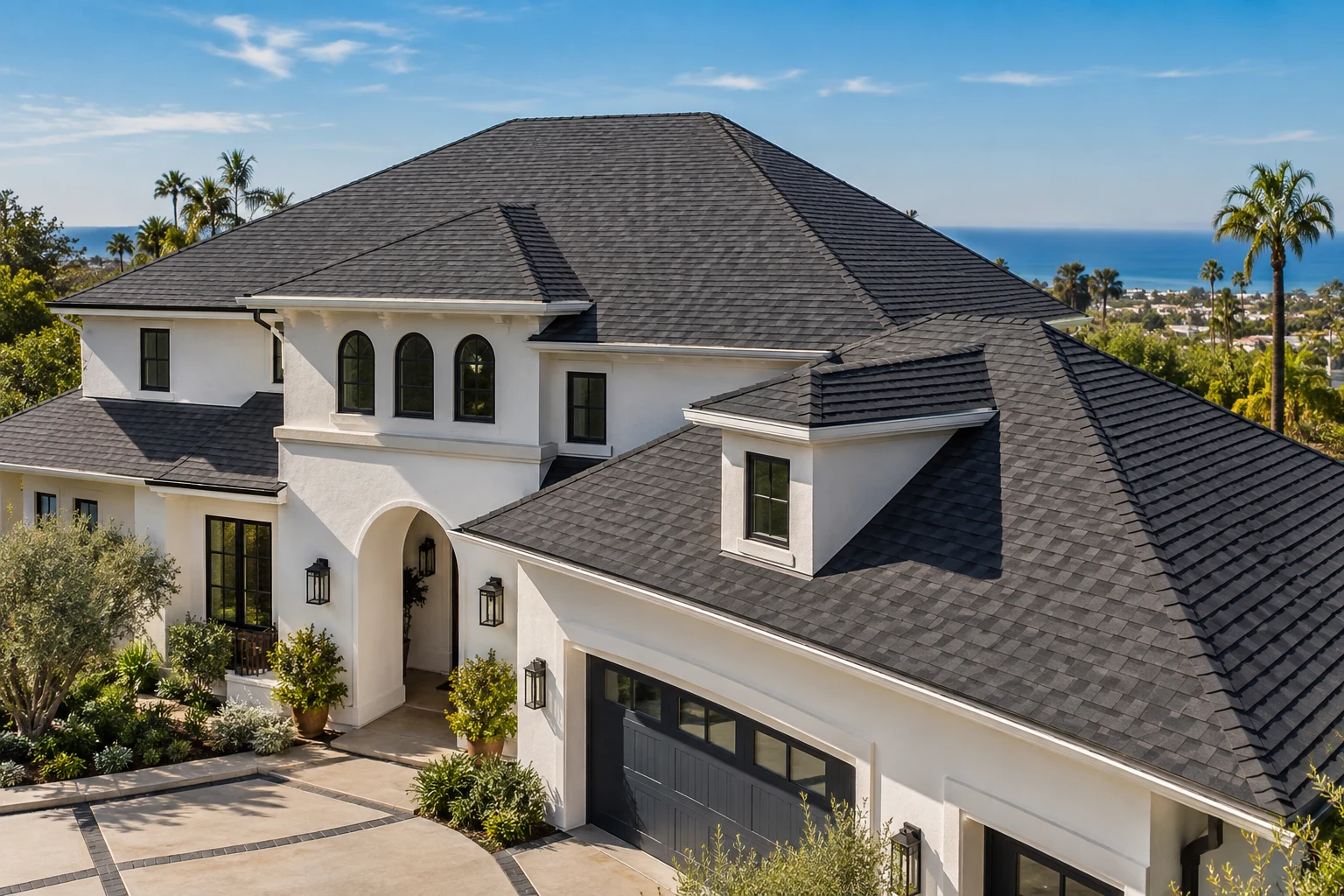
At All Star Roof Replacement, we understand that homeowners in Santa Ana often want a straightforward answer about roof lifespan. Typically, roofs here last between 20 and 30 years, depending on materials and system quality. Our experienced team specializes in detailed inspections to assess the condition of your full roofing system—shingles, underlayment, decking, flashing, and ventilation—especially given Santa Ana’s unique climate challenges.
Typical Roof Lifespan in Santa Ana
In Santa Ana, asphalt architectural shingles usually last about 20 to 25 years. Beyond that, chemical breakdown and granule loss reduce water resistance and increase the risk of leaks. Flat roofing membranes like TPO or modified bitumen tend to last 15 to 25 years, often affected by ponding water and intense UV exposure.
Tile roofs, common in this area, have surface tiles that can last 50 to 100 years or more. However, the waterproof membrane underneath deteriorates due to heat conduction and typically requires replacement every 20 to 30 years, even if the tiles look intact.
It’s important to note that the true lifespan depends on installation quality and the condition of all roofing components, including decking, flashing, and ventilation. A well-installed roof system with balanced ventilation can hold up closer to the upper range of its expected lifespan.
For those interested in details of our roof replacement process or how warranties work here, we provide clear explanations tailored to Santa Ana’s conditions.
Why Roofs Age Faster in Santa Ana: Climate and Local Factors
In Santa Ana, intense and constant UV exposure accelerates roof aging. Asphalt shingles lose their protective oils and granules quickly under such sun, becoming brittle and prone to cracking or curling. Seasonal Santa Ana winds add another layer of stress by causing uplift that can weaken flashing and underlayment, allowing water intrusion during rain events.
Homes near the coast also face marine moisture, which when combined with inadequate attic ventilation, leads to mold, mildew, and dry rot inside the roof decking and structural wood. This hidden deterioration can reduce the roof system’s longevity dramatically.
In our inspections, it’s common to see damage patterns that directly relate to wind and UV effects. These local factors shorten the effective life of roofing materials when not properly mitigated. We recommend homeowners explore options like energy-efficient roofing and other ways to reduce heat buildup to protect their investments.
Consequences of Ignoring Roof Replacement in Santa Ana
Ignoring the signs that your Santa Ana roof needs replacement can result in serious problems. Continued UV degradation and wind damage cause shingles to crack or lift, exposing the decking to water damage and reducing your home’s energy efficiency. This increases cooling costs, which is especially noticeable in our Southern California heat.
Failure of flashing and underlayment leads to interior leaks that can cause mold growth and structural dry rot. Over time, repairs become more frequent and less effective, ultimately allowing damage to electrical systems and indoor air quality.
These issues can escalate quickly, so understanding whether to pursue repair or replacement is critical. Our evaluations focus on helping homeowners avoid costly mistakes by addressing these problems early.
Understanding Residential Roof Lifespan as a Full System in Santa Ana
Roof longevity in Santa Ana depends on the roof as a complete system, not just surface materials. The underlayment beneath the roofing material is often the hidden weak link, especially on tile roofs where the membrane suffers from relentless heat conduction. When this layer fails, leaks are inevitable even if tiles remain perfectly intact.
Proper attic ventilation plays a crucial role by reducing trapped heat and moisture, which protects both underlayment and decking from premature decay. During roof replacement, we inspect decking thoroughly to ensure there is no dry rot or termite damage, which compromises the structural base and shortens roof life.
Flashing integrity is another critical factor. Flashing around chimneys, vents, and valleys must be durable and correctly installed to prevent leaks. We emphasize a system-wide approach, which you can read more about on our roof replacement installer page and in our replacement process.
FAQs About Roof Lifespan and Replacement in Santa Ana
How long does an asphalt shingle roof typically last here?
In Santa Ana, asphalt shingle roofs last around 20 to 25 years under constant UV exposure before granules erode and shingles become brittle, risking leaks. Proper attic ventilation and quality installation can sometimes extend this lifespan by a few years.
Why are tile roofs still leaking even when tiles look fine?
Tile surfaces act as a shield, but the underlayment waterproof membrane beneath usually fails every 20 to 30 years due to heat conduction. This means the membrane needs replacement even if the tiles themselves appear undamaged.
What signs indicate my roof is nearing the end of its lifespan?
Look for widespread granule loss in gutters, cracked or curled shingles, sagging rooflines, visible decking damage in the attic, water stains indoors, and repeated leak repairs. These are clear signals it’s time for replacement evaluation.
Does ventilation affect how long my roof will last?
Absolutely. Poor attic ventilation traps heat and moisture, accelerating the deterioration of underlayment and decking. Balanced intake and exhaust ventilation can extend the roof’s lifespan and improve your home’s energy efficiency.
Can partial repairs extend my roof’s life in Santa Ana?
Partial repairs may be effective for roofs younger than 12 to 15 years with isolated damage. However, for older roofs showing systemic aging or widespread granule loss, replacement is usually the better long-term choice.
How does Santa Ana’s climate specifically impact roof lifespan?
The combination of intense UV rays, dry Santa Ana winds, and seasonal rains takes a toll on roofing systems. These factors exploit weak points and shorten usual lifespan expectations when not addressed proactively.
Do roofing warranties cover lifespan issues related to climate here?
Manufacturer warranties generally cover material defects but prorate over time and do not cover labor. Premium warranties paired with certified installation typically provide the best protection against failures related to climate stress.
Schedule Your Santa Ana Roof Replacement Inspection
At All Star Roof Replacement, our expert inspections evaluate your roof system’s overall health—decking, underlayment, flashing, and ventilation—tailored specifically for Santa Ana’s climate and roofing challenges. We offer straightforward assessments without pressure, helping you decide between replacement or maintenance based on real data.
If your roof is showing signs of aging or you’re concerned about leaks and energy loss, don’t wait for hidden problems to grow. Contact us at (310) 729-3013 or teamallstarconstruction@gmail.com to schedule your inspection and get a clear picture of your roof’s status.
Learn more about inspection value at our roof inspection cost page, and prepare for future decisions by reviewing repair and replacement guidance and roof replacement cost considerations.