
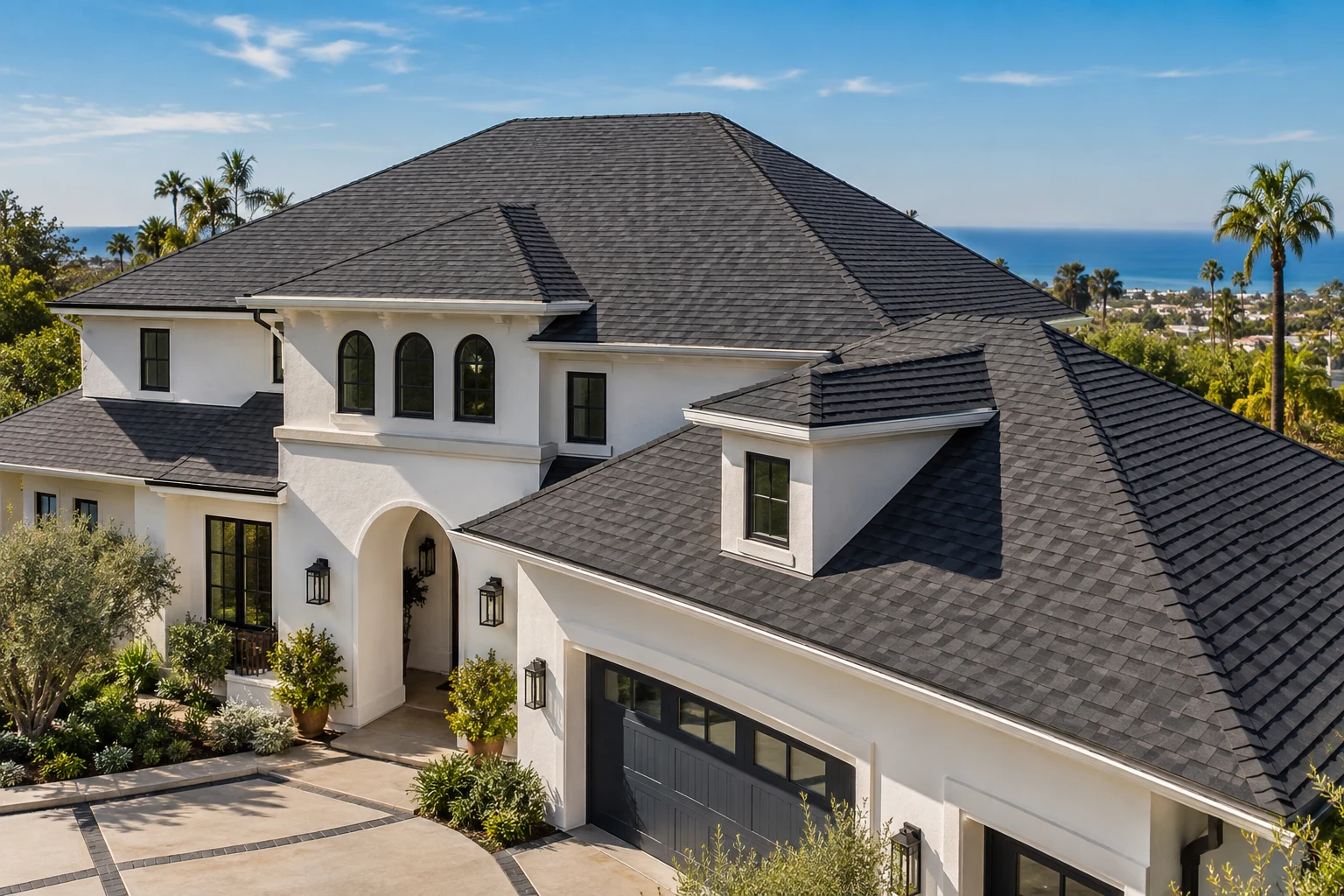
At All Star Roof Replacement, we know there’s no one-size-fits-all answer to the best roofing material here in Corona. With Inland Empire’s intense heat, strong UV exposure, and occasional Santa Ana winds, the best choice really depends on your home’s structure, HOA guidelines, roof pitch, budget, and attic ventilation.
Concrete tile, clay tile, architectural shingles, and metal roofing can all work well when installed as a complete roofing system. That means decking, underlayment, flashing, ventilation, and installation quality all matter just as much as the visible roof surface. We focus on helping Corona homeowners pick the right full roof system—not patching isolated issues.
Learn more about detailed roof replacement in Corona with All Star Roof Replacement.
Best Roofing Material in Corona: Direct Answer for Homeowners
For many Corona homes, especially in tile neighborhoods, concrete tile with upgraded underlayment offers excellent heat resistance and fits local Mediterranean styles. Architectural shingles provide a good balance of cost and performance, especially when rated for high heat and wind. Standing seam or stone-coated metal roofs are premium long-term options where HOA rules and home style allow.
Your existing roof type matters. Switching from tile to shingles—or vice versa—may require structural review due to weight differences. Remember, the underlayment, flashing details, ventilation, and installation quality often determine your roof’s actual lifespan more than the cap material alone.
Explore these options further in our tile vs shingle roof in Corona guide and see how cool roofing can also help with energy efficiency in Corona. For details on longevity, visit how long roofs last in Corona.
Why Roofing Material Choice Matters in Corona
Corona’s inland location exposes roofs to higher summer temperatures than coastal areas, while Santa Ana winds challenge your roof’s wind resistance. High heat and UV break down asphalt materials and make underlayment brittle. Temperature swings cause expansion and contraction, stressing flashing and fasteners.
Winter rains can reveal hidden underlayment and flashing failures, leading to leaks. Your material choice affects energy use, maintenance costs, HOA approval, and the right timing for replacement.
Keep in mind: even the highest-quality material will fail early if installed poorly. See what that means for roofing in Corona here and learn signs you need a new roof in Corona as your roof ages.
What Happens If You Choose the Wrong Roofing Material
Many Corona roofs fail not because of the top surface material, but due to issues with underlayment, flashing, or ventilation. Poor ventilation overheats the attic and shortens shingle and underlayment life. Using a material that doesn’t meet wind or HOA requirements can lead to premature cracking, wind damage, leaks around valleys and vents, and costly repairs.
Material selection should be made before installation, not after problems appear. Full roof replacement lets you correct hidden decking damage, update flashing, and improve ventilation for long-term durability.
Learn about consequences and process details in our roof replacement process in Corona and warranty coverage in roof warranty explained.
Main Roofing Materials for Corona Homes
Corona homes usually feature concrete tile, clay tile, architectural asphalt shingles, or metal roofing. Composite or synthetic roofing can be an option in select cases. At All Star Roof Replacement, we always evaluate your existing roof structure before recommending a material to ensure it fits your home, climate, code, and budget.
For detailed comparisons, check our tile vs shingle roof in Corona page and learn about energy-efficient options here.
Concrete Tile Roofing in Corona
Concrete tile is popular in many Corona master-planned and HOA communities. Its thermal mass reduces attic heat impact, and the material lifespan is long. However, underlayment usually fails before the tile itself, so proper installation with fastening, flashing, and ventilation is essential.
Concrete tile suits homes already built for tile weight, HOA requirements for tile profiles, and owners who want long-term durability and curb appeal. It’s more expensive upfront and heavier than shingles, and broken tiles can expose underlayment.
Compare tiles and shingles in our comparison page and find out about lifespan and costs here.
Clay Tile Roofing in Corona
Clay tile suits Corona’s hot climate and matches traditional Southern California styles well. It resists heat and can last a long time, but it is brittle and requires careful installation, especially on walkways, with proper flashing and underlayment to avoid leaks.
Clay tile is ideal for higher-end homes and HOA communities that prioritize appearance and long-term material life. It tends to be more expensive than shingles.
Learn about clay tile inspections here and whether to repair or replace tile here.
Architectural Shingle Roofing in Corona
Architectural shingles offer a cost-effective balance of price, weight, and performance. They come in many colors, including cool roof options, and install faster than tile. Proper attic ventilation and high-wind installation are key in Corona’s environment.
Shingles make sense when budget and weight matter, or when the structure is not designed for tile. They have shorter lifespans than tile and can lose granules faster with heat exposure.
See more about cool-roof shingles here and roof replacement timelines here.
Metal Roofing in Corona
Metal roofing offers a long service life, great heat reflectivity, fire resistance, and excellent wind performance. It requires expert installation and may face HOA restrictions on style or color in some neighborhoods.
Metal is best for homeowners planning long-term, prioritizing energy efficiency and durability, where HOA rules permit.
Explore metal roofing options and costs here, and financing options here.
Roofing Materials Compared for Corona Homes
Material | Best Use | Heat Performance | Wind Performance | Lifespan | Cost | HOA Considerations | Key System Needs
--- | --- | --- | --- | --- | --- | --- | ---
Concrete Tile | Tile communities, heat resistance | Good thermal mass | Good with proper fastening | 40+ years (material) | Higher upfront | Often required | Strong decking, underlayment
Clay Tile | Traditional style, upscale homes | Excellent heat resistance | Good if installed well | 50+ years (material) | Highest cost | Often required | Careful flashing, underlayment
Architectural Shingles | Cost-conscious, lighter roofs | Moderate, needs ventilation | Good with nailing/sealant | 20–30 years | Lower cost | Varies | Balanced ventilation, underlayment
Metal Roofing | Long-term, energy efficient | Very good with coatings | Excellent if fastened well | 40+ years | High upfront | May be restricted | Expert flashing, ventilation
See a full comparison and roof lifespan details here and review cost factors here.
The Roof System Matters More Than the Surface Material
Your roof is a full system: decking, underlayment, drip edge, flashing, valleys, starter strips, fasteners, ridge components, attic ventilation, and the final roofing material all work together.
Leaks often happen around vents, skylights, and valleys, not just under worn shingles or tiles. Proper tear-off replacement lets us inspect and repair the roof deck and replace worn underlayment and flashing. We install balanced ventilation to reduce attic heat and extend material life.
Read about our roof replacement process in Corona and why quality installation matters here.
How Corona Heat and UV Affect Roofing Materials
Corona’s Inland Empire summer temperatures can bake roof surfaces past 140°F. UV rays degrade asphalt shingles and make underlayment brittle over time. Tile stays durable on top but the underlayment ages more quickly.
Metal roofs expand and contract with heat, so good coatings and fastening matter. Proper attic ventilation lowers internal temperatures, helping all materials last longer. Cool-roof-rated products are often required and help reduce heat absorption.
Learn more about heat impact and energy savings for roofs here and cool roofing rules here.
Wind Resistance and Santa Ana Conditions in Corona
Santa Ana winds create uplift pressure on eaves, ridges, and roof edges. Shingles can lose their adhesive seal, ridge caps may come loose, and tiles may slip or break. Proper fastening and flashing help prevent wind-driven leaks and damage.
Architectural shingles perform well with correct nailing and sealant zones. Tile roofs require properly secured ridge components and fasteners. Metal roofs must be expertly fastened and detailed to resist uplift.
For more on wind impact and how to spot damage, visit signs you need a new roof in Corona and roof inspection cost info.
Energy Efficiency and Cool Roof Requirements in Corona
California Title 24 requires cool roofing on many residential roof replacements in Corona. Cool roofs use solar reflectance and thermal emittance to lower heat absorption. Materials include cool-roof shingles, reflective tile colors, coated metal, and improved attic ventilation.
Energy performance depends on the full system, not just roof color. Proper ventilation and underlayment work together with cool materials to reduce attic heat during hot summers.
Explore cool roof options here and see energy-efficient roofing details here.
HOA and Neighborhood Considerations in Corona
Many Corona HOAs have architectural guidelines specifying roof color, profile, or material type. Common requirements include tile profiles like S-tile, W-tile, or flat tile. HOA approval can affect project timeline and material selection.
Homeowners will usually need to supply material samples, color options, product data sheets, and contractor information for approval. Replacing tile roofs with shingles is often not allowed.
We help homeowners navigate HOA requirements and coordinate approvals. Learn about approvals and permits here and choosing the right roofing company here.
Cost Factors When Choosing Roofing Material in Corona
Roof replacement costs vary with material choice, roof size and complexity, tear-off, decking condition, underlayment, ventilation upgrades, and any HOA or permitting needs. Tile and metal typically cost more than architectural shingles.
Lower material cost doesn’t always mean lower lifetime cost. Hidden decking damage or underlayment failure often emerges during tear-off and can affect final pricing.
Get a thorough estimate that considers the full system. Learn more about costs here and financing options here.
When Shingles Make the Most Sense in Corona
Architectural shingles suit homeowners who want a cost-effective, lighter roofing option. They’re faster to install and work well if the home’s structure can’t support tile weight. Many shingle options include cool roof features important for heat management.
Shingles also work well where HOA rules allow, or the roof is already shingled. Proper ventilation, nailing, and underlayment remain crucial for long-term performance.
See when shingles make sense compared to tile here and cool shingles options here.
When Tile Makes the Most Sense in Corona
Tile—concrete or clay—is ideal when it matches existing roofing, HOA requirements, or the home’s structural design. Tile provides long-term curb appeal and strong heat resistance. Remember, the underlayment is the true waterproofing layer beneath tiles and usually requires replacement after 20–30 years.
Tile roofs may be lifted and reset to repair small sections, but widespread underlayment failure calls for full replacement.
Learn about replacing failed tile roof underlayment here and tile roof lifespan here.
Decision Support: How to Choose the Right Roof Material
Every Corona roof is unique. To choose the right material, ask:
- How old is the roof?
- What material is currently installed?
- Are leaks or stains visible?
- Is the attic hot or poorly ventilated?
- What HOA restrictions apply?
- Is the home exposed to Santa Ana winds?
- Are there energy-efficiency goals?
- How long do you plan to stay in the home?
The best material fits your home’s roof system and long-term plans. Schedule an inspection and estimate to identify system needs before deciding. Learn more about this process here.
Installation Quality Matters More Than the Label on the Material
High-quality materials don’t perform well if installed poorly. Most failures come from flashing, valleys, roof penetrations, and ventilation problems. Proper tear-off, deck inspection, underlayment replacement, flashing upgrades, correct fastener use, and balanced attic ventilation are essential.
At All Star Roof Replacement, we focus on full residential roof replacement to ensure the entire system performs as it should, not just the visible shingles or tiles.
See our detailed roof replacement process and how warranties depend on proper installation here.
FAQs About the Best Roofing Material in Corona
Planning your roof replacement? Here are answers to common questions from Corona homeowners.
What roofing material is best for homes in Corona?
Concrete tile fits many Corona homes for heat resistance and aesthetics. Architectural shingles offer a practical balance of cost and performance. Metal roofing is a good premium option when allowed. The best choice depends on your roof’s full system and your priorities.
Is tile or shingle roofing better in Corona?
Tile lasts longer and fits HOA-controlled neighborhoods. Shingles are lighter, more affordable, and easier to install. Both need proper underlayment, flashing, and ventilation to avoid early failure.
How much does roof material affect replacement cost in Corona?
Material is a big cost factor, with tile and metal generally more expensive than shingles. Roof size, pitch, access, condition of decking and underlayment, and ventilation upgrades also affect total cost.
How long do different roofing materials last in Corona?
Architectural shingles typically last 20–30 years. Tile materials can last 50+ years, but underlayment usually needs replacement sooner. Metal roofs can last decades if installed properly.
Can a roof material help lower energy bills in Corona?
Yes, cool roofing materials reduce heat absorption, but attic ventilation and underlayment quality are also important to manage attic temperature in hot summers.
Should I replace my roof or just repair it if I want better material?
Isolated issues on newer roofs may be repaired. Older roofs with common leaks, failed underlayment, or damage usually benefit from full replacement to address all system components.
How long does it take to replace a roof with new material in Corona?
Installation often takes a few days, but permits, HOA approvals, and complex tile roofs can extend the total project timeline.
For more on costs, see roof replacement cost in Corona and roof lifespan information.
Get a Practical Roofing Material Recommendation for Your Corona Home
Every Corona roof is different. At All Star Roof Replacement, we provide no-pressure, no one-size-fits-all advice. We inspect your roof system carefully—decking, underlayment, flashing, ventilation, and material condition—and help you understand your options.
Whether you’re considering tile, shingles, metal, or other approved materials, we’ll explain what fits your home, budget, and HOA restrictions. We’ll also help you decide if replacement or repair makes sense for your situation.
Call us at (310) 729-3013 or email teamallstarconstruction@gmail.com to schedule a roof replacement estimate tailored for Corona homeowners.
Learn more about your roofing options and our services on our Corona roof replacement page and trust All Star Roof Replacement as your roofing contractor near you in Corona.