
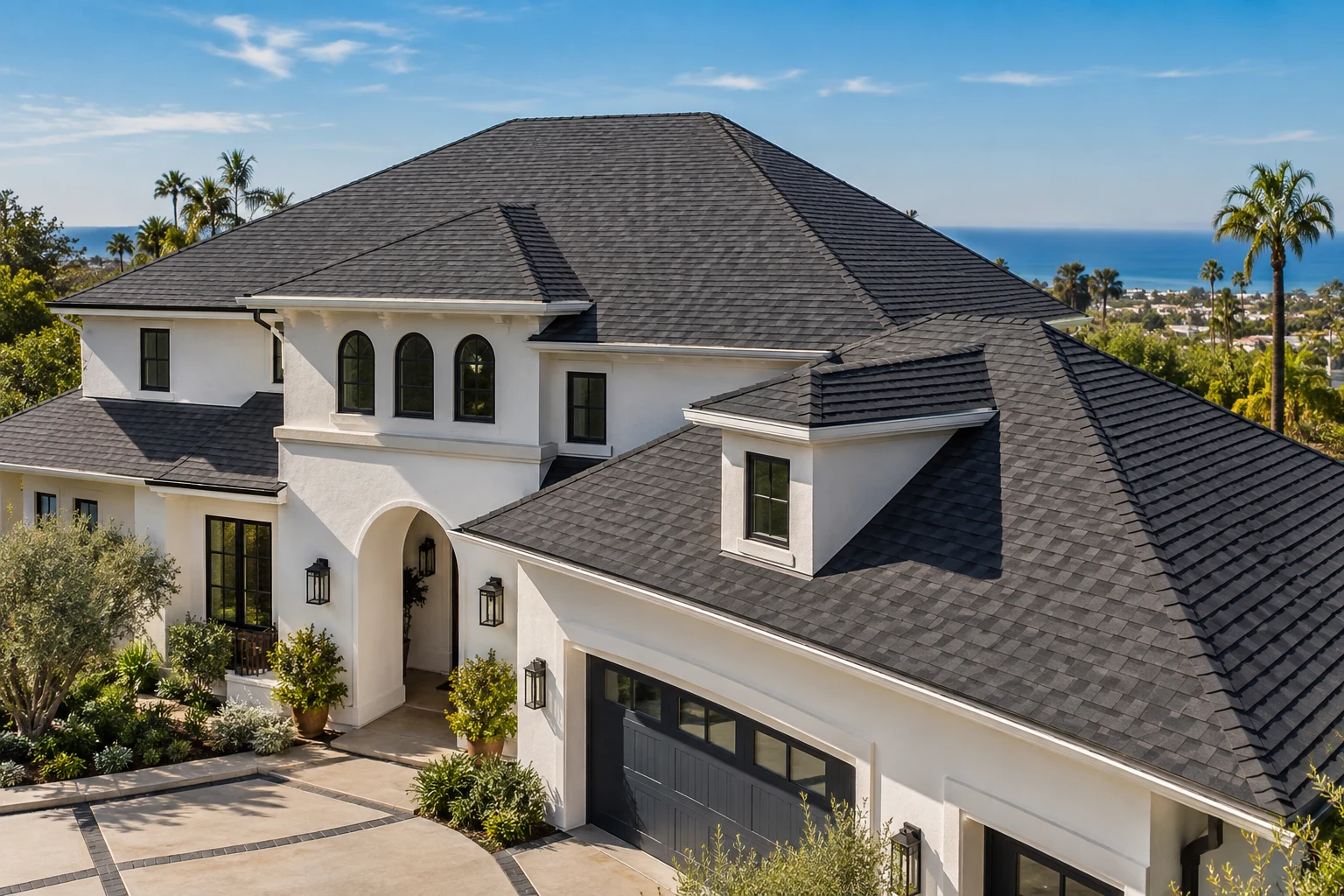
A cool roof is a roofing system designed to reflect more sunlight and release heat more efficiently than standard roofing. For homeowners considering roof replacement in Corona, this matters because inland heat and UV exposure can drive roof surface temperatures extremely high.
At All Star Roof Replacement, we approach cool roofing as part of a full system—not just a material choice. That includes underlayment, ventilation, flashing, and proper installation so the roof actually performs in Corona’s climate.
What a Cool Roof Means for a Corona Home
A cool roof is built with materials that reflect sunlight (solar reflectance) and release absorbed heat (thermal emittance). In simple terms, it helps your roof handle heat better—it doesn’t stay cold, but it doesn’t trap as much heat either.
Many homeowners don’t realize that in Corona, roofing decisions are often influenced by California energy standards. If you’re looking into energy-efficient roofing in Corona, cool-rated materials are often part of that conversation.
A direct answer: a cool roof is a complete roofing system designed to reduce heat buildup at the roof surface and in the attic, not just a reflective coating.
Cool Roof Term | What It Means for Homeowners
Solar reflectance | How well the roof reflects sunlight
Thermal emittance | How well the roof releases heat
SRI | Overall performance rating of reflectivity and heat release
Ventilation | Moves trapped attic heat out of the home
During a roof replacement process in Corona, all of these factors are evaluated together—not separately.
Why Cool Roofs Matter in Corona’s Heat and UV Exposure
Corona’s inland climate creates harsher conditions than many coastal areas. Long summers, strong UV exposure, and daily temperature swings put constant stress on roofing materials.
A direct answer: cool roofs matter in Corona because heat buildup accelerates roof aging and increases attic temperatures, which affects both comfort and roof lifespan.
In homes across Corona, we often see shingles drying out, tile underlayment becoming brittle, and flashing sealants cracking due to prolonged heat exposure. You can explore how to reduce heat with roofing in Corona to better understand how this affects your home.
Heat doesn’t just hit the surface—it builds up in the attic. That’s why ventilation and system design matter just as much as the outer material.
What Happens If Heat Problems Are Ignored
Ignoring heat buildup leads to gradual roof failure. It’s rarely sudden—it shows up as aging materials, small leaks, and repeat repairs that don’t solve the underlying issue.
A direct answer: excessive heat can shorten the life of your roof system and lead to ongoing leaks and higher cooling demand.
- Higher cooling costs during summer
- Shingle granule loss and brittleness
- Tile roofs with failing underlayment underneath
- Cracked flashing around vents and chimneys
- Leaks during winter rainstorms
A common issue during inspections is homeowners repairing the same area multiple times when the real problem is system-wide aging. If that sounds familiar, it may be time to evaluate whether to repair or replace your roof.
A Cool Roof Is a Full Roofing System
A cool roof only works when the entire system is built correctly. The material alone doesn’t solve heat problems.
A direct answer: a true cool roof includes reflective materials, proper underlayment, ventilation, flashing, and correct installation.
Roof Component | Why It Matters
Roofing material | Reflects sunlight and sheds water
Underlayment | Main waterproofing layer
Decking | Structural base of the roof
Flashing | Prevents leaks at transitions
Ventilation | Removes trapped heat
Fasteners | Resist wind uplift
Many homeowners don’t realize that poor ventilation can cancel out the benefits of a cool-rated roof. That’s why a full roof replacement process focuses on the entire system.
Cool Roof Materials That Work in Corona
Several materials can meet cool roof standards, but the right choice depends on your home, structure, and neighborhood requirements.
A direct answer: cool roofs in Corona are commonly built using cool-rated shingles, tile, or metal, depending on the home.
Material | Corona Performance Notes | Main Limitation
Cool asphalt shingles | Cost-effective and widely used | Shorter lifespan than tile
Concrete tile | Common in Corona, strong heat performance | Heavy; underlayment ages
Clay tile | Durable with strong curb appeal | Higher cost
Metal roofing | Highly reflective and long-lasting | Higher upfront cost
If you’re comparing options, this guide on best roofing materials for Corona homes can help narrow it down.
Title 24 and Cool Roof Requirements
California Title 24 energy standards often apply when replacing a roof in Corona. These rules are designed to reduce heat gain and improve energy efficiency.
A direct answer: many roof replacements in Corona require materials that meet specific reflectivity and performance standards.
Requirements vary depending on roof type and project scope, but they’re a key part of planning. We review this during every estimate so homeowners understand what applies to their home.
Ventilation: The Missing Piece
Ventilation is what allows a cool roof to actually work. Without it, heat gets trapped inside the attic.
A direct answer: cool roofing reduces heat absorption, but ventilation removes the heat that still gets in.
In homes across Corona, we often find poor airflow—either not enough intake at the eaves or not enough exhaust at the top of the roof. This leads to hot attic spaces and faster material wear. Learn more about how to reduce attic heat with roofing.
Cool Roof vs Standard Roof
Not all roofs perform the same under Corona’s sun.
A direct answer: cool roofs reflect more heat and typically reduce attic temperatures compared to standard darker roofing materials.
Feature | Cool Roof | Standard Roof
Heat reflection | Higher | Lower
Attic heat | Reduced | Higher buildup
Material stress | Lower | Higher
Code compliance | Often required | May not qualify
When a Cool Roof Makes Sense
Cool roofing is most effective when installed during full replacement—not as an add-on.
A direct answer: a cool roof makes the most sense when your current roof is aging, heat-damaged, or due for replacement.
- Roof is 20+ years old
- Attic gets extremely hot
- Shingles are brittle or curling
- Tile roof leaks despite intact tiles
- Repeated repairs haven’t solved issues
If you’re seeing these signs, it’s worth reviewing the signs you need a new roof in Corona.
Can You Add a Cool Roof Without Replacing It?
Short answer: not effectively.
A direct answer: a true cool roof requires full replacement so the entire system—underlayment, ventilation, and materials—can be updated.
Overlaying a new roof over an old one can trap heat and hide underlying damage. In Corona’s climate, that usually leads to shorter lifespan and more problems.
What a Cool Roof Replacement Includes
A proper replacement addresses everything from the deck up.
A direct answer: a cool roof replacement includes tear-off, deck inspection, underlayment, flashing, ventilation upgrades, and installation of cool-rated materials.
Every home is different, but the goal is the same—build a system that handles heat, sheds water, and lasts.
Cost Factors for a Cool Roof in Corona
Costs vary based on the home and roofing system.
A direct answer: cool roof pricing depends on size, materials, roof complexity, and system upgrades like ventilation and decking repair.
- Material type (tile, shingle, metal)
- Roof slope and complexity
- Condition of existing decking
- Ventilation improvements
- HOA and permit requirements
For more detail, see roof replacement cost in Corona.
Is a Cool Roof Worth It for Your Home?
It depends on your roof’s condition and your goals.
A direct answer: a cool roof is usually worth it when you’re already planning a replacement and want better heat performance and longer system life.
In Corona, where heat and UV exposure are constant, upgrading the full roofing system often makes more sense than continuing repairs. The best next step is an inspection to see what’s actually happening on your roof.
Schedule a Cool Roof Replacement Estimate in Corona
If you’re dealing with heat, aging materials, or ongoing roof issues, we can help you sort through it clearly.
At All Star Roof Replacement, we inspect the full system—materials, underlayment, ventilation, and structure—so you understand what your roof actually needs. If you’re planning a roof replacement in Corona, we’ll walk you through options without pressure.
Call (310) 729-3013, email teamallstarconstruction@gmail.com, or request an estimate to get started.