
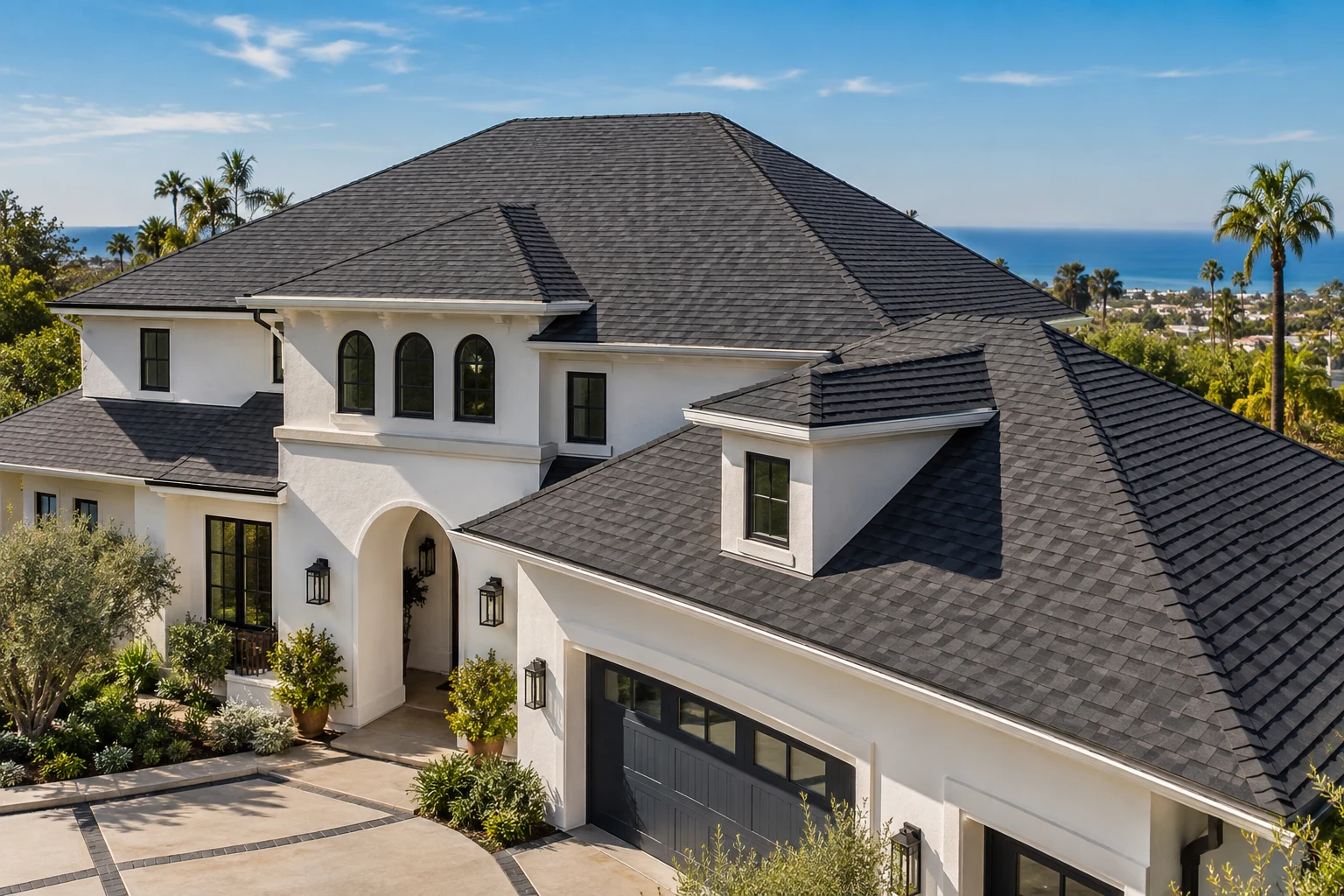
The cost per square for a new roof in Corona typically ranges from about $625 to $950 for asphalt shingles and $1,200 to $2,000 for tile systems. A “square” means 100 square feet of roof surface—not your home’s interior size. For a broader overview of roof replacement in Corona, it helps to understand how these numbers are built.
At All Star Roof Replacement, most homeowners we meet are trying to compare quotes and make sense of per-square pricing. The reality is simple: cost per square is a starting point, not a final number. The real price depends on the full roof system—tear-off, underlayment, decking, flashing, ventilation, and how everything is installed.
What Cost Per Square Means for a Corona Roof
A roofing square equals 100 square feet of actual roof area. Because of slopes, overhangs, and garages, your roof is usually larger than your home’s square footage.
In Corona, a realistic cost per square looks like this:
Roof Type | Approx. Cost Per Square | Main Cost Drivers
Architectural shingles | $625–$875 | Tear-off, ventilation, cool roof rating
Premium cool roof shingles | $750–$950 | Title 24 compliance, upgraded materials
Tile lift and reset | $600–$1,200 | Underlayment, broken tiles, flashing
New concrete/clay tile | $1,200–$2,000 | Labor, weight, HOA requirements
Standing seam metal | $1,500–$3,500 | Material cost, fabrication, labor
These ranges reflect full replacement, not just surface materials. For a deeper breakdown, see this roof replacement cost in Corona guide.
The key point: two homes on the same street can have very different per-square costs depending on what’s happening underneath the old roof.
Why Roof Pricing Is Different in Corona
Corona is not a mild roofing environment. Inland heat, UV exposure, and Santa Ana winds all affect how roofs age and how replacements are built.
In homes across Corona, we often see shingles dried out from sun exposure, brittle underlayment under tile, and loose ridge caps from wind events. These aren’t cosmetic issues—they directly affect replacement scope and cost.
Heat buildup is a major factor. Many homeowners don’t realize their attic can reach extreme temperatures, which shortens roof life from below. That’s why energy-efficient roofing in Corona and proper ventilation often factor into per-square pricing.
HOA requirements are another variable. Tile profiles, colors, and approvals can limit material options and increase cost depending on the neighborhood.
What a Real Per-Square Price Includes
A complete roof replacement includes much more than shingles or tile. A proper per-square price should cover the full system.
- Tear-off and disposal of old roofing
- Deck inspection after removal
- Replacement of damaged wood
- Underlayment installation
- Flashing, valleys, and penetrations
- Ventilation improvements
- Final roofing material installation
- Permits and inspections
- Cleanup and walkthrough
If these items aren’t clearly included, the per-square price may not reflect the true job. You can see how this fits into the full roof replacement process in Corona.
The bottom line: a lower number often means something is missing.
What Happens When Pricing Leaves Out the System
When key components are excluded, costs often show up later. A common issue during inspections is homeowners being surprised by change orders after tear-off.
For example, if underlayment or flashing isn’t included, leaks can return even with new materials on top. Poor ventilation can also trap heat, causing premature failure.
Another concern is warranty coverage. If the system isn’t installed correctly, roof warranty coverage may be limited.
In short, incomplete pricing usually leads to incomplete results.
What Affects Cost Per Square on Your Roof
The biggest factors are roof size, design, materials, and what’s found during tear-off. No two roofs are identical.
A direct answer: pitch, complexity, and material choice are the biggest drivers of cost differences between homes.
Roof Size, Pitch, and Layout
A 2,000-square-foot home rarely has a 2,000-square-foot roof. Slopes, overhangs, and multi-level sections increase total area.
Steeper roofs require more labor and safety setup. Complex layouts with valleys, skylights, and chimneys increase both time and material waste.
That’s why accurate measurement is critical before pricing.
Material Type and System Quality
Shingles are generally more affordable, while tile and metal cost more due to labor and material differences. To compare options, see best roofing materials for Corona homes.
Material is only part of the cost. Underlayment, fasteners, flashing, and ventilation all contribute to the final number.
Tear-Off and Hidden Damage
Many Corona homes have aging roofs where damage isn’t visible until tear-off. This includes dry rot, soft decking, and water damage.
That’s why a roof inspection before replacement matters—it helps set expectations before work begins.
Flashing and Ventilation
Flashing failures are one of the most common leak sources we see. Ventilation is another major factor, especially in hot inland areas.
Improving airflow can reduce attic heat and extend roof life. Learn how to reduce roof heat in Corona through proper system design.
Cost Increases Corona Homeowners Should Expect
Some cost factors are common in older Corona homes and should not be considered surprises.
A direct answer: wood replacement, tile matching, and code compliance are the most common reasons costs increase.
Wood Decking Replacement
Soft or damaged wood is often found after tear-off. Leaks can travel before showing inside, so damage may be larger than expected.
Tile Matching and Lift-and-Reset
Tile roofs often need underlayment replacement, not new tile. Matching existing tile can be difficult depending on age and HOA rules. See tile vs shingle roof in Corona for comparison.
Title 24 Cool Roof Requirements
California energy code may require reflective materials. These can increase cost but help reduce heat. Learn more about cool roof requirements in Corona.
Access and Labor Complexity
Steep roofs, tight access, and multi-story homes increase labor time. Protection of landscaping and structures also adds complexity.
How Corona Climate Impacts Roofing Costs
Corona’s climate directly affects how roofs wear out and how they should be replaced.
A direct answer: heat, UV exposure, and wind all increase the need for stronger materials and proper installation.
In homes across Corona, we often see roofs that look fine from the street but fail during the first heavy rain. Heat weakens materials over time, and wind exposes those weak points.
To understand longevity, see how long roofs last in Corona. Warning signs are covered here: signs you need a new roof.
If leaks appear suddenly, this guide explains what to do if your roof leaks.
Is the Lowest Cost Per Square the Right Choice?
Not always. A lower price can make sense on a simple roof with good decking and no complications.
But higher pricing is often justified for tile systems, complex layouts, ventilation upgrades, or code requirements.
If you’re deciding whether to repair or replace your roof, the age and condition of the system matter more than the price per square alone.
Reroofing over existing materials is rarely a good option in Corona. It traps heat and hides damage. Here’s why reroofing is risky in Corona.
What a Roof Replacement Estimate Should Show
A clear estimate should explain everything included—not just give a number.
A direct answer: you should see square count, materials, system components, and how unknowns like wood repair are handled.
It should also outline permits, timeline, and warranty details. You can review the full roof replacement timeline in Corona and roof replacement process.
If financing is part of your decision, here are roof replacement financing options.
FAQs About Cost Per Square Roof in Corona
How much does a roof cost per square in Corona?
Asphalt shingle roofs typically range from $625–$950 per square, while tile systems are often $1,200–$2,000 per square. Final cost depends on layout, materials, and full system scope.
Why does tile roofing cost more?
Tile is heavier and more labor-intensive. It also requires detailed underlayment and flashing work, plus possible HOA matching requirements.
Does cost per square include underlayment and flashing?
It should. A complete estimate includes all system components, not just surface materials.
How long does replacement take?
Most homes take 1–3 days for installation, but larger or more complex roofs may take longer.
Should I repair or replace?
If the roof is older or has recurring issues, replacement is usually more practical than ongoing repairs.
How long will a new roof last?
Shingles often last 20–30 years. Tile can last longer, but underlayment typically needs replacement within that same timeframe.
Do cool roof materials cost more?
Yes, but they can help reduce heat and improve energy efficiency in Corona’s climate.
Get a Clear Roof Replacement Estimate in Corona
If you want a clear number for your roof, start with an inspection—not a guess. All Star Roof Replacement provides detailed evaluations for roof replacement in Corona, including square count, system condition, and what the work should include.
You can also connect with a roofing contractor near me in Corona or learn more about working with a roof replacement installer in Corona.
No pressure—just a practical explanation of your roof and your options.
Call: (310) 729-3013
Email: teamallstarconstruction@gmail.com
Website: https://teamallstarconstruction.com/
In Corona, roofing costs aren’t just about materials—they’re about building a system that holds up to heat, wind, and time. A clear estimate makes that difference visible.