
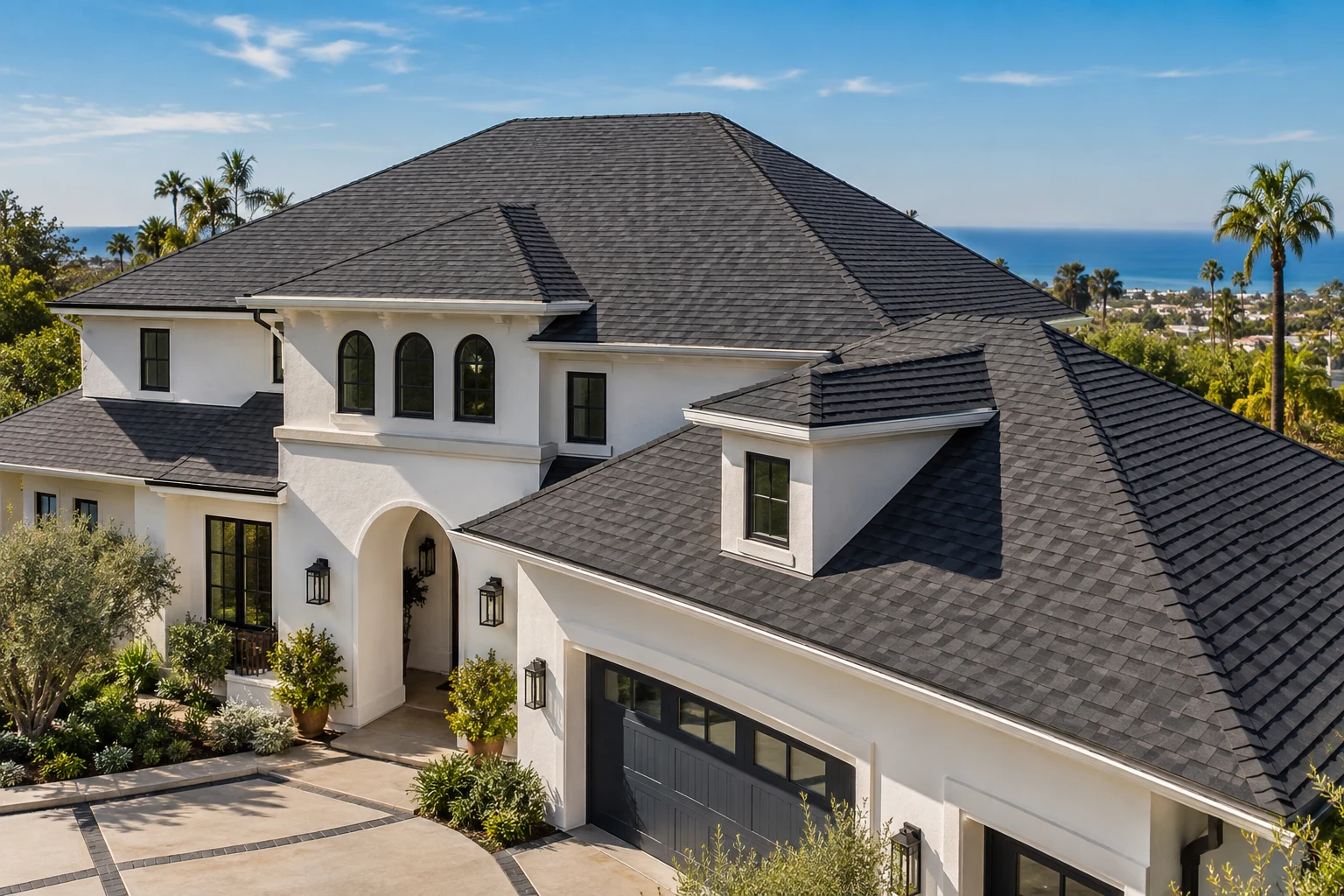
Energy-efficient roofing in Corona means more than choosing a “cool” shingle. It’s a full roof system upgrade designed to reduce heat buildup, improve comfort, and extend roof life. If you’re already considering roof replacement in Corona, that’s the right time to address energy performance properly.
At All Star Roof Replacement, we focus on residential roof replacement, not patchwork fixes. In homes across Corona, we often see roofs that look fine from the outside but trap heat, have failing underlayment, or lack proper ventilation.
In simple terms, energy-efficient roofing in Corona combines cool-rated materials, balanced ventilation, and proper installation so your roof can shed heat instead of holding it.
Why Energy Efficiency Matters for Roofs in Corona
Corona’s inland climate puts more stress on roofing systems than many homeowners expect. Roof surfaces take direct sun all day, and attic spaces can stay hot well into the evening.
The main issue is heat buildup. Roof materials absorb heat during the day, and without proper ventilation, that heat gets trapped in the attic. This is why many homeowners search for ways to reduce heat with roofing.
UV exposure also wears down roofing materials faster here. A common issue during inspections is brittle underlayment under tile roofs or shingles losing granules earlier than expected. If you’re unsure how long your roof should last, it helps to review how long roofs last in Corona.
Wind is a secondary factor. Santa Ana winds can lift shingles or shift tiles, exposing weak points that allow heat and moisture into the system.
Corona Condition | Roofing Impact | Energy-Efficient Response
High UV exposure | Faster material aging | Cool-rated materials, upgraded underlayment
Hot attic spaces | Higher cooling demand | Balanced ventilation
Aging tile roofs | Underlayment failure | Full replacement or lift/reset system
Santa Ana winds | Lifted materials | Proper fastening and flashing
What Happens If Heat and Ventilation Problems Are Ignored
Ignoring attic heat and ventilation issues usually leads to faster roof failure and higher cooling costs. It’s not just about comfort—it affects the entire roof system.
In Corona homes, we often see hot upstairs rooms, rising energy bills, and roofing materials aging unevenly. Many homeowners don’t realize that recurring leaks can be tied to system failure, not just one damaged area. If leaks are already happening, here’s what to know about what to do if your roof leaks.
Small repairs rarely fix these problems long-term. If the roof is aging across multiple areas, it becomes a question of repair or replace your roof, not just patching symptoms.
Heat and ventilation issues usually point to a system problem. That’s why a full replacement is often the right time to correct them.
What an Energy-Efficient Roof Replacement Includes
An energy-efficient roof replacement is built as a complete system from the deck up. It’s not something that can be added after the fact.
In Corona, a proper replacement typically includes:
- Full tear-off of existing roofing
- Deck inspection and wood replacement if needed
- Heat-resistant underlayment
- Title 24-compliant cool roof material
- Balanced attic ventilation
- New flashing at all penetrations
- Proper fastening for wind exposure
Every step matters. You can see how this comes together in the roof replacement process in Corona.
The key point is simple: energy efficiency is built into the system during installation, not just the material choice.
Roofing Components That Affect Energy Efficiency
Most homeowners focus on shingles or tiles, but performance depends on what’s underneath and how everything works together.
During Corona roof replacement services, we evaluate the entire system because hidden issues are common once the old roof is removed.
Cool Roof Materials
Cool roof materials are designed to reflect more sunlight and release heat faster. This reduces how much heat transfers into your attic.
In Corona, these materials often need to meet California energy code. You can explore cool roof materials in Corona to understand what qualifies.
Options typically include architectural shingles, tile, and sometimes metal. The right choice depends on your home and HOA guidelines, not just reflectivity ratings.
Attic Ventilation
Ventilation is one of the most overlooked parts of energy-efficient roofing. Without it, heat stays trapped no matter what material you use.
A proper system includes intake and exhaust working together. This is why attic ventilation and roof heat are closely connected.
In many older Corona homes, ventilation is either missing or unbalanced. Fixing that during replacement can make a noticeable difference in comfort.
Underlayment and Roof Decking
Underlayment is the real waterproof layer beneath your roof covering. In tile roofs especially, it often fails before the tile itself.
A common issue during inspections is brittle or deteriorated underlayment that can’t handle heat anymore. That’s one of the clearest signs you may need a new roof.
Decking also matters. If the wood underneath is damaged, it affects how the entire system performs and holds up over time.
Flashing, Valleys, and Roof Penetrations
Flashing protects the most vulnerable areas of your roof—vents, chimneys, skylights, and valleys.
In Corona’s heat, sealants dry out and pipe boots crack. That’s a frequent cause of leaks and why proper installation matters just as much as material choice. This ties directly into proper roof installation.
Even the best cool roof won’t perform if flashing details are weak.
Energy-Efficient Roofing Materials for Corona Homes
The best roofing material depends on your home, not just energy ratings. Structure, HOA rules, and budget all play a role.
To compare options, many homeowners review best roofing materials for Corona homes before deciding.
Material | Energy Benefit | Corona Consideration
Cool-rated shingles | Reflective options, lighter weight | Needs proper ventilation
Concrete tile | Thermal mass | Underlayment wears out first
Clay tile | Good heat performance | Fragile with age
Metal roofing | High reflectivity | HOA approval may be required
There is no one-size-fits-all answer. The right material depends on how your roof is built and what your neighborhood allows.
Repair vs Replacement for Energy Problems
If energy issues are tied to an aging roof, replacement is usually the more effective solution. Repairs rarely fix system-wide problems.
Repairs may work if the roof is newer and issues are isolated. But if you’re seeing multiple warning signs, it’s time to review roof repair or replacement in Corona.
In homes across Corona, we often see roofs over 20 years old with ventilation issues, worn materials, and repeated repairs. At that point, replacement gives you the chance to correct everything at once.
The decision comes down to whether the roof is failing in one area or across the system.
Cost Factors for Energy-Efficient Roof Replacement in Corona
Energy-efficient roof replacement cost varies widely depending on the home. There’s no flat rate because every roof is different.
Main factors include roof size, material, slope, decking condition, and ventilation upgrades. You can learn more about roof replacement cost in Corona to understand what drives pricing.
Tile roofs, complex layouts, and structural repairs typically increase cost. A proper inspection gives a clearer picture than rough estimates.
The most accurate approach is a full evaluation of the roof system before pricing is finalized.
Process: What to Expect During an Energy-Efficient Roof Replacement
The process starts with a detailed inspection and ends with a fully installed system designed for Corona’s climate.
Typical steps include inspection, material selection, permits, tear-off, deck repair, and installation. You can review the full roof replacement process in Corona for a breakdown.
Most installations take a few days, but HOA approvals and permits can extend the timeline. Noise and access are part of the process, but a good contractor will plan around your home.
The key is proper installation from start to finish.
HOA, Title 24, and Local Approval Considerations in Corona
Many Corona neighborhoods have HOA requirements that affect roofing materials, colors, and profiles.
At the same time, California Title 24 can require energy-compliant materials. This is where Title 24 cool roof requirements come into play.
Homeowners often need approval before work begins. Planning material choices early helps avoid delays.
Both performance and appearance need to be considered together.
Is an Energy-Efficient Roof Replacement Worth It?
If your roof is aging or causing comfort issues, upgrading during replacement is usually worth it. Doing it later is much harder.
This is especially true if you’re seeing signs it is time for a new roof like leaks, heat buildup, or worn materials.
In Corona, energy-efficient roofing makes the most sense when the roof is already nearing the end of its lifespan.
If the system is failing, replacement is the opportunity to fix both durability and energy performance at once.
FAQs About Energy-Efficient Roofing in Corona
How much does energy-efficient roofing cost in Corona?
Energy-efficient roof replacement in Corona depends on size, materials, roof complexity, and whether decking or ventilation upgrades are needed. A full inspection is required for an accurate estimate.
How long does an energy-efficient roof replacement take?
Installation may take a few days, but permits, HOA approvals, and inspections can extend the overall timeline.
Can a roof repair improve energy efficiency?
Repairs may fix isolated issues but usually do not improve overall energy performance on an aging roof.
How long do energy-efficient roofs last in Corona?
Shingle roofs often last 20–30 years. Tile can last longer, but underlayment beneath it may need replacement sooner.
What roofing material is best for energy efficiency?
Cool-rated shingles, tile, and metal can all perform well. The best option depends on your home, structure, and HOA requirements.
Will a cool roof lower energy bills?
It can help reduce heat absorption, but results vary depending on ventilation, insulation, and home design.
Is reroofing over old shingles a good idea?
No. It can trap heat and hide underlying problems. A full tear-off is usually the better approach in Corona.
Get a Clear Roof Replacement Estimate in Corona
If you’re dealing with heat, aging materials, or repeated issues, the next step is a proper roof evaluation. You can start with roof replacement in Corona to understand your options.
At All Star Roof Replacement, we walk through the full system—ventilation, underlayment, decking, and materials—so you know exactly what’s going on with your roof.
Call (310) 729-3013 or email teamallstarconstruction@gmail.com to request an inspection and estimate.
Every roof in Corona is different. The goal is to give you a clear, practical plan for a roof that performs in the heat and lasts.