
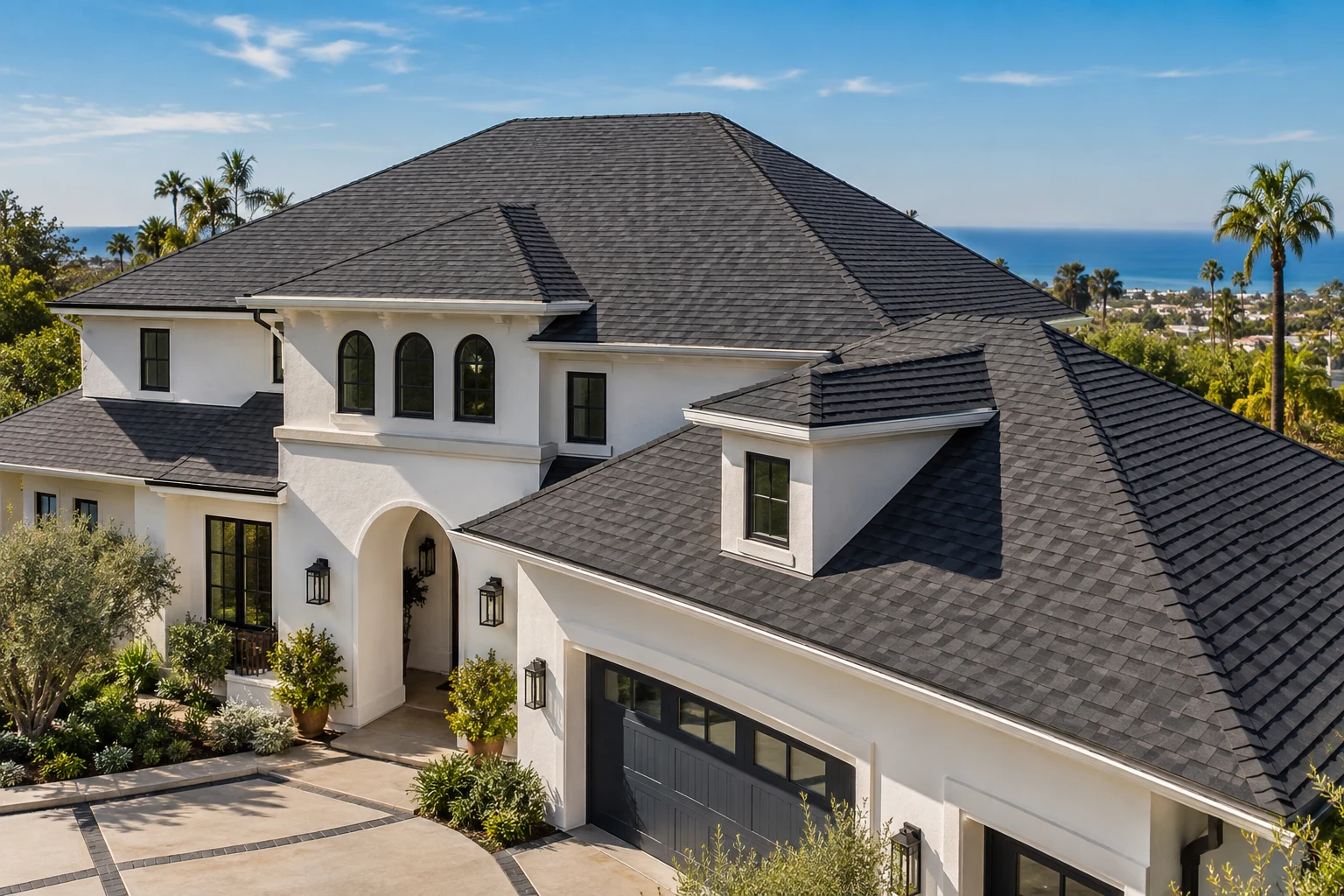
To reduce heat with roofing in Corona, you need more than just a lighter-colored material. The biggest improvements come from a full roofing system that reflects sunlight, releases heat, and properly ventilates the attic.
At All Star Roof Replacement, we evaluate how the entire system is performing—materials, underlayment, ventilation, and decking—because Corona’s inland heat puts stress on every layer. If you’re considering a roof replacement in Corona, it’s the right time to address heat issues at the same time.
In practical terms, reducing roof heat means combining cool roof options in Corona, ventilation upgrades, and a properly installed system from the deck up.
Reducing Roof Heat in Corona Starts With the Whole Roofing System
The most effective way to reduce heat is to treat the roof as a system, not just a surface. That includes reflective materials, balanced attic ventilation, durable underlayment, and proper installation.
In homes across Corona, we often see heat problems show up as hot upstairs rooms, high cooling bills, and roofs that age faster than expected. Many homeowners don’t realize these issues are connected to both what’s on top of the roof and what’s happening underneath it.
A properly designed energy-efficient roofing system helps reduce heat buildup while protecting the home long-term. That’s why a full tear-off and inspection during the roof replacement process in Corona matters.
What Homeowners Usually Mean by “Reduce Roof Heat”
Most homeowners are really talking about comfort. Rooms that stay hot, an AC system that runs constantly, or an attic that feels extreme are usually the first signs.
In Corona, we often inspect roofs that look fine from the street but have poor ventilation or aging underlayment underneath. A common issue during inspections is older roofs losing performance without obvious leaks yet.
If your roof is aging, it may already be showing signs you may need a new roof, even if the main concern is heat. Understanding how long roofs last in Corona helps set realistic expectations.
What a Heat-Reducing Roofing System Includes
A cooler roof comes from multiple components working together. Material alone will not solve the problem if ventilation or underlayment is failing.
- Reflective roofing materials designed for Corona heat
- High-performance underlayment that resists heat breakdown
- Balanced attic ventilation (intake and exhaust)
- Proper flashing at all roof transitions
- Solid roof decking beneath the system
Skipping any of these limits performance. Roofing materials that perform well in Corona heat are covered in our guide to best roofing materials for Corona homes.
Installation quality also matters. Poor installation can cancel out the benefits of better materials and affect warranty coverage.
Why Roof Heat Is a Bigger Issue in Corona
Corona’s inland climate creates harsher conditions than coastal areas. Long summers, strong sun exposure, and dry heat all increase roof surface temperatures.
Roofing materials expand during the day and contract at night. This daily movement—called thermal cycling—gradually weakens shingles, tiles, flashing, and sealants.
Heat and wind often work together. Santa Ana winds can test weakened materials, especially on older roofs. This is why heat and wind damage warning signs should not be ignored.
Heat, UV, and Thermal Cycling
Heat and UV exposure break down roofing materials over time. Shingles lose flexibility, granules shed, and seal strips weaken.
Tile roofs are common in Corona, but many homeowners don’t realize the underlayment beneath the tile often fails first. A roof can look intact while the waterproof layer is deteriorating.
This is why understanding tile vs shingle roofing in Corona matters when planning for heat and lifespan.
Attic Ventilation Problems
Ventilation plays a major role in reducing heat. Intake vents bring in cooler air, and exhaust vents allow hot air to escape.
A common issue during inspections is unbalanced ventilation—either not enough intake or outdated exhaust vents. Adding vents without proper calculation often doesn’t fix the problem.
Even with cool roof materials, poor ventilation can trap heat inside the attic. That’s why ventilation is part of every energy-efficient roofing upgrade.
What Can Happen If Roof Heat Is Ignored
Heat damage builds slowly. It rarely causes one sudden failure but instead shortens the life of the entire roof system.
- Higher cooling demand
- Faster shingle or underlayment aging
- Cracked flashing and sealants
- Hidden moisture or decking issues
Over time, this leads to more difficult decisions about whether to repair or replace your roof.
Best Roofing Choices to Reduce Heat in Corona
The best roofing option depends on your home, HOA requirements, and budget. In Corona, the most common choices include cool roof shingles, tile systems, and properly ventilated assemblies.
Option | Best For | Heat Benefit | Key Consideration
Cool roof shingles | Most homes | Reflects sunlight | Needs proper ventilation
Concrete/clay tile | HOA communities | Thermal mass and airflow | Underlayment is critical
Metal systems | Select homes | High reflectivity | Structure and HOA limits
Ventilation upgrade | Hot attics | Removes trapped heat | Must be balanced
Full replacement | Aging roofs | Corrects multiple issues | Larger project scope
Comparing materials in detail can help you choose the right system. See compare roofing materials in Corona for a deeper breakdown.
The Parts Homeowners Miss: Underlayment, Decking, Flashing, and Ventilation
The visible roofing material is only one part of the system. Underlayment, decking, and flashing often determine how well the roof handles heat over time.
In many Corona homes built between the 1980s and early 2000s, we see aging underlayment and outdated ventilation that limit performance. A full roof system replacement process addresses these hidden issues.
Heat reduction should never come at the expense of waterproofing. Both need to work together.
Do You Need a New Roof to Reduce Heat?
If the roof is older or showing signs of wear, replacement is often the most effective way to reduce heat because it allows the entire system to be upgraded.
Replacement is usually worth discussing if the roof is over 20 years old, has brittle materials, poor ventilation, or recurring issues. Reviewing signs you need a new roof in Corona can help guide that decision.
That said, not every heat issue is caused by roofing alone. Insulation, ductwork, and HVAC systems can also play a role.
What to Expect During a Heat-Focused Roof Replacement in Corona
A heat-focused replacement starts with inspection and ends with a complete system designed for Corona’s climate.
- Roof and attic evaluation
- Material and ventilation planning
- Permit and HOA coordination if needed
- Tear-off and decking inspection
- Installation of underlayment, flashing, and vents
- Cool roof material installation
The installation itself may take a few days, but planning and approvals can extend the timeline. You can review the full roof replacement timeline in Corona for details.
Get a Clear Roof Heat Assessment in Corona
If your home feels too hot or your roof is aging, the next step is a proper evaluation. There’s no need to guess which upgrade will help most.
All Star Roof Replacement will inspect your roof system and explain whether heat reduction should focus on materials, ventilation, or full replacement. Every home in Corona is different, and recommendations should match the actual condition of your roof.
Call (310) 729-3013 or email teamallstarconstruction@gmail.com to request an inspection or estimate. You can also learn more about roof replacement in Corona and what options make sense for your home.