
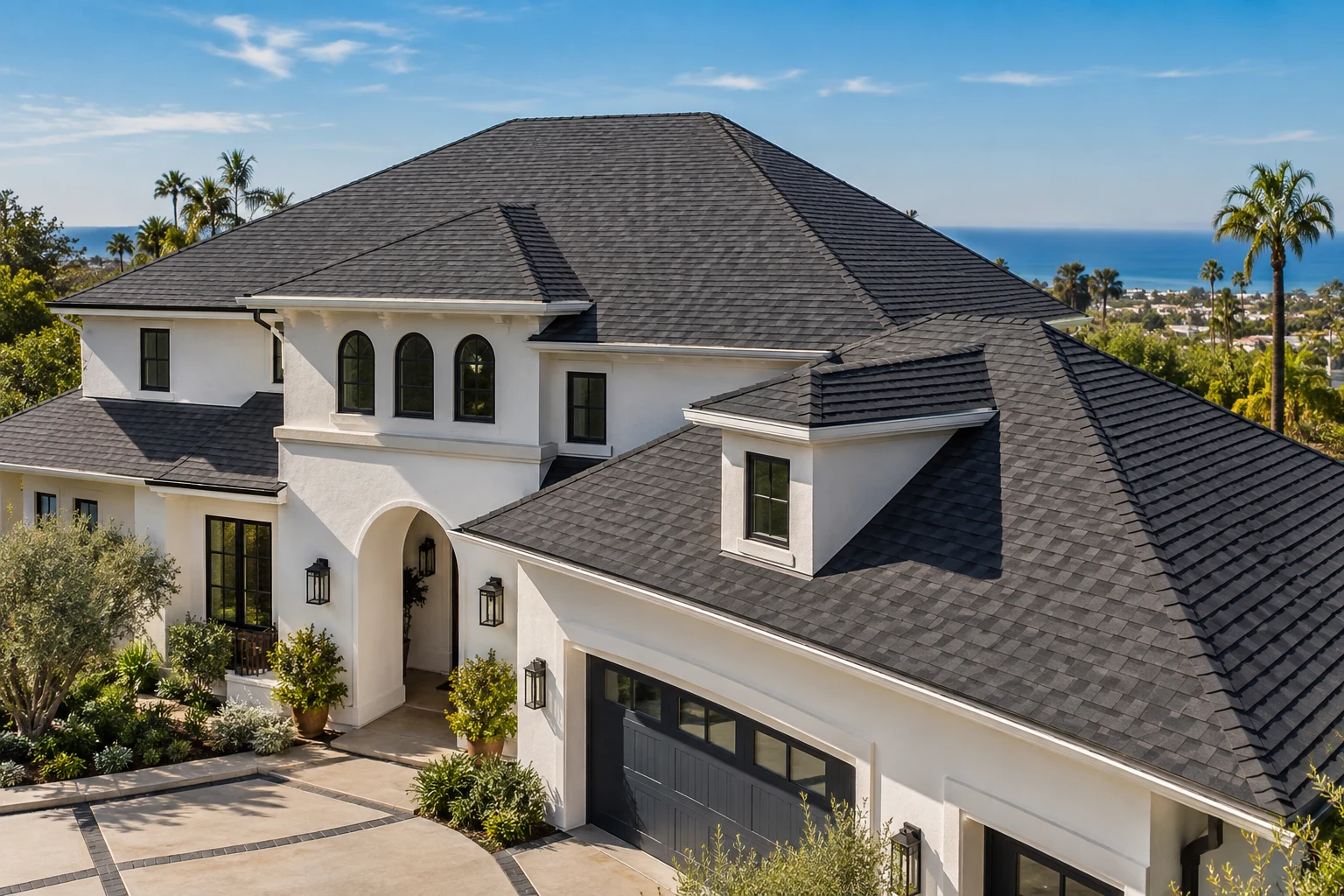
In Corona, most roofs don’t last as long as homeowners expect because of heat and sun exposure. Asphalt shingle roofs typically last around 20–25 years, while tile roofs can last longer on the surface but often need new underlayment in 20–30 years. At All Star Roof Replacement, we look at the full system—not just what you see from the street—when evaluating Corona roof replacement needs.
The key point is simple: roof lifespan isn’t just about shingles or tiles. It depends on the underlayment, flashing, ventilation, and how the roof was installed in the first place.
What Is the Typical Roof Lifespan in Corona?
Here’s what most homeowners in Corona can realistically expect:
- Asphalt shingles: About 20–25 years in inland heat
- Architectural or cool-roof shingles: Closer to 25–30 years with proper ventilation
- Concrete or clay tile: 50+ years for tile, but underlayment usually 20–30 years
- Metal roofing: 40–50+ years with correct installation
Those ranges depend heavily on installation quality and attic ventilation. If you want a better idea of what affects roof replacement cost in Corona, those same factors play a big role.
Many homeowners don’t realize a roof can look fine from the outside while failing underneath. We see this often during inspections—especially on tile roofs where the tiles are intact but the underlayment has already broken down.
Why Roofs Wear Out Faster in Corona
Corona’s inland climate is tough on roofing materials. Heat, UV exposure, and daily temperature swings all work against the roof system.
During summer, roof surfaces can get extremely hot. That heat dries out shingles, weakens sealants, and stresses underlayment. At night, temperatures drop, causing expansion and contraction that slowly breaks materials down.
Santa Ana winds add another layer of stress. They can lift shingles, loosen ridge caps, and expose weak spots. Then when rain finally comes, those weak areas turn into leaks.
If you’re looking at ways to reduce roof and attic heat in Corona, proper ventilation and material choice make a noticeable difference.
Roof Lifespan by Material in Corona
Different materials handle Corona’s climate differently, but none of them work well without a solid system underneath.
Asphalt shingles are common and cost-effective. In Corona, they usually last 20–25 years, sometimes longer with good ventilation and proper installation.
Cool-roof shingles are designed to reflect more sunlight. They can help reduce attic temperatures and slow down heat-related wear.
Tile roofs are everywhere in Corona neighborhoods. The tiles themselves last decades, but they are not the waterproof layer. The underlayment beneath them is what actually keeps water out.
Metal roofing performs well in heat and can last a long time, but installation details matter a lot.
If you’re comparing roofing materials that hold up in Corona heat, the right choice depends on your home, HOA, and ventilation setup—not just lifespan on paper.
The Roof System Matters More Than the Surface
A roof is not just shingles or tile. It’s a system of layers and components that all have to work together.
That includes decking, underlayment, flashing, valleys, penetrations, and ventilation. When one part fails, it can affect the rest of the system.
In homes across Corona, we often see leaks caused by flashing or underlayment—not the main roofing material. That’s why a full tear-off during replacement matters. It allows inspection of the wood decking and ensures everything underneath is solid.
You can learn more about what happens during a roof replacement and why these steps matter.
Signs Your Roof May Be Near the End of Its Life
If your roof is aging, there are usually warning signs—some obvious, some not.
- Curled, cracked, or brittle shingles
- Granules collecting in gutters
- Loose or missing ridge caps
- Slipped or broken tiles
- Exposed or deteriorating underlayment
- Ceiling stains or attic moisture
- Hot upstairs rooms or rising energy bills
A common issue during inspections is homeowners focusing on one visible problem, when the real issue is widespread aging across the system. If you’re unsure, reviewing the signs your roof may be near the end of its life can help you spot early warning signs.
What Happens If You Wait Too Long
An aging roof doesn’t usually fail all at once. It slowly lets water in through weak points.
In Corona, dry months can hide damage. Then winter rain exposes it quickly.
Waiting too long can lead to:
- Interior leaks and drywall damage
- Rotting roof decking
- Insulation damage
- Mold or moisture issues
- Higher cooling costs from poor ventilation
Many homeowners end up spending more because what could have been a straightforward replacement turns into structural repairs as well.
Repair or Replace an Aging Roof?
If your roof is around 20+ years old in Corona, replacement often makes more sense than continued repairs.
Repairs may work if the issue is isolated and the rest of the roof is in good shape. But if you’re dealing with repeated leaks, brittle materials, or aging underlayment, repairs usually don’t solve the underlying problem.
If you need help deciding, this guide on whether to repair or replace your roof in Corona breaks it down clearly.
How Ventilation Affects Roof Lifespan
Ventilation plays a bigger role than most homeowners expect.
In Corona, attic temperatures can get extremely high. Without proper airflow, that heat gets trapped and essentially bakes the roof from underneath.
Good ventilation brings cooler air in and pushes hot air out. That helps protect shingles, underlayment, and reduces strain on your HVAC system.
Many homeowners don’t realize their ventilation is part of the problem until a replacement project exposes it.
Why Tile Roofs Often Leak Before They “Wear Out”
Tile roofs can be misleading. The tiles may still look perfect while the roof underneath is failing.
In Corona, the most common cause is aging underlayment. Over time, heat dries it out and makes it brittle.
We often see tile roofs where the leak isn’t coming from broken tiles—it’s coming from worn-out underlayment or flashing in valleys and penetrations.
Depending on the condition, the solution may be a full replacement or a lift-and-reset with new underlayment.
How Installation Quality Impacts Lifespan
A properly installed roof lasts longer. A rushed or incomplete installation fails early.
Details like flashing, fastening patterns, and ventilation setup matter just as much as the material itself.
If those details are skipped or done incorrectly, it can lead to early leaks, trapped heat, and warranty issues. You can review how roof warranties work to see how installation affects coverage.
Planning Ahead for Roof Replacement
If your roof is approaching the 20–30 year range, it’s worth evaluating before problems get worse.
In Corona, planning ahead matters because HOA approvals, permits, and material selection can take time. Waiting until a leak shows up during rain season can limit your options.
Every roof is different. Some still have life left. Others are already past the point where repairs make sense.
If you’re considering roof replacement in Corona, getting a clear inspection is the first step.
FAQs About Roof Lifespan in Corona
How long does an asphalt shingle roof last in Corona?
An asphalt shingle roof in Corona commonly lasts about 20–25 years. Premium shingles may last longer with proper ventilation and installation.
How long does a tile roof last in Corona?
Tile can last 50+ years, but the underlayment underneath usually needs replacement around 20–30 years.
Should I repair or replace a 20-year-old roof?
If the roof has widespread wear, multiple leaks, or aging materials, replacement is usually the better long-term option.
What roofing material lasts the longest?
Tile and metal typically last the longest, but the best choice depends on the full roofing system and your home’s setup.
Can poor ventilation shorten roof life?
Yes. Trapped heat in the attic can speed up material breakdown and reduce the lifespan of the roof.
How much does roof replacement cost?
It depends on size, materials, roof condition, and ventilation needs. A proper estimate requires an inspection.
How long does roof replacement take?
Installation often takes a few days, but permits and approvals can extend the timeline.
Get a Clear Roof Lifespan Assessment in Corona
If your roof is getting older and you’re not sure how much life it has left, the best next step is a straightforward evaluation.
All Star Roof Replacement focuses on full residential roof replacement systems. We’ll look at the underlayment, flashing, ventilation, and overall condition—not just the surface.
Call (310) 729-3013 or email teamallstarconstruction@gmail.com to request a roof replacement estimate for your Corona home.