
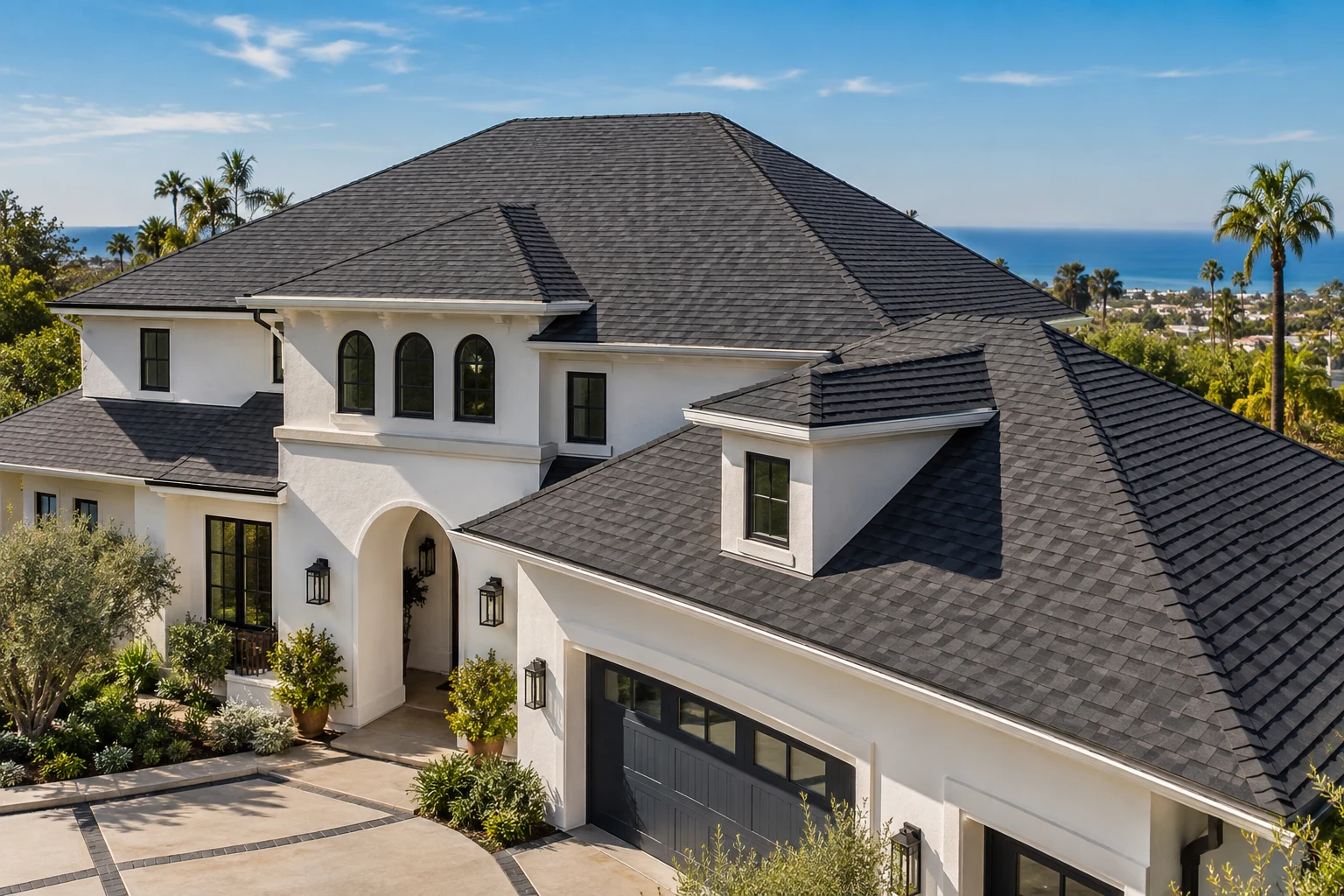
Most roofs in Corona don’t fail all at once—they break down underneath first. If your roof is over 20 years old, leaking, or needing repeat fixes, you’re usually looking at a full system replacement, not a repair.
At All Star Roof Replacement, we don’t guess based on what’s visible—we evaluate the entire roofing system to determine what’s actually failing and why.
Here’s the simple truth: what looks like a small issue on the surface is often a deeper system problem underneath. And in Corona, that process happens faster than most homeowners expect.
Why This Problem Is So Common in Corona
Corona isn’t a mild environment for roofing. The combination of inland heat, UV exposure, and seasonal wind creates stress that most roofing systems aren’t built to handle long-term.
During the summer, roof surfaces regularly reach extreme temperatures. Materials expand all day, then contract at night. That constant movement weakens seals, dries out underlayment, and causes small failures that don’t show up immediately.
Answer: In Corona, roofing systems wear out from heat and movement long before they visibly fall apart.
Then come the Santa Ana winds. These aren’t just strong gusts—they create uplift pressure that can loosen shingles, shift tiles, and break adhesive seals. Even if everything looks “normal” afterward, the system may already be compromised.
In homes across Corona, we often see roofs that look fine from the ground but have lost their ability to shed water properly.
If you want a breakdown of how roofing systems are evaluated locally, you can review how we approach homes in the area here:
Corona roofing service area overview.
What Homeowners Usually Think vs. What’s Actually Happening
Most homeowners assume:
- A leak means a small repair
- A few broken tiles aren’t a big deal
- If the roof looks okay, it’s still working
That’s not how roofing systems fail.
Answer: By the time you see a leak, the failure has usually been developing underneath for years.
The outer layer—shingles or tiles—is only part of the system. The real protection comes from what’s underneath: underlayment, flashing, decking, and ventilation.
A common issue during inspections is failed underlayment beneath tile roofs. The tiles still look intact, but the waterproof layer below has dried out and cracked from heat.
Water gets in, travels, and shows up somewhere completely different inside the home.
So the question isn’t just “what’s damaged?”
It’s “what part of the system has stopped working?”
When a Roof Repair Actually Makes Sense
Repairs aren’t always wrong—but they only work under specific conditions.
Answer: Repair makes sense when the roof is relatively new and the problem is isolated.
- Roof is under 15 years old
- Damage is limited to a small area
- No history of recurring leaks
- Underlying system is still intact
If those conditions are met, a targeted fix can extend the life of the roof.
But that’s not what we usually see in Corona.
Many homeowners have already done one or two repairs. The leak stops temporarily, then comes back in a different spot. That’s a sign the system—not the surface—is failing.
Many homeowners don’t realize that repeated repairs often cost more over time than replacing the roof once and fixing the root issue.
When Replacement Becomes the Smarter Option
There’s a point where repair stops being practical.
Answer: If the roof is older, leaking in multiple areas, or showing widespread wear, replacement is the more reliable and cost-effective solution.
Here are the common triggers we see:
- Roof is 20–30+ years old
- Leaks appear in different areas over time
- Shingles are brittle, lifting, or losing granules
- Tiles are slipping or breaking repeatedly
- Energy bills are rising due to poor ventilation
In Corona, age matters more because heat accelerates breakdown. A 25-year roof here is usually at the end of its functional life—even if parts of it still look okay.
And once multiple areas are compromised, patching becomes guesswork.
That’s where most homeowners get stuck—trying to decide if they should keep repairing or move forward with replacement.
If you want a deeper breakdown of what impacts pricing and scope, this page explains how those decisions are evaluated locally:
roof replacement cost in Corona.
What Happens If You Wait Too Long
Roofing problems don’t stay the same. They spread.
Answer: Delaying the decision usually increases the total cost because damage moves from the roof into the structure.
What starts as a small leak can turn into:
- Rotting roof decking
- Damaged insulation
- Mold growth inside attic spaces
- Interior ceiling and drywall damage
By the time these show up, the repair isn’t just roofing anymore.
In homes across Corona, we often see situations where a delayed replacement led to structural repairs that could have been avoided with earlier action.
There’s also an energy impact.
As the roofing system breaks down, it stops reflecting heat properly and loses ventilation efficiency. That traps heat in the attic, forcing your HVAC system to work harder.
Answer: A failing roof doesn’t just leak—it raises cooling costs and makes the home harder to regulate.
The Real Issue: System Failure vs Surface Damage
This is where most confusion comes from.
Answer: Roofing problems are rarely about the outer material—they’re about the system underneath failing.
You can replace a few shingles or tiles, but that doesn’t fix:
- Deteriorated underlayment
- Improper ventilation
- Weak fastening from past installation
- Heat-damaged sealing layers
Those are the components that actually keep water out and control temperature.
That’s why two roofs that look similar from the outside can perform completely differently.
At All Star Roof Replacement, the focus isn’t on selling materials—it’s identifying whether the system is still functioning as a whole.
Because once the system breaks down, surface fixes stop working.
Why Proper Evaluation Matters Before Deciding
You can’t make the right call without seeing what’s happening beneath the surface.
Answer: The decision between repair and replacement should be based on a full system evaluation—not a visual guess.
That includes:
- Satellite measurement for full layout accuracy
- Visual inspection of wear patterns and failure points
- Assessment of underlayment condition (when accessible)
- Ventilation and heat retention analysis
A common issue during inspections is mismatched aging—where one part of the roof has been repaired, but the rest of the system continues to degrade.
That creates uneven performance and leads to ongoing problems.
Every roof in Corona is different. Age, exposure, installation quality, and ventilation all affect how the system holds up.
That’s why there isn’t a one-size answer—but there is a clear way to determine the right direction.
Questions Corona Homeowners Ask About Roof Repair vs Replacement
roof replacement in Corona
roof replacement cost in Corona
How much does roof replacement cost in Corona?
There is no fixed price because every roof is different. Cost depends on size, slope, materials, tear-off requirements, and whether decking or ventilation needs to be replaced.
In Corona, heat-related wear often means more system components need attention, not just the surface. A proper inspection is the only way to determine accurate pricing instead of guessing.
roof replacement timeline in Corona
How long does a roof replacement usually take?
Most residential roof replacements take a few days, but timing depends on roof complexity, materials, and any hidden damage found during tear-off.
A common issue during inspections in Corona is discovering brittle underlayment or heat-damaged decking, which can extend the timeline slightly to ensure the system is rebuilt correctly.
How do I know if I need repair or replacement?
If the issue is small and isolated, repair may be enough. If problems are recurring, widespread, or tied to aging materials, replacement is usually the better long-term decision.
In homes across Corona, we often see roofs that look fine from the outside but have underlying system failure due to years of heat exposure. That’s why a full inspection matters.
roof lifespan in Corona
How long should a roof last in Corona?
Most roofs last 15–30+ years depending on materials, installation, and ventilation. However, Corona’s sun and heat can shorten that lifespan, especially for underlayment and sealants.
Even if tiles or shingles remain in place, the layers underneath may wear out sooner, which is often what leads homeowners to consider replacement.
Can a tile roof need replacement even if the tiles look fine?
Yes. Tile roofs often fail from underneath when the underlayment deteriorates, even if the tiles themselves still appear intact.
A common issue during inspections is finding dry, cracked underlayment beneath otherwise good-looking tiles, especially in older Corona homes exposed to long-term UV and heat.
Will a new roof help with heat and energy bills?
Yes, in many cases it can. A properly installed roofing system with updated ventilation and materials can reduce attic heat and improve indoor comfort.
In Corona, where attic temperatures can rise significantly, improving airflow and replacing aged materials can make cooling more efficient and consistent throughout the home.
Should I get another repair if the roof keeps leaking?
If leaks keep returning, another repair is usually not the right solution. Recurring issues often point to deeper system failure rather than a single damaged area.
Instead of continuing to patch symptoms, it’s better to inspect the full roof system and determine whether underlying components like underlayment or flashing have failed.
Get a Clear Roof Evaluation in Corona
- roof replacement in Corona
- what to expect during roof replacement
- choosing a roofing company in Corona
All Star Roof Replacement helps homeowners in Corona understand what’s actually happening with their roof and what the right next step looks like.
Every roof is evaluated as a complete system so you can see what is still working, what is failing, and whether repair or replacement actually makes sense. There is no pressure—just clear information so you can make the right decision for your home.
Call: (310) 729-3013
Email: teamallstarconstruction@gmail.com
Contact: Request an estimate
Licensed • Insured • Owens Corning Preferred Contractor • CA License #1009760