
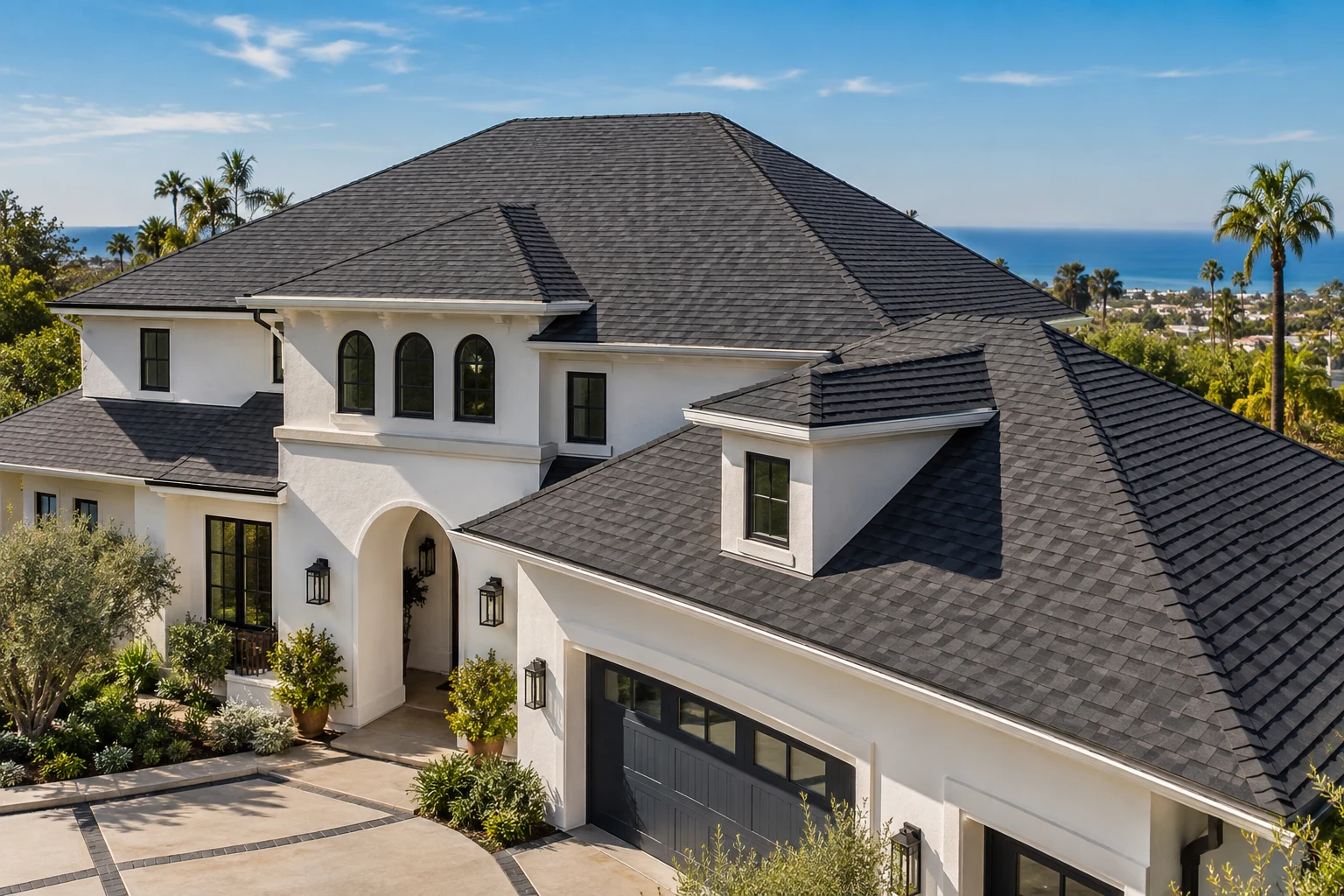
A new roof in Corona typically ranges from about $15,000 to $40,000+ depending on the size of the home, the roofing system, and what’s happening underneath the surface. The real cost isn’t just materials—it’s the condition of the entire roofing system and how it’s holding up against heat, wind, and age.
At All Star Roof Replacement, we don’t price roofs based on square footage alone. We evaluate the full system—because in Corona, most roofing problems aren’t visible from the street, and they’re rarely just surface-level.
Why Roof Costs in Corona Are Higher Than Expected
Roof replacement in Corona costs more than many homeowners expect because the environment is harder on roofing systems than it looks. This isn’t a mild coastal climate—this is inland heat, UV exposure, and seasonal wind pressure working together over time.
In simple terms: roofs in Corona wear out from the inside and underneath, not just on top.
The combination of high summer temperatures and cooler nights causes constant expansion and contraction. That movement breaks down sealants, weakens underlayment, and eventually opens pathways for water.
Answer: The cost is higher in Corona because roofing systems fail faster here due to heat, UV damage, and thermal cycling—not just age.
In homes across Corona, we often see roofs that look fine from the outside but are already failing underneath. Tiles may still be intact, but the waterproof layer below has dried out or cracked.
Many homeowners don’t realize that what they’re seeing—like a small leak or a few slipped tiles—is usually the result of deeper system failure.
What Actually Determines the Cost of a New Roof
The biggest mistake homeowners make is thinking roof cost is based on materials. It’s not. The price is determined by how much of the system needs to be rebuilt.
Answer: Roof replacement cost depends on system condition, not just size or material.
There are a few key factors that drive pricing in Corona:
- Roof size and layout: More valleys, slopes, and penetrations increase labor and complexity
- Material type: Shingles, tile, or metal systems all install differently
- Underlayment condition: This is the most common failure point in Corona homes
- Decking condition: Damaged wood must be replaced before installing a new system
- Ventilation: Poor airflow traps heat and shortens roof lifespan
- Wind resistance requirements: Corona’s Santa Ana winds require proper fastening and sealing
A common issue during inspections is discovering brittle or deteriorated underlayment beneath tile roofs that are 20+ years old. From the outside, everything looks intact—but once the system is opened, it’s clear why leaks are happening.
This is why two homes with the same square footage can have completely different roof replacement costs.
If you want a deeper breakdown of how pricing is calculated locally, this page explains it further: Corona roof replacement cost details.
Corona’s Climate Is Hard on Roofing Systems
Corona sits in a part of Southern California where heat builds and lingers. Roof surfaces regularly reach extreme temperatures during the summer, and that heat doesn’t just disappear when the sun goes down.
Answer: Heat is the main reason roofs in Corona fail earlier than expected.
That heat gets trapped in the attic, and without proper ventilation, it cooks the roofing system from below. At the same time, UV exposure from above breaks down materials from the surface.
This creates a two-sided failure:
- Top layer deteriorates from UV exposure
- Bottom layer weakens from trapped heat
Over time, this leads to cracking, shrinkage, and separation at critical points like vents, valleys, and flashing.
In hillside areas and open developments, wind becomes another factor. Santa Ana winds can lift shingles, shift tiles, and break seals that never fully recover.
Answer: Wind damage in Corona is often invisible at first but leads to long-term system failure.
Once those seals are broken, the roof is no longer watertight—even if it still looks intact.
What Happens If You Delay Roof Replacement
Delaying a roof replacement in Corona almost always increases the total cost. What starts as a manageable issue becomes structural once water gets past the surface layer.
Answer: The longer you wait, the more of the roofing system has to be replaced—not just repaired.
Small leaks don’t stay small in this environment. Water moves through the system, spreads across decking, and often shows up far from the original entry point.
In homes across Corona, we often see:
- Rotting wood decking beneath otherwise “good” tiles
- Multiple leak points caused by underlayment failure
- Insulation damage from prolonged moisture exposure
- Higher energy bills from poor ventilation and heat buildup
Many homeowners don’t realize their roof is affecting their energy costs. When ventilation fails, attic temperatures rise, forcing HVAC systems to work harder.
Answer: A failing roof doesn’t just leak—it increases cooling costs and reduces overall home efficiency.
This is especially noticeable during Corona’s long, hot summers.
The Real Issue: Roofing Is a System, Not a Surface
Most roofing estimates focus on shingles or tiles. That’s only the visible layer. The real protection comes from everything underneath.
Answer: Roofing problems in Corona are usually system failures, not material failures.
A complete roofing system includes:
- Underlayment (primary waterproof barrier)
- Flashing (protects transitions and penetrations)
- Decking (structural base)
- Ventilation (controls heat and moisture)
- Edge metal and drainage components
If one part fails, the entire system is compromised.
A common situation in Corona is tile roofs that still look solid but are leaking. The tiles aren’t the problem—the underlayment beneath them has reached the end of its life.
Replacing a few tiles doesn’t fix that. It just delays the inevitable.
If you’re unsure whether your situation is a repair or full replacement issue, this breakdown helps explain the difference: repair vs replacement in Corona.
Early Direction: How to Think About Roof Cost the Right Way
The right way to look at roof cost isn’t “what’s the cheapest option.” It’s “what actually fixes the problem long-term.”
Answer: A proper roof replacement solves the underlying system failure, not just the visible damage.
That starts with a full evaluation—not a guess.
At All Star Roof Replacement, every project begins with a system-level inspection using both satellite measurements and on-site verification. The goal is simple: identify what’s actually failing and show it clearly before recommending replacement.
No assumptions. No generic pricing. Every roof in Corona behaves differently based on exposure, age, and installation quality.
Because of that, two homes on the same street can have completely different roofing needs—and costs.
And in this climate, the difference between a surface fix and a full system replacement is usually the difference between solving the problem and seeing it come back again.
FAQs About New Roof Cost in Corona
Learn more about pricing details on our roof replacement cost in Corona page.
How much does a new roof cost in Corona?
A new roof in Corona can vary widely depending on size, materials, and the condition of the existing roof system. Most homeowners need a full inspection to get a reliable number because factors like decking, ventilation, and tear-off requirements are not visible from the ground.
In homes across Corona, we often see roofs that look fine from the outside but have underlayment breakdown from heat and UV exposure. That hidden damage can significantly affect the final cost once the roof is opened up.
Why can two roof replacement estimates be very different?
Estimates can differ because they may not include the same scope of work. One estimate might cover full system replacement—underlayment, flashing, ventilation—while another may only address surface materials.
A common issue during inspections is missing or poorly installed components from previous work. When those need to be corrected, it increases the scope, which is why comparing details—not just price—is critical.
How long does roof replacement usually take?
Most roof replacements in Corona are completed within a few days, depending on the size of the home and complexity of the roof. Larger or more complex systems, or projects with decking repairs, can take longer.
For a full breakdown of timing expectations, visit our roof replacement timeline page.
Should I repair or replace an older roof?
If your roof is nearing the end of its lifespan or has recurring issues, replacement is often the better long-term decision. Repairs may only delay larger problems when the overall system is failing.
In Corona, prolonged sun exposure often causes materials to become brittle, and repeated leaks are usually a sign that deeper system components have already worn out.
How long should a new roof last in Corona?
A properly installed roof in Corona can last 20–30 years or more, depending on the material and ventilation. However, the intense sun and heat can shorten lifespan if the system is not designed correctly.
You can explore more details about longevity on our roof lifespan in Corona page.
Do roofing materials affect the total cost?
Yes, material choice plays a major role in pricing. Asphalt shingles, tile, and cool roof systems all have different installation methods, weight requirements, and long-term performance characteristics.
In Corona, material selection also impacts how well the roof handles heat. Some options may cost more upfront but help reduce attic temperatures and energy use over time.
Do I need an inspection before getting a roof replacement estimate?
Yes, a proper inspection is the only way to understand the true condition of your roof system. Without it, any price is just a rough guess that may not include critical components.
During inspections, we often find issues like soft decking, failing underlayment, or poor ventilation that would not be included in a surface-level estimate. A clear evaluation helps prevent surprises later.
You can also explore our roof replacement in Corona services for a full overview.
Get a Clear Roof Replacement Estimate in Corona
All Star Roof Replacement helps homeowners in Corona understand what’s actually happening with their roof and what the right next step looks like.
Every estimate starts with a real evaluation—not guesswork. We review your roof using satellite measurements and a visual inspection to understand its condition, layout, and any underlying issues before making recommendations. You’ll get clear explanations, photos, and a breakdown of what matters and what doesn’t.
If you want to understand how the process works, you can review the roof replacement process or learn about a roof inspection before replacement. Financing options are also available if you’re planning ahead: roof replacement financing.
Call: (310) 729-3013
Email: teamallstarconstruction@gmail.com
Contact: Request an estimate
Licensed • Insured • Owens Corning Preferred Contractor • CA License #1009760