
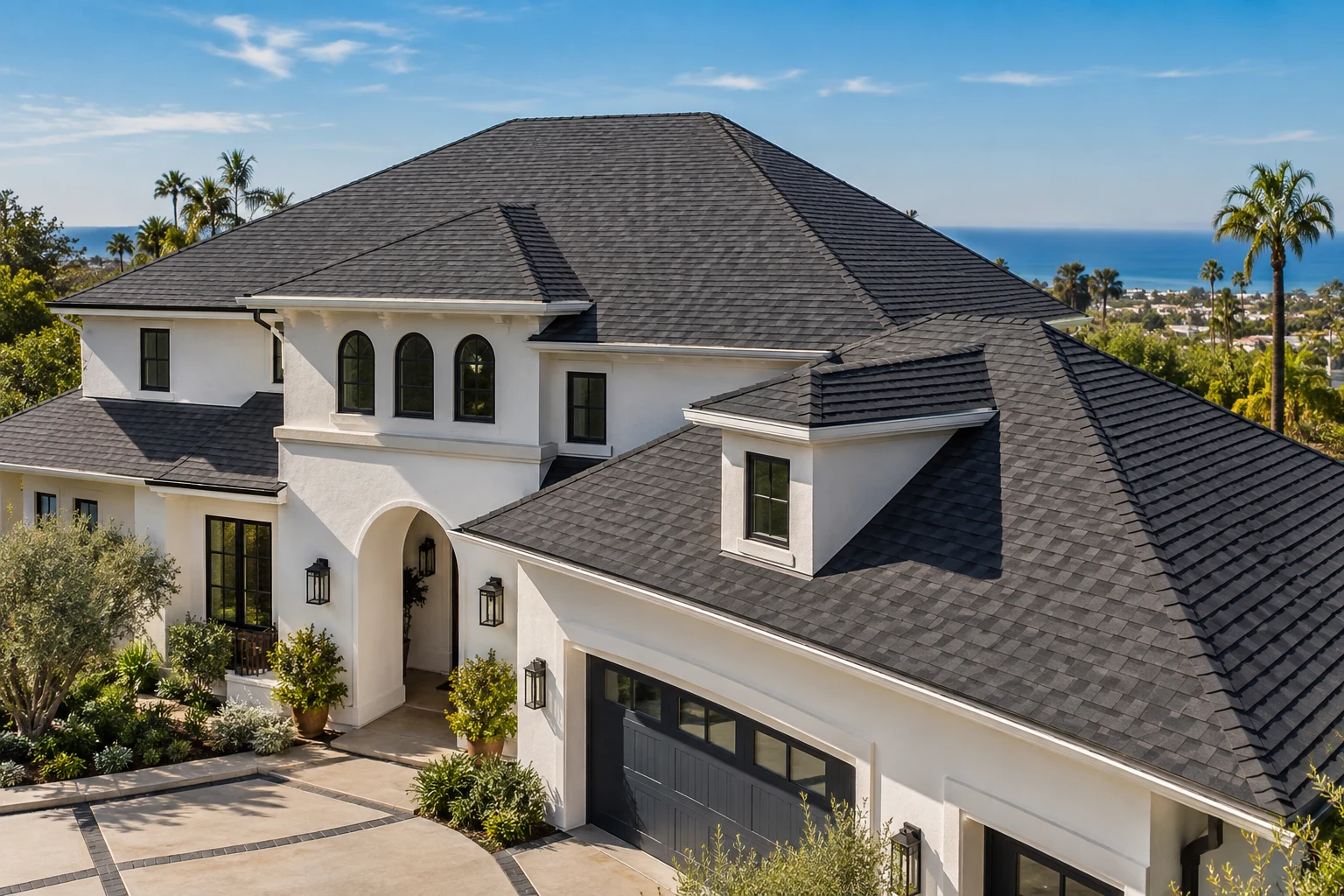
Roof replacement in Corona is handled by licensed roofing contractors who understand full roofing systems—not just shingles or tiles. At All Star Roof Replacement, we replace complete roof systems by identifying the real cause of failure, not just what’s visible on the surface.
If your roof is leaking, overheating your home, or nearing the end of its lifespan, the issue is usually deeper than what you can see. The right contractor doesn’t just swap materials—they diagnose why the system failed in the first place and rebuild it correctly.
What “Replacing a Roof” Actually Means
Replacing a roof is not about putting on new shingles or tiles. It means removing the existing system down to the deck, identifying hidden damage, and rebuilding everything so it works as one system again.
A proper roof replacement includes underlayment, flashing, ventilation, and structural inspection—not just surface materials. That’s where most problems are either solved or missed.
In homes across Corona, we often see roofs that look fine from the street but are already failing underneath. Tiles may still be intact, but the underlayment below has become brittle from years of heat exposure.
That’s why a full system evaluation matters. Without it, you’re guessing—and guessing is how roofing problems come back.
If you’re trying to understand how this applies locally, this Corona roofing service area overview breaks down how roofing systems are evaluated in this area.
Why Roof Replacement Is So Common in Corona
Corona is a tough environment for roofs. The combination of inland heat, strong UV exposure, and seasonal wind creates stress that breaks down roofing systems faster than most homeowners expect.
The main reason roofs fail here is thermal cycling—extreme heat during the day followed by rapid cooling at night. That constant expansion and contraction weakens materials over time.
In Corona, roof surface temperatures can exceed 150°F during summer. That level of heat dries out underlayment, cracks sealants, and causes shingles to lose flexibility.
Santa Ana winds add another layer of stress. Even if you don’t see missing shingles or tiles, wind can break the adhesive seals that hold materials in place.
A common issue during inspections is “lifted but reset” shingles—where wind has broken the seal, but the shingle falls back into place. It looks normal, but it’s no longer protecting your home.
That’s why roofs in Corona often fail from underneath or during the next rainstorm—not at the moment damage occurs.
What Happens When You Wait Too Long
Roofing problems don’t stay the same—they spread. What starts as minor deterioration turns into structural damage if the system is left in place too long.
If your roof is already showing signs of failure, delaying replacement usually increases the total cost—not just the urgency.
Here’s what we see when homeowners wait:
- Leaks that move through insulation and framing before becoming visible
- Rotting roof decking that requires structural repair
- Ventilation failure that traps heat and drives up energy bills
- Repeated patch repairs that don’t address the root problem
Many homeowners don’t realize that by the time a leak shows inside, the damage has already been developing for months—or longer.
In Corona homes, especially those built between the 1980s and early 2000s, it’s common for original roofing systems to reach full failure around the 20–25 year mark due to heat exposure alone.
If you’re unsure whether you’re at that point, this page explains how to evaluate whether your roof needs repair or full replacement based on system condition—not guesswork.
Surface Problems vs. System Failure
Most roofing issues don’t start where you can see them. Surface damage is usually just a symptom of deeper failure.
If you’re seeing cracked tiles, curling shingles, or small leaks, the real issue is often underneath—failed underlayment, poor ventilation, or aging materials that can’t handle the climate anymore.
Roofing problems in Corona are rarely isolated. Heat, UV, and wind affect the entire system—not just one section.
In homes across Corona, we often find that “problem areas” are just the first visible signs of a much larger issue affecting the whole roof.
That’s why partial fixes don’t last. You’re treating symptoms, not solving the cause.
How a Qualified Contractor Approaches Replacement
A contractor replacing roofs in Corona should start with evaluation—not a quote. If they’re recommending materials before inspecting the system, they’re skipping the most important step.
The right process begins with identifying why the current roof failed.
At All Star Roof Replacement, that means:
- Reviewing satellite measurements to understand roof layout and complexity
- Performing a visual inspection of key stress points
- Checking ventilation and heat buildup patterns
- Identifying signs of underlayment and decking failure
Only after that do you talk about replacement.
A proper replacement plan is built around your specific roof—not a standard package. Every home in Corona has different exposure to sun, wind, and structural conditions.
That’s why there’s no flat pricing and no one-size-fits-all solution.
What Makes Corona Roofs Different From Other Areas
Roofing in Corona is not the same as coastal Southern California. The inland environment changes how materials perform and how systems fail.
The biggest difference is heat retention and intensity. Inland homes absorb more heat and hold it longer, which accelerates aging from both the top and underside of the roof.
Ventilation becomes critical here. Without it, heat builds up in the attic and essentially bakes the roof from below.
A common issue during inspections is inadequate ventilation—especially in older homes that were not built to current energy standards.
This leads to:
- Higher indoor temperatures
- Increased AC usage
- Faster breakdown of roofing materials
Many homeowners assume the problem is insulation or HVAC, when it actually starts at the roof level.
That’s why modern roof replacements in Corona often include ventilation upgrades and “cool roof” compliant materials—not as upgrades, but as necessary corrections.
When Replacement Becomes the Only Real Option
There’s a point where repairs stop making sense. In Corona, that usually happens when the system as a whole has aged past its performance limit.
If more than a portion of the roof is compromised—or if the underlayment has failed—replacement is the only way to restore full protection.
Tile roofs are a good example. Many homeowners think they still have years left because the tiles look fine.
In reality, the waterproof layer underneath is often worn out after 20–30 years, even if the tiles are still intact.
That’s why leaks show up “randomly” in tile roofs. The system underneath is no longer doing its job.
Replacing the system resets the lifespan of the entire roof—not just the visible surface.
This is where working with a contractor who focuses on full replacement—not patchwork—makes a difference. The goal is to solve the problem once, not manage it over time.
FAQs
FAQ: Who should I call to replace a roof in Corona?
You should call a residential roof replacement contractor who evaluates the full roofing system, not just the surface materials. In Corona, that means working with a company that understands heat, wind exposure, and how underlayment and ventilation perform over time.
All Star Roof Replacement provides full-system evaluations and clear recommendations based on actual roof condition. If you are searching for roof replacement in Corona, a roofing contractor near Corona, or a roof replacement installer in Corona, the goal is to get a real inspection before making any decisions.
FAQ: How much does roof replacement cost in Corona?
Roof replacement cost in Corona depends entirely on the specific roof—there is no reliable flat price without an inspection. Factors like size, slope, access, material type, number of layers, and the condition of decking and underlayment all affect the final cost.
In many Corona homes, hidden issues such as brittle underlayment or heat-damaged components are only discovered after tear-off. A proper estimate—like those provided for roof replacement cost in Corona—should outline a clear scope of work, not just a number. You can also review roof replacement cost per square and options for financing a roof replacement.
FAQ: How long does roof replacement take in Corona?
Most roof replacements in Corona take a few days for the actual installation, but the full timeline can extend depending on complexity, permits, and inspections. Larger or more detailed roofs may take longer, especially if structural repairs are needed.
Speed should never come at the expense of proper installation. Tear-off, decking checks, underlayment, ventilation, and flashing details all need to be done correctly. You can learn more about timing through roof replacement timeline in Corona and the full roof replacement process.
FAQ: Should I repair or replace my roof?
It depends on the condition of the roof system, not just one visible issue. If the roof is older, has multiple leak areas, or repairs keep failing, replacement is usually the more practical long-term option.
In homes across Corona, we often see repeat leaks caused by worn-out underlayment beneath tile or shingles that still look acceptable from the outside. If you’re unsure, reviewing repair or replace your roof, what to do about a roof leak, and signs you need a new roof can help clarify when repairs stop making sense.
FAQ: How long should a roof last in Corona?
Roof lifespan in Corona depends on material, installation quality, ventilation, and exposure to heat and UV. Many roofs show system-level wear before the surface material looks fully worn out.
A common issue during inspections is underlayment failure on tile roofs around the 20–30 year mark, even when the tiles themselves are still intact. You can explore roof lifespan in Corona and how different roofing materials perform in local conditions, including cool roof options designed for heat exposure.
FAQ: What roofing material is best for homes in Corona?
The best roofing material depends on your home’s structure, budget, and how the full roof system is designed—not just the surface layer. Tile and shingles are both common in Corona, but performance comes down to installation and ventilation.
Material choice should also consider heat reflectivity and energy performance. Reviewing best roofing materials in Corona, tile vs shingle roof, and energy efficient roofing in Corona can help you understand what works best for your situation.
FAQ: Can a new roof help with heat and high energy bills?
Yes, a new roof can help reduce heat buildup when the system includes proper ventilation, underlayment, and energy-efficient materials. However, roofing is one part of overall home performance.
In Corona’s inland climate, attic heat is a common issue, especially in older roofs with poor ventilation. Upgrading the system can improve comfort and reduce cooling strain. Learn more about energy efficient roofing, how to reduce heat with roofing, and cool roof options in Corona.
Schedule a Roof Replacement Evaluation in Corona
All Star Roof Replacement helps homeowners in Corona understand what’s actually happening with their roof and what the right next step looks like.
Every evaluation includes a full-system review—looking at underlayment, ventilation, decking, and installation details—not just the surface. You get clear findings, photo documentation, and straightforward answers so you can decide whether repair or replacement actually makes sense.
Call: (310) 729-3013
Email: teamallstarconstruction@gmail.com
Contact: Request an estimate
You can also learn more about what happens during roof replacement, what to expect from a roof inspection before replacement, and how to get clear roof replacement pricing.
Licensed • Insured • Owens Corning Preferred Contractor • CA License #1009760