
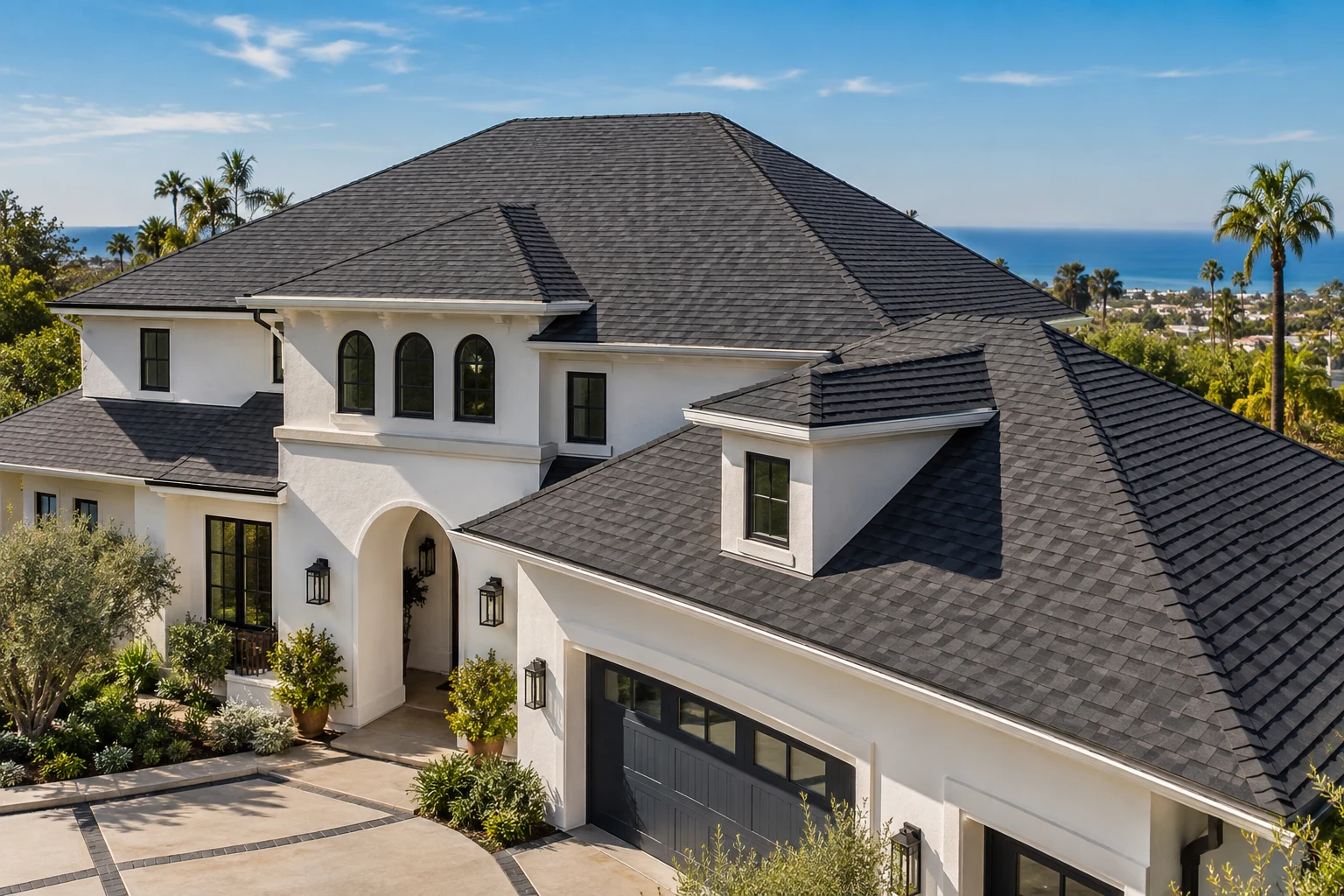
A roof replacement in Corona is a step-by-step process that goes far beyond removing old shingles or tiles. It involves inspecting the full system, replacing worn components underneath, and installing a new roof built to handle heat, UV exposure, and wind.
At All Star Roof Replacement, we focus on complete residential roof replacement. If you’re researching roof replacement in Corona, this page walks you through exactly what happens and what to expect.
What to Expect During a Roof Replacement in Corona
A roof replacement starts with a full inspection, not a guess from the street. In homes across Corona, we often see roofs that look fine from the outside but have worn underlayment, failing flashing, or ventilation issues underneath.
The process includes inspection, estimate, material selection, permits, tear-off, deck inspection, underlayment installation, ventilation upgrades, final roofing installation, and inspection. If you’re wondering about how long roof replacement takes in Corona, the physical work may take a few days, but planning and approvals can extend the timeline.
In Corona, heat and Santa Ana winds make installation quality just as important as materials. Choosing an experienced roof replacement installer in Corona directly affects how the roof performs over time.
The Corona Roof Replacement Process
A typical Corona roof replacement includes inspection, estimate, material selection, permitting, tear-off, deck inspection, underlayment and flashing installation, ventilation setup, final roofing installation, cleanup, and inspection.
This is a system, not just a surface upgrade. Many homeowners don’t realize the most important work happens after the old roof is removed. If you’re comparing options, it helps to understand the full roof replacement process before making decisions.
Before work begins, a roof inspection for replacement helps determine what is actually failing and why tear-off matters.
Why the Process Matters More in Corona
Corona roofs deal with intense sun, inland heat, and seasonal winds. These conditions break down roofing materials faster than many homeowners expect.
In homes across Corona, we often see dried-out underlayment, brittle shingles, and cracked sealants caused by constant UV exposure. Wind uplift during Santa Ana conditions can loosen shingles or shift tiles, even if they settle back into place afterward.
Proper ventilation also matters. Without it, heat builds up in the attic and shortens roof life. Upgrading to energy-efficient roofing in Corona or exploring cool roof options in Corona can help reduce heat load.
The short version: Corona’s climate exposes weak installations quickly. A complete system approach prevents repeat issues.
What Happens If an Aging Roof Is Ignored
Delaying replacement often leads to more than just a leak. Water can travel through the roof structure before showing inside the home.
A common issue during inspections is soft or rotted decking caused by long-term moisture exposure. Many homeowners also discover insulation damage, attic mold, or repeated ceiling stains during winter rain.
If you’re unsure whether to act, reviewing repair or replace your roof can help clarify next steps.
The key point: repeated repairs on an aging system usually indicate the underlying structure is wearing out.
Step-by-Step Roof Replacement Process in Corona
The process follows a clear sequence, but each step matters because it affects long-term performance.
Step | What Happens | Why It Matters in Corona
Inspection | Evaluate full roof system | Finds heat, wind, and age-related damage
Estimate | Define scope and materials | Prevents missing system components
Permits/HOA | Obtain approvals | Required in many neighborhoods
Tear-Off | Remove existing roof | Reveals hidden issues
Dry-In | Install underlayment and flashing | Protects against rain and wind
Installation | Install new roofing system | Ensures durability in harsh conditions
Final Inspection | Review and close out project | Confirms proper installation
For a broader overview, you can review the roof replacement timeline and how each step fits together.
Step 1: Roof Inspection and Evaluation
The process starts with a detailed inspection of the roof system. This includes materials, flashing, valleys, penetrations, and attic conditions where accessible.
In homes across Corona, we often find issues like lifted shingles, aging tile underlayment, and poor ventilation. Reviewing signs you need a new roof can help you identify early warning signs.
The goal is simple: understand what is failing and why before planning replacement.
Step 2: Estimate and Material Selection
The estimate outlines the full scope of work, including tear-off, underlayment, flashing, ventilation, and materials. It should not be limited to surface products.
Material choice depends on budget, HOA rules, and performance needs. Many homeowners compare tile vs shingle roof in Corona or explore roofing material options.
Costs vary based on size, slope, and condition. A proper roof replacement cost in Corona estimate comes after inspection.
Step 3: Permits, HOA, and Scheduling
Before installation begins, permits are obtained and HOA approvals are handled if required. This step often takes longer than the actual installation.
In many Corona neighborhoods, HOA approval affects materials, colors, and timing. Working with a local roofing contractor in Corona helps keep this process organized.
Scheduling also accounts for weather, material delivery, and crew availability.
Step 4: Tear-Off and Deck Inspection
The existing roof is removed down to the deck. This exposes the structure and reveals hidden damage.
A common issue during tear-off is deteriorated wood caused by long-term leaks. This is why why tear-off matters—it allows problems to be fixed instead of covered.
This step determines the true condition of the roof system.
Step 5: Underlayment, Flashing, and Dry-In
Once the deck is prepared, underlayment and flashing are installed to create a water-resistant barrier.
Many homeowners don’t realize leaks often come from flashing failures, not just shingles or tiles. Understanding why roofs leak helps explain why this step matters.
This is where long-term protection is built into the system.
Step 6: Ventilation and Energy Efficiency
Ventilation is adjusted to allow proper airflow through the attic. This reduces heat buildup and helps extend roof life.
In Corona’s climate, improving ventilation can reduce attic temperatures. Many homeowners look into ways to reduce heat with roofing during replacement.
This step improves both comfort and performance.
Step 7: Roof Installation
The final roofing material is installed based on manufacturer specifications and local code requirements.
Whether using shingles or tile, proper fastening is critical in wind-prone areas. Reviewing best roofing materials in Corona helps align product choice with conditions.
The installation stage determines how well the roof performs under real conditions.
Step 8: Cleanup, Inspection, and Warranty
After installation, the site is cleaned, debris is removed, and final inspections are completed.
Homeowners receive details about coverage, including material and workmanship protection. It helps to understand your roof replacement warranty before closing out the project.
This step confirms the job is complete and meets expectations.
Should You Replace Your Roof or Keep Repairing?
If your roof is older, leaking repeatedly, or showing widespread wear, replacement is usually the better long-term solution.
In homes across Corona, we often see homeowners continue repairs long after the system has reached the end of its life. Reviewing how long roofs last in Corona helps put this into perspective.
If you’re unsure, start with an evaluation. Replacement makes sense when issues are no longer isolated.
FAQs About the Roof Replacement Process in Corona
How long does a roof replacement take in Corona?
The installation itself may take a few days, but the full process can take longer due to permits, HOA approvals, and scheduling.
How much does roof replacement cost in Corona?
Cost depends on size, materials, roof condition, and complexity. A proper estimate requires inspection of the full system.
Should I repair or replace my roof?
If issues are widespread or recurring, replacement is usually more practical than continued repairs.
How long does a roof last in Corona?
Shingle roofs often last 20–30 years in this climate, while tile lasts longer but may require underlayment replacement sooner.
What materials work best in Corona?
Common options include shingles, concrete tile, clay tile, and cool roof systems, depending on the home and HOA requirements.
Do I need a cool roof?
Cool roof materials may be required or recommended to help manage heat and meet energy standards.
Will replacement include underlayment and flashing?
Yes, a proper roof replacement addresses all system components, not just the surface material.
Schedule a Roof Replacement Estimate in Corona
If your roof is aging, leaking, or you are dealing with repeat repairs, the next step is a clear evaluation.
All Star Roof Replacement will inspect your roof system, explain what is happening, and walk you through the full replacement process. You can also explore Corona roofing contractor options or review roof replacement financing options if budget is part of the decision.
Call (310) 729-3013 or email teamallstarconstruction@gmail.com to request a roof replacement estimate for your Corona home.
Every roof is different. The goal is to give you clear answers so you can make the right decision for your home.