
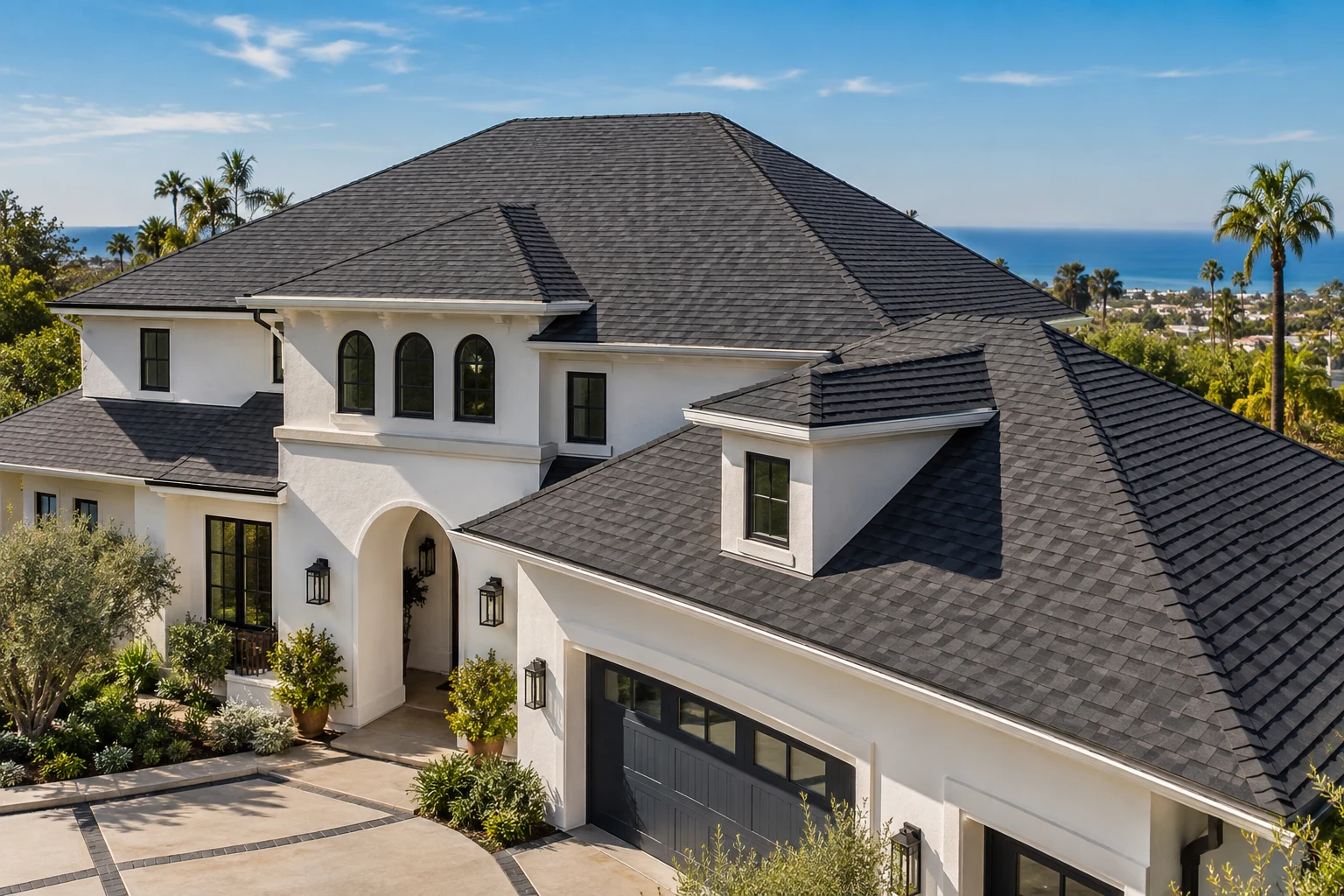
Most roof replacements in Corona take a few working days once installation begins, but the full process usually takes several weeks when you include permits, HOA approval, material selection, and inspections. At All Star Roof Replacement, we walk homeowners through the entire timeline so there are no surprises—before, during, or after the roof work.
If you’re planning a roof replacement in Corona, it helps to separate the timeline into two parts: preparation and installation. The work on your roof is often the shortest phase—the planning is what takes time.
How Long Roof Replacement Takes in Corona
For many homes, the physical installation takes about 1–3 days for asphalt shingles. Tile roofs, complex layouts, or homes with decking damage can take longer. The full project—from inspection to final sign-off—often spans a few weeks.
The reason is simple: a roof replacement is not just installing new shingles or tiles. It involves the full roofing system—decking, underlayment, flashing, ventilation, and drainage—all of which must be approved, installed correctly, and inspected.
To understand what happens step-by-step, you can review the roof replacement process in Corona. Most delays happen before installation even begins.
Phase | What Happens | Timeline Impact
Inspection | Roof evaluated and measured | Roof size, condition
HOA & Permits | Approvals and paperwork | HOA rules, city scheduling
Material Ordering | Shingles or tile selected | Availability, color matching
Tear-Off | Old roof removed | Roof type, layers
Dry-In | Decking + underlayment installed | Hidden damage
Installation | New roofing system installed | Material type, layout
Final Inspection | Cleanup and sign-off | Inspector availability
The Install Is Usually Faster Than the Full Project
Once everything is approved and scheduled, most roofs move quickly. In many Corona homes, the actual roofing work is completed in just a few days.
What takes longer is everything leading up to that point—HOA review, permits, and material coordination. This is especially common in neighborhoods with tile roofing standards or strict exterior guidelines.
Many homeowners searching for a roofing contractor near me in Corona expect the timeline to start when crews arrive. In reality, the project starts weeks earlier behind the scenes.
Why Roof Replacement Can Take Longer in Corona
In homes across Corona, we often see timelines extended by HOA approvals, especially in communities with specific tile profiles or color requirements. This step alone can add days or weeks depending on the association.
Climate also plays a role. Inland Empire heat and UV exposure break down underlayment, sealants, and flashing over time. Once the roof is opened, additional work may be needed to address what’s underneath.
Santa Ana winds also affect installation details. Proper fastening, edge work, and ridge installation matter here, and rushing through those steps can lead to problems later. That’s why a fast timeline isn’t always the right timeline.
If you’re considering materials, it helps to review roofing materials for Corona homes early, since availability and approval can affect scheduling.
What Delays Can Lead To If the Roof Is Already Failing
If your roof is already leaking or aging out, delays can increase the scope of work. In Corona, heat-dried shingles and brittle underlayment often fail suddenly during seasonal weather changes.
A common issue during inspections is damage that extends beyond the visible leak—into decking, fascia, or attic insulation. Waiting too long can turn a straightforward replacement into a larger project.
If you’re unsure whether to wait or move forward, this guide on whether to repair or replace your roof can help clarify the decision.
Step-by-Step Roof Replacement Timeline in Corona
Every project follows a similar structure, but timing varies based on approvals, materials, and roof condition. Here’s what to expect from start to finish.
Phase 1: Inspection, Measurements, and Scope Review
The process starts with a full roof evaluation. Measurements are taken, materials are identified, and problem areas are reviewed.
Many homeowners don’t realize that surface appearance doesn’t tell the whole story. Ventilation, flashing, and underlayment condition are just as important.
If you’re planning ahead, a roof inspection for replacement helps define scope early and avoid surprises later.
Phase 2: Material Selection, HOA Review, and Permits
This phase often takes the longest. You’ll choose materials, submit HOA documents if required, and secure permits.
In Corona, tile communities often require approved profiles and colors. Shingle roofs may need to meet cool roof requirements in Corona under Title 24.
Starting HOA approval early can significantly reduce delays later.
Phase 3: Scheduling, Material Delivery, and Site Preparation
Once approvals are complete, the project is scheduled and materials are delivered. Crews prepare the site and coordinate access.
Homeowners should clear driveways, secure outdoor items, and expect noise during installation. Preparation helps keep the timeline on track.
Phase 4: Tear-Off and Decking Inspection
The old roof is removed, exposing the decking underneath. This is where hidden issues are often discovered.
In older Corona homes, it’s common to find brittle underlayment or soft decking once materials are removed. Any damaged wood must be replaced before moving forward.
This step is critical—installing a new roof over a compromised deck leads to long-term problems.
Phase 5: Dry-In, Underlayment, Flashing, and Ventilation
Once the deck is ready, the waterproofing system is installed. This includes underlayment, flashing, and ventilation improvements.
Many homeowners don’t realize the visible roof covering is only part of the system. The layers underneath are what prevent leaks.
Ventilation upgrades are often addressed here. You can learn more about energy-efficient roofing in Corona if heat buildup has been an issue.
Phase 6: Roofing Material Installation
This is when shingles or tiles are installed. Shingle roofs typically move faster, while tile requires more layout and detail work.
Installation quality matters more than speed. Proper fastening, flashing integration, and ridge work all affect performance in Corona’s heat and wind conditions.
Phase 7: Cleanup, Final Walkthrough, and Inspection
After installation, the site is cleaned, debris is removed, and final details are checked. A city inspection may be required before completion.
You should receive documentation of the work, including warranty details and any decking repairs completed. For more on coverage, review roof warranty coverage.
What Affects Your Roof Replacement Timeline
No two roofs follow the exact same schedule. The timeline depends on size, pitch, access, materials, and condition.
Larger or steeper roofs take longer. Tile roofs usually take more time than shingles. Limited access can slow staging and cleanup.
In Corona, older roofs often reveal more work during tear-off due to long-term heat exposure. You can see how aging affects timing by reviewing how long roofs last in Corona.
Shingle vs Tile Timeline Differences
Shingle roofs are generally faster to install. Tile roofs require more labor, especially when underlayment replacement is involved.
Many tile roofs in Corona look fine from the outside but have failing waterproofing underneath. That adds time but is necessary for a proper replacement.
Repair vs Replacement Timing
If your roof has isolated damage, repairs may hold for a while. But if problems are widespread, replacement is usually more efficient.
Multiple leaks, aging materials, and high attic heat are signs the system is wearing out. Waiting often leads to more extensive work later.
FAQs About Roof Replacement Timeline in Corona
How long does roof replacement take in Corona?
Installation may take a few days, but the full process often takes several weeks including approvals, permits, and inspections.
Why does HOA approval affect the timeline?
HOAs may require review of materials, colors, and documents before work can begin, which can extend the schedule.
Can delays happen after tear-off?
Yes. Hidden damage like rotted decking or failed flashing may need to be repaired before installation continues.
Is shingle or tile faster?
Shingle roofs are typically faster. Tile roofs take longer due to underlayment work and installation complexity.
Should I repair or replace?
If the roof is older or failing in multiple areas, replacement is usually the better long-term option.
How long should a roof last in Corona?
Shingles often last a couple of decades, while tile lasts longer—but the underlayment beneath it may need replacement sooner.
Can a new roof improve energy efficiency?
Yes. Proper ventilation and reflective materials can help reduce attic heat and improve overall efficiency.
Get a Clear Roof Replacement Timeline for Your Corona Home
If your roof is aging, leaking, or becoming harder to maintain, All Star Roof Replacement can walk you through the full timeline—from inspection to final inspection—with clear expectations.
Every home is different. We’ll evaluate your roof, explain what’s needed, and outline a realistic schedule based on your materials, HOA requirements, and roof condition.
Call (310) 729-3013 or email teamallstarconstruction@gmail.com to schedule your roof replacement estimate. You can also learn more about working with a roof replacement installer in Corona or explore roof replacement financing options if you’re planning ahead.