
Prices and performance figures in this guide are planning examples, not a project quote or a promise of savings. Your estimate and results depend on the products, installation scope, existing home, climate, and energy use.
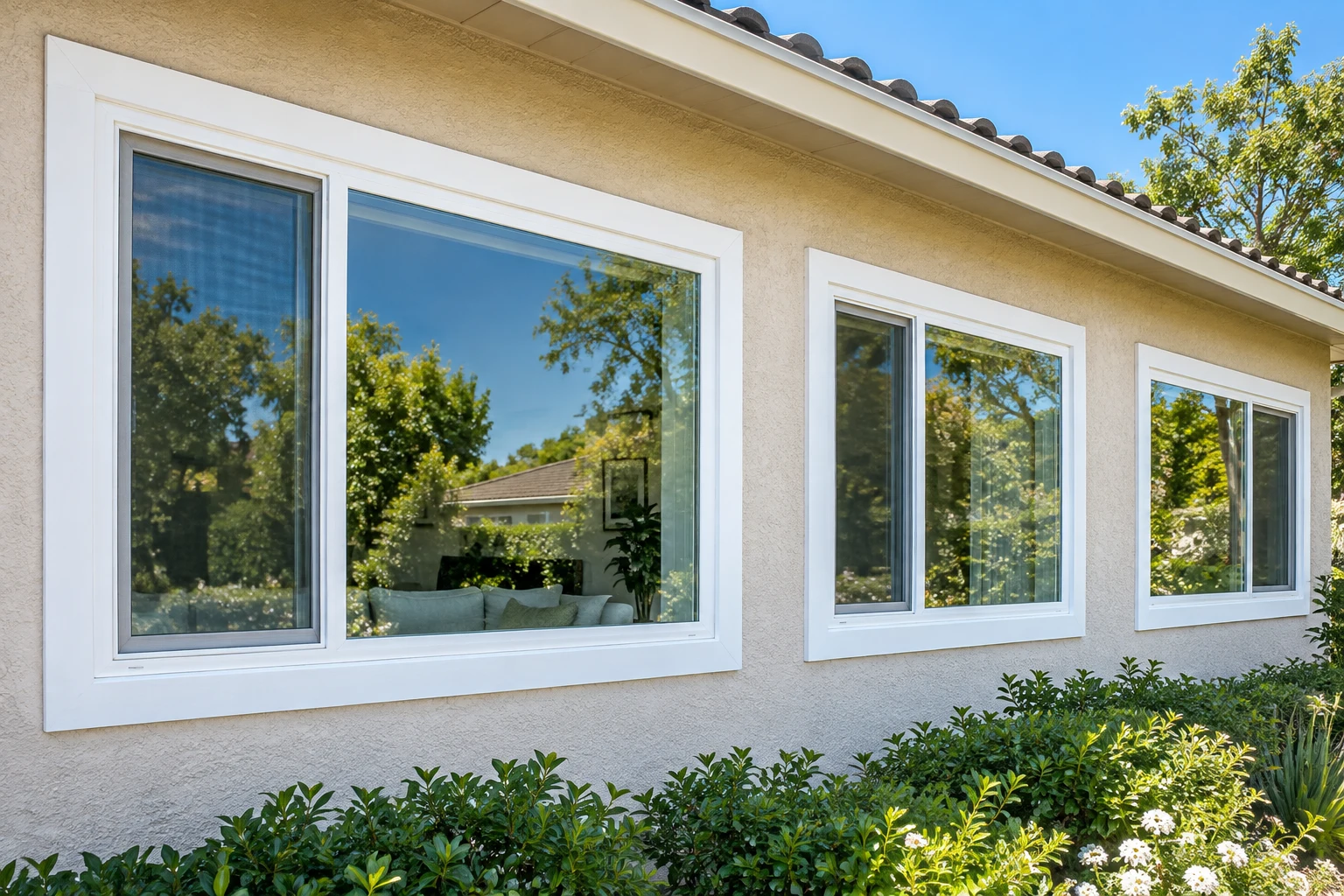
The best windows for homes in Corona are dual-pane, Low-E glass windows designed to reduce solar heat gain and keep indoor temperatures stable. In a hot inland climate like Corona, the goal is simple: stop heat from entering through the glass before it builds up inside your home.
At Total Home Windows, we see this every day. Homeowners call because their house feels hot even with the AC running, and the issue often traces back to the windows—not the HVAC system. If your home struggles to stay cool, the type of window you have plays a major role in comfort and energy use.
Corona’s climate makes window performance more important than appearance. With long summers, strong sun exposure, and rising energy costs, inefficient windows allow heat to pour in throughout the day. If you are starting to explore solutions, it helps to understand how window replacement in Corona actually solves these problems at the source.
Why Window Type Matters More in Corona Than You Think
Corona is an inland city with high summer temperatures, intense sunlight, and very little coastal cooling. That combination puts constant pressure on your home—especially your windows.
A common issue we find in homes across Corona is that rooms with direct sun exposure—especially west-facing rooms—heat up quickly in the afternoon and stay warm well into the evening.
Answer: The wrong window type allows solar heat to pass through the glass, raising indoor temperatures even when your AC is running.
Many homes in Corona were built decades ago with single-pane glass or early dual-pane systems that no longer perform well. Over time, seals break down, coatings wear off, and frames lose efficiency. What you end up with is a window that looks fine—but acts like a heat entry point.
That is why choosing the right window is not about style. It is about controlling heat.
The Best Windows for Corona Focus on Heat Control First
In a climate like Corona, the best windows are designed to block heat, not just insulate. This is where many homeowners get it wrong—they focus on thickness or brand instead of actual performance.
Answer: The best windows for Corona reduce solar heat gain, improve insulation, and stay sealed over time.
There are a few key features that matter most:
- Low-E glass coatings to reflect heat away from your home
- Dual-pane construction for improved insulation
- Low solar heat gain coefficient (SHGC) to limit heat entry
- Proper installation to prevent air leaks and performance loss
Without these features working together, even a “new” window can still let in too much heat.
If your home already feels uncomfortable, you may recognize the symptoms explained on our house hot even with AC in Corona page.
Low-E Glass Is One of the Most Important Upgrades
Low-E glass is one of the most effective ways to reduce heat in Corona homes. It uses a microscopic coating that reflects infrared heat while still allowing visible light to pass through.
Answer: Low-E windows help keep your home cooler by blocking heat from the sun without making your rooms dark.
In practical terms, this means:
- Less heat buildup during the day
- More consistent indoor temperatures
- Reduced strain on your AC system
- Better protection for floors and furniture from UV exposure
In homes across Corona, we often see older windows without any heat-reflective coating. These windows allow sunlight to pass through almost unfiltered, turning rooms into heat traps by mid-afternoon.
To understand how this works in more detail, visit our page on Low-E windows in Corona.
Dual-Pane Windows Are the Standard for This Climate
Dual-pane windows are typically the best balance of performance and practicality for Corona homes. They use two layers of glass with an insulating space between them, reducing heat transfer compared to single-pane windows.
Answer: Dual-pane windows significantly reduce heat transfer and are the most common upgrade for improving comfort in Corona.
If your home still has single-pane windows, they are one of the biggest contributors to indoor heat problems. These older windows provide almost no insulation and allow outside temperatures to directly affect your living space.
Upgrading to dual-pane windows helps:
- Reduce heat entering through the glass
- Improve insulation and comfort
- Lower energy usage over time
- Create more stable indoor temperatures
Triple-pane windows are sometimes considered, but in Southern California, they are not always necessary. The priority is controlling solar heat gain—not just adding more layers of glass.
Window Material Matters Less Than Glass Performance
Many homeowners ask whether vinyl or fiberglass windows are better. The truth is, in Corona’s climate, the glass package matters more than the frame material.
Answer: A high-quality glass system with Low-E coating will have a bigger impact on comfort than the frame type alone.
That said, material still plays a role:
- Vinyl windows are cost-effective, energy-efficient, and low maintenance
- Fiberglass windows offer stronger durability and better stability in extreme heat
In homes across Corona, we often recommend vinyl for homeowners looking for strong performance at a reasonable cost, while fiberglass may be a better fit for larger openings or long-term durability.
But regardless of material, the wrong glass will still allow heat in. That is why evaluation matters more than assumption.
Sun Exposure in Corona Changes What “Best” Means
Not all windows in your home perform the same. Directional exposure plays a major role in how much heat enters your space.
Answer: West- and south-facing windows in Corona require stronger heat-blocking performance than shaded or north-facing windows.
For example:
- West-facing windows receive intense afternoon sun and often cause the most overheating
- South-facing windows get consistent sun throughout the day
- East-facing windows bring in morning heat, which is usually less intense
- North-facing windows receive minimal direct sunlight
A common issue we find is homeowners replacing all windows with the same product, without considering sun exposure. That can lead to uneven results—some rooms improve, others stay hot.
This is exactly why Total Home Windows measures heat at the window level before making recommendations. We identify which windows are causing the biggest problems and match the solution to the actual conditions inside your home.
In many cases, the “best window” is not a single product—it is the right combination of glass performance, placement, and installation.
Installation Quality Matters More Than Most Homeowners Expect
Even the best-performing window will not solve heat problems if it is installed incorrectly. In Corona, where temperatures stay high for long stretches, small installation issues quickly turn into noticeable comfort problems.
Answer: Poor installation allows heat and air to bypass the window system, reducing or completely negating energy efficiency gains.
At Total Home Windows, we regularly inspect homes where “new” windows were installed, but rooms still feel hot. In many of these cases, the issue is not the glass—it is the installation.
Common problems include:
- Gaps between the frame and wall that let hot air seep in
- Improper sealing that weakens insulation
- Frames installed out of square, reducing long-term performance
- Missed insulation around the window opening
We do not rely on assumptions. We measure where heat is entering and show you exactly how your current windows are performing before recommending any solution.
Retrofit vs Full-Frame Replacement in Corona Homes
Choosing the right installation method can directly impact how well your new windows perform.
Answer: Full-frame replacement provides the most complete heat control, while retrofit installation works when existing frames are still in good condition.
Retrofit installation keeps the existing frame and inserts a new window inside it. This is faster and more cost-effective, but it depends heavily on the condition of the original frame.
Full-frame replacement removes everything down to the rough opening. This allows for proper insulation, sealing, and correction of any hidden issues.
In Corona, many older homes benefit more from full-frame replacement—especially if the original windows are decades old or if there are existing air leaks.
If you are evaluating your options, it helps to start with a full overview of window replacement in Corona and how different installation methods affect performance.
How Much Difference the Right Windows Actually Make
When windows are properly selected and installed, the change in comfort is usually noticeable within days.
Answer: The right windows reduce heat buildup, stabilize indoor temperatures, and lower the workload on your AC system.
Homeowners in Corona typically notice:
- Rooms that no longer overheat in the afternoon
- Less temperature difference between rooms
- Reduced glare and direct sun intensity
- More consistent cooling throughout the home
One pattern we consistently see: west-facing rooms that were previously unusable during the afternoon become comfortable again after upgrading to proper Low-E, heat-blocking glass.
Another common observation is that AC systems cycle less frequently—not because the unit changed, but because less heat is entering the home in the first place.
What Actually Drives Window Replacement Cost in Corona
Cost is always part of the decision, but it is important to understand what you are paying for.
Answer: Window replacement cost depends on size, glass performance, installation type, and the condition of your existing windows.
In Corona, most homeowners fall within these general ranges:
- $800 to $1,200 per window for standard upgrades
- $10,000 to $25,000+ for full-home replacement
The biggest cost factors include:
- Glass package (standard vs advanced Low-E coatings)
- Frame material (vinyl vs fiberglass)
- Number and size of windows
- Retrofit vs full-frame installation
- Labor complexity and access
What matters most is not just the upfront price—it is whether the windows actually solve the heat problem. Installing lower-cost windows that still allow heat in often leads to continued discomfort and ongoing energy costs.
Common Mistakes Homeowners Make When Choosing Windows
Many homeowners in Corona choose windows based on appearance or brand reputation, rather than performance.
That approach often leads to disappointing results.
- Choosing based on price alone instead of heat-blocking capability
- Ignoring solar heat gain ratings, which directly affect indoor temperature
- Assuming all dual-pane windows perform the same
- Overlooking installation quality
- Replacing all windows with the same glass without considering sun exposure
We often meet homeowners who replaced windows and still deal with hot rooms—because the original problem was never properly identified.
That is why Total Home Windows focuses on measuring heat at the source. We show you which windows are causing the biggest issues and why, so the solution is based on actual conditions—not guesswork.
So What Are the Best Windows for Corona, Really?
When you combine everything—climate, sun exposure, and real-world performance—the answer becomes clearer.
Answer: The best windows for Corona are dual-pane, Low-E glass windows with low solar heat gain, professionally installed and matched to your home’s specific exposure.
In practical terms, that means:
- Low-E coatings designed for heat rejection
- Dual-pane construction for insulation
- Glass packages tailored to sun-facing directions
- Proper sealing and installation
If your main goal is reducing indoor heat, you can also review our guide on the best windows to block heat in Corona to better understand performance differences.
There is no one-size-fits-all window. The best solution is the one that addresses how heat is actually entering your home.
Related Window Answers in Corona
- How much does window replacement cost in Corona?
- Are energy-efficient windows worth it in Corona?
- Dual-pane vs triple-pane windows in Corona
- Signs you need new windows in Corona
Frequently Asked Questions About What Type Of Windows Are Best For Hot Climates in Corona
Are expensive windows always better for heat control?
No. Price does not always reflect performance. The key factor is the glass package—specifically Low-E coatings and solar heat gain control. A properly selected mid-range window can outperform a more expensive option if it is designed for heat reduction.
How long does window replacement take?
Most installations take 1–2 days depending on the number of windows and installation type. Full-frame replacements may take longer, but they often provide better long-term performance in older Corona homes.
Will new windows lower my energy bills?
Yes, but the biggest impact in Corona is improved comfort. Lower energy usage typically follows because your AC does not have to work as hard to maintain temperature.
Do I need to replace all my windows at once?
Not always. If certain windows are causing the majority of heat issues—such as west-facing windows—you can prioritize those first. A proper evaluation will show where upgrades will have the biggest impact.
How do I know if my windows are the problem?
If your home feels hot even with the AC running, especially in specific rooms or during certain times of day, your windows are likely allowing heat in. Measuring heat at the window level provides a clear answer.
Get Your Free Window Replacement Estimate In Corona
If your home in Corona feels hotter than it should, the issue is often not your AC—it is your windows.
Total Home Windows will show you exactly where heat is entering your home and explain what is actually causing the problem. No guesswork. No pressure. Just clear answers based on real measurements.
If you are ready to make your home more comfortable and reduce heat at the source, Total Home Windows is ready to help.
Request Free Estimate
Related Content
Do Windows Help With Noise in Corona
Should I Replace All Windows At Once in Corona
Milgard Vs Andersen Windows in Corona
Vinyl vs Fiberglass Windows in Corona
Best Window Brands in Corona
Window Upgrade ROI in Corona
Helpful Resources for Homeowners
Whether you’re researching energy-efficient windows, looking for ways to reduce heat and noise, or comparing replacement options for an older home, these resources cover some of the most common questions homeowners ask. Browse the articles below for practical guidance and expert insights on choosing the right windows for your home.