
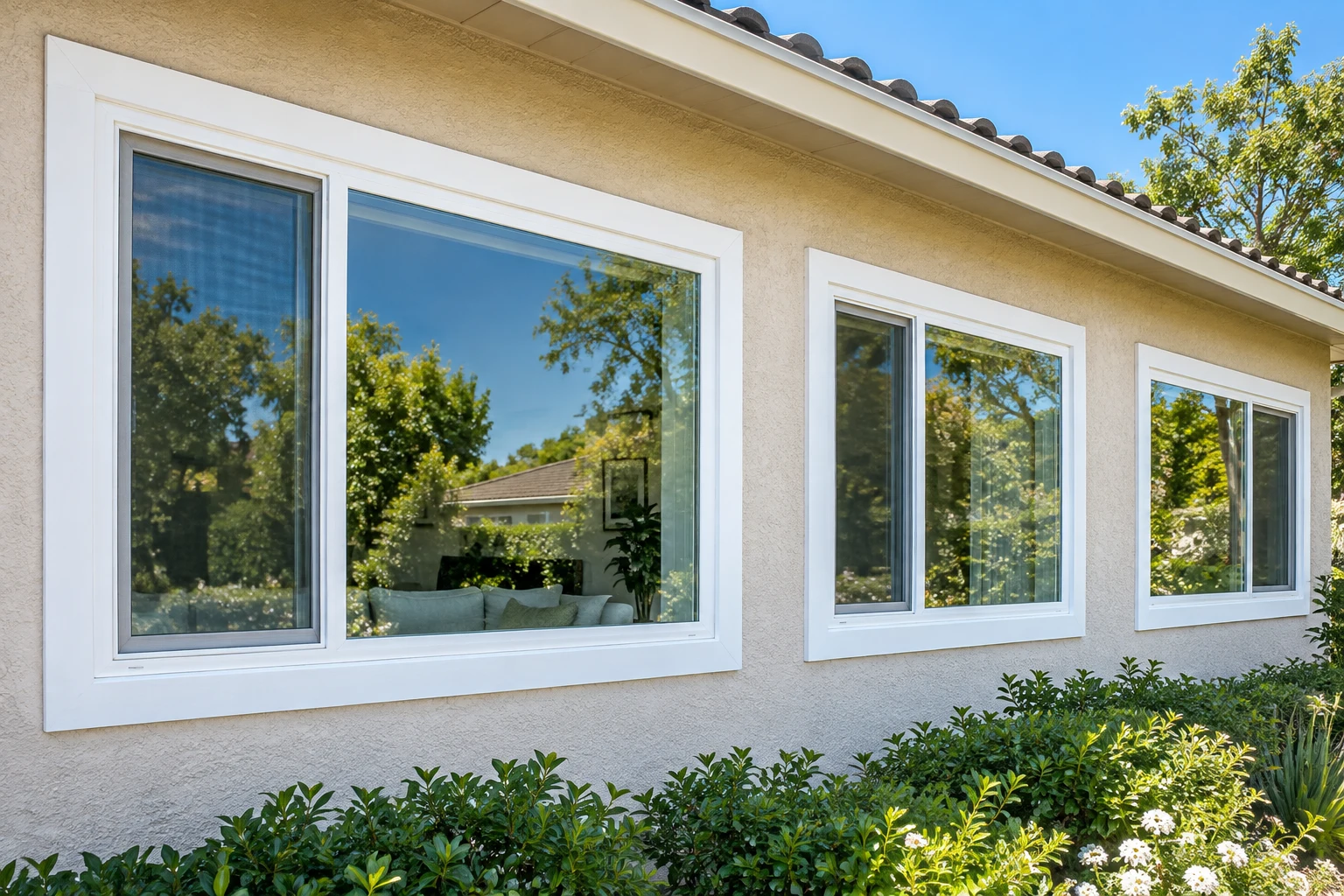
If you’re comparing Milgard vs Andersen windows in Corona, the honest answer is this: both brands can perform well, but neither one solves your problem unless the window is properly selected for heat control and installed correctly. In Corona’s climate, the better choice is the one that reduces heat entering your home—not just the one with the bigger name.
At Total Home Windows, we see this every day. Homeowners aren’t really struggling with “which brand is better.” They’re dealing with homes that stay hot even with the AC running, rising energy bills, and rooms that feel uncomfortable all afternoon. The brand matters—but heat control matters more.
For a broader look at how local homes are affected, visit our main Corona window replacement page.
Milgard vs Andersen: What’s the Real Difference?
Milgard and Andersen are both established window manufacturers, but they differ mainly in materials, product lines, and how homeowners typically use them in replacement projects.
Milgard is widely used across California and offers vinyl, fiberglass, and aluminum windows. Many Corona homeowners consider Milgard because it fits common replacement needs and offers practical options for energy efficiency.
Andersen is a national brand known for its Fibrex composite material and multiple product series. It’s often chosen by homeowners looking for a specific material type or broader design options.
Here’s the simple answer: Milgard gives you more traditional material options like vinyl and fiberglass, while Andersen focuses heavily on composite systems and brand recognition.
But that comparison alone doesn’t tell you which one will actually make your home more comfortable.
Why This Comparison Matters in Corona
Corona isn’t a mild coastal climate. It gets hot—especially in the summer—and that heat hits your windows directly for hours every day.
A common issue we find in homes across Corona is that west-facing and south-facing windows allow significant heat buildup by mid-afternoon. The AC runs constantly, but the temperature never feels balanced.
That’s not an AC problem. It’s a window performance problem.
If your house feels hot even with the system running, you’re likely dealing with solar heat gain through the glass. You can learn more about that here: why homes stay hot even with AC in Corona.
So when comparing Milgard vs Andersen, the real question is: which option actually reduces heat in your specific home?
Corona Homes: Why Older Windows Struggle
Many homes in Corona were built in the 1980s, 90s, or early 2000s. That means a large portion still have older dual-pane windows or even original aluminum frames.
In homes across Corona, we often see:
- Failing seals that reduce insulation
- Glass that allows too much solar heat in
- Frames that transfer heat into the home
- Poor installation from the original build
Here’s the direct answer: older windows were not designed for today’s energy demands or prolonged heat exposure, so they allow more heat in than modern systems.
This is why simply choosing between Milgard and Andersen without evaluating your current window performance can lead to the wrong decision.
Material Differences: What Actually Impacts Heat
When homeowners compare Milgard vs Andersen, they often focus on frame materials. That matters—but not as much as most people think.
Milgard typically offers:
- Vinyl (common, energy-efficient, cost-effective)
- Fiberglass (strong, stable, long-lasting)
- Aluminum (less common for energy-focused upgrades)
Andersen is known for:
- Fibrex composite (a wood-fiber and polymer blend)
- Multiple product series with different performance levels
Here’s the key takeaway: material affects durability and maintenance, but it does not control heat nearly as much as the glass package.
If your goal is to make your home cooler, the glass—not the frame—is doing most of the work.
The Bigger Factor: Glass and Heat Control
This is where most homeowners get it wrong.
They compare Milgard vs Andersen based on brand, price, or frame material—but ignore the one thing that directly affects comfort: how much heat the glass allows into the home.
In Corona, this matters more than almost anywhere else because of direct sun exposure.
The most important feature to look for is Low-E glass with the right solar heat gain performance. You can learn more about how this works here: Low-E windows in Corona.
Here’s the clear answer: a properly selected Low-E glass package can make a bigger difference than choosing between Milgard or Andersen.
That’s why two homeowners can choose different brands—and the one with the better glass setup ends up with the more comfortable home.
Energy Efficiency: Which Brand Performs Better?
Both Milgard and Andersen offer energy-efficient options, but neither brand is automatically more efficient across the board.
Performance depends on:
- The specific product line
- The glass package selected
- Installation quality
- Your home’s orientation to the sun
A common issue we find is homeowners assuming a “premium” brand automatically means better performance. That’s not how it works.
Here’s the direct answer: energy efficiency is determined by the configuration of the window, not just the brand name.
In Corona, the most important metric is how well the window blocks solar heat. That’s what directly affects your comfort and energy usage.
If your goal is lowering bills, see how new windows reduce energy bills in Corona.
Installation Matters More Than Brand
Even the best window will underperform if it’s installed incorrectly.
This is one of the biggest problems we see in Corona homes. Windows may be decent quality, but poor installation creates gaps, air leaks, and heat intrusion.
In homes across Corona, we often see:
- Improper sealing around the frame
- Gaps that allow hot air infiltration
- Misaligned installations that affect performance
- Retrofit jobs that ignore underlying issues
Here’s the simple truth: a properly installed window with the right glass will outperform a higher-end brand installed poorly.
That’s why homeowners researching window replacement in Corona should focus just as much on the installer as the product.
How Total Home Windows Approaches This Comparison
At Total Home Windows, we don’t start with Milgard or Andersen. We start with your home.
We measure how much heat is actually entering through your existing windows. We identify which rooms are affected most. We show you the problem before recommending any product.
Here’s the difference: we don’t guess which brand is better—we demonstrate what your home needs.
Because in Corona, the wrong choice isn’t choosing Milgard over Andersen or vice versa.
The wrong choice is installing windows that don’t solve the heat problem at all.
Price Differences Between Milgard and Andersen in Corona
One of the first things homeowners notice when comparing Milgard vs Andersen is the price difference. In most cases, Andersen windows come at a higher upfront cost, especially across certain product lines and material types.
Milgard is often chosen for its balance between affordability and performance, particularly with vinyl and fiberglass options that fit many Corona homes. Andersen, on the other hand, typically carries a higher price due to its composite materials and broader product lines.
Here’s the direct answer: paying more for a window does not automatically mean your home will be cooler.
We’ve seen homeowners in Corona invest in higher-end windows and still deal with hot rooms—because the glass package wasn’t designed for their sun exposure.
The better investment is the one that reduces heat entering your home, not just the one with the higher price tag.
Real-World Performance in Corona Homes
On paper, both Milgard and Andersen offer energy-efficient options. But real-world performance in Corona depends on how those windows handle direct sunlight.
In homes we evaluate, the biggest complaints are almost always the same:
- Rooms heating up in the afternoon
- AC running constantly without catching up
- Noticeable temperature differences between rooms
Here’s what we consistently find: windows facing west and south are responsible for most of the heat gain.
Direct answer: the brand matters less than whether the window is designed to block solar heat in those specific areas.
This is why two homes with the same brand can have completely different results. One feels comfortable. The other still struggles with heat.
The difference is in how the window was selected—not just what brand was installed.
Which Brand Lasts Longer?
Durability is another factor homeowners consider when choosing between Milgard and Andersen.
Both brands offer long-lasting products when installed correctly, but the material choice plays a role:
- Vinyl (Milgard): Low maintenance, resists moisture, performs well in heat
- Fiberglass (Milgard): Strong, stable, handles temperature swings well
- Fibrex (Andersen): Composite material designed for strength and reduced expansion
Here’s the direct answer: all of these materials can perform well in Corona’s climate if paired with the right glass and proper installation.
From experience, failures we see are rarely due to the brand itself. They’re usually caused by poor installation, aging seals, or windows that were never designed for the level of sun exposure the home receives.
Noise Reduction and Comfort
Some homeowners compare Milgard vs Andersen for noise reduction, especially in busier parts of Corona.
Both brands can reduce outside noise when using dual-pane or upgraded glass systems. But just like heat control, performance depends on the configuration.
Direct answer: noise reduction improves with better sealing and thicker glass—not the brand name.
That said, most homeowners who come to us aren’t primarily concerned about noise. They’re trying to fix comfort issues—specifically heat.
And in Corona, heat control is the bigger problem in most homes.
Common Mistakes Homeowners Make
When choosing between Milgard and Andersen, we see a few patterns that lead to poor results:
- Choosing based on brand reputation alone
- Focusing on frame material instead of glass performance
- Not accounting for sun exposure on specific sides of the home
- Assuming all “energy-efficient” windows perform the same
One of the most common situations we see is a homeowner replacing windows on the entire house with a standard package—only to find that the hottest rooms stay hot.
Why? Because those rooms needed a different glass configuration.
This is where most comparisons between Milgard and Andersen fall short. They don’t account for how your home actually behaves.
Which One Should You Choose?
If you’re trying to decide between Milgard vs Andersen in Corona, here’s the honest answer:
Both brands can be the right choice—and both can be the wrong choice.
It depends on:
- How much heat your current windows are letting in
- Which sides of your home get the most sun
- The glass package selected
- The quality of installation
For many homeowners, Milgard works well because it offers practical, cost-effective options that can be configured correctly for heat control.
For others, Andersen may be a fit depending on material preference and design goals.
But here’s what actually matters: choosing a window that solves your comfort problem.
If your main issue is heat, you need to focus on options specifically designed for that. Learn more about the best windows to block heat in Corona to understand what to look for.
How Total Home Windows Helps You Decide
At Total Home Windows, we approach this differently.
We don’t start by asking which brand you want. We start by measuring what’s happening in your home.
We show you:
- Where heat is entering
- Which windows are underperforming
- How different glass options will change that
From there, we help you choose the right solution—whether that ends up being Milgard, Andersen, or another configuration that fits your home better.
One thing we’ve seen consistently: once homeowners understand where the heat is coming from, the brand decision becomes much clearer.
Because now you’re solving a problem—not just buying a product.
Related Window Answers in Corona
- How much does window replacement cost in Corona?
- Dual pane vs triple pane windows in Corona
- Vinyl vs fiberglass windows in Corona
- How long does window installation take in Corona?
Frequently Asked Questions About Milgard Vs Andersen Windows in Corona
Which is more energy-efficient: Milgard or Andersen?
Neither brand is automatically more efficient. Energy performance depends on the glass package, installation quality, and how the window is configured for your home’s sun exposure.
Is Andersen worth the higher cost?
It can be, depending on your goals and material preference. But if heat reduction is your main concern, proper glass selection will have a bigger impact than the brand itself.
Do Milgard windows perform well in hot climates like Corona?
Yes—when configured correctly. Milgard offers options that work well in hot climates, especially when paired with the right Low-E glass designed to reduce solar heat gain.
How do I know which windows my home actually needs?
You need an in-home evaluation that measures heat at the window level. Without that, you’re making a decision based on assumptions instead of actual performance data.
Does installation really matter that much?
Yes. Even a high-quality window will underperform if it’s installed incorrectly. Proper sealing and fit are critical to preventing heat infiltration and air leaks.
Get Your Free Window Replacement Estimate In Corona
If you’re comparing Milgard vs Andersen but your home still feels hot, the issue isn’t just the brand—it’s how your windows are performing.
Total Home Windows will show you exactly where heat is entering your home and what’s causing the problem. No guesswork. No assumptions.
Call us at (310) 729-3013, email teamallstarconstruction@gmail.com, or visit our contact page to schedule your free estimate.
You’ll get clear answers, real measurements, and a solution built around your home—not just a brand name.
Request Free Estimate
Related Content
Do Windows Help With Noise in Corona
Should I Replace All Windows At Once in Corona
What Type Of Windows Are Best For Hot Climates in Corona
Vinyl vs Fiberglass Windows in Corona
Best Window Brands in Corona
Window Upgrade ROI in Corona
Helpful Resources for Homeowners
Whether you’re researching energy-efficient windows, looking for ways to reduce heat and noise, or comparing replacement options for an older home, these resources cover some of the most common questions homeowners ask. Browse the articles below for practical guidance and expert insights on choosing the right windows for your home.