
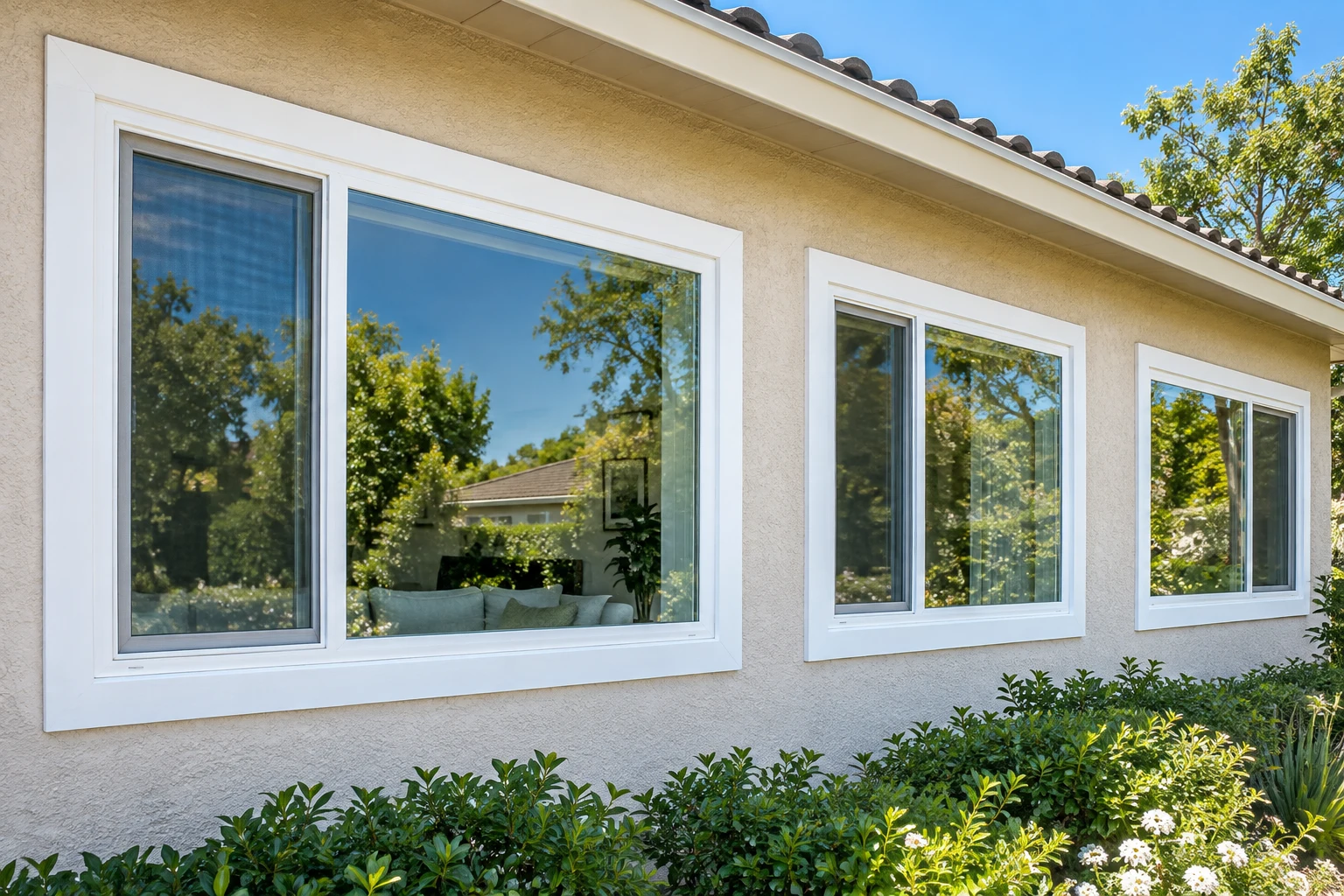
In many Corona homes, replacing all windows at once is often the better choice—but only if most of your windows are contributing to heat and comfort problems. If the issue is isolated to a few areas, a phased approach can still work. The key is identifying where heat is actually entering your home before deciding.
At Total Home Windows, we don’t guess. We measure heat at the window level and show you exactly what’s happening inside your home. In Corona, where long sun exposure and high summer temperatures are common, windows are often the main reason a house stays hot—even when the AC is running.
If you’re just starting to evaluate your options, it helps to understand how your home performs as a whole. You can begin with our Corona window replacement overview to see how local conditions affect your decision.
There Is No One-Size-Fits-All Answer
You don’t always need to replace every window at once—but in many cases, it ends up being the more effective solution.
The right approach depends on how widespread your window issues are. If your home has consistent heat problems, uneven temperatures, or rising energy bills, that usually points to multiple failing windows—not just one or two.
Simple answer: Replace all windows at once when the problem affects the whole home. Replace in phases when the problem is isolated.
In homes across Corona, we often see properties built in the 1980s and 1990s still using original dual-pane windows. Over time, seals break down, glass performance declines, and frames allow heat to pass through more easily.
A common issue we find is homeowners replacing one or two windows, but still dealing with the same comfort problems because the rest of the home is unchanged.
Why This Decision Matters More in Corona
Corona’s inland location means more intense heat and longer periods of direct sun exposure compared to coastal areas. West-facing and south-facing windows take the brunt of that heat, especially in the afternoon.
This is where the decision becomes more important than just budgeting—it directly affects how your home handles heat.
Simple answer: In hotter climates like Corona, replacing all windows creates a more consistent indoor temperature and reduces overall heat gain.
If your house feels hot even with the AC running, it’s not just an HVAC issue. In many cases, it’s a window performance problem. You can explore this further on our why homes stay hot even with AC in Corona page.
When some windows block heat and others don’t, your home becomes unbalanced. Certain rooms stay hot, your AC runs longer, and comfort never fully stabilizes.
When Replacing All Windows at Once Makes Sense
Replacing all windows at once is usually the right move when your home has widespread inefficiencies.
This is especially true if your windows are original to the home or showing signs of wear across multiple rooms.
Simple answer: Full replacement makes sense when most windows are outdated, inefficient, or contributing to heat throughout the house.
Here are common situations where a full replacement is the better option:
- Most windows are older or failing – especially early dual-pane or single-pane units
- Heat issues exist in multiple rooms – not just one side of the house
- Your AC runs constantly but the home still feels warm
- You want consistent performance across the entire home
- You plan to stay in the home long-term
In these cases, replacing everything at once eliminates weak points across the home instead of leaving problem areas behind.
From a performance standpoint, this is the most effective way to reduce heat gain and improve comfort.
If you want to understand what that process looks like, visit our window replacement in Corona service page.
When Replacing Windows in Phases Works
Phased replacement can still be a practical approach, especially if budget is a concern or only certain windows are underperforming.
This strategy focuses on fixing the biggest problems first, then addressing the rest over time.
Simple answer: Replace windows in phases if only specific areas of your home are causing heat or comfort issues.
In Corona homes, the worst-performing windows are usually:
- West-facing windows exposed to afternoon sun
- Large living room windows with direct sunlight
- Older sliding glass doors or oversized panels
By targeting these areas first, you can reduce heat where it matters most without committing to a full project upfront.
However, this approach has limitations.
A common issue we find is that homeowners improve one area, but the rest of the home continues to bring in heat—so overall comfort doesn’t fully improve.
This leads to a second installation later, which can increase total labor costs and prolong the problem.
The Real Issue: Heat Entering Through Your Windows
This decision is not really about windows—it’s about heat.
In Corona, solar heat gain through glass is one of the biggest contributors to indoor discomfort. Standard or aging windows allow that heat to pass through easily, especially during peak afternoon hours.
Simple answer: If heat is entering through multiple windows, replacing all of them at once provides the most complete solution.
At Total Home Windows, we measure how much heat is coming through each window. This allows us to show you which windows are causing the biggest problems.
Instead of guessing, you see real data from your own home.
From there, the decision becomes clearer:
- If most windows are letting in heat → full replacement makes sense
- If only a few windows are the issue → phased replacement can work
This is how you avoid overspending while still solving the actual problem.
Energy Efficiency: Whole-Home vs Partial Improvement
Energy efficiency improves any time you upgrade windows—but the level of improvement depends on how many windows you replace.
Simple answer: Replacing all windows delivers the most noticeable drop in energy use because it removes all major sources of heat gain.
When only some windows are replaced, your home still has weak points. Heat continues entering through older units, forcing your AC to compensate.
That’s why partial upgrades often lead to smaller, less noticeable results.
Modern solutions like Low-E glass windows in Corona are designed to reflect heat away from your home. But their effectiveness depends on how consistently they are used throughout the house.
If only a few windows have heat-blocking technology, the rest of the home continues to work against you.
In contrast, a full replacement creates a controlled environment where heat is reduced across all rooms—not just a few.
Cost Considerations: Upfront vs Long-Term
Cost is one of the biggest factors in this decision, and it’s often the reason homeowners consider phasing the project.
Simple answer: Full replacement costs more upfront, but phased replacement can cost more over time due to repeated labor and delayed efficiency gains.
When you replace all windows at once:
- You complete the project in one installation
- You avoid multiple labor charges
- You start seeing full energy savings immediately
When you replace in phases:
- You spread out the financial investment
- You delay full performance improvements
- You may pay more in total installation costs
There’s no universal right answer—but understanding the trade-offs helps you make a more informed decision based on your priorities.
For a detailed breakdown of pricing factors, visit our window replacement cost in Corona page.
Ultimately, the decision comes down to how widespread your window issues are and how quickly you want to solve them.
Installation Strategy Matters—Especially for Whole-Home Performance
Whether you replace all your windows at once or in phases, the installation method plays a major role in how much heat you actually keep out.
Simple answer: Even the best window will underperform if it’s not installed correctly or if the surrounding frame allows heat and air to pass through.
In Corona homes, we often see older frames that look fine from the outside but allow heat to transfer through gaps, aging materials, or poor insulation. This is where the choice between retrofit and full-frame installation becomes important.
Retrofit (insert) installation keeps the existing frame and installs a new window inside it. This works well when the frame is still solid and properly sealed.
Full-frame installation removes everything down to the rough opening. This allows us to correct hidden issues like air leaks, insulation gaps, or structural wear that contribute to heat gain.
At Total Home Windows, we evaluate this during your inspection. We don’t assume every home needs the same approach—we show you where heat is entering and recommend the installation method that actually fixes it.
What Happens When You Only Replace Some Windows
Replacing a few windows will improve those specific areas—but it does not fix the overall system of your home.
Simple answer: Partial replacement reduces heat in certain rooms, but the rest of the home can still work against you.
Here’s what that looks like in real-world conditions:
- One room feels cooler, but adjacent rooms still trap heat
- Your AC continues running longer because heat is entering elsewhere
- Temperature differences between rooms become more noticeable
We’ve seen this often in Corona—especially in homes where west-facing windows were replaced first. The living room improves, but bedrooms or upstairs areas remain uncomfortable.
The issue isn’t the new windows. It’s the remaining ones.
This is why a full-home approach tends to deliver more consistent and noticeable results.
What Happens When You Replace All Windows at Once
Replacing all windows creates a controlled environment where heat gain is reduced across the entire home.
Simple answer: Full replacement eliminates weak points, so your home performs as one system instead of a mix of old and new.
With a complete upgrade, you can expect:
- More consistent indoor temperatures
- Less strain on your AC system
- Faster cooling and better heat retention
- Improved comfort in every room—not just a few
This is especially important in Corona, where long sun exposure can heat multiple sides of the home throughout the day.
Instead of chasing hot spots room by room, a full replacement addresses the root cause everywhere at once.
The Role of Glass Technology in Your Decision
Not all windows perform the same, and this becomes more important when deciding whether to replace everything or just a few.
Modern glass systems are designed to reduce solar heat gain, not just improve insulation.
Simple answer: The right glass package can significantly reduce how much heat enters your home—but only if it’s used consistently.
For Corona homes, this usually means using heat-reflective coatings designed for hot climates. If you’re comparing options, it helps to understand what actually works in this environment. You can review the best windows to block heat in Corona to see how different configurations perform.
If you install these upgrades across all windows, the effect is noticeable immediately. If you only apply them to a few windows, the rest of your home still allows heat in.
This is where many partial upgrades fall short—they improve performance locally, but not globally.
Common Homeowner Mistakes When Deciding
This decision often comes down to budget—but focusing only on cost can lead to results that don’t fully solve the problem.
Here are the most common mistakes we see in Corona homes:
- Replacing windows based on appearance instead of performance
- Fixing only the most obvious problem areas while ignoring the rest of the home
- Mixing different window types or efficiency levels, leading to uneven results
- Assuming the AC system is the issue when heat is actually entering through the glass
In many cases, homeowners spend money but still deal with the same comfort issues—just slightly improved.
That’s why we focus on measuring heat first. It removes the guesswork and shows you exactly what needs to be addressed.
Should You Wait or Start in Phases?
Timing is another key factor.
Simple answer: If your home is consistently uncomfortable, waiting may prolong the problem—starting sooner can provide immediate relief.
That said, not every homeowner is ready to complete a full replacement at once.
Here’s how to think about it:
- If comfort is a daily issue → start with the worst-performing windows now
- If consistency and long-term value matter more → plan for a full replacement
We’ve worked with homeowners who started with one side of the home and quickly realized the difference—then chose to complete the rest sooner than planned.
We’ve also seen homeowners wait, complete everything at once, and avoid dealing with multiple installations.
Both approaches can work. The difference is how quickly you want the problem solved.
What Most Corona Homeowners End Up Doing
In practice, most homeowners fall somewhere in between.
They start by addressing the biggest heat sources—then expand the project once they see the results.
However, in homes where windows are uniformly old or inefficient, full replacement is usually the more straightforward and effective path.
At Total Home Windows, our role is to show you what’s actually happening inside your home so you can make that decision with real information—not assumptions.
Get a Clear Answer Based on Your Home
There is no universal rule for replacing all windows at once.
The right answer depends on how your home handles heat—and which windows are causing the problem.
That’s why Total Home Windows measures heat at the source. We show you which windows are underperforming, how much heat they’re letting in, and what impact that has on your comfort.
From there, you can decide whether a full replacement or phased approach makes the most sense for your situation.
Related Window Answers in Corona
- How long does window installation take in Corona?
- Are energy-efficient windows worth it in Corona?
- What is the ROI of replacing windows?
- What are the signs you need new windows?
Frequently Asked Questions About Should I Replace All Windows At Once in Corona
Is it cheaper to replace all windows at once?
Yes, in most cases. Replacing all windows at once avoids multiple installation costs and allows you to complete the project in one phase, which can reduce total labor expenses.
Will I notice a difference if I only replace a few windows?
You will notice improvement in those specific areas, but overall comfort may not change significantly if other windows are still allowing heat in.
How do I know if all my windows need to be replaced?
The most accurate way is to measure heat at each window. If multiple windows are contributing to indoor heat, a full replacement is usually the better solution.
Can I replace windows in stages without problems?
Yes, but results may be limited until all major heat sources are addressed. Phased projects work best when the problem is isolated to specific areas.
How long does a full window replacement take?
Most full-home projects can be completed in one to two days depending on the number of windows and installation type.
Get Your Free Window Replacement Estimate In Corona
If your home feels hot, your AC runs constantly, or you’re unsure whether to replace all your windows or just a few, Total Home Windows can help you get clear answers.
We’ll measure how much heat is entering through your windows and show you exactly where the problem is coming from—so you can make the right decision for your home.
Call us at (310) 729-3013, email teamallstarconstruction@gmail.com, or visit our contact page to schedule your free estimate.
Total Home Windows is here to help you solve the real problem—so your home stays comfortable, efficient, and consistent year-round.
Request Free Estimate
Related Content
Do Windows Help With Noise in Corona
What Type Of Windows Are Best For Hot Climates in Corona
Milgard Vs Andersen Windows in Corona
Vinyl vs Fiberglass Windows in Corona
Best Window Brands in Corona
Window Upgrade ROI in Corona
Helpful Resources for Homeowners
Whether you’re researching energy-efficient windows, looking for ways to reduce heat and noise, or comparing replacement options for an older home, these resources cover some of the most common questions homeowners ask. Browse the articles below for practical guidance and expert insights on choosing the right windows for your home.