
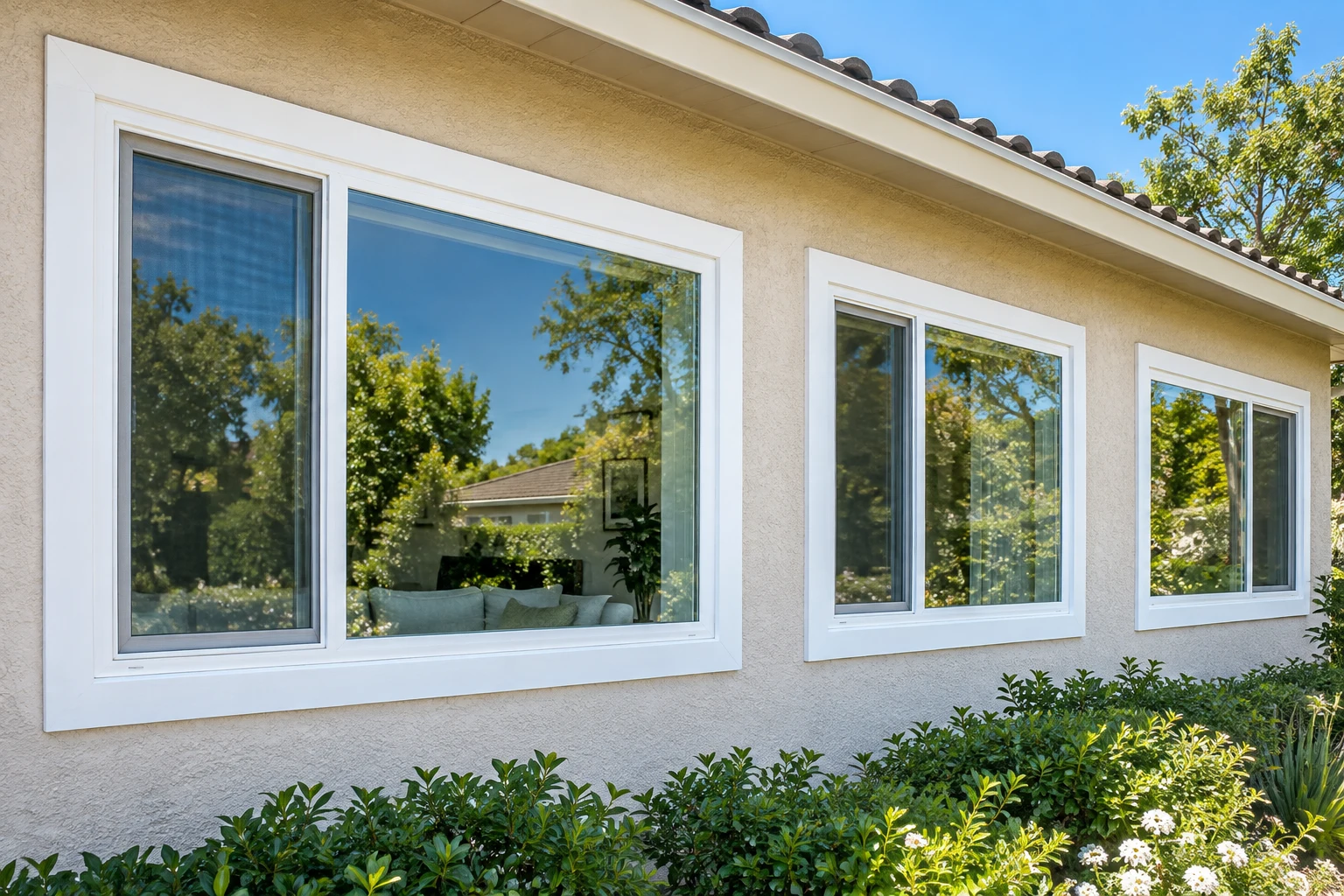
Vinyl and fiberglass windows can both work in Corona homes, but neither solves your problem on its own. The real difference comes down to how well the window system blocks heat, not just what the frame is made of.
At Total Home Windows, we see this every day—homeowners replacing windows expecting relief, but still dealing with hot rooms and high energy bills. That’s because the issue isn’t just vinyl vs fiberglass. It’s how much heat is coming through your current windows and whether the replacement actually stops it.
If you’re comparing options, start with the bigger picture of how window replacement in Corona works and why material choice is only one part of the solution.
Why This Decision Matters in Corona Homes
Corona is not a mild climate. Long sun exposure, inland heat, and rising energy costs all put pressure on your windows. Many homes—especially those built before the early 2000s—still have older dual-pane or even aluminum windows that were never designed to handle today’s temperatures.
A common issue we find in homes across Corona is that certain rooms become unusable in the afternoon. The AC runs constantly, but the temperature never evens out. That’s not an HVAC issue—it’s solar heat entering through the glass.
Here’s the key point: in hot climates like Corona, windows are one of the largest sources of heat gain inside the home.
If your house feels hot even with the AC running, the window material alone won’t fix it. The full window system needs to be evaluated.
What Are Vinyl Windows—and When Do They Work?
Vinyl windows are made from PVC and are widely used in residential replacement projects. They are known for being cost-effective, low maintenance, and reasonably energy-efficient when paired with the right glass.
In practical terms, vinyl windows are a solid option for many Corona homeowners—especially in standard-sized openings where structural demands are lower.
In homes across Corona, we often see vinyl windows perform well when:
- The installation is properly sealed
- The glass package is designed for heat control
- The existing frame condition doesn’t require structural reinforcement
But here’s the reality: vinyl by itself does not block heat. The glass does most of that work.
If you install a vinyl window with the wrong glass, you can still end up with the same heat problem.
For a deeper breakdown of performance, you can review whether vinyl windows are a good fit for Corona homes.
What Are Fiberglass Windows—and When Do They Make Sense?
Fiberglass windows are built from reinforced glass fibers, making them stronger and more rigid than vinyl. They are often used in situations where durability, structural stability, or larger window spans are required.
Fiberglass performs well in environments with temperature swings because it expands and contracts less than vinyl. In Corona, where daytime heat can be intense, that stability can be an advantage in certain homes.
In real-world applications, fiberglass windows are typically chosen when:
- The window openings are large or custom
- The home has structural movement or older framing
- The homeowner wants a more rigid, long-term frame
However, fiberglass does not automatically mean better energy performance.
Just like vinyl, fiberglass relies on the glass package and installation quality to actually reduce heat.
This is where many homeowners get misled—paying more for fiberglass without addressing the real issue: solar heat gain through the glass.
Vinyl vs Fiberglass: What Actually Affects Heat in Your Home
When comparing vinyl and fiberglass windows, most homeowners focus on the frame. But in Corona, the frame is not the primary source of heat transfer.
The glass is.
Here’s the simple answer: the difference in heat control between vinyl and fiberglass is smaller than the difference between the right glass and the wrong glass.
That’s why features like Low-E coatings, solar heat gain coefficient (SHGC), and proper sealing matter far more than the frame material alone.
In homes across Corona, we often measure significant heat coming directly through the glass—not the frame. This is especially true on west-facing and south-facing windows where sun exposure is strongest.
If your goal is to reduce heat, you should be looking at solutions like Low-E window technology and heat-blocking glass systems.
Energy Efficiency: What Homeowners Often Get Wrong
Many homeowners assume fiberglass is always more energy-efficient than vinyl. That’s not necessarily true.
Both materials can be energy-efficient—or inefficient—depending on the configuration.
A clear answer: energy efficiency depends more on the glass package, installation quality, and sealing than whether the frame is vinyl or fiberglass.
In Corona’s climate, the goal is to reduce solar heat gain while keeping indoor temperatures stable. That requires:
- Glass that reflects heat
- Proper insulation between panes
- A tight, sealed installation
Without those elements, even a high-end fiberglass window won’t solve your comfort issues.
This is why we don’t recommend windows based on material alone. We measure how your current windows are performing and show you exactly where heat is entering.
Cost Differences—and What You’re Really Paying For
Vinyl windows are generally more affordable than fiberglass. Fiberglass typically comes at a higher upfront cost due to its strength and durability.
But cost alone doesn’t determine value.
Here’s the straightforward answer: the best choice is the one that actually solves your heat problem—not the one with the higher price tag.
In many Corona homes, vinyl windows with the right glass package deliver better real-world results than fiberglass windows with standard glass.
On the other hand, in homes with large openings or structural concerns, fiberglass may be worth the investment.
To understand how pricing fits into your specific home, review window replacement cost in Corona and what factors actually affect it.
Installation Matters More Than Material
One of the biggest mistakes homeowners make is focusing on the product instead of the installation.
A poorly installed fiberglass window will still leak air and allow heat in. A properly installed vinyl window can outperform it.
A common issue we find is gaps, poor sealing, or retrofit installations that leave the original frame problems untouched. This allows heat to continue entering the home—even after replacement.
Here’s the clear takeaway: installation quality has a direct impact on comfort, energy efficiency, and long-term performance.
At Total Home Windows, we don’t guess. We measure heat at the window level, identify where it’s entering, and show you the difference before recommending any solution.
That’s how you determine whether vinyl or fiberglass is actually right for your home—not by specs, but by real performance inside your space.
When Vinyl Windows Make More Sense in Corona Homes
Vinyl windows are often the practical choice for many homes in Corona, especially when the goal is to reduce heat without overcomplicating the project.
Direct answer: vinyl windows are usually the better option for standard-sized openings when paired with the right heat-blocking glass.
In neighborhoods across Corona, we regularly see vinyl perform well in homes built in the 80s, 90s, and early 2000s. These homes typically have consistent window sizes and don’t require the added structural strength fiberglass provides.
Vinyl tends to make more sense when:
- You want to improve comfort without overspending
- Your window openings are standard in size
- Your main issue is heat coming through the glass—not structural failure
- You want a low-maintenance solution that holds up in the sun
From what we see in the field, most homeowners are not dealing with frame failure—they’re dealing with heat entering through outdated glass. In those cases, a properly built vinyl window with a high-performance glass package solves the problem effectively.
When Fiberglass Windows Are the Better Choice
Fiberglass becomes the better option when the project demands more strength or when the existing conditions are less forgiving.
Direct answer: fiberglass windows are worth it when your home has large openings, structural movement, or long-term durability concerns.
In Corona, this often applies to:
- Homes with oversized or custom window designs
- Older properties with shifting or worn frames
- Projects involving full-frame replacement rather than retrofit
Fiberglass is more rigid, which helps maintain a tight seal over time in demanding conditions. But again, that strength doesn’t automatically reduce heat.
We’ve seen cases where homeowners upgraded to fiberglass expecting a major comfort difference, only to find the rooms still overheating. The issue wasn’t the frame—it was the glass configuration.
That’s why material choice should always follow a proper evaluation, not lead it.
Retrofit vs Full-Frame Installation in Corona
The installation method plays a bigger role than most homeowners expect.
Retrofit installations fit new windows into your existing frame. This is common in Corona and works well when the original frame is still solid. Vinyl windows are often used here because they adapt easily to existing openings.
Full-frame installation removes everything down to the studs. This is more involved but necessary when the original frame is damaged, leaking, or poorly sealed.
Direct answer: if your existing frame is failing, the installation method matters more than whether you choose vinyl or fiberglass.
We often find hidden issues during inspections—air gaps, sun-damaged seals, or poorly installed original windows. In these cases, installing a new window into a bad frame won’t fix the heat problem.
At Total Home Windows, we measure and show these issues before recommending the installation type. That’s how you avoid replacing windows and still feeling the same heat.
What Real Heat Reduction Looks Like
Most homeowners aren’t looking for new windows—they’re looking for a cooler home.
So what should you realistically expect?
When windows are properly selected and installed, you should notice:
- Rooms staying more consistent throughout the day
- Less direct heat near windows in the afternoon
- Reduced AC runtime
- Lower strain on your HVAC system
But this only happens when the window system is designed to block heat—not just replace old materials.
That’s why understanding the best windows for hot climates in Corona is critical. The wrong glass will cancel out the benefits of either vinyl or fiberglass.
In our experience, west-facing rooms in Corona homes are the biggest problem areas. We’ve measured dramatic temperature differences between rooms based purely on sun exposure and glass performance.
Once the right glass is installed, those same rooms become usable again—without lowering the thermostat.
Common Decision Mistakes Homeowners Make
Choosing between vinyl and fiberglass often leads to a few predictable mistakes.
- Overpaying for fiberglass without solving heat issues
- Choosing vinyl without upgrading the glass package
- Ignoring sun exposure on specific sides of the home
- Assuming all new windows perform the same
The biggest mistake is treating this like a product decision instead of a performance problem.
If your home is uncomfortable, there’s a reason. Windows are one of the largest contributors—but only if they’re evaluated correctly.
If you haven’t already, it helps to start with the full picture on the Corona window replacement service area page to understand how all these factors connect.
So Which Should You Choose?
Here’s the straightforward answer based on what we see in Corona homes every day:
Choose vinyl if your home has standard window sizes, your frames are in decent condition, and your main goal is reducing heat and improving efficiency.
Choose fiberglass if your project involves large openings, structural concerns, or long-term durability in more demanding conditions.
But here’s the more important truth:
The right choice isn’t made by picking a material first. It’s made by understanding how your current windows are performing and where heat is actually entering your home.
That’s the step most companies skip—and the reason many homeowners don’t get the results they expected.
Related Window Answers in Corona
- How long window installation takes in Corona
- Dual-pane vs triple-pane windows in Corona
- Do new windows reduce energy bills in Corona
- Should you replace all windows at once in Corona
Frequently Asked Questions About Vinyl vs Fiberglass Windows in Corona
Are fiberglass windows worth the extra cost in Corona?
Only in specific situations. If your home has large window openings or structural concerns, fiberglass can be worth it. Otherwise, vinyl with the right glass package often delivers similar comfort improvements at a lower cost.
Do vinyl windows reduce heat as well as fiberglass?
Yes—when they use the same glass package. Heat reduction comes primarily from the glass, not the frame material. A vinyl window with high-performance glass can match or exceed fiberglass in real-world conditions.
How do I know which window type my home needs?
You need to evaluate how your current windows are performing. This includes measuring heat at the glass, checking frame condition, and identifying air leaks. Without that, you’re guessing.
Will new windows lower my energy bills?
They can, but only if they reduce heat gain. If your current windows are allowing significant solar heat inside, upgrading to properly designed windows can reduce AC usage and improve efficiency.
Is installation really more important than the material?
Yes. Even the best window will underperform if it’s poorly installed. Proper sealing and fit are critical to stopping heat and air infiltration.
Get Your Free Window Replacement Estimate In Corona
If you’re trying to decide between vinyl and fiberglass windows, the next step isn’t guessing—it’s seeing what your windows are actually doing.
At Total Home Windows, we measure heat at the window level and show you exactly where it’s entering your home. That’s how you make the right decision based on real conditions—not assumptions.
Total Home Windows will walk you through your options, explain what’s happening in your home, and help you choose the solution that actually improves comfort.
Request Free Estimate
Related Content
Do Windows Help With Noise in Corona
Should I Replace All Windows At Once in Corona
What Type Of Windows Are Best For Hot Climates in Corona
Milgard Vs Andersen Windows in Corona
Best Window Brands in Corona
Window Upgrade ROI in Corona
Helpful Resources for Homeowners
Whether you’re researching energy-efficient windows, looking for ways to reduce heat and noise, or comparing replacement options for an older home, these resources cover some of the most common questions homeowners ask. Browse the articles below for practical guidance and expert insights on choosing the right windows for your home.