
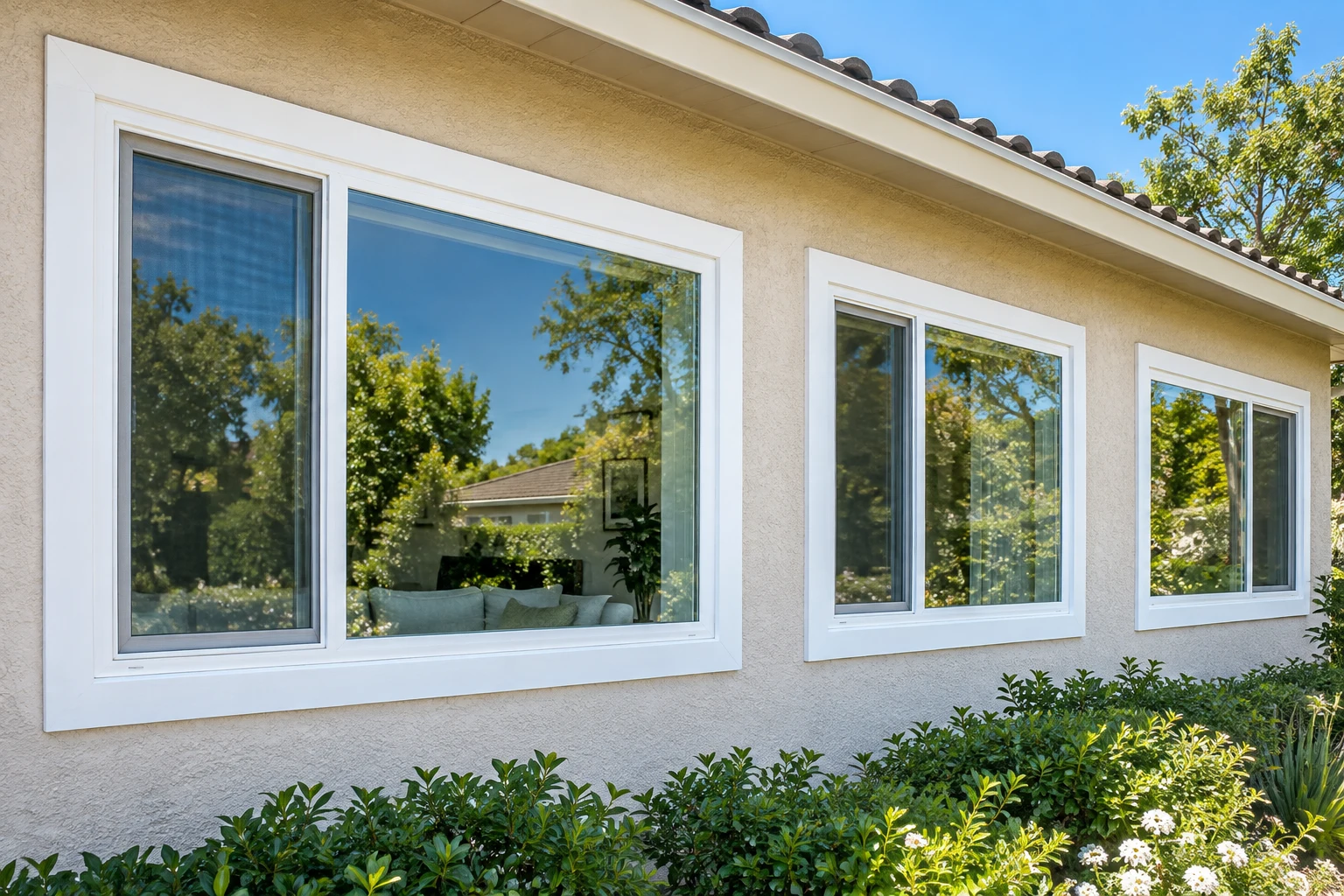
Prices and performance figures in this guide are planning examples, not a project quote or a promise of savings. Your estimate and results depend on the products, installation scope, existing home, climate, and energy use.
Window replacement in Corona typically costs between $800 to $1,200 per window, or $10,000 to $25,000+ for a full home, depending on size, materials, and installation method. At Total Home Windows, we see that the real cost is not just about the window itself—it is about how much heat your current windows are allowing into your home.
Many Corona homeowners reach out because their house still feels hot even with the AC running. In most cases, the issue is not the HVAC system. It is heat entering directly through inefficient or outdated windows. Understanding cost starts with understanding that problem.
If you are comparing options, start with the full overview of window replacement in Corona to see how pricing connects to real performance inside your home.
What Is the Average Cost of Window Replacement in Corona?
The average cost depends on your home, but most projects in Corona fall within a predictable range.
Typical pricing:
- $800–$1,200 per standard window
- $10,000–$25,000+ for full-home replacement
Homes with larger openings, custom shapes, or upgraded glass packages will fall on the higher end of that range.
The key point is simple: window replacement cost is not one flat number. It is based on how your specific windows perform and how much work is needed to fix the problem.
In homes across Corona, we often see homeowners initially focused on price per window. But once we measure heat at the glass, the conversation shifts to performance—because that is what actually changes comfort.
Why Window Replacement Costs Vary in Corona
Corona has a combination of strong sun exposure, long summer seasons, and neighborhoods with older homes. These factors directly impact both cost and urgency.
A home in Corona that faces direct afternoon sun will experience significantly more heat gain through west-facing windows. Older homes—especially those built before the 1990s—often have aluminum frames or early dual-pane glass that no longer insulates effectively.
This creates two issues:
- Higher indoor temperatures
- Longer AC run times and higher energy bills
The more heat entering through your windows, the more your cooling system has to compensate.
A clear answer: homes in hotter, sun-exposed areas of Corona often require higher-performing glass packages, which can increase upfront cost but significantly reduce heat gain.
If your home feels uncomfortable despite running the AC, this page explains the root cause: why homes stay hot even with AC in Corona.
What Actually Affects Window Replacement Cost?
Several factors determine the final cost of your project. Some are obvious, while others are often overlooked.
1. Number of Windows
The more windows you replace, the higher the total cost. However, replacing multiple windows at once is often more cost-efficient per unit than doing them in phases.
Short answer: more windows increase total cost, but reduce cost per window.
2. Window Size and Layout
Larger windows or custom shapes require more materials and labor. Homes in Corona with open floor plans or large living room windows often fall into this category.
A common issue we find is oversized windows that bring in excessive sunlight, which directly increases indoor heat.
Short answer: larger windows cost more and allow in more heat if not properly upgraded.
3. Glass Package and Energy Efficiency
This is one of the most important—and most misunderstood—cost factors.
Basic glass will cost less upfront. But in Corona’s climate, it allows significant solar heat gain. Higher-performance glass, such as Low-E coatings, helps reflect heat and reduce UV penetration.
Short answer: better glass costs more initially but directly reduces heat and improves comfort.
To understand this upgrade, see how Low-E windows in Corona help block heat at the source.
4. Frame Material
Vinyl and fiberglass are the most common materials for replacement windows.
- Vinyl: More affordable, strong insulation, low maintenance
- Fiberglass: Higher cost, greater strength, longer lifespan
In Corona, both materials can perform well when paired with the right glass package. The bigger issue is not the frame—it is how much heat passes through the glass.
Short answer: material affects price, but glass performance affects comfort.
5. Installation Method
Not all window replacements are installed the same way.
Retrofit installation uses the existing frame. It is typically less expensive but only works if the frame is still in good condition.
Full-frame replacement removes everything down to the opening. This costs more but allows for a complete reset of insulation, sealing, and fit.
In many Corona homes, especially older ones, full-frame replacement may be necessary to stop air leaks and heat transfer.
Short answer: retrofit costs less upfront, full-frame solves deeper problems.
For a full breakdown of installation options, visit window replacement in Corona.
The Hidden Cost Most Homeowners Miss
Most homeowners focus only on the price of the window. But the bigger cost is ongoing energy loss.
When windows allow heat inside:
- Your AC runs longer
- Your energy bills increase
- Your home never fully cools down
That means you are paying for the problem every single month.
In homes across Corona, we often measure significant temperature differences between rooms based solely on window exposure. South- and west-facing rooms are typically the hottest.
Short answer: inefficient windows create a recurring cost through energy use and discomfort.
Many homeowners look into whether new windows reduce energy bills in Corona, and the answer depends on how much heat your current windows are letting in.
Why the Cheapest Window Quote Can Be Misleading
Lower quotes often leave out critical details that affect long-term performance.
A cheaper project may skip:
- Proper heat measurement
- Glass suited for Corona’s climate
- Full evaluation of frame condition
- Correct installation method
That leads to a situation where the windows are new—but the house is still hot.
At Total Home Windows, we approach this differently. We measure how much heat is entering through each window before making recommendations. That allows homeowners to see the problem firsthand.
Short answer: a lower upfront price can lead to higher long-term costs if the root issue—heat—is not solved.
How Corona’s Climate Impacts Your Final Cost
Corona regularly experiences high summer temperatures, strong sunlight, and extended cooling seasons. Homes without proper window performance absorb heat throughout the day and release it slowly at night.
This creates a cycle where:
- Your home heats up quickly
- Your AC struggles to keep up
- Indoor comfort never stabilizes
That is why many homeowners in Corona prioritize windows designed specifically for heat control.
Short answer: Corona’s climate increases the need for heat-blocking windows, which can influence cost but significantly improve comfort.
How Many Windows You Replace Impacts Total Cost and Comfort
The number of windows you replace does more than change the total price—it directly affects how your home feels afterward.
Replacing only a few windows may lower your upfront cost, but it often leaves the original problem unresolved. Heat will continue entering through the remaining older windows, especially in rooms that get direct sun.
Direct answer: replacing all major heat-exposed windows at once creates more consistent indoor temperatures.
In Corona homes, we regularly see situations where homeowners replace front-facing windows but leave west-facing ones untouched. The result is predictable—one side of the house improves, while the hottest rooms stay uncomfortable.
If your goal is to actually reduce heat, the focus should be on where heat is entering—not just how many windows you can replace within a budget.
Performance Differences: What You Pay For vs What You Feel
Not all window replacements deliver the same results, even if they look similar on paper.
The biggest difference comes down to how much heat the window blocks.
Basic replacement windows can improve appearance and fix drafts. But in Corona’s climate, that alone is not enough. If the glass still allows solar heat to pass through, your home will continue to heat up throughout the day.
Higher-performance windows are designed specifically to reduce solar heat gain. This is where features like coatings and insulated glass matter.
Direct answer: the right glass package can reduce heat transfer far more than the frame or style of the window.
To see which options are designed for this climate, review the best windows to block heat in Corona.
In real homes, the difference is noticeable. Rooms that were previously unusable in the afternoon become stable and livable without overworking the AC.
Real-World Cost vs Real-World Results
There is a difference between what a project costs and what it actually fixes.
A lower-cost project may solve surface-level issues like drafts or outdated appearance. But if it does not address heat gain, the main problem remains.
At Total Home Windows, we focus on showing homeowners the measurable difference between options. When we test windows, you can see how much heat is entering before any work begins.
This changes the conversation from “What is the cheapest option?” to “What actually solves the problem?”
Experience observation: many Corona homeowners initially plan for a basic replacement, but after seeing heat measurements at the glass, they choose higher-performance options because the issue is clearer.
Phased Replacement vs Full Replacement
Some homeowners choose to replace windows in phases to manage cost. Others prefer to complete the project at once.
Both approaches can work, but they lead to different outcomes.
Phased replacement:
- Lower upfront cost
- Improvement in selected rooms
- Remaining areas may still feel hot
Full replacement:
- Higher upfront investment
- Consistent performance across the home
- Stronger overall reduction in heat
Direct answer: full replacement delivers the most noticeable comfort improvement because it eliminates multiple sources of heat entry at once.
In Corona, many homeowners start with west-facing or sun-exposed windows if they choose a phased approach. Those are typically the largest contributors to indoor heat.
Installation Quality Affects Long-Term Cost
Installation is not just a line item—it directly impacts how well your windows perform.
Poor installation can lead to:
- Air leaks
- Heat infiltration around the frame
- Reduced lifespan of the window
Even high-quality windows will underperform if they are not properly sealed and fitted.
At Total Home Windows, installation is treated as part of the solution, not just the final step. We focus on sealing, fit, and alignment so the window performs the way it is designed to.
Experience observation: in older Corona homes, we often find gaps and frame issues that were never corrected during previous installations. Fixing those issues is what actually improves comfort.
When Window Replacement Is Worth the Cost
Not every home needs immediate full replacement—but many homes in Corona show clear signs that the windows are the source of the problem.
Window replacement is typically worth the cost when:
- Your home feels hot even with AC running
- Certain rooms are consistently warmer than others
- Your energy bills continue to rise during summer
- Your windows are older and allow direct sunlight heat
Direct answer: if your AC is running but your home is still uncomfortable, your windows are likely contributing to the problem.
The key is verifying that before making a decision. That is where proper measurement matters.
Making the Right Decision for Your Home
The best decision comes from understanding three things:
- Where heat is entering your home
- How your current windows are performing
- What level of upgrade will actually fix the issue
Total Home Windows does not rely on assumptions. We measure heat at the window level and show you the results inside your home.
That gives you a clear answer before you commit to any cost.
Once you see the data, the decision becomes more straightforward—because you are no longer guessing.
Frequently Asked Questions About Window Replacement Cost in Corona
How much should I expect to pay for window replacement in Corona?
Most homeowners pay between $800 and $1,200 per window, or $10,000 to $25,000+ for a full home. The final cost depends on size, glass type, and installation complexity.
Do more expensive windows really make a difference?
Yes—if the cost is tied to better glass performance. Higher-quality glass reduces heat transfer, which improves comfort and lowers AC usage.
Can I replace just a few windows to save money?
You can, but it may not fully solve the problem. Heat will continue entering through older windows, especially in sun-exposed areas.
How long does window replacement take?
Most installations take one to two days, depending on the number of windows and complexity of the project.
How do I know if my windows are the problem?
The most reliable way is to measure heat at the glass. If significant heat is entering through your windows, they are contributing to indoor discomfort.
Related Window Answers in Corona
- Dual-pane vs triple-pane windows in Corona
- How long window installation takes in Corona
- Should you replace all windows at once in Corona
- Window replacement ROI in Corona
Get Your Free Window Replacement Estimate In Corona
If your home feels hot, your AC is constantly running, or your energy bills keep climbing, the issue may be your windows—not your HVAC system.
Total Home Windows will show you exactly where heat is entering your home and how much it is affecting your comfort.
No guesswork. No pressure. Just clear answers based on real measurements.
Total Home Windows helps Corona homeowners solve heat problems at the source—so your home stays cooler, more comfortable, and more efficient.
Request Free Estimate
Related Content
Best Windows for Homes in Corona
Should I Replace All Windows At Once in Corona
What Type Of Windows Are Best For Hot Climates in Corona
Milgard Vs Andersen Windows in Corona
Vinyl vs Fiberglass Windows in Corona
Best Window Brands in Corona
Helpful Resources for Homeowners
Whether you’re researching energy-efficient windows, looking for ways to reduce heat and noise, or comparing replacement options for an older home, these resources cover some of the most common questions homeowners ask. Browse the articles below for practical guidance and expert insights on choosing the right windows for your home.